
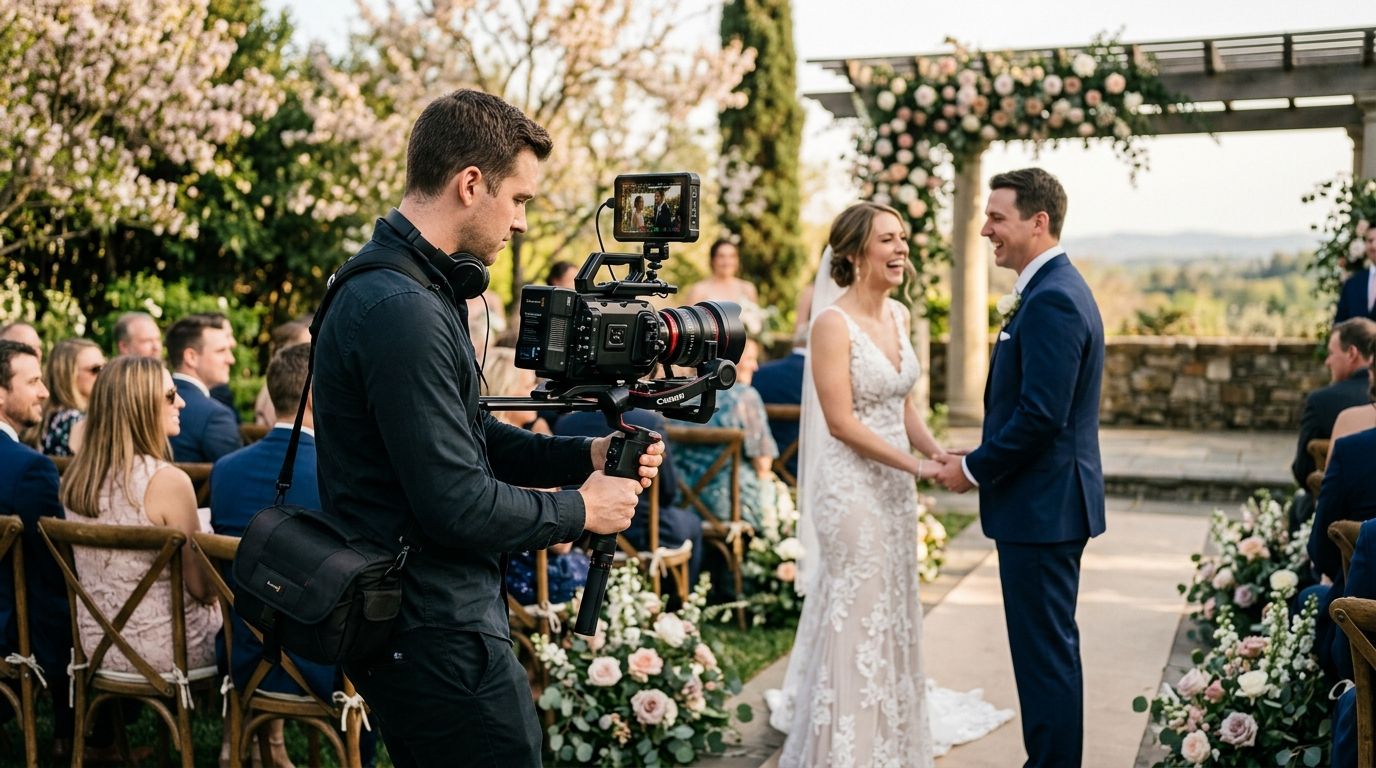
Feature length wedding film couples want a full, documentary-style movie of their wedding day, not a three-minute highlight reel, and the goal is a film they will sit down and watch start to finish for decades. This segment cares about narrative arc, ceremony audio, and multi-camera coverage more than a punchy 60-second teaser built for a social feed.
- A feature length wedding film covers the full ceremony, speeches, and reception arc rather than a 3-5 minute highlight reel.
- David Suns Weddings builds feature-length coverage around audio-first capture of vows and toasts for couples planning documentary-style films in 2026.
- Two-person crews handle feature-length coverage better than solo shooters once a day spans a ceremony, first look, and reception.
- Feature-length delivery takes longer than a same-day edit, so timeline expectations need to be set before you book.
Why feature length wedding film matters for this segment
A couple searching for a feature length wedding film in 2026 has usually already ruled out a quick highlight reel. They are past the "do we even want video" question and into "how do we get the whole day, not just the pretty parts."
That changes what they need from a videographer. Crew size, audio setup, and edit turnaround matter more than a flashy sizzle clip on a social feed. David Suns Weddings treats a feature-length request as a different brief than a highlight-only booking — more hours of raw footage, more audio channels, and a longer post-production timeline.
Couples in this segment also tend to book earlier. A full-length film means more crew hours reserved, and popular 2026 wedding dates fill videographer calendars months out.
Define your must-have scenes
Before you talk to anyone, write down what the film has to contain. A feature-length film without a plan turns into two hours of unedited ceremony audio and nobody watches it twice.
- List every ceremony moment you want captured in full: vows, ring exchange, first kiss
- Note which speeches or toasts matter enough to include unedited
- Flag any surprise elements, like a first-dance routine or a sibling's speech, that need advance warning to the crew
- Mark quiet moments — getting ready, family arriving — you want documented even if nothing obvious happens
- Decide if you want guest reactions and interviews woven into the film
Choose single-day or multi-day coverage
A feature-length film for one ceremony and reception is a different shoot than one covering a welcome party, ceremony, and after-brunch. Decide this before you book crew hours.
- Walk your full wedding weekend schedule and mark which events need a camera present
- Confirm whether your venue allows filming across multiple days if events span more than one location
- Ask any videographer you are considering how they handle multi-day wedding video coverage logistically: crew rest, battery and card management, travel between venues
- Budget extra hours for a second or third day rather than assuming one day's rate covers it
- Decide if every day gets full documentary treatment or if some days only need light candid footage
Plan audio capture for vows and speeches
Video quality gets most of the attention, but audio is what actually breaks a feature-length film. A beautifully shot ceremony with muffled vows is unwatchable a second time.
- Ask about lavalier mics on the officiant and both partners for ceremony audio
- Request a backup audio recorder as insurance against wind, wireless dropout, or battery failure
- Flag outdoor ceremony locations with traffic, wind, or water noise in advance
- Confirm reception speeches get a dedicated feed from the DJ or band system, not just an on-camera mic
- Ask how audio syncing works across cameras when more than one crew member is filming
This is where hiring a crew with feature-length experience pays off. David Suns Weddings builds every feature-length wedding videography booking around redundant audio capture first, because a film couples rewatch for years lives or dies on whether the vows are clear.
Build the narrative arc before the wedding day
A highlight reel can be assembled from whatever looks good. A feature-length film needs structure or it turns into a chronological slog. Decide the shape of the story before the day starts.
- Choose whether the film opens with the ceremony or a cold open, such as the first look or getting ready
- Decide between a chaptered structure — ceremony, portraits, reception — or one continuous cut
- Talk through whether voiceover, letters, or the vows themselves narrate the transitions
- Ask your videographer how they approach documentary-style wedding films versus a staged, cinematic format
- Decide how much dancing and toasting makes the final cut versus staying in raw footage only
Decide your edit timeline
A feature-length film takes longer to edit than a highlight reel because there is more footage to sync, color, and structure. Set this expectation before the wedding, not after.
- Ask for a realistic delivery window for the full-length film specifically, separate from any teaser
- Confirm whether you get a rough cut for review before the final version
- Decide if you want a short reel delivered fast for sharing while the full film is still in post
- Ask how many rounds of revision are included before the film is final
- Clarify delivery format: private link, physical copy, or both
Book a videographer with feature-length credits
Not every wedding videographer regularly delivers full-length films. Many businesses are built around the three-minute highlight reel because it is faster to produce and easier to market. Ask directly about feature-length experience before you book.
- Request a full sample film, not just a highlight reel demo
- Ask how many feature-length films they deliver per year versus highlight-only bookings
- Confirm crew size for your specific day — one shooter cannot cover a ceremony and simultaneous getting-ready footage
- Ask whether drone work, if you want it, is handled in-house or subcontracted
- Read the contract for overtime terms, since feature-length days run long
Plan your feature-length coverage
Sort crew size, audio setup, and delivery timeline before you book your date.
Comparison: coverage options for feature-length films
| Option | Best for | Key strength | Key limitation |
|---|---|---|---|
| Solo videographer, single day | Small, single-location weddings in 2026 | Simpler scheduling, fewer logistics | Misses simultaneous moments like both partners getting ready |
| Two-person crew, single day | Most ceremony-plus-reception weddings | Audio redundancy and multiple angles | Higher hourly commitment than a solo shooter |
| Multi-day crew coverage | Weddings with welcome parties or weekend events | Captures the full weekend arc, not one day | Needs more advance planning and travel logistics |
| Feature film plus same-day edit | Couples who want a reception-night reel and a full film later | Guests see something the same night | Full film still takes normal post-production time |
Common mistakes couples make with feature-length wedding films
Confusing feature-length with raw and uncut. A film that runs long because nothing was edited is not a feature-length film. Length without a narrative arc is just footage.
Underbudgeting crew hours. A single videographer booked for six hours cannot realistically cover a full ceremony, family portraits, and a multi-hour reception in enough detail for a feature-length cut.
Skipping an audio backup plan. Vows and toasts lost to wind or wireless dropout cannot be recovered in editing. This is the most common reason feature-length films disappoint couples.
Judging a videographer only by their highlight reel. A stunning three-minute reel says nothing about how someone structures a long film you will watch again in ten years.
Misaligned delivery expectations. Assuming a full-length film arrives on same-day-edit turnaround sets up a frustrating wait.
“A feature-length wedding film only works if the audio survives as well as the video does.”
FAQ
What is a feature length wedding film?
A feature length wedding film is a full documentary-style edit of the wedding day covering the ceremony, speeches, and reception arc, rather than a short highlight reel built for social media. It is made to be watched start to finish, not scrolled past.
Is a feature-length wedding film better than a highlight reel?
Neither is objectively better. A highlight reel is built for sharing quickly, while a feature-length film is built for rewatching the full day years later, and many couples in 2026 book both.
How much does a feature length wedding film cost?
Pricing depends on crew size, coverage hours, and whether multi-day events are included. Check current rates directly with your videographer rather than assuming a flat figure.
How long does it take to get a feature-length wedding film after the wedding?
Full-length films take longer to deliver than a same-day edit because there is more footage to sync, color, and structure. Ask for a specific delivery window in writing before you book.
Do I need two videographers for a feature-length film?
A two-person crew is strongly recommended once the day includes a ceremony, simultaneous getting-ready footage, and a multi-hour reception. One shooter cannot be in two places at once.
Can a feature-length wedding film include drone footage?
Yes, drone footage is commonly added for establishing shots of the venue and ceremony site. Confirm whether your videographer flies it in-house or brings in a separate operator.
What's the best way to make sure the vows are audible in the film?
Use lavalier mics on the officiant and both partners plus a separate backup recorder. Relying on an on-camera mic for outdoor vows is the single biggest audio risk.
Is a same-day edit different from a feature-length film?
Yes. A same-day edit is a short reel shown to guests the night of the wedding, while the feature-length film is the longer edit delivered after post-production is complete.
One last thing
Most couples planning a feature length wedding film in 2026 spend their entire first videographer conversation on shot lists and camera angles, then never ask about the audio backup plan until after the wedding, when a dropped mic feed during the vows cannot be fixed. Ask about redundant audio in the first five minutes, before you discuss anything visual.


