
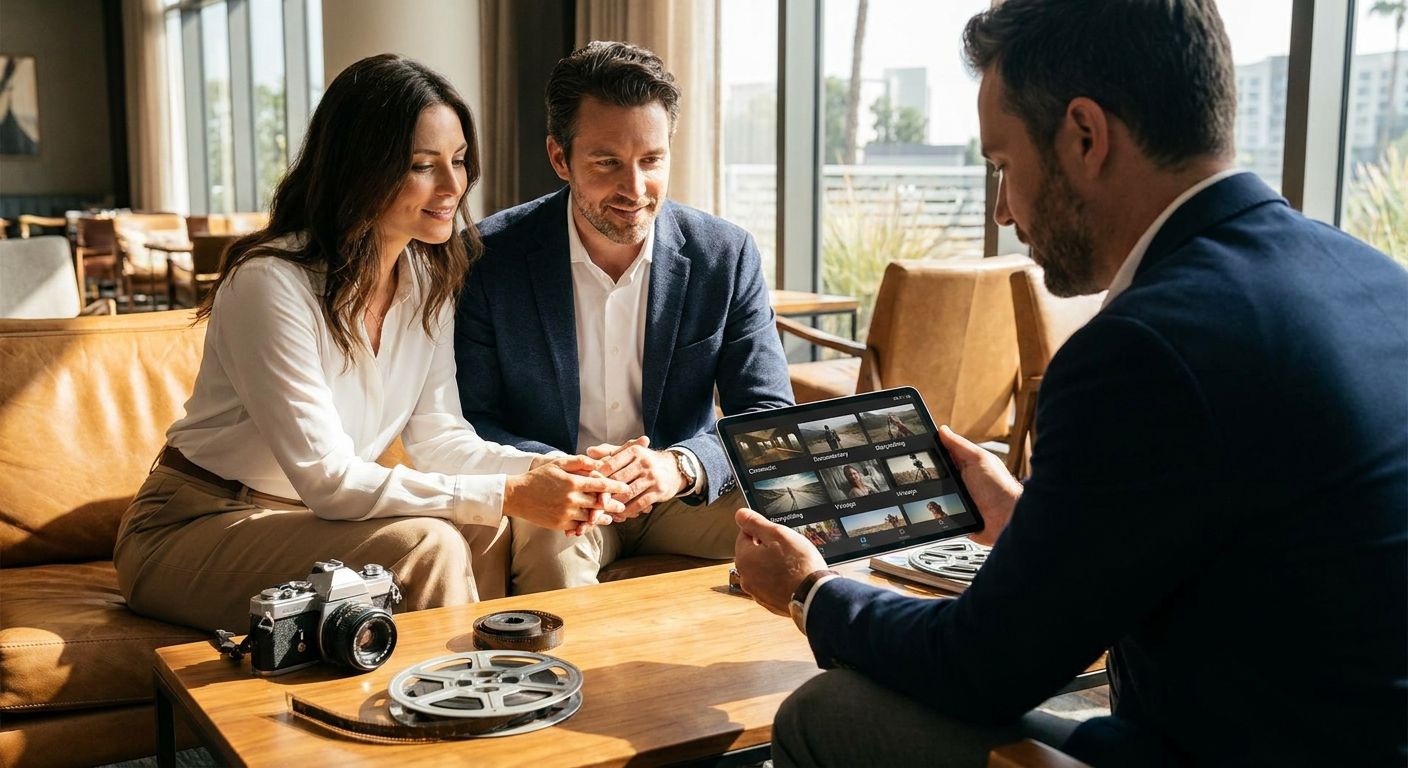
Choosing a wedding videography style before you book anything decides how your film feels forever — cinematic, documentary, journalistic, or a hybrid of the three — and every downstream decision, from editor to add-ons, follows from that one choice.
- Documentary-style wedding films capture real moments as they happen with minimal direction — pick this if you hate posed shots.
- Same-day edit films deliver a 3-5 minute cut at your reception, which demands a second editor on-site in 2026.
- Drone footage coverage adds aerial establishing shots but only works with venues that clear FAA airspace rules.
- Match your wedding videography style to your timeline first, your aesthetic second — mismatched pacing ruins otherwise great footage.
- Book your videographer 9-12 months out in 2026 if you want a specific style locked in during peak season.
Why this matters
Most couples pick a videography style by scrolling Instagram reels, then get surprised when the final film doesn't match what they saw. A highlight reel is a trailer, not a preview of your full film's pacing, narration, or coverage.
The style you choose determines shot list, crew size, editing timeline, and how much of your actual ceremony makes it into the final cut. Get this decision wrong in 2026 and you're stuck with 90 seconds of drone shots when what you wanted was your grandfather's toast in full.
David Suns Weddings shoots across styles — documentary-style wedding films sit at one end, tightly directed cinematic pieces at the other. Picking correctly up front saves you a reshoot conversation you can't actually have after the wedding.
What you'll need
- Your venue timeline — indoor ceremony, outdoor reception, multi-location day. Style choice changes with light and logistics.
- 3-5 full wedding films to watch — not highlight reels. Full films from real videographers, ideally shot in the last two years.
- A guest list count and reception format — intimate dinners edit differently than 200-person receptions with a live band.
- A sense of how much narration or interview footage you want — documentary films skip it, cinematic ones often lean on it.
- Your budget ceiling for add-ons — drone coverage, same-day edits, and second shooters all sit on top of base packages.
The steps
1. Name your top priority: moments or aesthetic
This single question narrows your options fast. If you want every real reaction captured as it happens — the vows shaking, the flower girl running the wrong way — documentary coverage wins. If you want a film that looks like a short movie with color grading and directed shots, cinematic style wins instead.
Most couples land somewhere in between, which is why hybrid packages exist. Write down your answer before you watch a single sample film — it keeps you from getting seduced by pretty footage that doesn't match how you actually want your day remembered.
Common mistake: picking a style because a friend's wedding film looked good, without checking whether that friend's day matched your own pacing and guest count.
2. Watch three to five full-length films, not trailers
Highlight reels are cut for maximum drama in 90 seconds. They tell you nothing about pacing, dialogue, or how a videographer handles a slow toast or a rained-out ceremony.
Ask any videographer you're considering for full films from real weddings, ideally two from the last 12 months. Watch the first 10 minutes straight through — that's where you'll see whether the editing style actually matches what you want on your own footage.
Expected outcome: you'll eliminate at least one style option just from watching full films, because it looks different in 20 minutes than it does in a 90-second reel.
3. Match the style to your ceremony format and timeline
A courthouse elopement with 15 minutes of ceremony time doesn't need the same coverage plan as a black-tie reception running past midnight. Documentary style thrives on long, unscripted stretches — cocktail hour, reception toasts, dance floor chaos. Cinematic style needs planned time for directed shots, which means blocking 20-30 minutes into your timeline for it.
If your day is tightly scheduled with back-to-back vendors, a heavily directed cinematic approach will fight your timeline. Documentary coverage adapts to whatever actually happens, which matters more than most couples realize until the day is running 40 minutes behind.
Common mistake: booking a cinematic package for a day with zero buffer time, then wondering why the videographer missed half the reception chasing shots.
4. Decide on your final deliverable format
This is where style meets logistics. A same-day edit film gets cut and screened at your own reception — usually a 3-5 minute piece — which means a second editor works on-site while your ceremony and cocktail hour happen. Same-day edit films require a bigger crew and a tighter turnaround than a standard highlight film delivered weeks later.
If you don't need same-day delivery, a standard highlight film plus a longer feature cut (10-20 minutes) covers most couples fine. Decide this now, because it changes crew size and pricing before you sign anything.
Expected outcome: you walk into your videographer meeting knowing exactly which deliverable format you want, instead of discovering the option exists after you've already booked.
5. Layer in add-ons that support your style, not fight it
Drone footage works beautifully for documentary and cinematic styles alike when your venue has open sky and clears local airspace restrictions. Drone footage coverage adds aerial establishing shots that most couples underestimate until they see the difference in the final cut.
Ceremony highlight add-ons capture vows and ring exchange with a dedicated second angle, which matters more for documentary-style films where you're relying on real audio and reactions rather than staged reshoots.
Common mistake: adding drone coverage to an indoor-only venue with no outdoor ceremony space — check with your venue coordinator before you pay for it.
6. Confirm turnaround time and revision policy
Style choice affects turnaround. Heavily edited cinematic films with color grading and music licensing take longer to deliver than straightforward documentary cuts. Ask directly: how many weeks out, how many revision rounds, and what format the final files arrive in.
Get this in writing before your wedding date, not after. Turnaround expectations set during booking prevent the most common post-wedding frustration couples report: months of silence waiting on a film.
Expected outcome: a written delivery timeline you can hold your videographer to, with revision rounds spelled out.
7. Book 9-12 months out if you want a specific style locked in
Popular videography styles and specific videographers book out fast during peak wedding season. If you've settled on documentary coverage with a same-day edit add-on, that combination requires a specific crew setup that isn't always available on short notice in 2026.
Lock your date and style together. Waiting until three months out narrows your options to whoever's still free, not whoever matches your vision.
Common mistake: finalizing your venue and catering months before even starting the videographer conversation, then discovering your ideal style is booked solid for your date.
Talk through your wedding videography style
See documentary, cinematic, and hybrid coverage options for your date.
Troubleshooting
- The sample films all look the same style-wise. Ask the videographer directly which style they'd default to for your venue and guest count — some shoot one way regardless of what's marketed.
- You love two different styles and can't choose. Ask about hybrid packages that blend documentary coverage with a handful of directed portrait shots — most videographers offer this even if it's not listed as a separate package.
- Your venue has strict drone restrictions. Confirm airspace rules with your venue coordinator before adding drone footage coverage — some properties near airports or parks ban it outright.
- You're worried a same-day edit will feel rushed. Same-day edits are short by design — 3-5 minutes — meant for reception screening, not as a replacement for your full highlight film.
- Your timeline keeps shrinking as the date approaches. Tell your videographer immediately. Documentary-style coverage adapts to a compressed schedule far better than a heavily directed cinematic plan.
- You can't tell if a videographer's editing pace matches your taste. Time a full film during a rewatch — fast cuts under three seconds per shot read as high-energy, longer holds read as quieter and more emotional.
Tools and resources
- Full-length wedding films (not reels) from at least three videographers
- Your venue's outdoor space rules and airspace restrictions, in writing
- A written timeline from your planner or venue coordinator
- Documentary-style wedding films and same-day edit films as reference pages for what each format actually delivers
- A shortlist of two or three add-ons — drone footage coverage among them — priced out before your booking call
What to do next
Once you've settled on a wedding videography style, the next decision is picking the actual photographer or videography team who shoots that way consistently. That's a separate evaluation from style alone — crew chemistry, past client reviews, and contract terms all matter just as much.
FAQ
What are the main wedding videography styles?
The main wedding videography styles in 2026 are documentary (unscripted, real-time coverage), cinematic (directed, movie-like pacing), and hybrid, which blends both. Most couples choose based on how much of their day they want captured naturally versus staged.
Is documentary-style wedding videography better than cinematic?
Neither is objectively better — documentary style suits couples who want real reactions and minimal posing, while cinematic style suits couples who want a directed, movie-like final film. The right choice depends on your ceremony format and how much time your timeline allows for staged shots.
How much does a same-day edit wedding film cost?
Same-day edit films typically cost more than standard highlight films because they require a second editor working on-site during your ceremony and cocktail hour. Pricing varies by videographer and package, so confirm the add-on cost directly during your booking consultation.
Do I need drone footage for my wedding video?
Drone footage is optional and works best for venues with open outdoor space and no airspace restrictions. It adds aerial establishing shots but isn't necessary for indoor-only ceremonies or venues near restricted airspace.
How far in advance should I book a wedding videographer?
Book 9-12 months before your wedding date in 2026 if you want a specific style or crew setup, since popular videographers and style combinations book out fast during peak season. Waiting until three months out limits your options to whoever remains available.
Can I combine documentary and cinematic wedding videography styles?
Yes, most videographers offer hybrid coverage that blends unscripted documentary moments with a handful of directed portrait or couple shots. Ask directly during your consultation since hybrid isn't always listed as a separate package.
What's the difference between a highlight film and a feature film?
A highlight film runs 3-6 minutes and covers the emotional peaks of your day, while a feature film runs 10-20 minutes with a fuller narrative arc including speeches and reception details. Many couples order both as part of a single package.
Should my photographer and videographer match styles?
It helps but isn't required — what matters more is that both teams can work around the same timeline without conflicting for angles during key moments like vows and first dances. Confirm this coordination directly when booking both.
One last thing
The detail most couples skip: ask your videographer how they handle low light during receptions, since that's where documentary-style footage either holds up or turns grainy once the DJ dims the lights for the first dance.


