Choosing a wedding photographer is a decision you make once, and you're stuck with the result forever, so it pays to get the process right before you sign anything.
- Book your wedding photographer 9-12 months out for 2026 dates in peak season markets.
- A full 8-hour wedding day package is the industry standard for coverage that doesn't rush the reception.
- Full galleries take 4-6 weeks to deliver — anything longer than 8 weeks is a red flag.
- David Suns Weddings prioritizes an engagement session before the wedding day to build shooting rapport.
- Skip photographers who won't show a full, unedited gallery from a real 2026 wedding.
Why this matters
Your wedding photographer is the only vendor whose work you'll look at for the rest of your life. The flowers wilt, the cake gets eaten, the DJ's playlist is forgotten by the following weekend — but the photos and video sit in an album, a hard drive, or a frame on your wall for decades.
Most couples spend more time picking a venue than vetting the person who will document the entire day. That's backwards. A venue you can describe to your grandkids. A photographer's gallery is the thing you actually hand them.
What you'll need before you start
- Your wedding date and venue locked (photographers book 9-12 months ahead for 2026 peak-season weekends)
- A rough headcount and timeline (ceremony time, reception start, golden hour window)
- A budget range you won't blow past, including a second shooter if the guest list tops 100
- 3-5 shortlisted photographers with full galleries you've actually scrolled through, not just highlight reels
- A list of must-have shots (grandparents, specific family combos, first look or no first look)
- 30-45 minutes for each initial consultation call
The steps
1. Define your style before you look at a single portfolio
Wedding photography splits into a few dominant styles: documentary/photojournalistic, fine art, and traditional/posed. Pick one before you start browsing, or you'll end up comparing apples to oranges and picking based on which portfolio had the best lighting that day.
Scroll David Suns Weddings and note whether the images feel candid or directed. That single gut check eliminates half your shortlist in minutes.
Common mistake: picking a photographer because one image went viral on Pinterest, then discovering their actual full-day style is nothing like that single shot.
2. Watch full galleries, not just the highlight reel
Anyone can post 20 perfect frames from a 2026 wedding. What you need to see is the full delivered gallery — 400 to 800 images from ceremony to last dance — to judge consistency in low light, group shots, and candid reception moments.
Ask directly for two complete galleries from real weddings, not a curated "best of" page. If a photographer hesitates or only offers a slideshow, that's your answer.
Common mistake: assuming a stunning Instagram feed means every photo in the gallery is that strong. It usually means the opposite — you're seeing the best 2% of a much rougher body of work.
3. Book a real conversation, not just an email quote
A 30-minute call tells you more than ten emails. You're listening for how they talk about your actual timeline, not a generic pitch. Do they ask about your ceremony start time, your venue's indoor lighting, or your parents' expectations for formal portraits?
A photographer who books a call in 2026 without asking a single question about your day is running volume, not craft.
Common mistake: hiring off a portfolio and a price quote alone. Personality and communication style matter for eight straight hours of working alongside someone on the most stressful day of your life.
4. Confirm hours of coverage match your actual timeline
An 8-hour package covers getting-ready through the first hour of reception for most weddings. If your ceremony starts late, your reception runs past 10pm, or you want a sparkler exit, you need more hours or you'll lose the ending.
Map your real timeline hour by hour before you sign, then match the package to it — not the other way around.
Common mistake: booking the cheapest package and realizing on the invoice that it doesn't cover your cake cutting because coverage ends at 6pm.
5. Ask about second shooters and backup plans
One shooter can't be at the groom's getting-ready room and the bride's first-look reveal simultaneously. If you want both moments documented, you need a second shooter — standard for guest lists over 100 or multi-location days.
Also ask what happens if your photographer gets sick. A professional operation has a backup shooter or a network they can call; a solo hobbyist does not.
Common mistake: not asking this question until two weeks before the wedding, when it's too late to fix.
6. Nail down delivery timelines in writing
Standard delivery for a full wedding gallery runs 4-6 weeks in 2026, sometimes 8 weeks during peak fall season when a photographer is editing multiple weddings back to back. Get the exact window in your contract, not a verbal promise.
Ask for a sneak peek timeline too — most photographers deliver 20-40 preview images within 48-72 hours so you have something to post and share immediately.
Common mistake: signing a contract with no delivery date, then chasing a photographer for months after the wedding.
7. Read the contract for usage rights and reshoot policy
Confirm who owns the images, what resolution you receive, and whether you get print release rights. Also check the weather/reshoot clause — outdoor ceremonies need a rain plan discussed before the day, not during it.
Common mistake: assuming "digital files included" means full-resolution, print-ready files. Some contracts only include web-resolution copies unless you pay extra.
Talk through your wedding date
Check availability and coverage options for your 2026 wedding.
Troubleshooting common problems
- Photographer isn't responding to emails after booking. Set a 48-hour response expectation in writing before you sign a deposit. Slow communication before the wedding predicts slow communication after.
- You can't agree on a shot list. Send a written list of must-have combinations (immediate family, wedding party, specific relatives) two weeks before the wedding, not the morning of.
- Your venue has strict photography restrictions. Confirm flash policy, drone rules, and balcony/aisle access with your photographer and your venue coordinator at the same time, ideally a month out.
- Budget doesn't match the photographer you want. Ask about shorter coverage windows (6 hours instead of 10) before assuming you need to downgrade quality entirely.
- Gallery arrives late. Reference the delivery date in your signed contract and follow up in writing — most delays get resolved once there's a paper trail.
- You're torn between two finalists. Book a paid engagement session with your top choice first. An hour of real shooting together tells you more than another round of portfolio scrolling.
Tools and resources
- Full wedding galleries (not highlight reels) from at least two recent 2026 weddings
- A written timeline template covering getting-ready through send-off
- A shot list shared with your photographer and wedding party at least two weeks out
- David Suns Weddings for photography and videography services and to check current availability
- A signed contract that specifies hours, delivery date, usage rights, and backup plan
What to do next
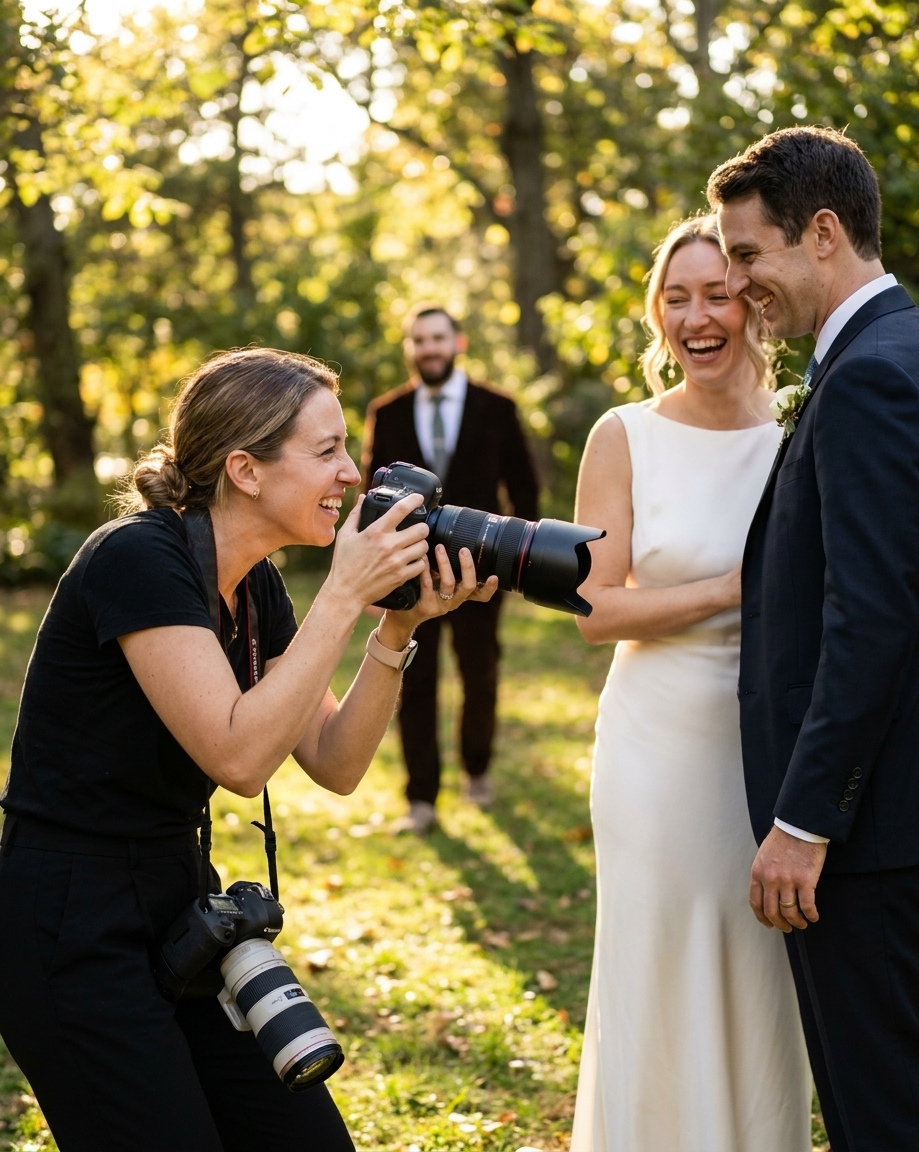
Once you've narrowed your list to two or three photographers, book paid engagement sessions with your top pick before the wedding. It's the single best predictor of how comfortable you'll feel in front of the camera on the actual day, and it gives your photographer real experience with your face, your angles, and your nerves before the pressure of a wedding timeline.
FAQ
How far in advance should I book a wedding photographer for 2026?
Book 9-12 months ahead for a 2026 peak-season weekend, especially May through October. Popular photographers in busy markets often fill their calendar a full year out.
How many hours of wedding photography coverage do I need?
Most couples need 8 hours, covering getting-ready through the first hour of reception. Add hours if you want a sparkler exit, an evening send-off, or if your ceremony starts late in the day.
How long does it take to get wedding photos back?
Standard delivery runs 4-6 weeks, with sneak peek previews often available within 48-72 hours. Anything past 8 weeks without an explanation is worth asking about directly.
Do I need a second photographer for my wedding?
Yes if your guest list tops 100, you have multiple getting-ready locations, or you want both partners' prep documented simultaneously. One shooter physically can't cover two rooms at once.
Is a wedding photographer or videographer more important?
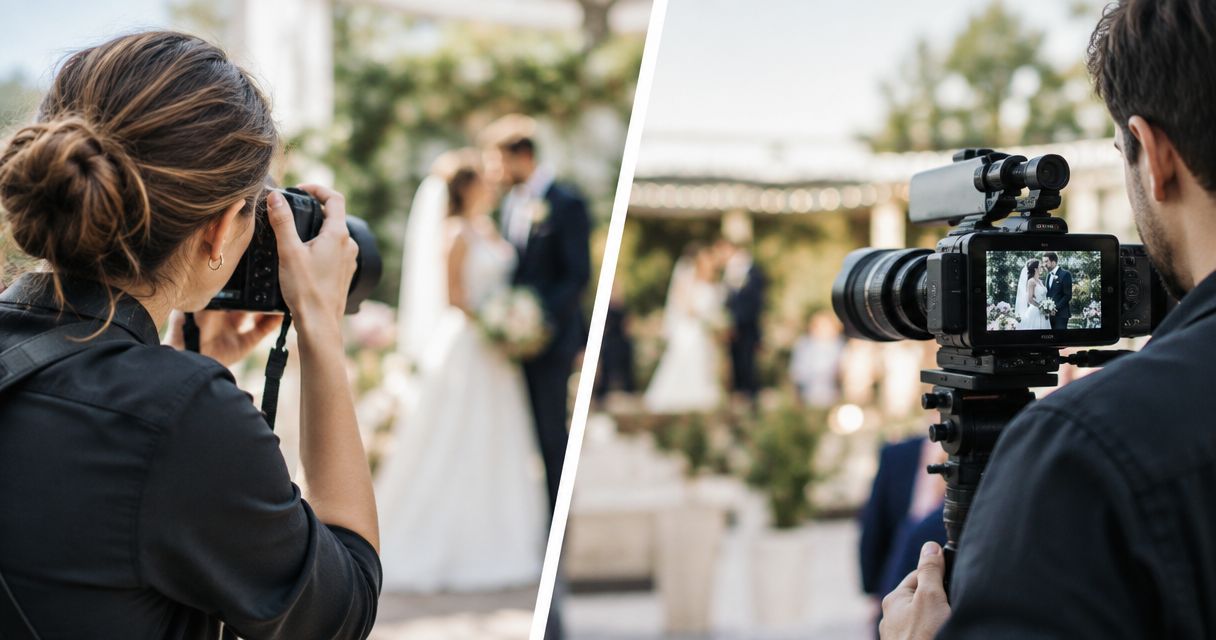
Neither replaces the other — photos capture stills you'll frame, video captures voices and motion you can't get any other way. Many couples in 2026 book both from the same studio for a consistent style across formats.
What questions should I ask a wedding photographer before booking?
Ask about hours of coverage, delivery timeline, backup plan if they get sick, second shooter availability, and usage rights on the final files. Their answers on the phone tell you as much as their portfolio does.
Should I do a first look with my wedding photographer?
A first look adds 20-30 minutes of calm, private portrait time before the ceremony and lets your photographer capture reactions without the stress of a full aisle walk. It's optional, but it buys you more usable golden-hour portrait time later.
How much should I budget for wedding photography in 2026?
Budgets vary widely by region and hours of coverage, so get a direct quote based on your specific timeline rather than relying on national averages. Ask for a breakdown by hours, second shooter, and album add-ons so you're comparing like for like.
One last thing
The photographer whose portfolio looks the most "perfect" online is often the riskiest pick — polished galleries can hide inconsistent full-day work. The better signal is a photographer who answers your timeline questions specifically, not generically, on the very first call. That's the difference between someone selling you a service and someone actually planning your day with you.