
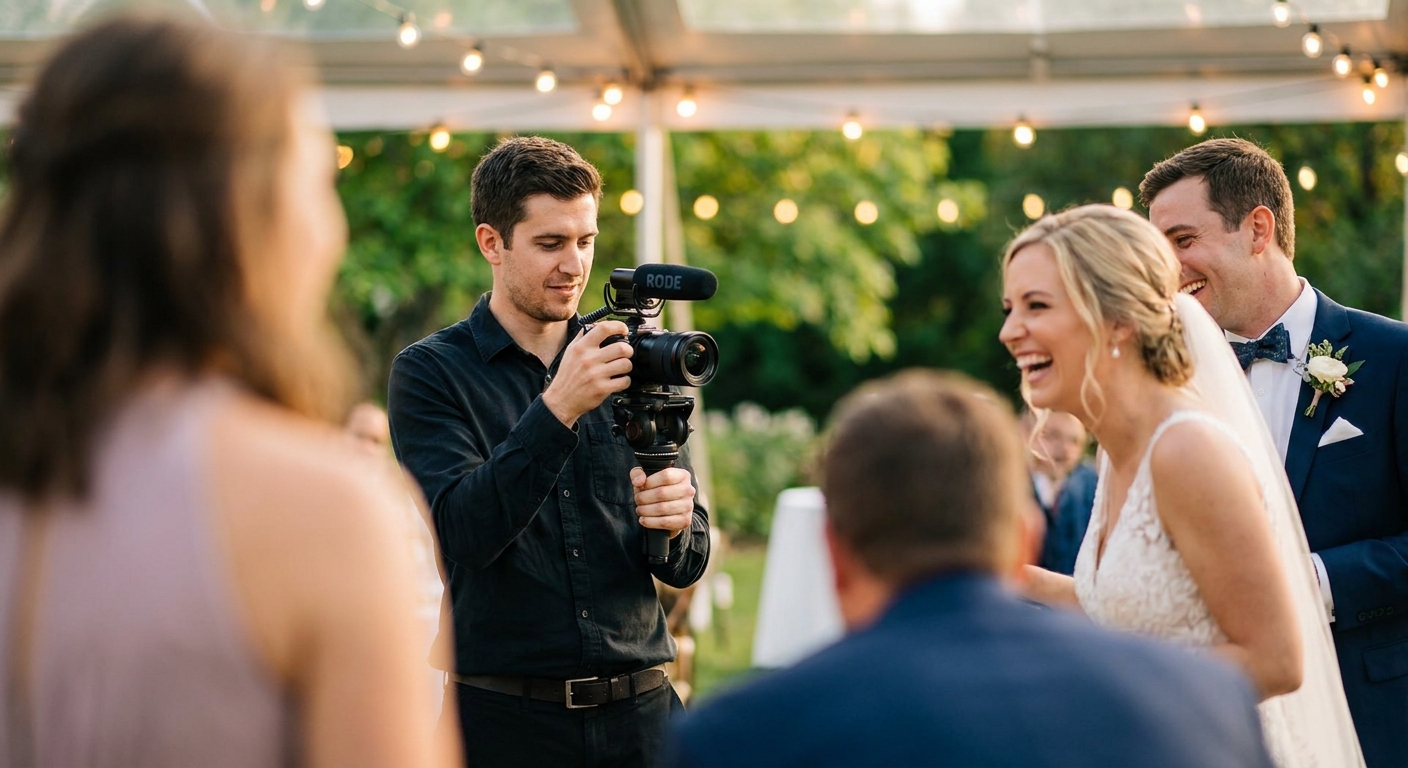
Documentary-style wedding videography means the camera disappears into the day instead of directing it — vows, reactions, and unscripted moments captured as they happen, not staged for a second take. This guide breaks down what to look for, what to book, and what to skip if you want a film that reads as real rather than rehearsed.
- A documentary wedding videographer prioritizes unscripted moments over posed shots — verify this before booking, not after.
- Multi-day celebrations need 8-plus hours of documentary coverage per day to catch getting-ready and late-night reception moments.
- Same-day edit films compress a full wedding into a 4-8 minute reel played at the reception, not weeks later.
- Intimate and elopement weddings are the easiest documentary format to shoot well because there's less to stage around.
- Skip any videographer who sells a 90-second highlight as "documentary" with no ceremony audio — that's a trailer, not a film.
Why this matters
Most couples booking a videographer in 2026 don't know the difference between "cinematic" and "documentary" until they're reviewing a sample reel that looks nothing like their actual wedding. Cinematic packages often re-stage first looks, add dramatic voiceover, or cut reception footage to a trailer length that skips the toast entirely. A documentary wedding videographer works differently: the goal is a record of what actually happened, shot with enough discretion that guests forget the camera is there.
That distinction changes everything about how you evaluate a videographer — the questions you ask, the sample films you watch, and the deliverables you expect. Get this wrong and you end up with a beautifully shot film of a wedding that doesn't feel like yours.
Who this is for
This guide is for couples who want their wedding film to feel like a memory, not a movie trailer — people who'd rather rewatch their actual vows and their grandmother's toast than a slow-motion montage set to a stock instrumental. It's for couples planning multi-day celebrations, backyard ceremonies, or courthouse elopements where the story is in the small, unplanned moments rather than a choreographed reveal. If you're already comparing sample reels and one word keeps coming up — "authentic," "real," "unscripted" — you're in the right place.
What to look for in a documentary wedding videographer
Observational coverage over directed shots
A true documentary wedding videographer shoots what's happening, not what they've asked you to redo. Ask any videographer directly how much of their sample reel is re-staged versus captured live — if they can't answer clearly, assume more of it is staged than they're letting on.
Full-length audio capture
Vows, toasts, and readings need clean audio, not just pretty footage with music laid over the top. Documentary-style films live or die on whether you can actually hear the moment, so ask whether the videographer uses a lapel mic on the officiant and speakers, not just a camera-mounted shotgun mic from thirty feet away.
Deliverable structure that matches the format
Documentary coverage typically produces two deliverables: a highlight film running 4 to 8 minutes and a feature-length cut running 20 to 45 minutes that includes the ceremony and speeches in full. If a package only offers the short highlight, you're paying for a trailer, not a documentary record of your day.
Turnaround time you can plan around
Same-day edit films are the exception — they're built to premiere at the reception within a few hours of the ceremony ending. Standard documentary edits take longer, so confirm the turnaround window in writing before you sign anything, especially if you're planning to use footage for a first-anniversary watch party.
Experience with your specific ceremony format
A videographer who's covered dozens of large ballroom receptions may not have the instincts for a two-hour courthouse elopement or a three-day destination celebration. Ask to see a sample film that matches your format — intimate weddings require a different rhythm of coverage than a 200-guest reception.
Backup gear and a second shooter plan
Documentary coverage means one take — there's no reshoot for a missed vow. Confirm the videographer carries backup cameras and audio recorders, and ask whether a second shooter covers guest reactions while the lead follows the couple.
Top picks by wedding format
The marathon pick: multi-day celebration coverage. If your wedding spans a welcome dinner, ceremony day, and farewell brunch, documentary coverage needs to follow the full arc, not just the ceremony afternoon. Look for packages built around multi-day wedding coverage that budget 8 or more hours per day across the event. One spec that matters here: ask whether raw footage from every day is included in the final feature cut, or just day-of highlights. Verdict: Buy if your celebration runs more than one day — single-day packages will leave gaps.
The crowd-pleaser: same-day edit films. A same-day edit compresses the ceremony and early reception into a short film that plays for guests before the night ends — usually within 3 to 4 hours of the ceremony wrapping. It requires a dedicated editor working on-site during the reception, which is a different production setup than standard documentary coverage. Check the same-day edit film option if you want that reveal moment. Verdict: Consider — it's a genuine crowd moment, but it adds cost and requires a second editor on-site, so confirm it doesn't cut into your raw coverage hours.
The quiet observer: intimate and elopement coverage. Smaller guest counts and less choreography make documentary style easier to shoot well — there's simply less to stage around, and fewer moving parts for a two-person crew to miss. Intimate wedding videography built around observational coverage tends to produce the most unscripted footage of the three formats. Verdict: Buy for guest counts under 50 — this is where documentary style shows its strength.
What to avoid
- "Cinematic trailer" reels sold as documentary. If every sample film opens with slow-motion dress shots and a voiceover, that's a trailer format re-labeled — it's not built around unscripted coverage.
- Short highlights with no ceremony audio. A 90-second reel set entirely to music, with no vows or toast audio, tells you the videographer didn't prioritize sound capture. That's a red flag for anyone who wants to rewatch the actual words spoken.
- Same-day edit add-ons that shrink your coverage hours. Some packages quietly reduce total shooting hours to free up editor time for the same-day cut. Confirm total coverage hours stay the same before adding this deliverable.
Talk through your wedding format
Get a coverage plan matched to your ceremony style and timeline.
Verdict comparison
| Format | Best for | Typical hours | Turnaround | Verdict |
|---|---|---|---|---|
| Multi-day celebration coverage | Weddings spanning 2+ days | 8+ hrs/day | Weeks after final day | Buy for multi-day events |
| Same-day edit film | Couples wanting a reception-night reveal | Same as standard + on-site editor | 3-4 hrs post-ceremony | Consider as an add-on |
| Intimate/elopement coverage | Guest counts under 50 | 4-6 hrs total | Standard documentary timeline | Buy for small ceremonies |
FAQ
What is a documentary wedding videographer?
A documentary wedding videographer captures unscripted moments as they happen rather than directing staged shots. The result is a film built around real vows, reactions, and speeches instead of a re-created highlight reel.
Is documentary style better than cinematic wedding videos?
Neither style is objectively better — they serve different goals. Documentary style favors authenticity and full-length moments, while cinematic style favors dramatic pacing and re-staged shots for visual impact.
How long is a documentary wedding film?
A documentary-style highlight film typically runs 4 to 8 minutes, while a feature-length cut runs 20 to 45 minutes and includes the ceremony and speeches in full. Same-day edit films are shorter, built to play within hours of the ceremony.
How much does a documentary wedding videographer cost in 2026?
Cost depends on coverage hours, deliverables, and location, so it varies widely by videographer and package. Check current pricing and package details directly before comparing quotes across providers.
Can documentary videography work for small or intimate weddings?
Yes — documentary style often works best for intimate weddings and elopements because there's less staged choreography to interrupt. Smaller guest counts make it easier for a videographer to stay unobtrusive throughout the day.
What's the difference between documentary and same-day edit wedding films?
A same-day edit is a short film compiled and played during the reception, usually within 3 to 4 hours of the ceremony ending. Standard documentary coverage takes longer to edit but typically covers more of the day in the final cut.
How far in advance should you book a documentary wedding videographer?
Book as early as your venue and photographer, since documentary videographers with strong reels fill their calendar the same way. Popular wedding dates in peak season get booked out months ahead.
Does documentary style work for multi-day wedding celebrations?
Yes, but it requires a coverage plan built around the full event arc, not just the ceremony day. Multi-day celebrations need 8 or more hours of coverage per day to capture the welcome dinner, ceremony, and any farewell events.
One last thing
The single question that filters out most non-documentary videographers fastest: ask to watch a full, unedited ceremony audio clip from a past wedding, not just the polished highlight reel. If they hesitate or don't have one to show, the sample reels you've already seen were built around staged moments, not captured ones.


