
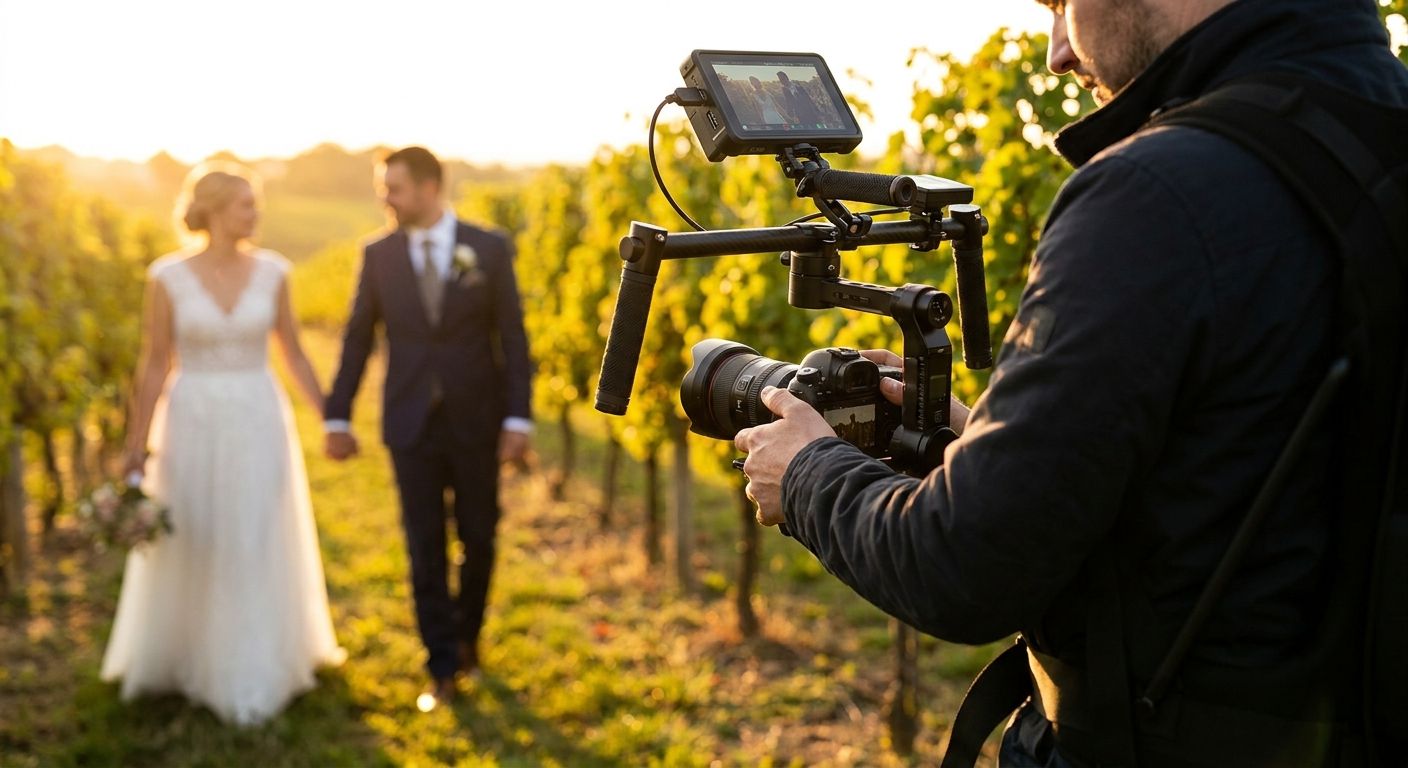
A cinematic wedding trailer videographer builds a 3-to-5-minute highlight film from your wedding day, not a raw ceremony recording — and choosing the right one determines whether that film looks like a movie or a home video.
- Cinematic wedding trailers run 3-5 minutes and need a dedicated videographer, not a photographer's video mode.
- Same-day edit films deliver a trailer before the reception ends — real production work, not a gimmick.
- Drone footage adds scale but only works with venue clearance and calm wind conditions on the day.
- Documentary-style coverage catches raw moments a scripted trailer misses; pairing both formats tells the fuller story.
- David Suns Weddings builds cinematic wedding trailer packages around your actual timeline, not a fixed template.
Why this matters
Most couples booking a videographer in 2026 have watched dozens of wedding trailers on Instagram and TikTok before they ever call a studio. That raises the bar: a shaky, poorly-graded trailer gets scrolled past in two seconds, while a well-cut one gets shared, saved, and forwarded to friends still planning their own weddings.
The problem is that "cinematic" gets used loosely. Some studios mean color grading and a drone shot. Others mean a full narrative arc with vows, speeches, and a music cue that hits on the first kiss. Knowing the difference before you book at David Suns Weddings or anyone else saves you from paying trailer prices for a highlight reel.
Who this is for
This guide is for couples who already know they want video coverage and are trying to decide how much of that coverage should be built around a shareable trailer versus a longer documentary-style film. If you're planning a single-day ceremony and reception in 2026 and want a film you'll actually rewatch — not just archive — the criteria below apply directly to you.
What to look for in a cinematic wedding trailer videographer
A finished trailer from a wedding this year
Ask to see a trailer cut from a wedding shot in 2026, not a five-year-old reel. Color grading trends, drone regulations, and even music licensing shift year to year, and a stale portfolio tells you nothing about current work quality.
A real editing timeline, not a vague promise
A cinematic trailer takes real post-production time — color correction, sound design, and pacing all happen after the wedding, not during it. If a videographer can't tell you roughly how many weeks out delivery lands, that's a sign the editing step gets rushed.
Audio capture separate from the camera mic
Vows and speeches make or break a trailer's emotional beats, and on-camera mics pick up wind and crowd noise before they pick up a clean voice. A videographer running a lav mic or a boom operator during the ceremony is planning for a trailer that actually uses dialogue, not just music.
A second shooter or drone operator on the day
A single operator can get you a documentary record of the day. A trailer with sweeping establishing shots, reaction cutaways, and drone-height venue shots needs at least two angles running simultaneously.
Music licensing handled up front
A trailer built around a popular song without a cleared license gets muted or taken down the moment it's posted publicly. Confirm the studio licenses tracks for you rather than leaving that step to the couple.
Delivery format that matches how you'll actually share it
A trailer built for Instagram Reels needs a vertical or square cut; one built for a living-room screening needs a widescreen master. Ask which formats are included before you assume both exist.
Book a cinematic trailer consultation
Talk through your timeline before you lock a videographer.
Top picks by coverage style
The scripted showcase — documentary-style coverage
Documentary-style coverage shoots the day as it happens, without staged re-creations, and gives editors the raw footage to cut a trailer that feels observed rather than performed. It works best when you want the trailer to include real reactions — a father tearing up, a best man fumbling his toast — rather than posed moments. Documentary-style wedding films fit couples who care more about authenticity than polish. Verdict: Buy if your priority is a trailer that plays back true to the actual day.
The instant gratification pick — same-day edit
A same-day edit compresses ceremony and early-reception footage into a short film screened for guests before the night ends, which means the editor works in hours, not weeks. This format demands the tightest crew coordination of any style on this list — footage has to move from card to timeline within a single afternoon. Same-day edit wedding videography packages deliver a trailer-length film fast, but detail and color grading get less polish than a standard post-wedding cut. Verdict: Consider if the wow factor for guests matters more than maximum cinematic polish.
The wildcard — drone footage coverage
Drone shots turn a trailer's opening seconds into something that looks like a film festival entry instead of a phone video, but they only work with the right venue permissions and weather window. Drone footage coverage for weddings adds the establishing shots and reception-exit sweeps that make a trailer feel expensive. Verdict: Consider it an add-on, not a replacement for ground coverage — a trailer built entirely from drone shots has no faces in it.
The safe pick — full-day coverage with a trailer add-on
If you're not sure which style fits, full-day ground coverage with a trailer cut delivered afterward is the format every experienced wedding videographer defaults to, because it captures the raw material for both a trailer and a longer film without betting the whole shoot on one technique. This is the baseline recommendation for most 2026 bookings. Verdict: Buy as your foundation, then layer drone or same-day-edit add-ons on top.
"If a wedding videographer can't show you a finished trailer from a wedding shot this year, that's your answer before you even ask about pricing."
What to avoid
- A trailer promised with no ceremony audio plan. A trailer without clean vow or speech audio leans entirely on music, which flattens the emotional peak the format is supposed to deliver.
- A single-operator shoot sold as "cinematic." One camera can document a day competently, but it can't cover the reactions, cutaways, and multiple angles a trailer edit needs to feel dynamic.
- A studio that quotes a trailer without asking about your venue's drone rules. If drone shots are part of the pitch, the studio should ask about airspace and venue restrictions before promising them, not after the ceremony.
Verdict comparison table
| Coverage style | Best for | Typical length | Verdict |
|---|---|---|---|
| Documentary-style | Couples wanting raw authenticity | Trailer 3-5 min, film 20-40 min | Buy |
| Same-day edit | Guest-facing reveal same night | Trailer 3-5 min | Consider |
| Drone footage add-on | Scale and establishing shots | Add-on, no standalone length | Consider |
| Full-day + trailer cut | Most 2026 couples, default baseline | Trailer 3-5 min, film varies | Buy |
FAQ
What is a cinematic wedding trailer videographer?
A cinematic wedding trailer videographer specializes in cutting a 3-to-5-minute highlight film from your wedding footage, built with color grading, sound design, and pacing meant for sharing. It differs from raw ceremony coverage, which records the day without a narrative edit.
How long does a wedding trailer take to deliver in 2026?
Standard trailer delivery after a wedding typically takes several weeks because color grading and sound design happen in post-production. Same-day edit trailers are the exception, delivered within hours of the ceremony for reception screening.
Is a same-day edit better than a standard trailer?
A same-day edit is better when the goal is a guest-facing reveal during the reception itself, while a standard post-wedding trailer allows more time for color grading and sound work. Neither replaces the other — they serve different moments.
Do I need drone footage for a cinematic trailer?
No, drone footage is an add-on that strengthens establishing shots and scale, not a requirement for a cinematic trailer. It depends entirely on venue permissions and weather conditions on the day.
Can a photographer also shoot my wedding trailer?
A dedicated videographer is strongly recommended over a photographer using video mode, because trailer editing requires separate audio capture, multiple camera angles, and video-specific color grading. Combined photo-video packages exist, but the video side should still be a specialist.
How much footage does a wedding trailer use?
A 3-to-5-minute trailer draws from hours of raw footage shot across the ceremony and reception, condensed down through the edit. The full-length documentary film, if you order one, uses a much larger share of that same raw footage.
What music can I use in my wedding trailer?
Only tracks your videographer has properly licensed for the platform where the trailer will be shared, since unlicensed popular songs get muted or taken down on public platforms. A studio should handle this licensing as part of the trailer package, not leave it to the couple.
One last thing
The detail most couples miss when booking a cinematic wedding trailer videographer for 2026 isn't the camera gear — it's the audio plan. A trailer with perfect color grading and shaky, wind-muffled vows still falls flat, while a trailer with clean dialogue and modest visuals still lands emotionally. Ask about the mic setup before you ask about the drone.


