
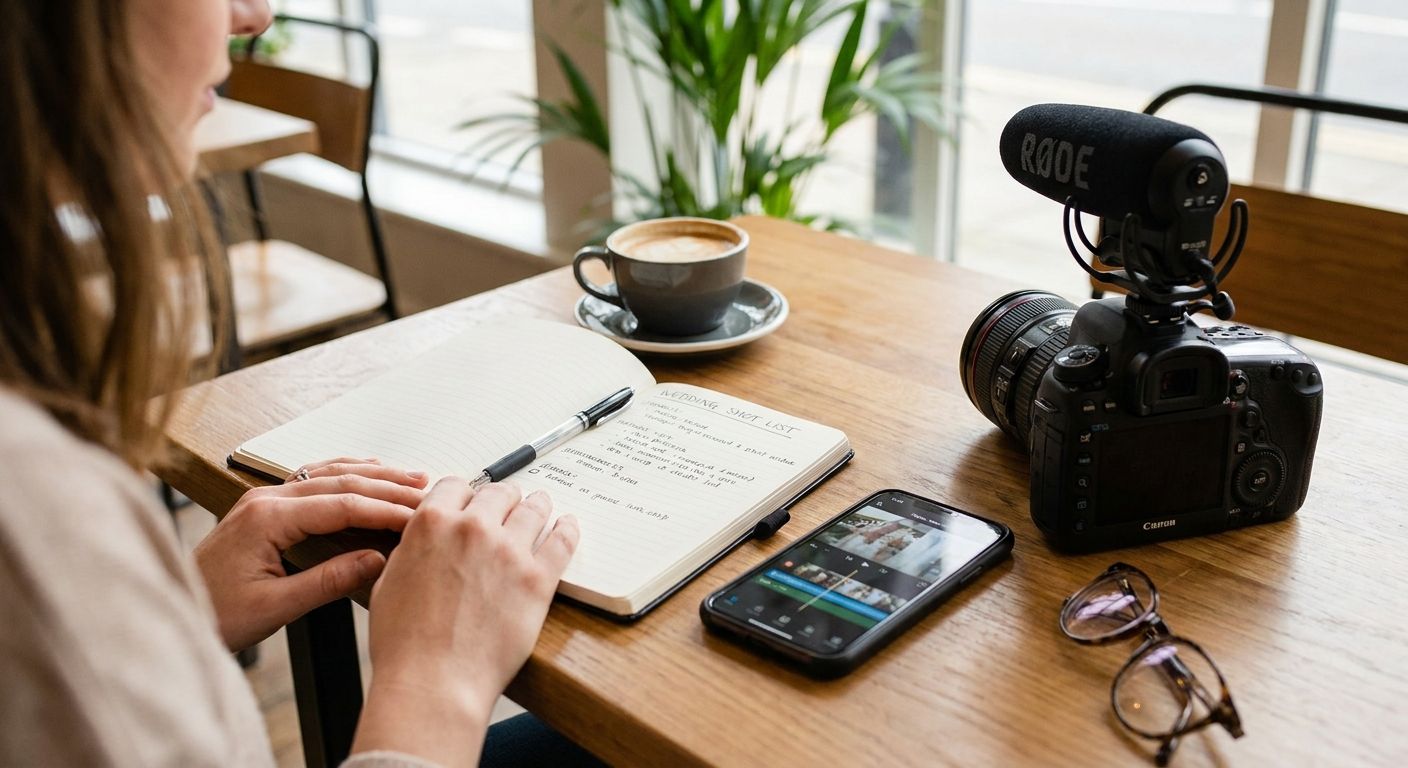
A wedding video shot list is the working document that tells your videographer which moments you can't afford to miss: prep, ceremony, reception, and the quiet in-between beats that turn into the film's best cuts. Build it by blocking the day into four phases and ranking three to five must-have shots per phase — skip that ranking step and the crew defaults to generic coverage instead of your priorities.
- A complete wedding video shot list covers four blocks: getting-ready, ceremony, reception, and detail or drone footage.
- Rank 3-5 must-have shots per block so your videographer isn't guessing on the wedding day.
- The most commonly missed items are guest reactions and the walk between venues, not the vows themselves.
- David Suns Weddings works from a written shot list before finalizing the [wedding day timeline](https://davidsunsweddings.byryze.com/how-to-plan-a-wedding-day-timeline-with-your-photographer).
Why this matters
A videographer without a shot list falls back on their own default coverage pattern — the same processional, the same reception wide shot, every wedding they film in 2026. That's fine if your day is standard. It's a problem if you have a grandmother flying in for one dance, a surprise musical number, or a ceremony detail that only happens once.
The shot list is also the document that prevents the awkward post-wedding conversation where you realize nobody filmed your father's toast. A written list forces a conversation before the wedding day, not an apology after it.
How to plan a wedding video shot list step by step
Restating the question: planning a wedding video shot list means breaking the day into phases, assigning priority shots to each, and syncing that list against your actual wedding day timeline so nothing gets rushed.
- Block the day into four phases — getting-ready, ceremony, reception, and details/drone.
- List 3-5 non-negotiable shots per phase. More than that and your videographer spends the day chasing a checklist instead of reading the room.
- Flag lighting-dependent shots — golden hour portraits, a sparkler exit, a sunset first dance — so the crew builds buffer time around them.
- Name the VIPs. "Reaction shot of the bride's grandmother during vows" gets filmed. "Guest reactions" generically does not.
- Share the finished list 2-4 weeks before the wedding, not the morning of.
- Cross-check it against your ceremony and reception schedule so no priority shot lands during a gap in coverage.
| Phase | Typical duration | 2-3 shots to prioritize |
|---|---|---|
| Getting ready | 1-2 hours | Dress/suit detail, first look with a parent, ring box close-up |
| Ceremony | 20-30 minutes | Processional, ring exchange, recessional |
| Reception | 4-5 hours | Toasts, first dance, grand exit |
| Details/drone | Varies by venue | Venue establishing shot, table settings, aerial arrival |
Getting-ready shots: what belongs on the list
This block sets the tone of the film, and it's the easiest one to over-shoot or under-plan.
- Dress or suit hanging detail, plus rings and invitations flatlay.
- A candid moment between the couple and a parent — not posed, just present in the room.
- First look reaction, filmed from the side so both faces are visible in one frame.
Skip generic "getting ready" b-roll if your videographer already knows your priority shots — it wastes light-dependent morning time you can't get back.
Ceremony shots: the non-negotiables
Most ceremonies run 20 to 30 minutes, which means there's no room to re-shoot a missed moment.
- Processional and the first look down the aisle.
- Officiant close-up during the vows — this is the shot couples request re-watching most.
- Ring exchange, first kiss, and recessional.
- One aisle-side reaction shot named to a specific guest.
Verdict: name your reaction-shot target by relationship, not "family." A generic instruction gets a generic result.
Reception shots: what videographers actually miss
Receptions typically run 4 to 5 hours, and that length is exactly why priority shots get lost in the middle of open dancing.
- Toast reactions from the people being toasted, not just the speaker.
- First dance and parent dances, filmed from a fixed second angle if a second shooter is available.
- Cake cutting and the grand exit.
Couples who considered a videography style heavy on documentary coverage tend to add more candid reaction shots to this block; couples leaning cinematic add more staged wides. Neither approach is wrong — pick the style first, then build the reception shot list around it.
Why your wedding video shot list varies by wedding type
A shot list for a backyard ceremony looks nothing like one for a black-tie ballroom reception. The variation comes down to a handful of factors:
- Venue lighting — outdoor golden hour shots need buffer time; indoor low-light receptions need the crew warned in advance.
- Guest count — a 40-guest wedding can name every reaction shot; a 250-guest wedding has to prioritize by relationship.
- Ceremony type — religious ceremonies often restrict camera movement during specific rites; civil ceremonies usually don't.
- Multi-day schedules — a welcome dinner or second-day brunch adds phases the standard four-block list doesn't cover.
- Weather contingency — an indoor backup plan needs its own mini shot list in case the outdoor ceremony moves.
Build your shot list with David Suns Weddings
Walk through your priority shots before your wedding day timeline is locked.
FAQ
What should be on a wedding video shot list?
A wedding video shot list should cover four blocks: getting-ready details, ceremony vows and reactions, reception toasts and dances, and detail or drone shots. Each block should have 3-5 named priority shots, not a generic list.
How long should a wedding video shot list be?
A wedding video shot list should stay under 20 total priority shots across the whole day. Longer lists push videographers into checklist mode instead of reading the moment.
Who should build the shot list, me or my videographer?
Build the priority shots yourself, since only you know which relatives and moments matter most. Your videographer fills in the technical and lighting-dependent shots around your list.
Do I need a separate shot list for photography and videography?
Yes, because video priorities are motion-based (reactions, toasts, first dance) while photo priorities are often static (poses, group portraits). Overlap exists, but the two lists solve different problems.
What's the most commonly missed shot on wedding video shot lists?
Guest reaction shots and the walk between venues are the most commonly missed, not the ceremony vows themselves. Couples plan for the obvious moments and forget the transitional ones.
Should I share my shot list with my officiant and DJ?
Yes, share timing-sensitive items like the ring exchange cue or first dance song with your officiant and DJ. It lets the videographer position for the shot instead of reacting to it.
How far in advance should I finalize my shot list?
Finalize your wedding video shot list 2 to 4 weeks before the wedding, after the ceremony and reception timeline is set. Locking it earlier risks missing last-minute schedule changes.
Can I request a same-day edit if it's not on my shot list?
A same-day edit needs to be planned into the shot list in advance, not requested day-of, since it changes the shooting and editing schedule. Raise it during initial planning if it's a priority.
One last thing
The shot couples regret skipping most isn't the ceremony kiss — it's the reaction shot of parents during the first toast, because it can't be re-staged after the fact. Name it on the list, or it won't get filmed.


