
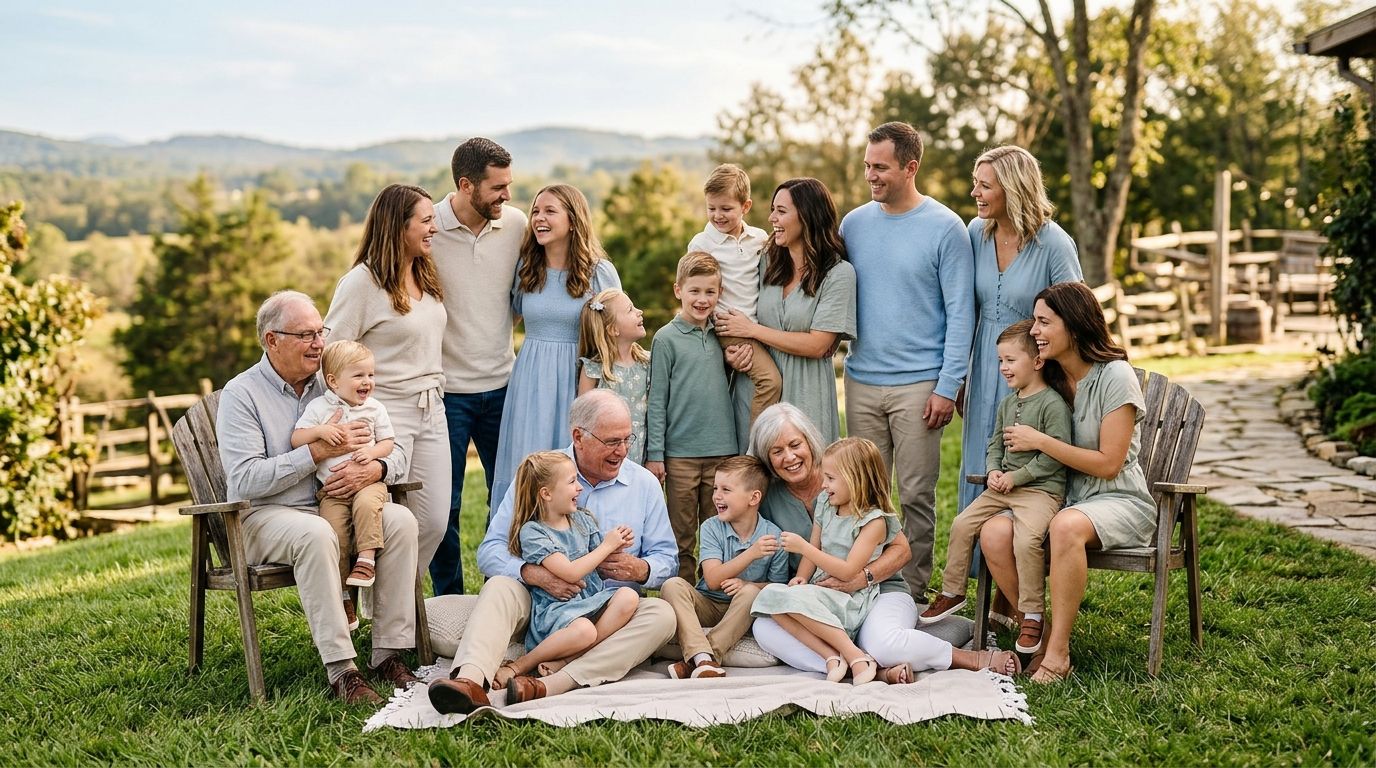
Multigenerational family portraits go wrong when the shot list gets built on the day instead of weeks before it. Plan the session by locking a written grouping order first, assigning one wrangler to run it, and scheduling 20 to 30 minutes right after the ceremony while everyone is still dressed, gathered, and photograph-ready.
The hidden cost most couples miss isn't money, it's time. A guest list spanning three or four generations needs a 15-minute buffer built into the day-of timeline for wheelchairs, walkers, nap schedules, and relatives who flew in the night before and are running on no sleep.
- Multigenerational family portrait planning works best with a written shot list built before the wedding, not called out on the spot.
- Block 20-30 minutes for full-family groupings right after the ceremony, when formality and energy both peak.
- One designated wrangler per session keeps grandparents, kids, and divorced-parent groupings moving without wasted minutes.
- Blended and divorced-parent families need separate, low-conflict groupings drafted in advance, not improvised in front of the group.
- David Suns Weddings builds the grouping order into the wedding day timeline so portraits don't eat cocktail hour.
Why this matters
A 20-person family portrait with three generations in it can eat 45 minutes of reception time if nobody has a plan, and that's 45 minutes couples don't get back on their wedding day in 2026. Multigenerational family portrait sessions run tight when the photographer already knows who's in each combination, who has mobility limits, and which relatives shouldn't be grouped together for reasons that have nothing to do with photography.
This is planning work, not photography work. It happens before the wedding date, not during the reception.
How do you plan a multigenerational family portrait?
- Write the shot list by combination, not by guest count. List every group you actually want photographed: bride plus both sets of grandparents, groom plus siblings plus nieces and nephews, full extended family. Six to ten combinations covers most multigenerational weddings.
- Assign one wrangler. A bridesmaid, cousin, or planner who knows the family calls names and physically moves people in and out of frame. Without this role, every group change costs 3-5 extra minutes.
- Schedule 20-30 minutes right after the ceremony. Hair, makeup, and outfits are freshest here, and most of the family is already gathered in one place.
- Build in a mobility and travel buffer. Add 10-15 minutes if grandparents use walkers or wheelchairs, or if relatives traveled long distance and need a seated rest between groupings.
- Group by side and by generation, in that order. Full family first, then split by side, then by generation, then by nuclear unit. This order photographs faster than mixing structures mid-session.
- Brief your photographer on family dynamics ahead of time. Divorced parents, estranged siblings, or a recently blended family all change how groupings should be sequenced.
Time by group type
| Grouping | Typical time | Best for |
|---|---|---|
| Full extended family (20+ people) | 8-10 minutes | The one printed portrait everyone gets a copy of |
| Each side of the family | 4-5 minutes each | Separate prints for each set of parents |
| Generation groupings (all grandchildren, all siblings) | 3-4 minutes each | Families with four generations present |
| Nuclear units | 2-3 minutes each | Couples who want individual family prints |
Grandparent-inclusive groupings: what changes
Sessions built around grandparent-inclusive family sessions need seating built into the shot list, not added as an afterthought. Standing for 20-30 minutes straight is unrealistic for most grandparents, so the plan should put them in seated positions for at least half their groupings.
Shoot the grandparent combinations first, while energy is highest, then release them from the rest of the block. Sequencing grandparents first is the single change that keeps a four-generation session inside 30 minutes.
Pros of front-loading grandparents: less standing, better expressions, faster release to cocktail hour. Cons: the couple has to hold the rest of the family in place while the earliest groupings run, which needs the wrangler to be firm.
Divorced parents and blended families: separate groupings, not one big one
Divorced-parent and blended-family weddings need their own grouping logic. Instead of one combined parents photo, the plan includes separate groupings: one parent and their partner, then the other parent and their partner, then a full blended group only if everyone is genuinely comfortable with it.
This isn't a photography preference. It's a conflict-avoidance plan that has to be settled before the wedding day, not negotiated in front of 100 guests. Treat the shot list as a diplomacy document as much as a photography one.
“If a grouping needs a conversation, have that conversation four weeks out, not four minutes before the shot.”
Why timing and group size vary
- Number of generations present — three generations photograph faster than four, since fewer combinations are needed.
- Mobility needs — walkers, wheelchairs, or limited standing time add 10-15 minutes to any grouping block.
- Divorce or blended structure — separate groupings add combinations, and each combination adds 2-5 minutes.
- Group size per combination — a 20-person full-family shot takes longer to organize than a 6-person nuclear group.
- Venue layout — a single flat backdrop moves faster than a venue that forces the group to relocate between combinations.
- Travel fatigue — relatives arriving the same day from long distances need rest breaks the timeline should already account for.
Get your family portrait timeline built
Book a consult and get a grouping order made for your wedding day.
How long should a multigenerational family portrait session take?
A multigenerational family portrait session takes 20 to 30 minutes for a three-generation guest list of 15-25 people. Add 10-15 minutes for wheelchairs, walkers, or a fourth generation. Sessions that run past 40 minutes almost always started without a written list.
Should family portraits happen before or after the ceremony?
Family portraits work best right after the ceremony, while the whole group is already gathered in one location and dressed. Scheduling them before the ceremony only works if the couple has already done a first look and the extended family agrees to arrive 60-90 minutes early.
What's the best way to handle a divorced-parent family in wedding photos?
The best approach is separate groupings for each parent and their partner, drafted into the shot list weeks in advance rather than decided on the spot. Couples in this situation should also read up on divorced parent family portraits before finalizing the list.
Where David Suns Weddings fits
David Suns Weddings is best for couples who want the multigenerational family portrait block written into the wedding day timeline rather than improvised between the ceremony and cocktail hour. The grouping order gets drafted alongside the ceremony and reception blocks in the wedding day timeline, so the 20-30 minute portrait window doesn't compete with golden-hour couple photos.
The honest tradeoff: a planned session means more decisions in the weeks before the wedding, including uncomfortable ones about who stands next to whom. Couples who'd rather skip that conversation should expect the session to run long on the day.
FAQ
How much time should I block for a multigenerational family portrait in 2026?
Block 20 to 30 minutes for a three-generation group of 15-25 people in 2026. Add 10-15 minutes if grandparents need seating or a fourth generation is present.
Who should run the family portrait session on the wedding day?
One designated wrangler, usually a bridesmaid, cousin, or planner who knows the family, should call names and move people in and out of frame. Without this role, each group change takes 3-5 minutes longer.
Should grandparents stand for the whole family portrait session?
No. Seat grandparents for at least half their groupings and shoot those combinations first, while energy is highest. This cuts standing time roughly in half for the people who need it most.
How do I handle photos with divorced parents at my wedding?
Draft separate groupings for each parent and their partner into the shot list before the wedding day. Deciding in the moment creates awkward negotiations in front of the full guest list.
Is it better to do family portraits before or after the ceremony?
Right after the ceremony works best for most multigenerational weddings, since the group is already gathered and dressed. Before the ceremony only works with a scheduled first look and family willing to arrive 60-90 minutes early.
How many group combinations should a multigenerational shot list have?
Six to ten combinations covers most multigenerational weddings: full family, each side, each generation, and nuclear units. Every extra combination adds 2-5 minutes, so trim to the groupings you'll actually print.
Does a family of 20 or more people need extra planning?
Yes. A 20-person group needs a flat, open backdrop and a wrangler used to large groups, because organizing that many people takes 8-10 minutes for a single frame. Plan for the top of the 20-30 minute window.
What should I tell my photographer about family dynamics in advance?
Tell your photographer about divorced parents, estrangements, and blended-family sensitivities before the wedding day. That information changes the sequence of the shot list and prevents awkward moments during the session.
One last thing
The biggest time-saver in multigenerational photography isn't a second shooter or a faster camera, it's sequencing. Couples who shoot seated and grandparent groupings first and standing groupings last consistently finish closer to 20 minutes than 30 in 2026, even with four generations in frame, because nobody who needed to sit down is still waiting on the group behind them.


