
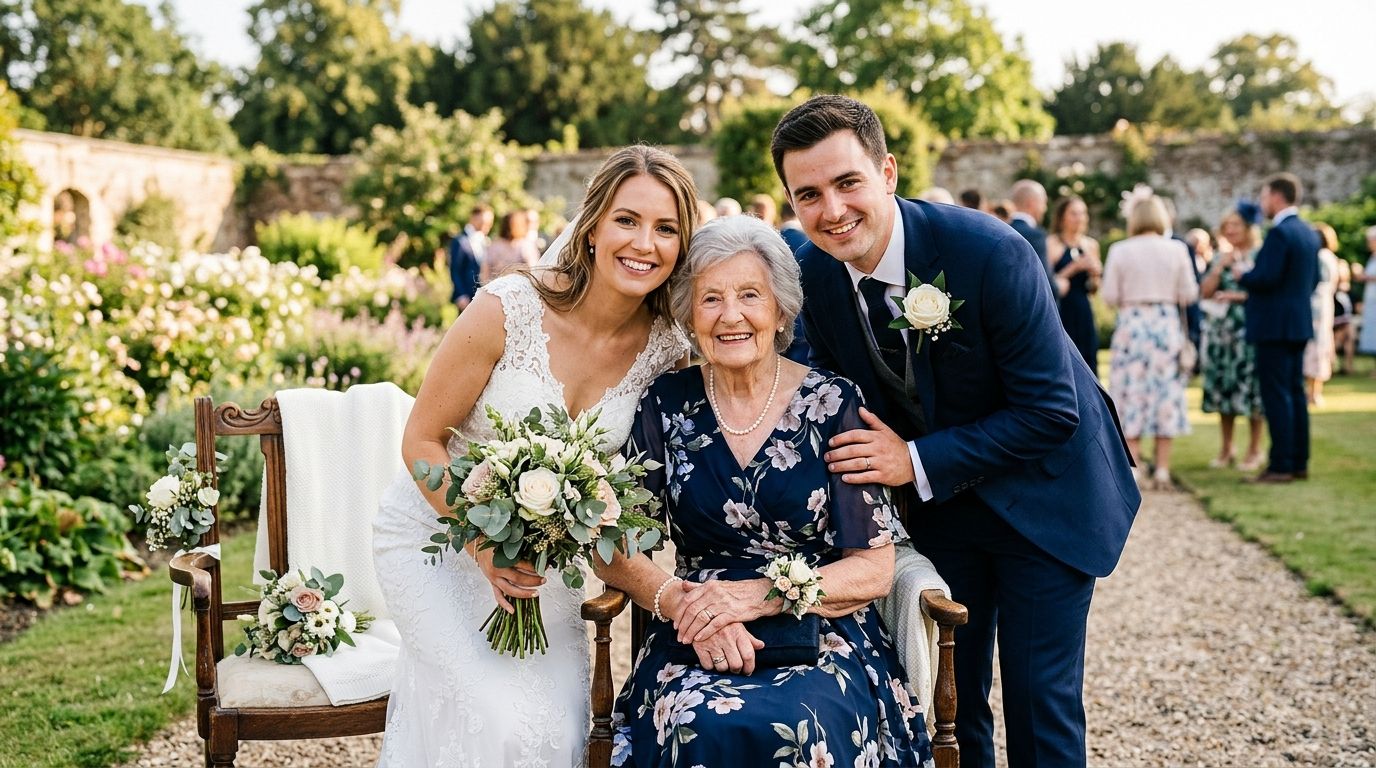
Grandparent wedding photos are portraits and candid coverage built around the aging parents and grandparents in a couple's life, with the goal of producing images a family treats as heirlooms rather than throwaway group shots. Grandparents move slower, tire faster, and need seating and sightlines a standard extended-family list never accounts for, which is why this segment gets its own plan instead of a slot on the general family-photo checklist.
- Grandparent wedding photos work best scheduled in the first 15-20 minutes of formal portraits, before fatigue sets in.
- Named shot lists with full names beat generic 'grandparents' groupings for large or blended families.
- Seated formations outperform standing lineups for anyone over 75 or using a mobility aid.
- David Suns Weddings builds grandparent groupings into the timeline during planning, not as a last-minute add-on.
Why wedding photography matters for grandparent-inclusive family sessions
Couples marrying in 2026 are increasingly planning around grandparents who may be attending their last major family event, and that changes what "family photos" needs to mean. A standard bride-groom-plus-parents lineup doesn't cover step-grandparents, honorary grandparents, or a grandparent using a walker who can't stand through six groupings in a row.
The rise in blended and multigenerational families also means the photo list itself has gotten longer and more particular. Couples researching multigenerational family portraits are usually trying to solve the same problem: how to get everyone in frame without turning the moment into a logistics scramble.
Getting this right isn't about hiring a "better" photographer. It's about planning the sequencing, seating, and shot list before the wedding day starts, so grandparents get a dedicated moment instead of getting folded into whichever group photo happens to be next.
How to plan grandparent wedding photos, step by step
Confirm mobility and stamina needs before the wedding day
Do this at least a month out, not the morning of. A grandparent who can't stand for 10 minutes needs a different plan than one who can walk a garden path unassisted.
- Ask each side of the family about wheelchairs, walkers, canes, or hearing aids
- Flag any grandparent who can't stand for more than 10 minutes at a stretch
- Note stairs, gravel paths, or uneven grass at ceremony and portrait locations
- Build a seated rest break into the portrait block, not just at the end
- Share the finished list with the photographer, planner, and day-of coordinator
Build a named grandparent shot list, not a generic one
Write full names, not "Grandma" or "his grandparents." A list that says "Grandpa Joe and Grandma Ruth, then Nana Carol solo" moves faster than a photographer guessing who's who mid-shoot.
- Split maternal and paternal sides into separate groupings
- Include step-grandparents and honorary grandparents by name
- Confirm with a parent how each grouping should be arranged
- Flag any pairing to avoid, like an ex-spouse's new partner standing beside a grandparent
- For families with remarriages on both sides, plan groupings the same way you'd approach blended family wedding photography — name every grouping instead of hoping people sort themselves
Schedule grandparent portraits first, while energy is highest
Grandparent portraits belong in the first 15-20 minutes of the formal photo block, seated groupings before standing ones. Waiting until after the ceremony, cocktail hour, and dinner means shooting tired faces and restless children.
- Slot grandparent groupings within the first 15-20 minutes of formal portraits
- Photograph seated groupings before standing ones
- Pull grandparents aside during cocktail hour if the full group shot gets cut
- Avoid stacking grandparent photos at the tail end of a 6-8 hour wedding day
Lock this sequencing into the actual schedule, not a mental note. Building it into the wedding day timeline means the photographer, planner, and family point person are all working from the same order of operations.
Choose seated formations over standing lineups
A bench, loveseat, or two folding chairs solve most of the problem for anyone over 75. One seated grandparent with the couple standing behind, hands on shoulders, reads better than three generations crammed into a standing row.
- Use a seated formation for anyone with limited mobility or over 75
- Skip staircases, docks, or uneven lawn for anyone using a mobility aid
- Ask the venue in advance about a shaded or indoor backup spot
- Check the venue layout against a guide for accessible and ADA-friendly wedding venues before the day, not during it
Assign a family point person to gather relatives
The couple should not be the ones rounding up grandparents between groupings. Pick one person per side who isn't in the wedding party to physically collect people when it's their turn.
- Assign one point person per side of the family, not the couple
- Give that person a printed or texted copy of the named shot list
- Coordinate with whoever is prepping the wedding party for photos so lineups don't collide
- Build a 5-minute buffer into the timeline for gathering slower-moving relatives
Plan grandparent-inclusive coverage
Book a session that builds every generation into the timeline from the start.
Capture candid, unscripted moments beyond the posed list
The posed shot list covers the record. The candid coverage is what usually ends up framed. A photographer should stay near grandparents during toasts, the first dance, and the cake cutting, not just track the couple.
- Keep a camera near grandparents during toasts and speeches
- Photograph grandparents watching the ceremony, not only posing after it
- Let the photographer work loosely around the edges of the formal list instead of directing every frame
- Skip forcing smiles for every image; grandparents mid-laugh or mid-tear are usually the keepers
A photographer who books multigenerational family sessions regularly, like David Suns Weddings, already knows to keep a second camera on grandparents during toasts instead of only covering the couple. That's the difference between one clean posed shot and a full set of images a family actually revisits.
“The best grandparent wedding photos come from the first 20 minutes of the day, before anyone gets tired.”
Ways to include grandparents in wedding photography
| Approach | Best for | Key limitation | Verdict |
|---|---|---|---|
| Formal seated grandparent portrait | Locking one clean image for the family album | Needs 10-15 dedicated minutes and coordinated seating | Do first |
| Candid documentary coverage | Genuine reactions during toasts and dances | Unpredictable; can miss a moment if a grandparent leaves early | Always include |
| Getting-ready inclusion | Grandparents helping with final touches before the ceremony | Only works if grandparents arrive with the couple's prep team | Situational |
| Video tribute interview | Recording a grandparent's voice, not just their image | Needs a separate booking and a quiet space | Add-on, not default |
Common mistakes couples make with grandparent wedding photos
- Treating grandparents like extras in the full extended-family group shot instead of giving them a dedicated moment
- Scheduling their portraits last, at hour six of a long wedding day, when standing that long is genuinely hard
- Skipping the mobility conversation until the morning of, leaving the photographer improvising around stairs or gravel
- Assuming one wide group photo covers "the grandparents" instead of naming each individual pairing
- Forgetting step-grandparents and honorary grandparents on the shot list entirely, then trying to add them in on the fly
FAQ
What's the best way to photograph grandparents at a wedding?
Schedule a dedicated seated portrait in the first 15-20 minutes of the formal photo block, using a named shot list rather than a general family grouping. This avoids fatigue and gets every pairing photographed before energy drops.
How long should grandparent portraits take?
Plan for 10-15 minutes if the shot list is named in advance and a family point person gathers people quickly. Add a 5-minute buffer for anyone moving slowly or using a mobility aid.
Is a seated portrait better than a standing group shot for grandparents?
Yes, for anyone over 75 or using a mobility aid, a seated formation with a bench or two chairs works better than a standing lineup. It reduces fatigue and reads cleaner in the final image.
How do you handle step-grandparents or blended families in wedding photos?
List every step-grandparent and honorary grandparent by full name on the shot list, and confirm groupings with a parent ahead of time. Flag any pairing to avoid, such as an ex-spouse's new partner standing next to a grandparent.
Do grandparents need to be at the getting-ready session?
Not by default; getting-ready inclusion works only when grandparents arrive early with the couple's prep team. Most couples reserve grandparent coverage for the formal portrait block instead.
What if a grandparent uses a wheelchair or walker?
Flag this to the photographer and venue at least a month out so portrait locations avoid stairs, gravel, or uneven grass. A seated formation on flat ground solves most of the framing problem.
How much does grandparent-inclusive wedding photography cost?
Grandparent coverage is typically part of the standard family portrait block within a photography package rather than a separate line item. Confirm specifics directly with the photographer during booking for 2026 dates.
One last thing
The single biggest fix couples skip in 2026 isn't a better camera setting or a fancier pose, it's timing. Grandparent portraits shot in the first 15-20 minutes of the formal block consistently come out sharper and more relaxed than the same groupings photographed after a full ceremony and cocktail hour, simply because nobody's tired yet.


