
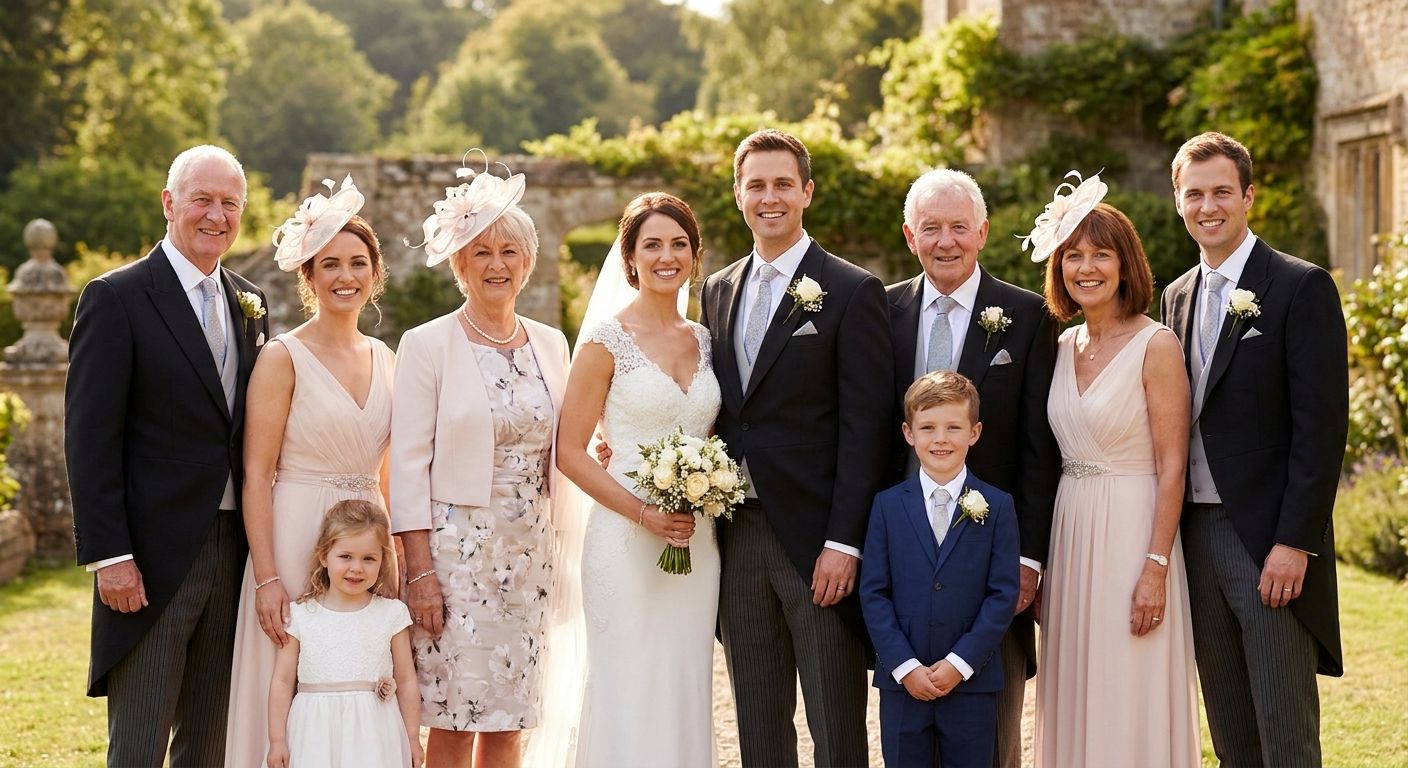
Multigenerational family wedding photos capture three or four generations in one frame, and getting them right depends on a portrait list built before the day, not during it. Couples juggling grandparents, parents, siblings, and blended-family combinations need a plan that respects mobility limits and the fifteen-to-twenty-minute window most receiving lines actually get before guests start drifting toward the bar.
- Multigenerational family wedding photos work best with a written shot list and a dedicated 15-20 minute block on the timeline.
- David Suns Weddings groups combinations by generation first, then by side of the family, to speed up sessions with elderly relatives.
- A wedding day timeline with a named family portrait slot beats squeezing photos between the ceremony and cocktail hour.
- Blended and stepfamily combinations need to be named in the shot list ahead of time — guessing on the spot costs minutes nobody gets back.
Why this matters for multigenerational family portraits
The more generations in a wedding party, the more variables working against a clean session: grandparents who tire standing, cousins who show up late from a connecting flight, stepparents who need a diplomatic grouping order. None of that resolves itself in the five minutes between the recessional and cocktail hour.
Couples who skip a formal plan almost always end up with a shorter list of usable group shots than they wanted, because the photographer is improvising combinations while half the family wanders off toward drinks. A wedding day timeline with a named portrait block fixes that before it becomes a problem.
Build the shot list before the wedding day
Start with names, not roles. "Bride's grandparents" is vague when there are two sets on each side plus a step-grandparent; write out each person by name and pair them with the exact combination you want.
- List every combination: couple alone, couple with each parent set, full immediate family, extended family by generation
- Note any health or mobility issue next to a name so seating or standing arrangements can be adjusted
- Cap the list at 20-25 combinations for a typical reception window; longer lists routinely run over
- Share the finished list with your photographer and your family point person at least two weeks out
- Print a physical copy for the wedding day — phones die, get left in bags, or lose signal
Assign a family point person
One person, usually a sibling or an aunt who knows both families, should be responsible for physically gathering relatives when a combination is called. This is the single biggest time-saver on a multigenerational list.
- Pick someone who isn't in the bridal party and isn't needed for cocktail hour duties
- Give them a copy of the shot list with names circled, not initials
- Have them stage the next group while the current one is being photographed
- Brief them the morning of, not the week before, so it's fresh
Schedule a dedicated portrait block on the timeline
A 20-minute slot built into the day beats trying to steal five minutes here and there. Couples working with David Suns Weddings typically lock this block in during the initial timeline conversation, right after the ceremony or immediately following a first look.
- Place the block right after the ceremony, before guests disperse to cocktail hour
- Budget roughly one minute per combination plus buffer for slow transitions
- Keep the location within a two-minute walk of the ceremony site
- Tell the officiant or coordinator the block exists so they don't release guests early
Account for mobility and seating needs
A grandparent who can't stand for 20 minutes changes how a group shot gets composed, and planning for that ahead of time avoids an awkward scramble mid-session.
- Identify anyone who needs a chair, cane support, or shade during the session
- Photograph seated combinations first while energy and patience are highest
- Choose a flat, paved, or grass-level location — skip stairs and uneven terrain for multigenerational groups
- Keep a folding chair or two on hand as a backup, even if no one requested it in advance
Plan for blended and stepfamily combinations
This is where most shot lists fall apart. Divorced parents who don't want to be grouped together, stepsiblings who've never met before the wedding, a stepparent who should appear in the family photo but not the "immediate family only" shot — all of it needs to be decided in writing, not negotiated in front of a camera.
- Name every blended combination explicitly rather than relying on "family only" as a catch-all
- Decide in advance whether exes are photographed together at all
- Give the photographer a private heads-up on any sensitivity so it's handled quietly
- Consider a few extra minutes for combinations where relationships are still being sorted out
Brief the photographer on names and relationships
A photographer calling out "next, the aunts" to a group of six aunts wastes time. Names attached to faces, shared ahead of the wedding, move a multigenerational session along fast.
- Send the shot list with names, not just role labels, at least two weeks before the wedding
- Include a few identifying details for large families ("tallest," "in navy," "holding the baby")
- Flag any name pronunciation issues so the photographer isn't guessing out loud
- Confirm the final list again during the week-of call
Choose a location that works for large groups
A narrow garden path photographs beautifully for a couple but falls apart with 25 people trying to fit into frame. Multigenerational groups need width, even light, and a background that doesn't compete with faces.
- Pick a spot with room for a stepped or tiered arrangement so shorter and seated guests aren't hidden
- Avoid direct overhead sun for large groups — open shade evens out skin tones across generations
- Test the spot for how many people it comfortably fits before the day, not during the session
- Have a backup indoor location in case of rain, especially for a rainy-day wedding
Plan your family portrait timeline
Talk through your shot list and generation groupings before the big day.
Review and select the final images afterward
Multigenerational sessions produce a lot of near-duplicate frames — someone blinking, a kid looking away, a grandparent mid-sentence. Reviewing methodically afterward matters as much as the shoot itself.
- Sort by combination first, then by best expression across the set
- Prioritize sharpness on faces over composition when picking between similar frames
- Get input from the family point person on which relatives look their best
- Use the final selects to guide choosing photos for the wedding album
Comparison: ways to handle multigenerational portraits
| Option | Best for | Key limitation |
|---|---|---|
| DIY shot list with a family point person | Budget-conscious couples with under 20 combinations | Relies on one relative remembering names under stress |
| Photographer-led portrait block | Weddings with 3+ generations or blended families | Requires committing 20-30 minutes on the timeline |
| Candid-only coverage, no formal list | Small or intimate weddings without extended family travel | Misses the posed generational shots grandparents usually want printed |
| Videography alongside photos | Couples who want reactions captured, not just poses | Doesn't replace posed portraits and needs its own planning slot |
The DIY shot list plus a point person works for smaller families; anything past 20 combinations across three or more generations needs a scheduled block, not a hope that it works out.
Common mistakes families make with generational portraits
- Skipping the formal portrait block entirely and assuming candids will cover it — they rarely do for posed generational groupings
- Not accounting for a grandparent's wheelchair, walker, or standing limit until the moment the group is called
- Leaving blended-family combinations unnamed, which forces awkward on-the-spot decisions in front of everyone
- Scheduling portraits during the same golden-hour window planned for the couple, which doubles up competing time slots
- Forgetting to tell out-of-town relatives when and where to show up, so the group is short two people when the camera's ready
Couples preparing a large guest list often pair this planning with a look at preparing the wedding party for photos, since the same logistics — names, timing, a point person — apply to both groups.
FAQ
How long do multigenerational family wedding photos take?
Budget 20-30 minutes for 20-25 combinations, roughly one minute per grouping plus transition time. Larger families with more combinations should extend the block rather than rush through it.
What's the best time to schedule family portraits at a wedding?
Right after the ceremony, before guests move to cocktail hour, works best in 2026 timelines. Waiting until after dinner means lower energy and relatives who've already left.
How do you handle blended families in wedding photos?
Name every combination explicitly in the shot list rather than using a catch-all label like family only. Decide in advance which combinations include stepparents or exes so nobody negotiates it in front of the camera.
Do grandparents need special accommodations for wedding photos?
Yes — flag mobility needs on the shot list so seated combinations get photographed first and locations avoid stairs or uneven ground. A folding chair on hand solves most last-minute issues.
Is a family point person really necessary?
For weddings with three or more generations, yes. One person physically gathering the next group while the current one is being shot is the biggest time-saver on a multigenerational list.
Should family portraits happen before or after the ceremony?
After the ceremony works for most couples since everyone is already dressed and gathered in one place. Couples doing a first look sometimes move part of the block earlier to free up time later.
How many combinations should be on a family portrait shot list?
Cap it at 20-25 combinations for a standard reception window. Lists longer than that routinely run over and cut into cocktail hour.
One last thing
Grandparent portraits taken in the first 20 minutes after the ceremony almost always look better than the same shots attempted after dinner — the light is more even, and nobody's tired yet. If there's one slot on the timeline worth protecting above all others in 2026 planning, it's that one.


