
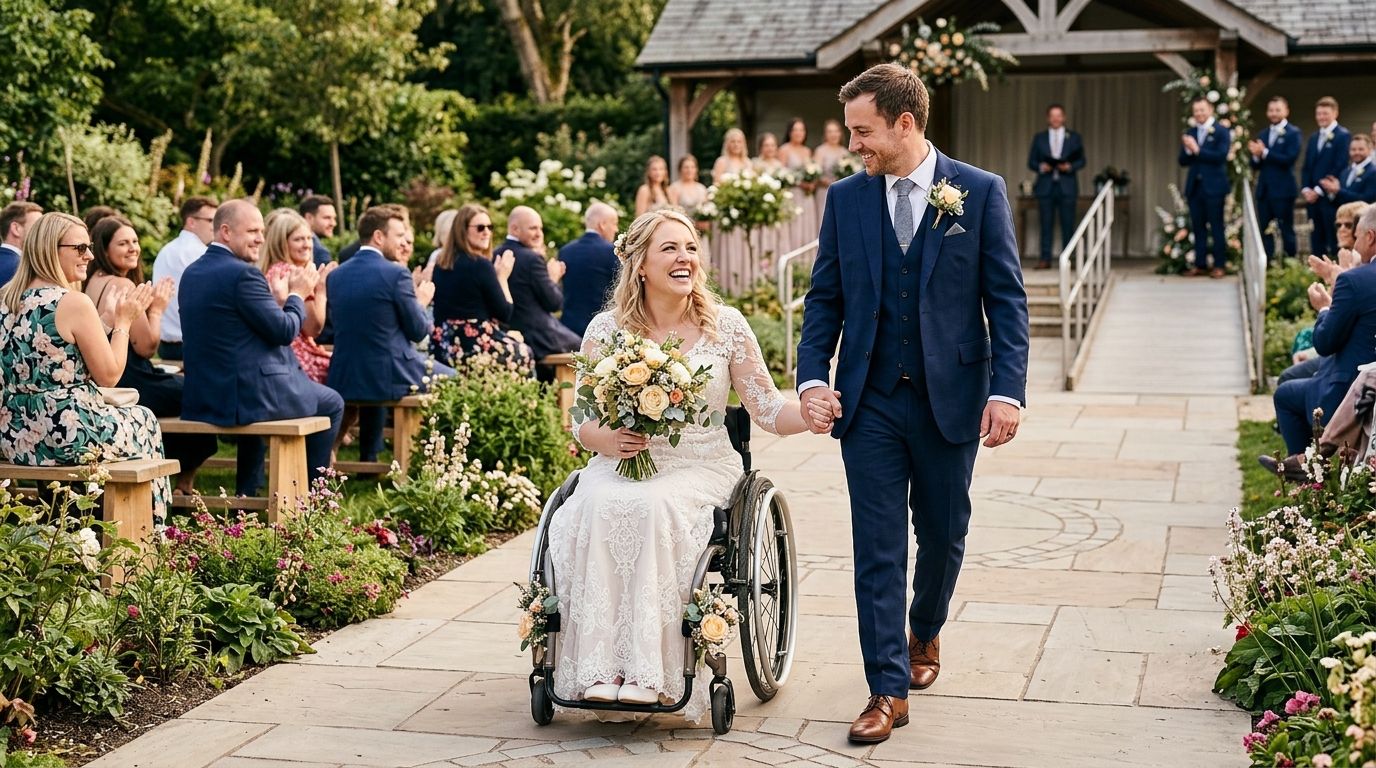
Accessible wedding photography means working with a photographer who plans camera angles, timelines, and posing around wheelchair users, guests with limited mobility, and venues with real ADA features — not venues that just claim to be accessible. Couples in this segment need a photographer who scouts ramp locations and elevator wait times before the ceremony, not during it.
- An accessible wedding photographer should walk the venue in advance to confirm ramps, elevators, and step-free sightlines actually work for your guest list.
- David Suns Weddings builds the shot list around accessible pathways so no guest is photographed struggling with stairs or gravel.
- Ask any accessible wedding photographer for a written ADA venue checklist before you sign a contract in 2026.
- Backyard and small-venue weddings often solve accessibility problems better than historic venues with grandfathered exemptions.
Why accessible wedding photography matters for this segment
Couples planning an ADA-friendly wedding are usually solving two problems at once: a venue that legally qualifies as accessible, and a photographer who won't stage photos that expose gaps in that accessibility. A ramp that's technically compliant but too steep for a manual wheelchair still shows up in photos as a struggle, not a celebration.
This segment also tends to have a guest list with mixed mobility needs — a grandparent using a walker, a groomsman in a wheelchair, a flower girl with a service dog. The photography plan has to account for all of it without turning any one guest into the center of attention for the wrong reason.
Confirm the venue's real accessibility before you book
Marketing copy and ADA compliance certificates don't always match what happens on the ground. A photographer who has shot at the venue before, or who agrees to a joint walkthrough, catches problems a couple planning long-distance would miss.
- Request a site visit with the photographer present, not just the planner
- Check restroom accessibility separately from ceremony-space accessibility — many venues pass one and fail the other
- Measure doorway widths if a guest uses a wide power chair
- Ask about backup indoor space if the accessible outdoor path floods or ices over
- Confirm parking-to-ceremony distance in feet, not just "accessible parking available"
Build the timeline around transition points, not just ceremony length
The slowest part of an accessible wedding day is almost never the ceremony itself — it's moving guests between ceremony, cocktail hour, and reception. A timeline that budgets 10 minutes for a transition that actually takes 20 creates rushed, unflattering photos of guests being hurried along.
- Add a 15-20 minute buffer to every venue transition
- Schedule family formals in the space guests are already in, rather than moving the group again
- Confirm elevator capacity if the venue has one — a single elevator serving 80 guests changes the whole schedule
- Ask the venue coordinator for average wait times at peak usage, not just capacity numbers
Choose posing setups that work from a seated position
Group and couple portraits designed for standing guests often leave wheelchair users cropped out of frame or positioned awkwardly at the edge. Posing has to start from eye-level parity, not be adjusted after the fact.
- Shoot family groups at a height that matches the shortest seated guest, not the tallest standing one
- Use benches or low walls so standing and seated guests share the same sightline
- Avoid backgrounds that require guests to be photographed from behind or below
- Test the ceremony aisle width for a wheelchair turn radius before the rehearsal
Light the ceremony space for mobility aids, not just the couple
Wheelchairs, canes, and walkers reflect light differently than skin and fabric, and harsh backlighting can turn a mobility aid into a distracting silhouette. Photographers who plan lighting only for the couple often get this wrong.
- Position key lights to avoid glare off chrome wheelchair frames
- Check for reflective surfaces near the accessible entrance that could blow out exposure
- Bring a diffuser for any spot where a guest using a mobility aid will be stationary for photos
- Confirm the venue's accessible entrance isn't in permanent shadow if it's the main photo backdrop
Coordinate with an interpreter or aide without photographing around them
If a guest uses an ASL interpreter or personal care aide, that person is part of the day's story, not someone to be edited out of frame. A photographer who tries to shoot "clean" images without them usually ends up with awkward crops later.
- Ask in advance whether any guest will have an interpreter or aide present
- Include that support person naturally in candid shots rather than posed-out entirely
- Confirm with the couple whether the interpreter or aide should appear in formal portraits
Plan the reception layout for wheelchair sightlines to the dance floor
A reception seating chart built for standing guests often blocks wheelchair users' view of the first dance, toasts, and cake cutting. This is a coordination issue between the planner and photographer, and it directly affects what gets captured.
- Request reserved space at floor level near the dance floor, not just "accessible seating" at the back
- Confirm sightlines to the head table from every wheelchair-designated spot
- Photograph key moments from multiple angles so no guest's photo of the couple is blocked by a post or step
Compare venue types for accessible wedding photography
| Venue type | Best for | Key limitation |
|---|---|---|
| Hotel ballroom | Larger guest lists needing elevators and indoor backup | Lighting is often flat and requires added photography gear |
| Botanical garden with paved paths | Couples wanting outdoor portraits with step-free access | Paths can be narrow, limiting group photo width |
| Backyard or home venue | Full control over ramps, seating, and layout | Requires renting accessible restroom trailers |
| Community center | Budget-conscious couples needing guaranteed ADA compliance | Interior often lacks strong natural light for photos |
| Beach boardwalk venue | Couples wanting a coastal setting with wheelchair access | Sand beyond the boardwalk is off-limits for mobility aids |
Couples choosing between these options should treat the boardwalk or backyard setups as the safer bet for multigenerational family portraits where guest ages and mobility vary widely. Smaller venues also tend to pair well with wedding photographer packages built for small weddings, since a tighter guest list makes accessible seating and sightlines far easier to manage.
Plan your accessible wedding day
Walk through venue accessibility and timeline details before you book.
Common mistakes couples make planning accessible wedding photography
- Trusting the venue's ADA badge without a walkthrough. Compliance certificates cover minimum legal standards, not whether a ramp is comfortable to use in formal shoes or a power chair.
- Skipping the accessible-guest conversation with the photographer. Couples often assume the photographer will "figure it out" on the day, which leads to rushed, awkward compositions.
- Underestimating transition time between spaces. A 10-minute buffer that should have been 20 creates visibly stressed guests in the reception photos.
- Forgetting restroom accessibility during the timeline. A guest who needs extra restroom time gets photographed rushing back into a formal group shot.
- Cropping out interpreters or aides from posed photos. This erases part of the day's real story and often has to be corrected in editing, which costs time and money.
FAQ
What makes a wedding photographer accessible-friendly?
An accessible wedding photographer plans posing, lighting, and timelines around wheelchair users and guests with mobility aids before the wedding day, not on the spot. Look for someone willing to do a joint venue walkthrough in 2026 rather than relying on the venue's own ADA claims.
How much does an accessible wedding photographer cost?
Pricing depends on the package and coverage hours a couple chooses, and varies by photographer, so check current rates directly rather than assuming a flat rate applies. Ask whether venue walkthroughs or accessibility consultations are included in the base package.
Is a backyard wedding more accessible than a traditional venue?
Often yes, because couples control ramp placement, seating layout, and restroom access directly instead of working around a fixed historic building. The tradeoff is that accessible restroom trailers and ramp rentals usually need to be arranged separately.
Should I tell my photographer about guests with disabilities in advance?
Yes, always share this before the wedding day so the photographer can plan posing height, lighting, and timeline buffers around it. Waiting until the rehearsal or wedding day leaves no time to adjust the shot list properly.
Can wheelchair users be included in formal group portraits naturally?
Yes, when the photographer poses the group at a height matching the seated guest instead of adjusting after the fact. This avoids the common problem of wheelchair users being placed at the edge of the frame.
What questions should I ask a venue about ADA compliance?
Ask about doorway widths, elevator capacity at peak times, restroom accessibility, and parking-to-ceremony distance in feet. A venue can pass ceremony-space compliance and still fail on restroom or parking access.
Do accessible weddings need extra photography time?
Most benefit from a 15-20 minute buffer added to each venue transition to avoid rushed, unflattering photos of guests moving between spaces. This buffer matters more than adding extra total coverage hours.
One last thing
The detail couples overlook most in 2026 isn't the ramp or the elevator — it's lighting at the accessible entrance, since that's often the one spot every guest photo passes through and it's frequently the darkest corner of the venue. Ask any photographer bidding on an accessible wedding to name that spot during the walkthrough before you sign anything.


