
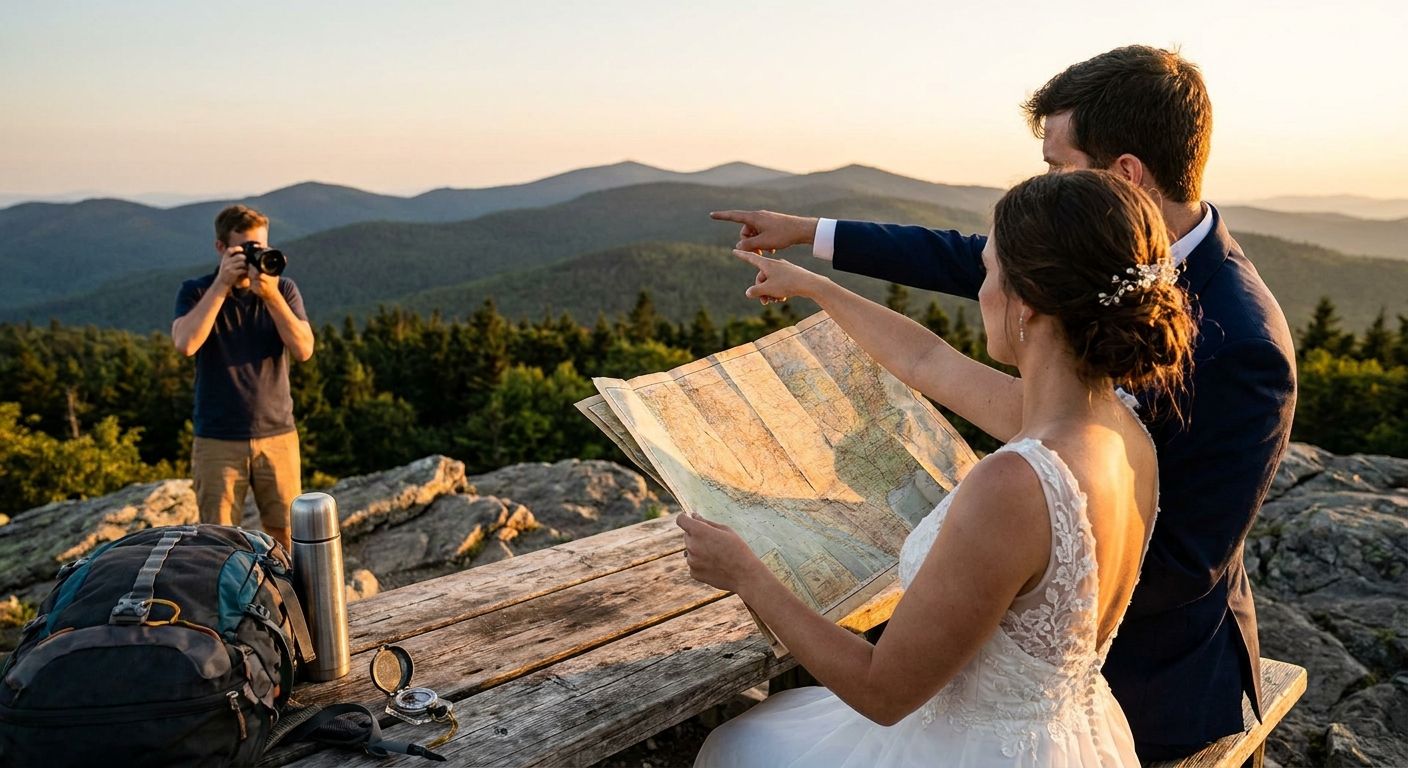
Picking the right backdrop is the single decision that shapes every photo from your elopement day — light, logistics, and legal paperwork all hinge on it. This guide walks through the exact process for choosing an elopement location for photos in 2026, from permits to golden hour math.
- National parks and mountain overlooks give the strongest light window but require permits booked 60-90 days out in 2026.
- Courthouse elopements photograph best between 10am-2pm when interior light is flattest — plan around that, not around the calendar.
- Beach ceremonies need a backup shot list for wind and tide; sunrise sessions solve both problems at once.
- Choosing an elopement location for photos comes down to light, access, and legal permission — in that order.
Why this matters
A scenic location with no photo permit gets you a fine, not a photo. A gorgeous mountain summit at noon gets you flat, harsh light and squinting faces. Couples who pick a location based on Instagram alone routinely find out too late that the trailhead requires a 4am start or the venue bans professional cameras entirely.
David Suns Weddings has photographed elopements across national parks, courthouses, beaches, and backyard ceremonies, and the pattern holds every time: location choice determines 80% of the final gallery before a single shutter click happens. Get the location right and the photography does the rest.
What you'll need
- A shortlist of 2-3 locations, ranked by light direction and time of day
- Permit requirements confirmed directly with the land management agency (park service, city hall, private venue)
- A sunrise/sunset time for your actual date, not a rough guess — light shifts by weeks, not months
- A backup location within 20 minutes for weather contingencies
- Your photographer's input before you book anything non-refundable
- A realistic headcount if anyone besides the two of you is attending
The steps
1. Decide on terrain before scenery
Pick the terrain type — mountain, beach, desert, urban, backyard — before you fall in love with a specific photo you saw online. Terrain dictates footwear, dress logistics, and how far you can realistically hike in wedding attire.
Couples planning national park elopement adventures often underestimate trail distance in a gown or heels. Confirm mileage and elevation gain before locking the date. Common mistake: choosing a summit shot that requires a 3-mile approach with a 45-minute golden hour window — you won't make it back down before the light disappears.
2. Check permit rules for 2026
Every national park, most city parks, and many beaches require a commercial photography permit if a hired photographer is shooting your elopement. Rules vary by agency, and enforcement has tightened at high-traffic parks in recent years. Call the permits office directly rather than relying on a blog post — rules change year to year and vary by unit within the same park system.
For mountain wedding elopements, permit lead time can run 60-90 days in peak season. Courthouse ceremonies are the low-friction option here: most require zero photography permit, just a marriage license and an appointment.
3. Map the light, not the map
Golden hour lasts roughly 20-60 minutes depending on latitude and season, and it's the single biggest lever on how your photos look. Shooting a west-facing beach at 5pm in June gives you soft, warm light for over an hour. Shooting that same beach at noon gives you harsh shadows and squinting.
Check the compass direction your ceremony spot faces relative to sunrise or sunset before booking the time slot. A sunrise elopement session solves the crowd problem at popular locations too — fewer tourists, fewer wind gusts, cooler temperatures for hiking in formalwear.
4. Build in a weather backup
Outdoor elopements need a plan B within a short drive, not a hope that the forecast holds. Beach ceremonies are especially exposed — wind that ruins a veil shot at 10am can die down completely by 4pm, or vice versa.
Common mistake: booking a single outdoor location with no indoor or covered alternative. If your date lands in a rainy season, confirm the location allows a tent, covered pavilion, or nearby indoor fallback before you sign anything.
5. Match the location to your guest count
A true two-person elopement has different location needs than a small gathering of 8-15 people. Some scenic overlooks and courthouse steps physically can't accommodate more than the couple and photographer. If you're bringing family, confirm the site has room, parking, and restroom access nearby.
Couples merging an elopement with a short trip often look at two-day adventure elopement packages to cover both a ceremony location and a separate portrait location on a second day — this splits the light and logistics problem across two shorter sessions instead of cramming everything into one afternoon.
6. Confirm access for your photographer's gear
A location that's a beautiful 45-minute hike for two people carrying nothing is a different logistics problem for a photographer carrying two camera bodies, lenses, and possibly a drone. Confirm with your photographer whether the site is reachable with full gear, and whether drone footage is even legal there — most national parks ban recreational drone flights outright.
Talk through your location shortlist
Get direct feedback on light, permits, and logistics before you book.
7. Lock the timeline last, not first
Once location, light, and permits are confirmed, set your ceremony time to match the best light window for that specific spot on that specific date — not the other way around. A 2026 courthouse elopement works fine at 11am; a beach ceremony almost never should be.
Troubleshooting
- The permit office won't confirm availability in time. Move to a courthouse or private-property backup that doesn't require a commercial photo permit.
- Your dream trailhead requires a permit lottery. Build a second, less competitive location into the plan by month three of planning, not week two.
- Weather forecast flips the week of. Confirm the indoor or covered backup 72 hours out, not the morning of.
- The location bans professional cameras or tripods. This is common at some beaches and historic buildings — ask the specific question, not the general one, before booking.
- Guests can't reach the site. Swap to a location with drive-up access if anyone attending has mobility limits.
- Golden hour window is too short to cover ceremony and portraits. Split into two shorter sessions on the same day, ceremony at sunrise and portraits later, rather than cramming both into one 30-minute window.
Tools and resources
- The land agency's official permits page for any national or state park under consideration
- A sunrise/sunset calculator set to your exact date and coordinates, not a generic monthly average
- How to plan an elopement with a photographer for the full pre-wedding checklist beyond location
- Courthouse elopement photography if permits or budget push you toward the lower-friction option
- Beach ceremony elopement photography for tide-table and wind-timing specifics
What to do next
Once your location and timeline are locked, the next planning step is confirming photography and videography coverage around that specific site and light window — read the full elopement planning guide with a photographer for the sequence to follow after location is set.
FAQ
What's the best time of day for elopement photos?
Golden hour, roughly 20-60 minutes after sunrise or before sunset, gives the softest and most flattering light for elopement photos. Midday sun creates harsh shadows and squinting, especially at exposed locations like beaches or mountain summits.
Do I need a permit to elope in a national park?
Yes, if you hire a professional photographer, most national parks require a commercial photography permit even for a two-person elopement. Requirements and lead times vary by park, so confirm directly with that park's permits office before booking your date.
Is a courthouse elopement better for photos than an outdoor location?
Courthouse elopements are lower-risk for permits and weather, but outdoor locations generally offer more varied, dramatic light. The right choice depends on your priorities: courthouse for simplicity, outdoor for scenery, with a weather backup either way.
How far in advance should I book an elopement location?
Book permit-required locations like national parks 60-90 days ahead in peak season 2026, and courthouse appointments can often be scheduled a few weeks out. Lock your photographer's date before finalizing the location if their calendar is limited.
Can I elope on a beach without a permit?
Many public beaches allow small ceremonies without a permit, but hiring a professional photographer often triggers a commercial photo permit requirement even on public sand. Check with the local parks or coastal management office for that specific beach.
What should I do if it rains on my elopement day?
Have a covered or indoor backup location confirmed at least 72 hours before the date, not the morning of. Tented pavilions, covered courthouse steps, or an indoor venue nearby all work as fallback options.
How many locations should an elopement have?
One primary ceremony location plus one weather backup is standard for most 2026 elopements. Couples combining a ceremony site with a separate portrait location often split the day into two shorter sessions to work around light windows.
One last thing
The location that photographs best is rarely the one with the most dramatic backdrop — it's the one where the light direction matches your ceremony time and the permit paperwork is already signed. Couples who lock light and legality first, then pick scenery within those constraints, consistently end up with stronger galleries than those who fall in love with a view and scramble to make the logistics fit afterward.


