Eloping inside a national park means trading a ballroom for a granite overlook or a slot canyon at sunrise, and it changes everything about who you hire to document it. This guide breaks down what to look for in a national park elopement photographer, which parks reward the effort, and what trips up couples who skip the planning.
- Zion National Park permits run about $80 for elopements under 12 people in 2026 -- book the photographer first, permit second.
- A national park elopement photographer needs Leave No Trace fluency and backcountry fitness, not just a full-frame camera bag.
- Rocky Mountain National Park above 11,000 feet demands altitude-adjusted golden hour timing -- sunrise arrives 15-20 minutes earlier than valley floor.
- David Suns Weddings frames elopement coverage around permit logistics and weather contingency, not studio-style posing.
Why This Matters
A national park elopement photographer isn't a wedding photographer who happens to shoot outdoors. Backcountry terrain, permit paperwork, and unpredictable mountain weather change the job entirely, and couples who hire the wrong fit end up with a photographer who can't keep pace on a 4-mile approach or doesn't know the special-use permit rules a ranger will enforce on-site in 2026.
The stakes are higher than a missed shot list. Miss a permit deadline and the ceremony location isn't legal. Hire someone unprepared for a 6 a.m. call time at 9,000 feet and you lose the light entirely.
Who This Is For
This guide is built for couples planning a small ceremony -- typically 2 to 12 people -- inside a U.S. national park in 2026, where hiking access, weather windows, and federal permitting shape the day more than venue decor ever would.
What to Look for in a National Park Elopement Photographer
Permit and Special-Use Experience
Most national parks require a special-use permit for any ceremony with a photographer present, even for two people. A photographer who has filed these before knows the lead time -- often 2 to 4 weeks minimum in 2026 -- and won't leave the couple scrambling the week of.
Backcountry-Ready Gear and Fitness
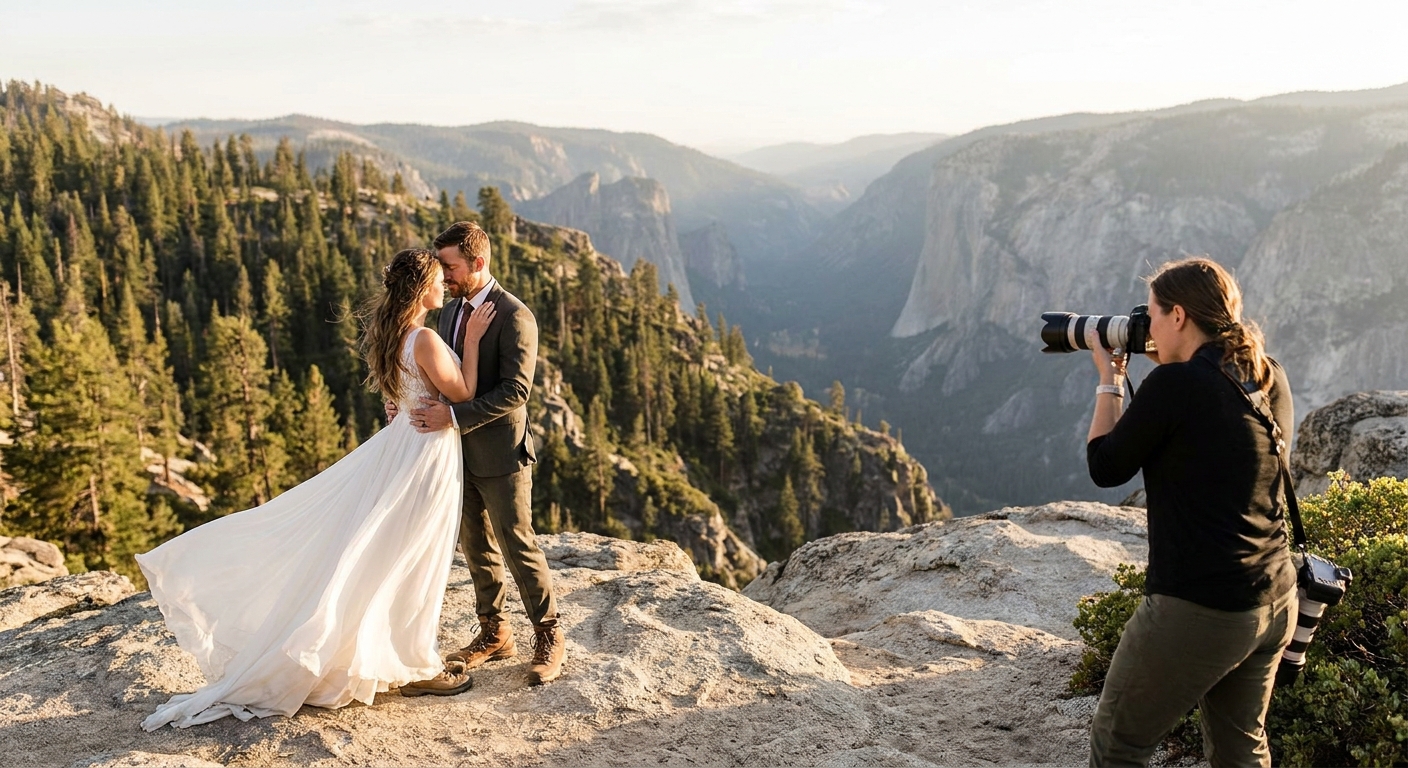
If the ceremony site sits a mile or more from the trailhead, the photographer carries that gear the whole way, in boots, sometimes before sunrise. Ask what their pack weighs and whether they've hiked the specific trail before saying yes.
Golden Hour and Elevation Timing
Sunrise and sunset shift by 15 to 20 minutes at elevations above 9,000 feet compared to valley timing apps. A how to choose a wedding photographer for your big day resource is a good starting checklist, but for park settings specifically, ask how they calculate light at altitude rather than trusting a generic sunrise app.
Weather Contingency Planning
Mountain weather changes in under an hour. A photographer who has a backup shot list and a rain-or-shine mindset protects the day when a storm rolls in at 2 p.m., which happens on roughly a third of summer afternoons in parks like Rocky Mountain National Park.
Legal Officiant Coordination
Self-uniting marriage laws exist in states like Colorado, meaning couples can legally marry without an officiant present. A photographer who understands this can help coordinate paperwork timing so the ceremony and the permit window actually line up.
Top National Park Settings for Elopement Photography
Zion National Park -- the reliable pick. Permit fees run around $80 for small ceremonies in 2026, and the park processes applications in about 2 weeks. Angels Landing and the Zion Narrows require additional wilderness permits if the ceremony happens off the main trail corridor. Buy.
Rocky Mountain National Park -- the high-altitude wildcard. Trail Ridge Road tops out above 12,000 feet, and sunrise ceremonies there see temperatures near freezing even in June 2026. The payoff is alpine tundra light that no lowland venue replicates. Consider if the couple is prepared for elevation and a strict timed-entry permit system.
Great Smoky Mountains National Park -- the easy-access option. No special-use permit fee is charged for ceremonies under 12 guests as of 2026, making it the lowest-friction park on this list. Fog rolls through the ridgelines most mornings, which photographers use rather than fight. Buy.
Acadia National Park -- the sunrise specialist. Cadillac Mountain is one of the first points to see sunrise in the continental U.S. for parts of the year, but permit slots fill months ahead for peak fall foliage weeks in 2026. Consider, and only with a photographer who has shot the summit before.
Planning a national park elopement
Talk through permit timing and location fit before you book.
What to Avoid
- Oversized guest counts on a small-ceremony permit. Most parks cap the low-fee elopement permit tier at 10-12 people; go over that and the paperwork, fee, and lead time jump to special-event status.
- Studio lighting rigs on backcountry trails. Strobes and stands look great in a portfolio but slow down a hike-in ceremony and often violate minimal-impact rules in wilderness zones.
- A photographer without Leave No Trace habits. Trampling alpine tundra for a wider shot damages terrain that takes decades to recover, and rangers do enforce this in 2026.
Verdict Comparison
| Park | Permit Difficulty | Best Season | Crowd Level | Verdict |
|---|---|---|---|---|
| Zion National Park | Moderate, ~2 weeks | Spring, fall | High midday | Buy |
| Rocky Mountain National Park | High, timed entry | Summer | Very high | Consider |
| Great Smoky Mountains National Park | Low, no fee under 12 | Fall foliage | Moderate | Buy |
| Acadia National Park | High, books out early | Fall | High | Consider |
FAQ
What's the best national park for an elopement photographer to shoot?
Great Smoky Mountains National Park and Zion National Park rank highest for reliability in 2026 because their permit process is faster and their fee tiers are lower for small ceremonies. Parks like Acadia and Rocky Mountain reward the effort but require booking months ahead.
How much does a national park elopement photography permit cost?
Special-use permits for small ceremonies typically run $50 to $100 in 2026, though several parks including Great Smoky Mountains waive the fee for groups under 12. Costs and rules vary by park, so confirm directly with the park's permit office.
Do you need a permit to get married in a national park in 2026?
Yes, most national parks require a special-use permit for any wedding or elopement ceremony with a photographer present, even for two people. The permit covers the ceremony location and time window, not the marriage license itself.
Is a national park elopement photographer different from a wedding photographer?
Yes -- a national park elopement photographer needs permit knowledge, backcountry fitness, and weather contingency planning that a standard venue-based wedding photographer rarely deals with. Ask specifically about their experience hiking to remote ceremony sites before booking.
How far in advance should you book a national park elopement photographer?
Book 6 to 12 months ahead for popular parks like Acadia or Rocky Mountain, since permit slots and photographer calendars both fill early for peak seasons in 2026. Lesser-visited parks can sometimes be booked with 2 to 3 months' notice.
Can you elope in a national park without a permit?
No, a ceremony with any photography, staging, or more than the two people getting married generally requires a special-use permit in almost every U.S. national park. Rangers do check, and unpermitted shoots risk being asked to leave mid-ceremony.
What's the best season for a Rocky Mountain National Park elopement?
Late June through September gives the clearest trail access above 11,000 feet, since snow can close high-elevation roads outside that window. Fall brings golden aspen groves at lower elevations as a backup if summer permit slots are gone.
How much does a national park elopement photographer cost?
Pricing depends on travel distance, hours of coverage, and location complexity, so figures vary photographer to photographer. Check current packages directly with the photographer you're considering, including David Suns Weddings, before comparing quotes.
One Last Thing
The detail most couples miss: national park permit offices process applications on their own schedule, often 2 to 4 weeks out, and that clock runs independent of the photographer's calendar. Lock the photographer first, then file the permit the moment the date is confirmed -- reversing that order is the single most common reason elopements get rescheduled. David Suns Weddings treats permit timing as part of the planning conversation from the first inquiry, not an afterthought handled the week before.