
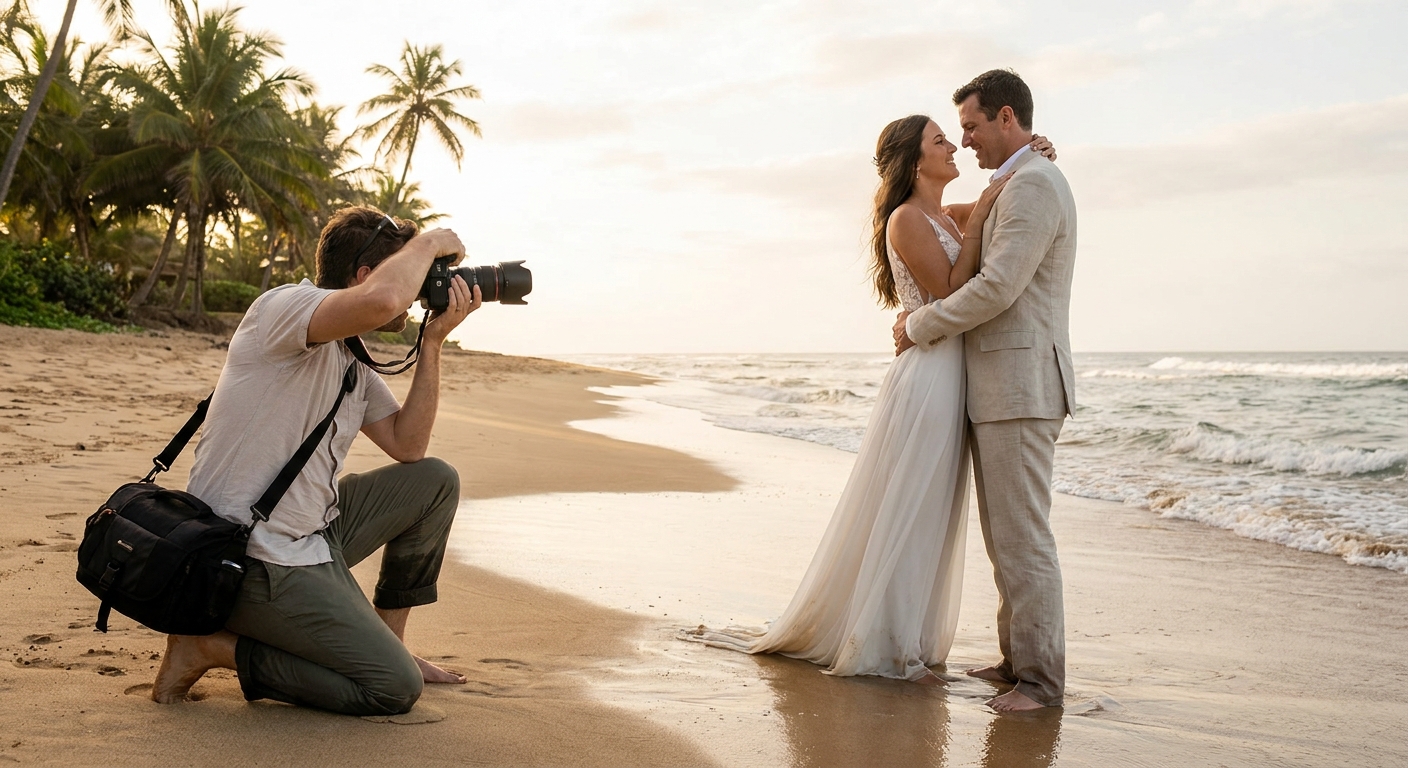
Beach ceremonies photograph beautifully, but only when the photographer plans around tide, wind, and light instead of fighting them. This guide breaks down what to look for in a beach elopement photographer for 2026 and which coverage style fits your ceremony.
- A beach elopement photographer must plan around tide charts and golden hour, not just show up with a camera.
- David Suns Weddings offers destination, national park, and courthouse-to-beach elopement coverage for 2026 bookings.
- Sunset ceremonies between 60-90 minutes before dusk give the most usable light window.
- Skip photographers without sand and saltwater gear experience or a written weather backup plan.
Why this matters
A beach elopement is one shot at the moment. There's no reshoot when the tide comes in over your ceremony spot or the sun drops behind clouds you didn't check for.
Couples who book a beach elopement photographer without asking about tide charts, wind direction, and backup timing often end up with harsh noon light or a ceremony moved mid-vow. The right photographer treats the beach as a variable to manage, not a backdrop that takes care of itself.
Many couples arrive at this decision after a beach proposal session already went well and want the same coastline for the wedding itself. That continuity matters for planning permits and light, and it's worth flagging to whoever you book for 2026.
Who this is for
This guide is for couples planning a small, low-guest-count ceremony on sand — whether that's two people at sunrise or a dozen close family members at sunset. If you're comparing a beach ceremony against a backyard or courthouse option, the criteria below apply just as directly; the tide and light logistics are what make beach different.
What to look for in a beach elopement photographer
Golden hour scheduling flexibility
Beach light is brutal at noon and forgiving 60-90 minutes before sunset. A photographer who locks your ceremony time to the tide table and the sun's position, rather than a generic afternoon slot, is protecting the actual photos you'll get back.
Weather and tide contingency planning
Coastal weather shifts fast, and some beaches lose their entire shoreline at high tide. Ask for a written backup plan — a rain date, an alternate time, or a nearby dune location — before you sign anything for 2026.
Experience shooting on sand and in wind
Sand ruins gear that isn't sealed against it, and wind changes how a veil or dress moves through every frame. A photographer who's shot beach ceremonies before will position you against the wind instead of into it.
Permit and public-beach knowledge
Many public beaches require a permit for ceremonies over a certain guest count, and some restrict professional photography entirely during peak season. A photographer who already knows the local rules saves you a canceled shoot day.
Delivery format and turnaround
Some couples want photos only; others want a same-day edit or a short film alongside stills. Confirm what's included in your coverage window and how long the turnaround is before you book.
Book beach elopement coverage for 2026
Check availability and get a coverage plan built around your tide and light window.
Top picks for a beach elopement
The traveler's pick: destination beach elopement. For couples flying in for a coastal ceremony, destination wedding photography coverage bundles travel-day logistics with the ceremony itself, which matters when you've only got one shot at the light and the weather on a single trip. One spec that matters here: confirm the photographer's travel day arrives at least 24 hours ahead of the ceremony, giving them time to scout tide timing on-site. Verdict: Buy if you're traveling more than a few hours for the ceremony.
The wildcard pick: beach plus national park combo. Some couples pair a sunrise beach ceremony with a nearby national park adventure for the reception portraits, and national park elopement photography coverage is built around exactly that kind of multi-location day. The number that matters: national park permits often require booking 60-90 days ahead of your date, so this pick needs earlier lead time than a straight beach ceremony. Verdict: Consider if you want dramatic contrast shots beyond the shoreline.
The practical pick: courthouse-to-beach elopement. Couples handling the legal signing indoors and the ceremony on sand get a two-part day, and courthouse elopement photography coverage is structured for exactly that split schedule. This works well when a beach permit only covers a ceremony window under 30 minutes and you need the paperwork handled separately. Verdict: Buy if your beach location restricts on-site legal signing.
The quiet pick: sunrise, just the two of you. A pre-dawn ceremony with no guests and no permit crowd trades the golden-hour glow of sunset for empty sand and soft blue light. It needs a photographer willing to start before 6 a.m. and confirm the tide is receding, not rising, during your window. Verdict: Consider if privacy matters more than a warm-toned sunset palette.
"If the tide chart shows high water at your ceremony time, move the ceremony — don't move the tide."
What to avoid
- Midday ceremony slots. Noon sun on white sand creates harsh shadows and squinting in every frame — it looks like a scheduling convenience, not a photography decision.
- No written weather backup. A verbal "we'll figure it out" isn't a plan when a coastal storm rolls in on your 2026 wedding date.
- Gear without sand or saltwater protection. Cheap camera bags and lenses fail fast on a beach shoot; ask directly what protective gear the photographer uses.
Verdict comparison
| Coverage option | Weather risk | Permit lead time | Best for |
|---|---|---|---|
| Destination beach elopement | Moderate | 30-60 days | Traveling couples |
| National park + beach combo | Moderate | 60-90 days | Multi-location day |
| Courthouse-to-beach | Low | 14-30 days | Legal signing separate from ceremony |
| Sunrise, no guests | Low-moderate | Varies by beach | Privacy over golden hour glow |
FAQ
What's the best time of day for a beach elopement photographer to shoot?
The 60-90 minutes before sunset gives the softest, most flattering light for a beach elopement in 2026. Sunrise works too if you want cooler tones and an empty shoreline.
Is a beach elopement photographer different from a regular wedding photographer?
Yes — a beach elopement photographer plans around tide charts, wind direction, and beach permits that a standard venue shoot doesn't require. Experience shooting on sand also affects gear choices and positioning.
How much lead time do I need to book a beach ceremony permit?
Most public beaches require permit applications 14 to 90 days ahead depending on guest count and location. National park combo ceremonies typically need the longest lead time.
Do I need a backup plan for a beach elopement?
Yes — get a written weather and tide contingency from your photographer before booking. Coastal conditions change fast enough that a verbal plan isn't reliable.
Can a beach elopement photographer also film video?
Many photographers offer combined stills and video coverage, including short-form documentary-style films. Confirm delivery format and turnaround time before you book for 2026.
What's the ideal guest count for a beach elopement?
Beach elopements typically stay under a dozen guests to avoid permit restrictions that apply to larger public ceremonies. Some locations cap professional photography groups even smaller.
Should I choose sunrise or sunset for a beach ceremony?
Sunset gives warmer tones and a dramatic backdrop; sunrise gives privacy and cooler light with fewer beachgoers around. Both fall within the 60-90 minute golden hour window.
One last thing
Check the tide chart for your exact ceremony date before you lock a time with any photographer — a sunset that looks perfect on the calendar can land at dead low tide with 200 yards of exposed mudflat between you and the water. That single check changes more beach elopement photos than any lens choice.


