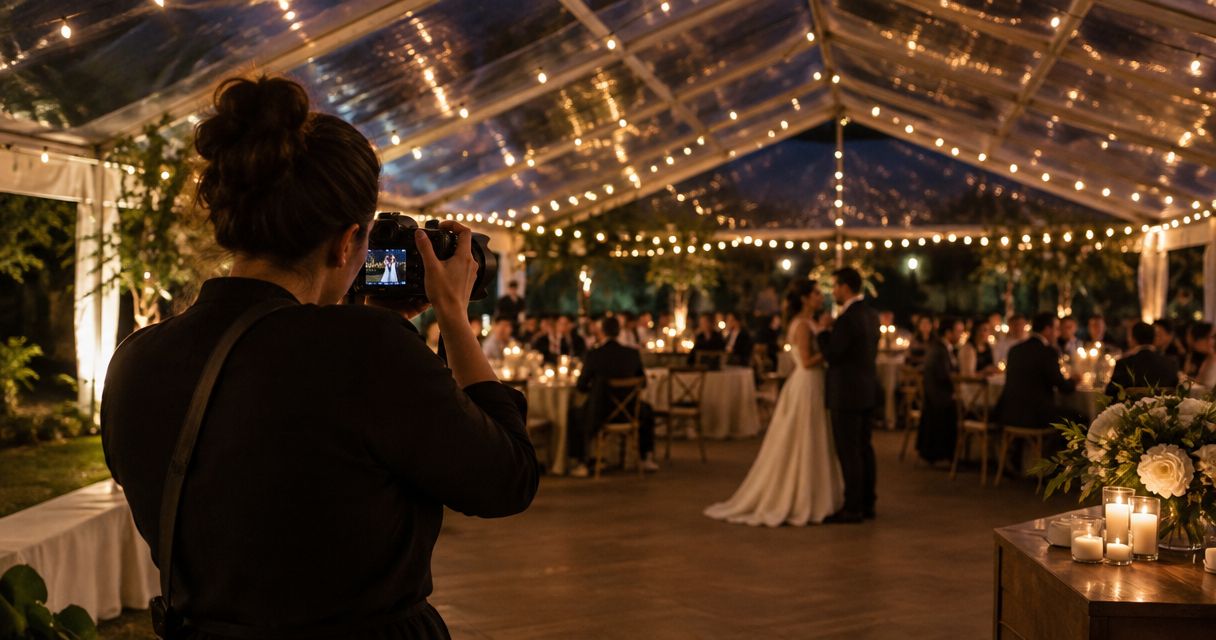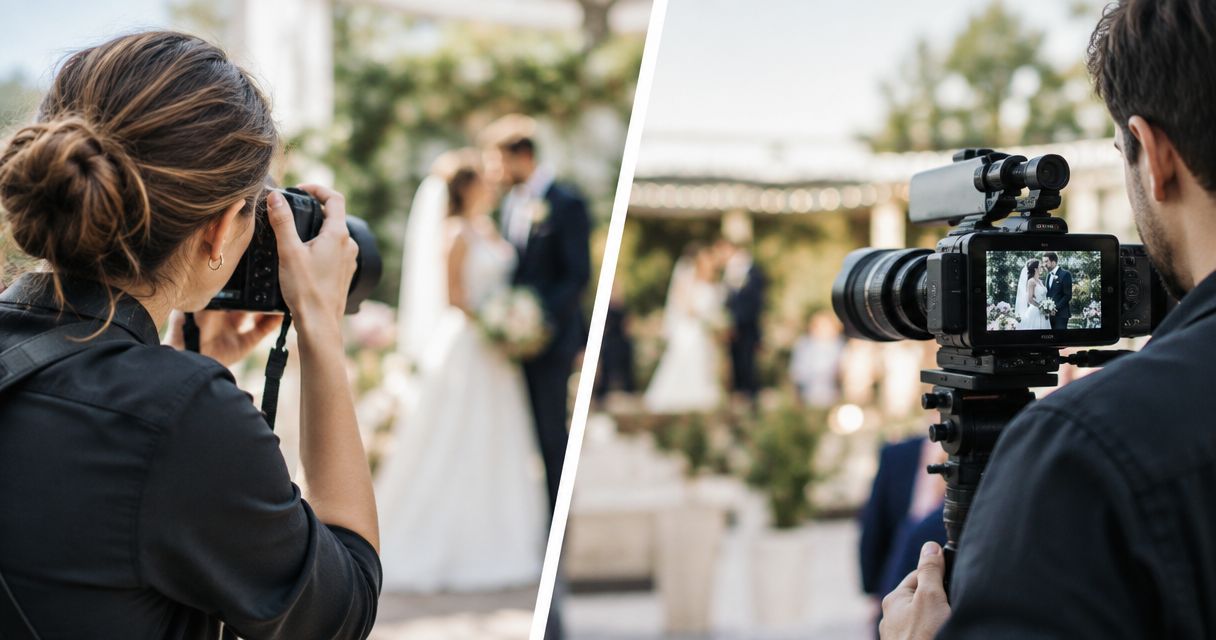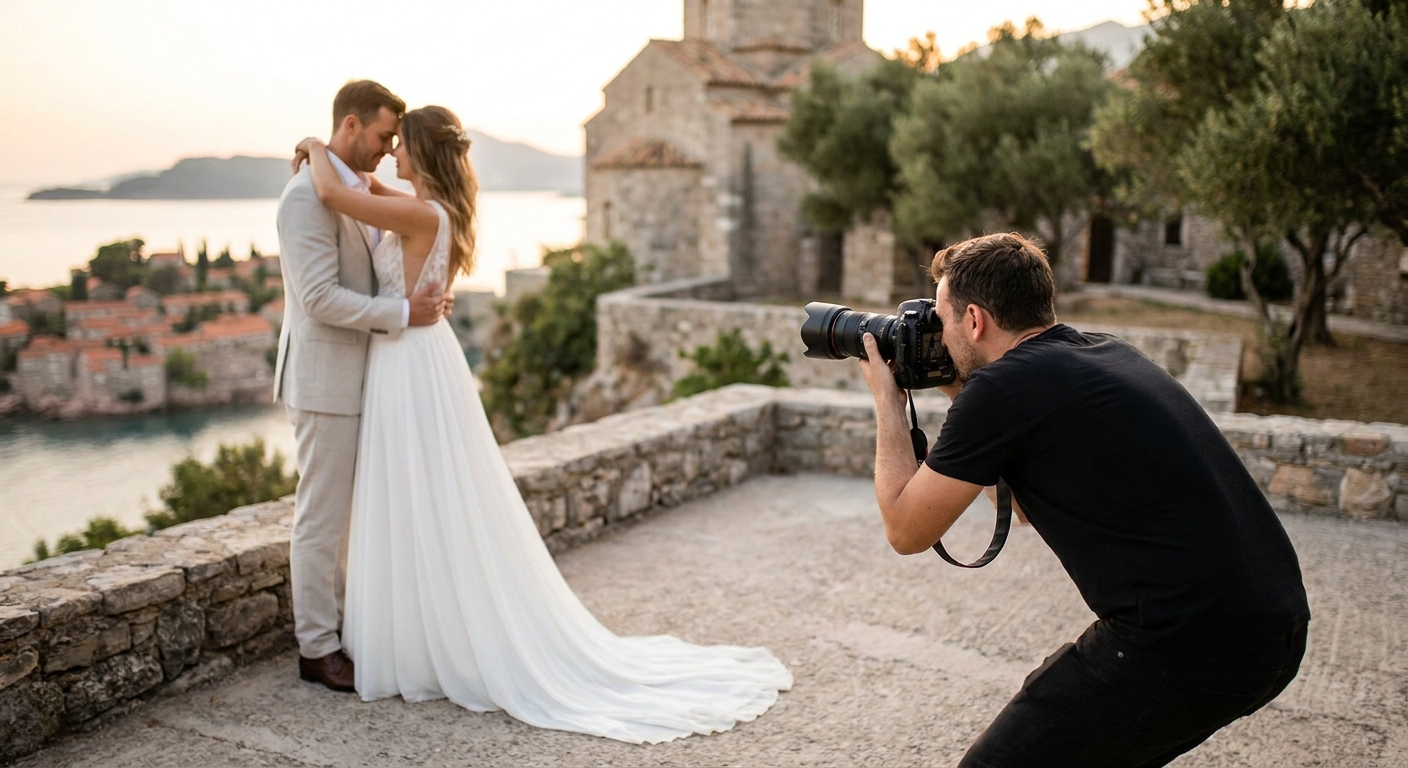
Choosing a destination wedding photographer changes the math completely: you're vetting someone who has to travel, adapt to unfamiliar light, and deliver a full story from a location neither of you knows well. This guide breaks down exactly what to check before you book, plus which coverage types actually make sense for a wedding away from home.
- A destination wedding photographer needs proven travel experience, not just a strong local portfolio.
- Two-photographer teams cover ceremony and reception angles that a solo shooter misses at multi-day events.
- Full-weekend coverage packages fit destination weddings better than single-day bookings — buy accordingly.
- Photo-and-film hybrid teams are becoming the 2026 standard for couples who want a wedding film, not just galleries.
Why this matters
A destination wedding photographer isn't a local vendor with a passport — travel logistics, unfamiliar venues, and jet-lagged timelines all affect the final gallery. Booking the wrong fit means paying travel fees for someone who freezes when the ceremony moves indoors because of wind, or who never scouted the venue and burns an hour figuring out where the light falls at 4pm.
David Suns Weddings works with couples planning ceremonies away from home, and the checklist below reflects the questions that actually separate a photographer who travels well from one who just happens to own a passport.
Who this is for
This guide is for couples who've already picked a location — a coastline, a vineyard, an international city — and now need a photographer willing and equipped to shoot there. It applies whether the guest count is 20 people at a courthouse abroad or 150 flying in for a resort wedding across three days.
What to look for in a destination wedding photographer
Travel and logistics experience
Ask how many out-of-state or international weddings the photographer has shot in the past year. A photographer who's flown to five ceremonies in 2026 already knows how to pack gear for airline weight limits and how to build a backup plan when a flight lands three hours late.
Light adaptability across unfamiliar venues
Most local photographers know their home market's golden hour by muscle memory. At a destination, they're seeing the ceremony site for the first time — ask whether they scout locations the day before or rely on a walkthrough video call with the venue coordinator.
Team size for multi-day events
Destination weddings often stretch across a welcome dinner, ceremony day, and farewell brunch. A solo shooter can cover one day well; a two-photographer team covers ceremony and reception simultaneously without missing either the vows or the first dance.
Turnaround time after travel
Travel adds days to editing schedules. Confirm the delivery window upfront — a photographer quoting a 6-8 week turnaround for a destination wedding is being realistic, not slow.
Videography compatibility
If you want a wedding film alongside stills, confirm the photographer works alongside a videographer regularly, or offers both under one booking. Split teams that have never worked together before your wedding day create blocking conflicts during the ceremony.
Contract clarity on travel costs
Travel fees, lodging, and per-diem terms should be spelled out before you sign. A vague "travel costs TBD" line is the single most common source of destination wedding photography disputes after the fact.
Coverage types to consider
The all-in package — multi-day coverage. Covers welcome dinner through farewell brunch, typically 2-3 shooting days. Look for photographers who quote a flat multi-day rate instead of stacking single-day fees. Buy if your wedding spans more than one event.
The minimalist pick — elopement and intimate coverage. Built for guest counts under 20 and a single ceremony block, usually 2-4 hours of shooting. This is the leanest and most affordable structure for a courthouse or cliffside ceremony. Buy if you're skipping a full reception.
The memory keeper — videography add-on. Pairs a second shooter with motion coverage of vows and toasts. Worth it if guests are flying in from multiple time zones and won't get another chance to relive the day together. Consider it if budget allows a second creative on-site.
The safety net — second shooter or associate photographer. Adds a backup angle during the ceremony and covers getting-ready shots on both sides simultaneously. For any wedding over 50 guests, a single shooter physically cannot be in two rooms at once. Buy for anything past an intimate elopement.
The modern standard — photo and film hybrid team. One coordinated team shoots both stills and film, cutting down on scheduling conflicts between separate vendors. This has become the more common request among couples booking 2026 dates. Consider if you want one point of contact instead of coordinating two vendors' travel schedules.
Book your destination wedding coverage
Check availability and coverage options for your 2026 wedding date.
What to avoid
- A portfolio with zero travel work. A stunning local portfolio doesn't prove someone can adapt when the ceremony venue changes the layout an hour before start time.
- No written travel fee breakdown. If lodging, flights, and per-diem aren't itemized, expect a surprise invoice after the wedding.
- Single-day-only packages for multi-day events. A welcome dinner and farewell brunch left uncovered means half the trip has no photos at all.
The full breakdown on vetting any wedding photographer, destination or local, is covered in how to choose a wedding photographer for your big day — worth reading before you sign anything.
Verdict comparison
| Coverage type | Best for | Typical shooting window | Team size | Verdict |
|---|---|---|---|---|
| All-in multi-day | 2-3 day celebrations | 2-3 days | 1-2 photographers | Buy |
| Elopement / intimate | Under 20 guests | 2-4 hours | 1 photographer | Buy |
| Videography add-on | Multi-timezone guest lists | Full day | 2 creatives | Consider |
| Second shooter | 50+ guests | Full day | 2 photographers | Buy |
| Photo + film hybrid | One-vendor simplicity | 1-3 days | 2-3 creatives | Consider |
FAQ
What does a destination wedding photographer typically cost?
Destination wedding photography pricing includes the base package plus travel costs — flights, lodging, and per-diem — which should always be itemized separately in the contract. Multi-day coverage runs higher than single-day local bookings because of the added shooting time.
Is a destination wedding photographer better than hiring a local one at the venue?
Hiring your own photographer to travel means consistent style and a relationship built before the wedding day, versus meeting a local vendor for the first time on-site. Many couples in 2026 prioritize the relationship and reliability over saving on travel fees.
How far in advance should you book a destination wedding photographer?
Book 9-12 months ahead for a 2026 destination date, since travel-based photographers have limited weekend availability once flights and lodging are factored in. Popular months like May, June, and September fill fastest.
Do destination wedding photographers charge travel fees?
Yes, travel fees covering flights, lodging, and ground transportation are standard and should appear as a line item in the contract. Ask whether the fee is flat-rate or itemized against actual receipts.
Should you get a second shooter for a destination wedding?
A second shooter is worth it for any guest count over 50, since one photographer can't cover both sides of the aisle during getting-ready and can't shoot the ceremony and reception details simultaneously. For elopements under 20 guests, a single shooter is usually enough.
How long does it take to get photos back from a destination wedding?
Turnaround for destination weddings typically runs 6-8 weeks, longer than local bookings because of travel days added before editing starts. Confirm the delivery window in writing before booking.
Can one team handle both photography and videography for a destination wedding?
Yes, hybrid photo-and-film teams are increasingly common for 2026 bookings because they eliminate scheduling conflicts between two separately-traveling vendors. Ask whether the team has shot photo and film together before, not just separately.
What's the biggest mistake couples make booking a destination wedding photographer?
The most common mistake is booking based on portfolio alone without confirming travel experience or an itemized travel fee breakdown. That gap shows up as either a surprise invoice or a photographer unprepared for unfamiliar light and venue logistics.
One last thing
The detail couples forget most: ask whether your photographer has shot a wedding in your specific destination's climate before — humidity, altitude, and harsh midday sun each change how a photographer meters light, and a portfolio full of overcast European courtyards doesn't guarantee someone knows how to shoot a beach ceremony at noon.