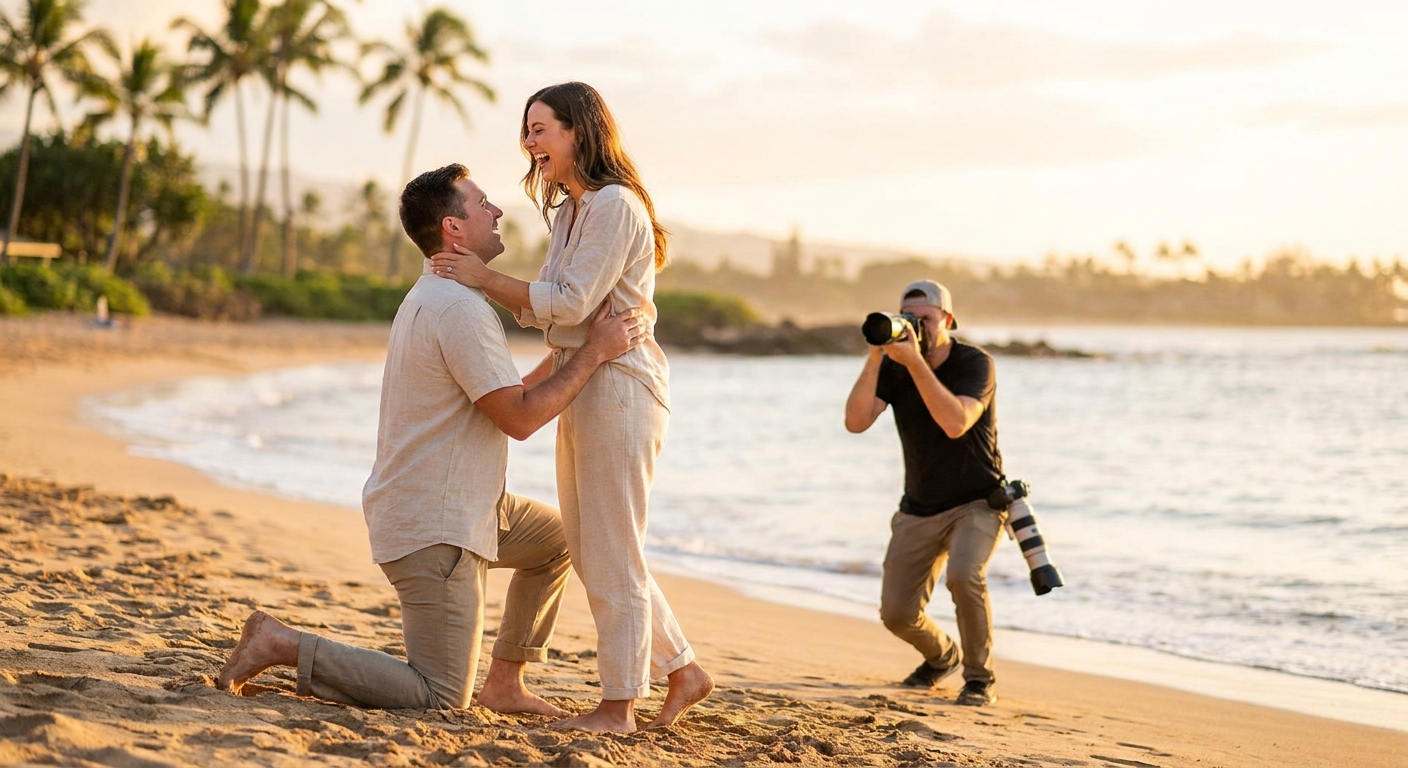
Beach proposals photograph nothing like a studio session or even a park engagement shoot — wind moves hair and fabric mid-frame, tide timing shifts the shoreline by the minute, and light changes fast once the sun drops toward the water. Picking the right beach proposal photographer for 2026 means knowing which skills actually translate to sand and which ones are studio habits that don't hold up outdoors.
- A beach proposal photographer who checks tide charts avoids getting cut off mid-shoot by incoming water. Buy.
- Golden hour sunset windows run 20-30 minutes in 2026 coastal calendars — book the session to end inside that window. Buy.
- Sunrise surprise setups need a photographer positioned 30-45 minutes before the couple arrives. Consider for early risers.
- Public beaches increasingly require shoot permits in 2026 — confirm before locking a date. Skip photographers who skip this step.
Why this matters
A proposal happens once. If the photographer misjudges the tide, mistimes the light, or gets spotted hiding behind a dune, the moment is gone and there's no reshoot. David Suns Weddings treats beach proposal sessions as a logistics problem first and a photography problem second — the camera work only matters if the setup holds.
Most couples booking a beach proposal photographer in 2026 are choosing between a generalist wedding photographer who occasionally shoots outdoors and someone who actually plans around sand, water, and weather. That distinction decides whether the gallery looks intentional or improvised.
Who this is for
This guide is for couples planning a beach proposal — sunrise surprise, sunset walk, or a quiet cove elopement-style moment — who need a photographer that understands tide schedules, wind direction, and how to stay invisible until the ring comes out. It's also for anyone comparing a dedicated beach proposal photographer against a general wedding photographer who's willing to do the beach thing.
What to look for in a beach proposal photographer
Tide and light scheduling experience
A photographer who books blind by clock time instead of tide chart will lose usable shoreline as the water rises. Ask how far in advance they check tide tables — the answer should be days, not hours.
Weatherproof gear and a backup plan
Sand and saltwater spray damage unprotected camera bodies within a single session. A beach proposal photographer working coastal locations regularly should already carry rain covers and a rescheduling policy for high wind or storm surge, not improvise one on the spot.
Stealth positioning for surprise proposals
If the proposal is a surprise, the photographer needs to be in position 30 to 45 minutes before the couple arrives and stay far enough back with a long lens that the partner never clocks them. Ask directly how they've handled hidden setups before — vague answers mean no real experience.
Drone and permit awareness
Many public beaches in 2026 require a permit for commercial photography, and some restrict drone flights near nesting areas or lifeguard towers. A photographer who doesn't ask about local rules is the one who gets your session shut down mid-shoot.
Direction style that fits a surprise moment
Posed, stiff direction works against a genuine surprise reaction. Look for a portfolio with real, unscripted expressions right after the ring comes out — that's the shot that gets reprinted, framed, and shared, not the posed follow-up.
Turnaround time on the gallery
Couples want the proposal photos within days, not weeks, especially if they're announcing the engagement. Ask for a specific delivery window before booking, not soon.
Session styles that work for beach proposals
The safe pick — golden hour sunset walk. Scheduled to end inside the 20-30 minute sunset window, this is the most requested beach proposal setup for 2026 bookings. Predictable light, warm tones, minimal squinting. Buy if you want reliable, editorial-looking results without much risk.
The early-riser pick — sunrise surprise. Requires the photographer hidden 30-45 minutes ahead of arrival and shooting into soft, low-angle light before beach foot traffic picks up. Fewer bystanders in frame, cooler color palette. Consider if you're both early risers and want an empty beach.
The dramatic pick — cliffside or rocky coast. Adds elevation and texture but needs a photographer comfortable scouting footing and framing around rock formations rather than flat sand. Consider only if the photographer has shot that specific coastline type before.
The documentary pick — candid walk-and-talk. No posed setup at all; the photographer trails at a distance with a long lens and captures the proposal as it unfolds. Best raw reactions, least control over composition. Buy for couples who want authenticity over polish.
The risky pick — midday beach session. Flat, harsh overhead light and squinting are near guaranteed outside the golden hour windows. Skip unless the only available slot is midday and there's no way to reschedule.
Plan your beach proposal session
Check availability and discuss timing with David Suns Weddings.
What to avoid
- Generic engagement photographers with no beach portfolio — studio lighting habits don't transfer, and you'll see it in flat, overexposed shoreline shots.
- No stated weather or reschedule policy — coastal weather changes fast in 2026's shoulder seasons; a photographer without a backup plan leaves you stranded.
- Drone shots promised without permit confirmation — a grounded drone mid-session because of restricted airspace kills the one aerial shot you were counting on.
Verdict comparison
| Session style | Best light window | Surprise-friendly | Verdict |
|---|---|---|---|
| Golden hour sunset walk | 20-30 min pre-sunset | Moderate | Buy |
| Sunrise surprise | 30-45 min pre-sunrise | High | Consider |
| Cliffside/rocky coast | Golden hour | Low | Consider |
| Candid walk-and-talk | Any low-angle light | High | Buy |
| Midday flat-light session | None | Low | Skip |
For the broader decision beyond just the beach setting — pricing structure, contract terms, portfolio red flags — the wedding photographer selection guide walks through the full vetting process.
FAQ
What's the best time of day for a beach proposal photographer to shoot?
The 20-30 minute window before sunset gives the most reliable warm, soft light for a beach proposal in 2026. Sunrise works too but requires the photographer positioned 30-45 minutes ahead for a surprise.
Do beach proposals need a photography permit?
Many public beaches in 2026 require a permit for commercial or professional photography sessions. Confirm with the photographer and the local parks department before locking in a date and time.
How long does a beach proposal photo session take?
A typical beach proposal session runs 60-90 minutes including the surprise, the reaction, and a short follow-up portrait set. Sunrise or sunset timing keeps most of that inside the good light window.
Is a beach proposal photographer different from a wedding photographer?
A dedicated beach proposal photographer plans around tide charts, wind, and stealth positioning, which a generalist wedding photographer may not have practiced. Ask specifically about coastal and surprise-proposal experience before booking.
Should we use a drone for a beach proposal?
A drone adds a dramatic wide shot but only works if the beach allows it and wind conditions cooperate. Confirm airspace restrictions with the photographer before counting on an aerial shot.
What should we wear for a beach proposal photo session?
Flowing fabrics and solid or muted colors photograph better against sand and water than busy patterns or stiff structured pieces. Avoid pure white, which can blow out against bright sand in direct sun.
Can a beach proposal be a surprise if a photographer is there?
Yes — an experienced beach proposal photographer hides 30-45 minutes before the couple arrives and shoots from a distance with a long lens. The partner typically has no idea a camera is present until after the ring comes out.
What happens if it rains on the day of a beach proposal shoot?
A photographer with a stated weather policy will offer a reschedule window or an alternate covered location nearby. Confirm this policy before booking so a storm doesn't cancel the moment entirely.
One last thing
The detail most couples miss: tide timing matters more than sunset timing. A photographer who nails the golden hour but ignores an incoming tide can lose the entire shoreline setup 20 minutes into the session — check both charts, not just one, before locking the time slot.
For the full vetting checklist beyond beach-specific logistics — contracts, delivery timelines, portfolio questions — the guide to choosing a wedding photographer covers what to ask before any deposit changes hands.