
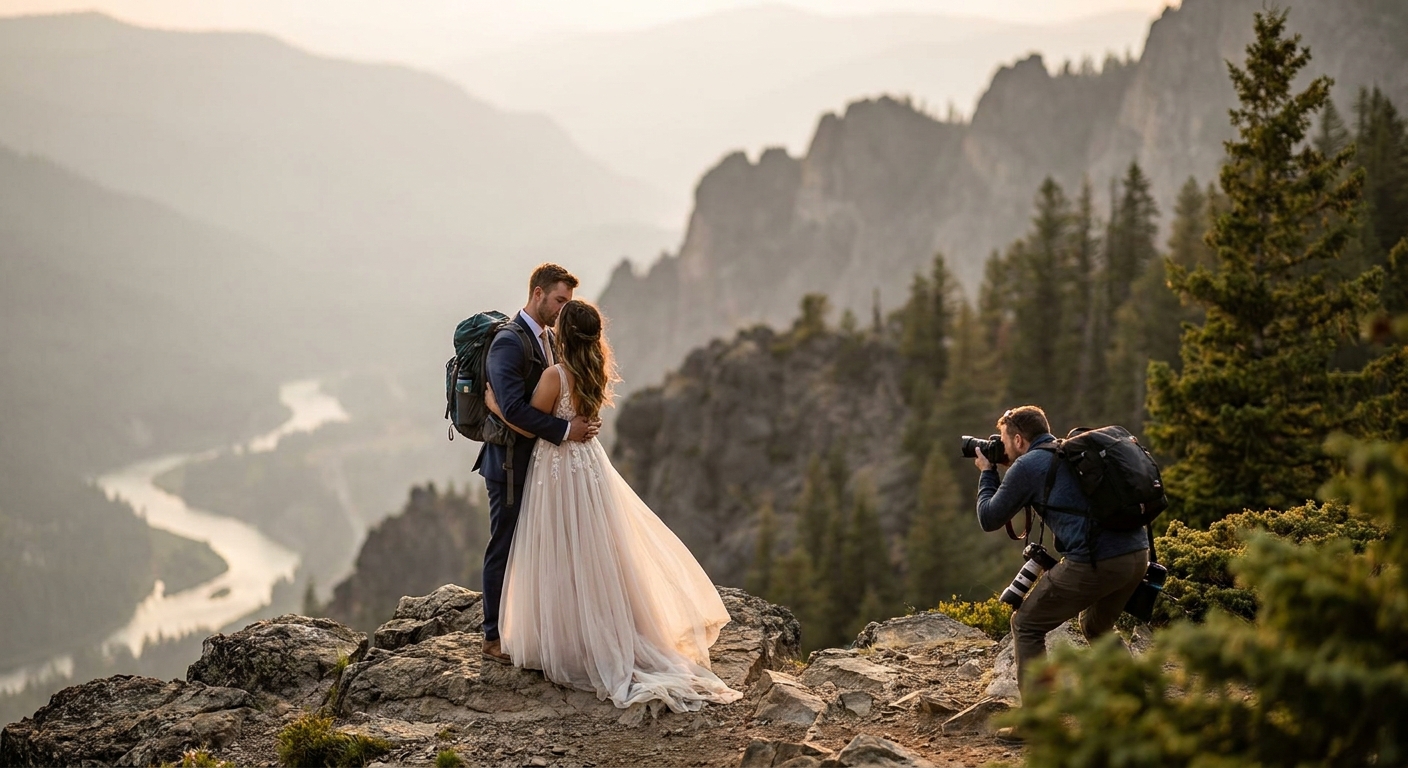
Mountain elopements strip a wedding down to two people, a summit, and whatever light shows up — which means the photographer you hire has to double as a hiking partner, a weather forecaster, and a ceremony officiant's best friend. This guide breaks down exactly what separates a mountain elopement photographer worth booking in 2026 from one who'll leave you stranded at 9,000 feet with a dead battery.
- A mountain elopement photographer needs altitude stamina, permit know-how, and a hard weather backup plan for 2026 bookings.
- David Suns Weddings' national park elopement package is the safe pick for couples hiking above treeline.
- Courthouse-to-summit combos work for couples who want a legal ceremony plus a mountain photo session in one day.
- Skip any photographer who won't commit to a rain-or-shine contingency in writing.
Why this matters
A backyard wedding photographer and a mountain elopement photographer are not the same hire. Altitude changes light, weather turns in minutes above 8,000 feet, and most national parks require a permit before anyone can legally shoot a ceremony inside their boundaries. Get any of that wrong and you're re-shooting vows in a parking lot instead of on the ridge you picked for a reason. The couples who get this right in 2026 book someone who has actually done the hike before, not just the wedding.
Who this is for
This guide is built for couples planning a two-to-ten-guest ceremony somewhere with elevation gain — a national park overlook, an alpine meadow, a ridge accessible only by trail. If you're picturing a hotel ballroom or a beach, a different service page fits your day better. If you're picturing hiking boots under a dress, keep reading. David Suns Weddings covers exactly this kind of shoot alongside more traditional formats, and the criteria below apply whether you book them or someone else.
What to look for in a mountain elopement photographer
Altitude experience, not just portfolio photos
Anyone can Photoshop a mountain backdrop. Ask how many ceremonies the photographer has actually shot above 7,000 feet, because carrying two camera bodies, a tripod, and a drone up a switchback trail is a different job than working a hotel hallway. A photographer who's winded by mile two will miss the moment at the summit.
Permit and access knowledge
Most national parks and many state forests require a commercial-use or special-activity permit before a photographer can legally shoot a ceremony on-site, and fees typically run around $50 to $150 depending on the park. A photographer who doesn't bring this up unprompted either doesn't know the rule or is planning to ignore it — both are your problem on the wedding day, not theirs.
A real weather contingency
Mountain weather turns fast: clear skies at 7 a.m. can be a hailstorm by 10. The photographer you hire needs a documented backup plan — a lower-elevation alternate location, a flexible start time, or gear that survives rain — not a vague "we'll figure it out."
Golden-hour timing at elevation
Usable golden-hour light at altitude often runs shorter than at sea level, sometimes as tight as 25 minutes before harsh shadows return. A photographer scheduling your ceremony without checking sunrise or sunset tables for your specific elevation is guessing, not planning.
Photo and video bundling
Some mountain elopements want a same-day edit film for guests who couldn't make the hike; others want stills only. Confirm upfront whether photo and video are bundled or billed separately, because gear weight and crew size change the logistics of a trail shoot significantly.
Turnaround time
Gallery delivery on elopements commonly lands in the 6-to-8-week range as of 2026, though it varies by studio and season. Ask for a specific delivery window in writing before you book, not a general "soon."
Planning a mountain elopement for 2026?
See how David Suns Weddings handles altitude, permits, and weather backups.
Top picks for mountain elopement photography
The safe pick: national park adventure package
The hook here is simple — this option is built specifically for above-treeline ceremonies, not adapted from a standard wedding package. One spec that matters: it's structured around hikes with meaningful elevation gain, meaning gear and pacing are planned for trail conditions rather than a paved venue. Couples doing a 2-to-4-mile approach hike to an alpine lake or ridge fit this pick exactly. Verdict: Buy — go here first if your ceremony location requires a trail. See the national park elopement photography page for the specifics.
The wildcard: courthouse-to-summit combo
This pairs a legal courthouse ceremony with a separate mountain photo session later the same day or on a different date — useful for couples who want the marriage license handled fast without waiting on park permit approval timelines. One number that matters: courthouse ceremonies typically run under 30 minutes, leaving the rest of the day free for the hike and shoot. Verdict: Consider if your ideal location needs a permit you haven't secured yet. Check the courthouse elopement package for how the two pieces fit together.
The intimate option: micro-wedding at altitude
Built for guest counts under a dozen, this fits couples bringing a small group up the mountain rather than eloping solo. One spec: coverage is scaled to a smaller footprint, which keeps logistics manageable when everyone's hiking together. Verdict: Consider for couples who want a few witnesses without a full wedding party. Details are on the micro-wedding photography page.
The one to think twice about: same-day edit add-on
A same-day edit film sounds appealing for a mountain ceremony, but batteries drain faster in cold, high-altitude conditions, and editing gear on a trail with no cell signal is a real constraint. This isn't a service to skip outright, but confirm connectivity and power logistics before assuming a same-day film is realistic at your specific location. Verdict: Skip unless your ceremony site has reliable signal and power access nearby.
What to avoid
- "All-inclusive" elopement packages that don't mention permits. If the price sheet is silent on who handles park paperwork, assume it's you — and assume you'll find out too late.
- Photographers without a stated backup location. A mountain forecast can flip in an hour; anyone without a named plan B is asking you to gamble your ceremony on the weather.
- Portfolios full of studio or ballroom shots with one mountain photo mixed in. One dramatic image doesn't mean altitude experience — ask directly how many hikes they've actually shot.
Verdict comparison
| Option | Altitude experience needed | Permit handling | Weather backup | Verdict |
|---|---|---|---|---|
| National park adventure package | High | Built into planning | Documented alternate site | Buy |
| Courthouse-to-summit combo | Low for the legal part, moderate for the hike | Only needed for the photo session | Flexible date split | Consider |
| Micro-wedding at altitude | Moderate | Depends on guest count and site | Should be confirmed upfront | Consider |
| Same-day edit add-on | Moderate | N/A | Power/signal dependent | Skip unless site is well-connected |
FAQ
What's the best time of year for a mountain elopement?
Late June through September gives the most reliable trail access and weather at higher elevations. Snowpack can close trails into early summer at some sites, so check conditions for your specific location before locking a 2026 date.
Is a mountain elopement photographer more expensive than a standard wedding photographer?
Pricing varies by studio, but mountain elopements often involve smaller guest counts and shorter coverage windows, which can offset added logistics costs like permits or gear. Ask for a quote specific to your location rather than assuming a flat markup.
Do I need a permit to get married on a mountain?
Most national parks and many state or national forests require a commercial-use permit for the photographer, even if the couple doesn't need one personally. Fees commonly run $50 to $150 and should be arranged weeks in advance of your 2026 ceremony date.
How many guests can attend a mountain elopement?
Most mountain elopements run two to ten guests, since larger groups struggle with trail access and permit limits at many sites. Confirm your specific park's group size cap before inviting anyone.
What happens if it rains or storms on elopement day?
A photographer with a real weather contingency will have a lower-elevation backup site or a flexible start window built in. Ask for this plan in writing before booking, not as a verbal assurance.
Should I get video as well as photos for a mountain elopement?
Video adds meaningful value if you want a same-day edit film for guests who couldn't attend, but cold weather drains batteries faster and remote sites often lack signal for quick editing. Confirm power and connectivity at your specific location before adding video.
How far in advance should I book a mountain elopement photographer?
Book 6 to 12 months ahead for 2026 dates, especially for popular national park locations where permits and photographer calendars fill early. Peak summer weekends go first.
Can I combine a courthouse ceremony with a mountain photo session?
Yes — a courthouse-to-summit combo handles the legal ceremony in under 30 minutes, then moves to a mountain location for photos the same day or later. This avoids waiting on a park permit before you're legally married.
One last thing
The detail most couples skip: usable light at altitude runs shorter than they expect, often closing out in under 25 minutes once the sun clears the ridgeline. Build your ceremony start time around that window, not around what looks good on a wedding invitation.


