
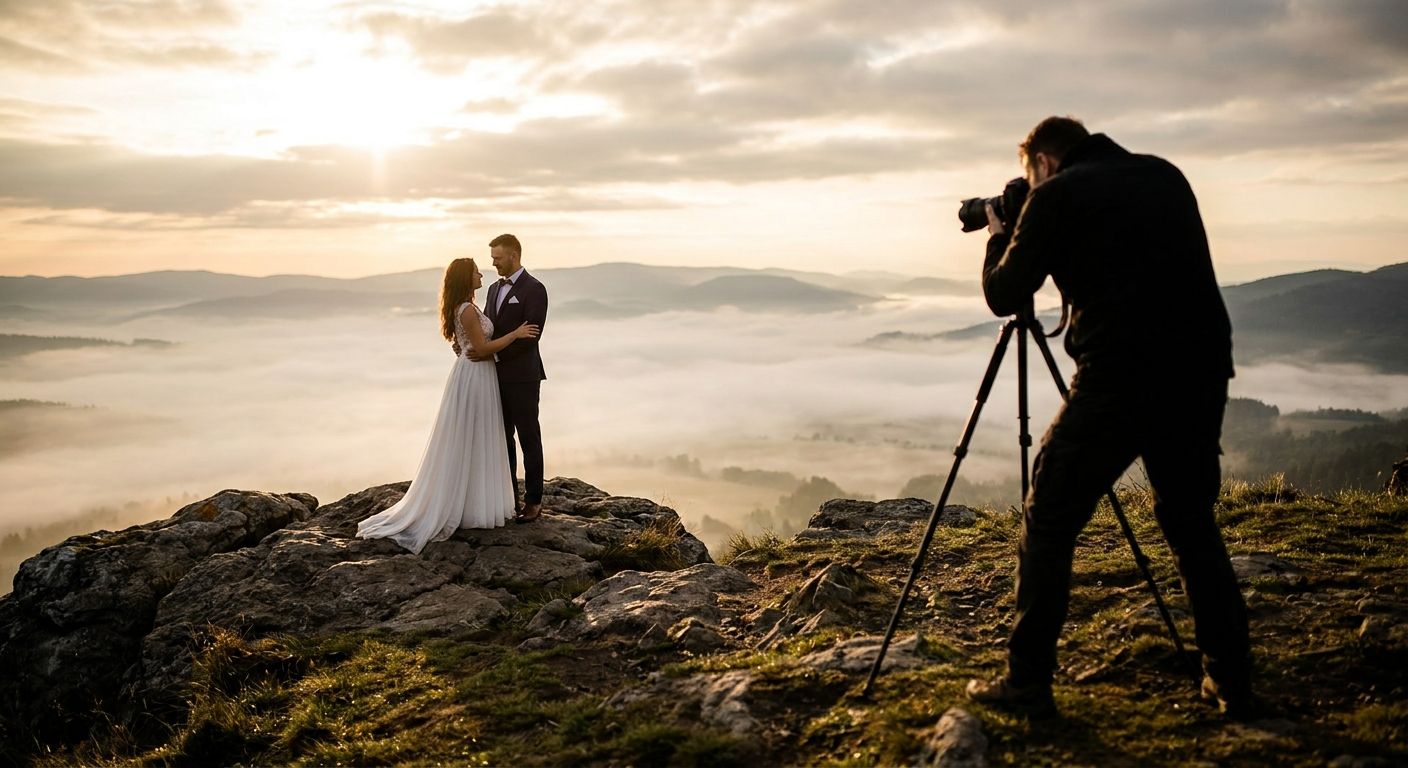
A sunrise elopement gets you the softest light of the day, the emptiest locations, and a ceremony that photographs like a movie — but only if the photographer treats the 5 a.m. call time as a craft, not an inconvenience.
- A sunrise elopement photographer needs golden-hour timing skill, not just a portfolio — light direction changes by the minute at dawn.
- Mountain elopements deliver the most dramatic light but sunrise breaks 15-20 minutes earlier at altitude than at trailhead parking. Buy.
- National park sunrise sessions often face 1-2 ceremony permits per morning — book the permit before the photographer. Consider.
- Beach sunrise ceremonies depend on tide tables that shift roughly 50 minutes a day. Buy if the tide lines up.
- Courthouse sunrise sessions work as a backup since most courthouses don't open until 8 or 8:30 a.m. Consider.
Why this matters
Sunrise light lasts about 20-30 minutes once the sun clears the horizon, and the 20-30 minutes before that — civil twilight — gives a soft, shadowless blue that a lot of couples want without knowing the name for it. Miss that window and you get flat midday light with none of the drama that made you search for a sunrise elopement photographer in the first place. In 2026, more couples are choosing 20-40 minute elopement ceremonies over full weddings specifically to control cost and guest count, and sunrise is the timing choice that makes those short ceremonies look cinematic instead of rushed.
Who this is for
This guide is for couples planning a ceremony with 2-10 people who want dramatic, low-angle light and are willing to start the day before most guests are awake. It's built for the couple choosing between a mountain overlook, a national park trail, a beach, or a courthouse sign-in timed around first light — not for a 150-guest reception with a sunrise send-off.
What to look for in a sunrise elopement photographer
Golden-hour timing and light direction
Sunrise time shifts by roughly two hours between June and December depending on latitude, so a photographer who quotes one fixed call time for every month hasn't done the homework. Ask for the exact sunrise time and light-direction plan for your date, not a generic "early morning" answer.
Early-morning reliability and call-time flexibility
A 2026 elopement photographer needs to be on location, gear checked, before civil twilight starts — that's often a 4:30 or 5 a.m. arrival. If a studio hedges on early call times or charges a steep surcharge for pre-6 a.m. starts, that's a signal they don't shoot sunrise often.
Location scouting for sunrise-facing backdrops
Not every gorgeous spot faces the right direction at dawn. A photographer who has scouted the specific overlook, beach, or trailhead for sunrise — not just sunset — will know exactly where the sun breaks the horizon relative to your backdrop.
Weather contingency planning
Clouds roll in fast at dawn in most climates. Ask what the backup plan is if sunrise is socked in — a fill-flash setup, a nearby covered alternative, or a reschedule policy — before you book.
Editing style tuned for warm, low-angle light
Sunrise light is warm and directional; overprocessed cool-tone presets flatten exactly the color palette you paid for. Look at a photographer's actual sunrise galleries, not just their sunset ones, before deciding.
Check sunrise dates for 2026
See availability and start planning your dawn ceremony.
Top picks: sunrise elopement locations that actually deliver the light
Mountain sunrise elopement — the drama pick. Sunrise breaks 15-20 minutes earlier at elevation than it does at the trailhead parking lot, which means the light hits ridgelines and peaks before it reaches the valley floor below. That gap is exactly what produces the glowing-ridge photos couples search for. Mountain wedding photography sessions built around this timing gap are worth the early alarm. Buy.
National park sunrise adventure — the permit gamble. Many national parks cap ceremony permits at one or two per morning at popular overlooks, so the location is scenic but competitive. If you can lock the permit early, a national park elopement at sunrise gets you empty trails and zero tourist crowds in the frame. Consider.
Beach sunrise ceremony — the reflection pick. Low tide windows shift by roughly 50 minutes each day, and wet sand at low tide creates the mirror-reflection shots that make beach elopements distinctive. Time the ceremony to the tide table, not just the clock, and a beach elopement at dawn delivers reliably. Buy when the tide lines up with sunrise; Wait if it doesn't.
Courthouse sunrise sign-in — the backup plan. Most courthouses don't open until 8 or 8:30 a.m., so "sunrise" here means a portrait session at dawn followed by the legal sign-in later that morning. A courthouse elopement built this way gives you sunrise photos without weather risk on the legal part of the day. Consider.
International destination elopements and beach ceremonies overseas follow the same logic — sunrise timing and tide or altitude math still apply, just on a foreign clock.
What to avoid
- A photographer with no fill-flash or reflector plan for backlit shots. Shooting straight into the rising sun without a fill plan produces silhouettes instead of faces — fine for one dramatic frame, a problem for the whole gallery.
- A fixed "sunrise package" call time with no month-specific adjustment. Sunrise in June and sunrise in December can differ by close to two hours; a rigid schedule means you're either shooting the wrong light or waiting around in the dark.
- Over-processed, cool-tone editing on what was actually warm dawn light. If the sample gallery looks blue and flat rather than golden, the studio is editing away the exact light you're paying to capture. Check how to choose a wedding photographer for your big day before signing anything.
Verdict comparison
| Location type | Light window | Permit/crowd risk | Best for | Verdict |
|---|---|---|---|---|
| Mountain overlook | Breaks 15-20 min earlier than valley | Low, but trail access can be limited | Dramatic ridge and peak backdrops | Buy |
| National park trail | Standard sunrise timing | High — 1-2 permits per morning at top spots | Empty-trail, adventure-style photos | Consider |
| Beach | Tied to tide, shifts ~50 min/day | Low, but tide-dependent | Reflection and wide-horizon shots | Buy if tide aligns |
| Courthouse | Portraits at dawn, sign-in later | Low | Legal simplicity plus sunrise portraits | Consider |
FAQ
What time should a sunrise elopement start?
Start arriving 30-45 minutes before official sunrise to catch civil twilight, the soft blue light before the sun clears the horizon. Exact timing shifts by up to two hours between summer and winter, so confirm the local sunrise time for your specific date in 2026 rather than guessing.
Is sunrise or sunset better for elopement photos?
Sunrise gives softer, cooler-to-warm transitioning light and empty locations before crowds arrive, while sunset gives a longer warm-light window but more foot traffic at popular spots. Couples who want solitude at a national park or beach usually pick sunrise for that reason alone.
How much does sunrise elopement photography cost in 2026?
Pricing varies by location, coverage length, and season, so check current rates directly with the studio rather than relying on a flat number. Early call times before 6 a.m. sometimes carry a separate line item, so ask about that specifically when requesting a quote.
Do sunrise elopements need a permit?
Many national parks and some beaches require a ceremony permit, and popular overlooks can cap approvals at one or two ceremonies per morning. Courthouse elopements typically need a marriage license appointment instead of a location permit.
What happens if it's cloudy on the morning of a sunrise elopement?
A photographer with a real weather contingency plan will shift to fill-flash technique, move to a covered backup spot, or discuss rescheduling before your date arrives. Ask about this plan before booking, not the morning of.
How many guests can attend a sunrise elopement?
Most sunrise elopements run with 2-10 guests, since early call times and remote locations naturally limit attendance. Courthouse sunrise sessions can accommodate slightly more if the portrait segment happens outdoors before the sign-in.
How early should we book a sunrise elopement photographer?
Book as early as possible for 2026 dates, especially for national park or beach locations tied to permits and tide tables. Popular sunrise slots at scenic overlooks fill first because only one or two ceremonies are permitted per morning at top locations.
One last thing
Civil twilight — the 20-30 minutes before the sun actually clears the horizon — often produces better portrait light than the ten minutes right after sunrise, because the sky itself becomes a giant soft box before direct sun creates hard shadows. Ask any sunrise elopement photographer whether they shoot during twilight or wait for the sun to fully rise, and the answer tells you a lot about how many dawn sessions they've actually done.


