
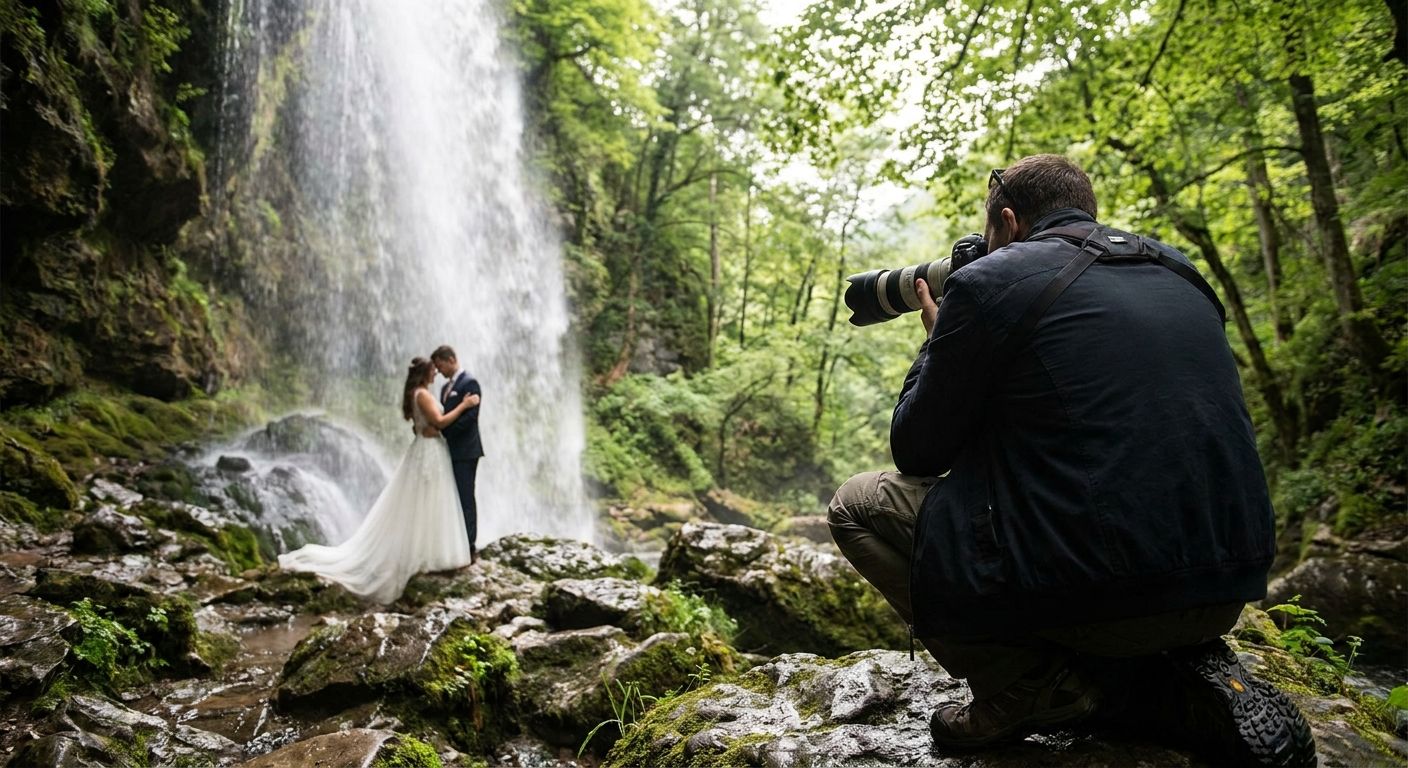
A waterfall elopement photographer works around three constants that don't apply to a standard ceremony: constant spray, uneven light bouncing off rock walls, and a location where a permit or a slippery ledge can end the shoot early. Getting the shot means planning for water, light, and access before the couple ever says a vow.
- A waterfall elopement photographer needs a shutter speed of 1/500s or faster to freeze spray without blowing out highlights.
- Permits are required at most national park and state park waterfalls in 2026 — check before booking a date.
- Golden hour at a waterfall runs shorter than open-field golden hour because canyon walls block direct light early.
- David Suns Weddings treats waterfall sites as a two-location shoot: a dry backup spot is standard, not optional.
Why waterfall elopement photography matters for this segment
Couples choosing a waterfall ceremony aren't picking a backdrop, they're picking a set of constraints. Rock is wet, sound is loud, and light shifts fast as the sun moves behind canyon walls. A photographer who shoots gardens and ballrooms all year won't have a workflow for any of that, and it shows up in the final gallery as blown highlights, water-spotted lenses, or a couple squinting into a light source they didn't know was there.
The planning problem is different too. Before choosing a spot, most couples still need to work through how to choose an elopement location for photos — waterfall access, hike length, and crowd patterns all change what's actually shootable on the day.
A waterfall elopement photographer who scouts the site, times the light, and carries mist-rated gear will get usable images; one who shows up cold usually doesn't.
Scout the waterfall and confirm permit rules
Most public waterfalls sit inside land managed by a park service, and rules vary by jurisdiction and by season in 2026.
- Check whether the waterfall requires a wedding/elopement permit, not just a general park entry fee
- Confirm group size limits — some sites cap ceremony parties at 6-10 people
- Ask about tripod and drone restrictions, since many parks ban both without a separate permit
- Verify seasonal closures — spring runoff or ice can shut down trail access entirely
- Note the nearest ranger contact in case a permit question comes up on-site
Time the shoot around light and water flow
Canyon walls block direct sun earlier and later than an open field, so the golden-hour window at a waterfall often runs 60-90 minutes instead of the two hours couples expect elsewhere.
- Scout the site at the same hour you're booking the ceremony, ideally a week or more ahead
- Ask locals or park rangers about seasonal water volume — spring flow throws more mist than late summer
- Plan for backlit conditions if the falls face east or west; a reflector or off-camera flash fixes most of it
- Build a 15-minute buffer into the timeline for cloud cover changes
- Check tide and rain forecasts the morning of, since flow volume shifts fast after storms
Choose gear that survives mist and spray
This is where a generalist wedding photographer and a waterfall elopement photographer split. Standing gear needs weather sealing, and shutter speed needs to stay high enough to freeze falling water without underexposing skin tones.
- Shoot at 1/500s minimum, 1/1000s if the falls are high-volume
- Carry microfiber cloths in a sealed bag, not a pocket — mist finds pockets
- Use a lens hood on every lens near the falls; it's the single biggest fix for spray on glass
- Bring a rain sleeve or plastic bag for the camera body during heavier spray days
- Pack a second, dry camera body as backup — a soaked body mid-ceremony has no fix
Couples researching similar wet-terrain sites often land on the mountain elopement photography page next, since altitude, weather swings, and trail access overlap heavily with waterfall locations.
Protect footing and wardrobe for wet rock
Wet rock near a waterfall is more dangerous than it looks in photos, and wardrobe choices matter as much as gear choices.
- Swap formal shoes for grip-soled boots or sandals, then change back for posed shots on dry ground
- Avoid long, flowing hems near the base of the falls — fabric drags in water and picks up grit
- Bring a change of dry socks and a towel; nobody plans for a soaked hem until it happens
- Scout a level, dry staging area within 10 feet of the ceremony spot for gear and guests
- Assign one person (not the photographer) to hold umbrellas or reflectors during spray-heavy moments
Plan audio and vow capture near loud water
Waterfalls are loud enough to drown out spoken vows on camera audio, which matters for anyone adding video coverage.
- Use a lavalier mic clipped to each partner if video is part of the package
- Have the officiant read vows slightly slower and closer to the couple than usual
- Record a clean vow read separately if ambient noise is too high to salvage in editing
- Position the ceremony spot slightly back from the loudest section of the falls if sound quality matters more than proximity
David Suns Weddings pairs still photography with video coverage for couples who want both, and the same mist and noise planning applies to either format — the national park elopement adventures page covers how that plays out across full-day park bookings.
Build a backup location and weather plan
A waterfall shoot has more failure points than a garden ceremony — flash flooding, trail closures, and sudden fog are all real possibilities.
- Identify a dry, accessible backup spot within a 10-minute walk of the falls
- Confirm the backup location doesn't also require a separate permit
- Set a weather cutoff time with your photographer — most call it 30 minutes before ceremony start
- Keep the timeline flexible enough to shift the ceremony 20-30 minutes if light or flow changes
Comparison: photography options for a waterfall elopement
| Option | Best for | Cost tier | Key limitation |
|---|---|---|---|
| Local generalist wedding photographer | Couples eloping close to home with a tight budget | Budget | Rarely carries mist-rated gear or waterfall-specific timing experience |
| Phone or friend-shot photos | Couples with zero photography budget | Free | No backup gear, no editing, high risk of blown highlights near falls |
| Destination elopement photographer (e.g. David Suns Weddings) | Couples traveling to a specific waterfall or national park | Mid to premium | Requires travel scheduling and advance booking |
| Photographer + videographer combo | Couples who want vows on film despite waterfall noise | Premium | Needs lav mics and a noise plan built into the timeline |
Verdict: for a waterfall ceremony specifically, a photographer with mist-gear experience and a permit checklist beats a generalist every time — the terrain punishes anyone shooting it cold.
“If you can't hear your officiant over the falls, plan for lav mics or a written vow exchange before the ceremony, not after.”
Common mistakes couples make with waterfall elopements
- Skipping the permit check — showing up without one can end the shoot before it starts, even on public land
- Booking peak spring runoff without checking flow — heavier flow means more mist, louder audio problems, and slicker rock
- Wearing the wrong shoes for the hike in — formal footwear on wet trail rock causes more delays than any weather issue
- Assuming golden hour lasts as long as it does in an open field — canyon shadow cuts usable light short by 30-60 minutes
- Not budgeting time for a wardrobe or gear reset — mist-soaked hems and lenses need a few minutes to fix mid-shoot
Plan your waterfall elopement shoot
Talk through location, permits, and timeline before you book a date.
FAQ
What's the best time of day for a waterfall elopement photographer to shoot?
Mid-morning or late afternoon usually works best, since canyon walls shorten the standard golden-hour window at most waterfalls to 60-90 minutes. Scouting the exact site at the planned hour a week ahead catches shadow problems before the ceremony day.
Do I need a permit to elope at a waterfall in 2026?
Most public waterfalls inside national or state parks require a wedding or elopement permit separate from general entry fees in 2026. Rules vary by park, so confirming with the land manager before booking a photographer saves a wasted trip.
How does a waterfall elopement photographer deal with mist on the lens?
Lens hoods, sealed microfiber cloths, and rain sleeves handle most spray, along with shooting at 1/500s or faster to keep images sharp. A second dry camera body as backup covers the rare case of a soaked primary body.
Can a videographer capture vows clearly over waterfall noise?
Lavalier mics clipped to each partner solve most of the noise problem, and some couples record a separate clean vow read for editing. Waterfall ambient noise is loud enough that on-camera audio alone often isn't usable.
What should I wear for a waterfall elopement to avoid slipping?
Grip-soled boots or sandals for the hike and ceremony, with a change into formal shoes only for dry-ground posed shots, is the standard approach. Long flowing hems near the base of the falls tend to drag in water and pick up grit.
Is a waterfall elopement more complicated to plan than a beach or forest elopement?
Yes, mainly because of permit rules, seasonal flow changes, and footing safety that beach and forest sites don't have in the same way. A dry backup location within a short walk is standard practice for waterfall bookings.
How far in advance should I book a waterfall elopement photographer?
Booking several months ahead gives time to confirm permits, scout the exact site, and lock a weather-flexible date. Popular national park waterfalls fill permit slots early in peak season.
Is a national park waterfall better than a private waterfall for elopement photos?
National park waterfalls usually offer more dramatic scale but come with stricter permit and group-size rules; private waterfalls trade scenery for flexibility. The right choice depends on how much planning overhead the couple wants to take on.
One last thing
The detail most couples skip: bringing a towel and dry socks changes more shoots than any camera setting does, because a soaked hem or squelching boot shows up in every wide shot for the rest of the day. Pack it before the gear list, not after.


