
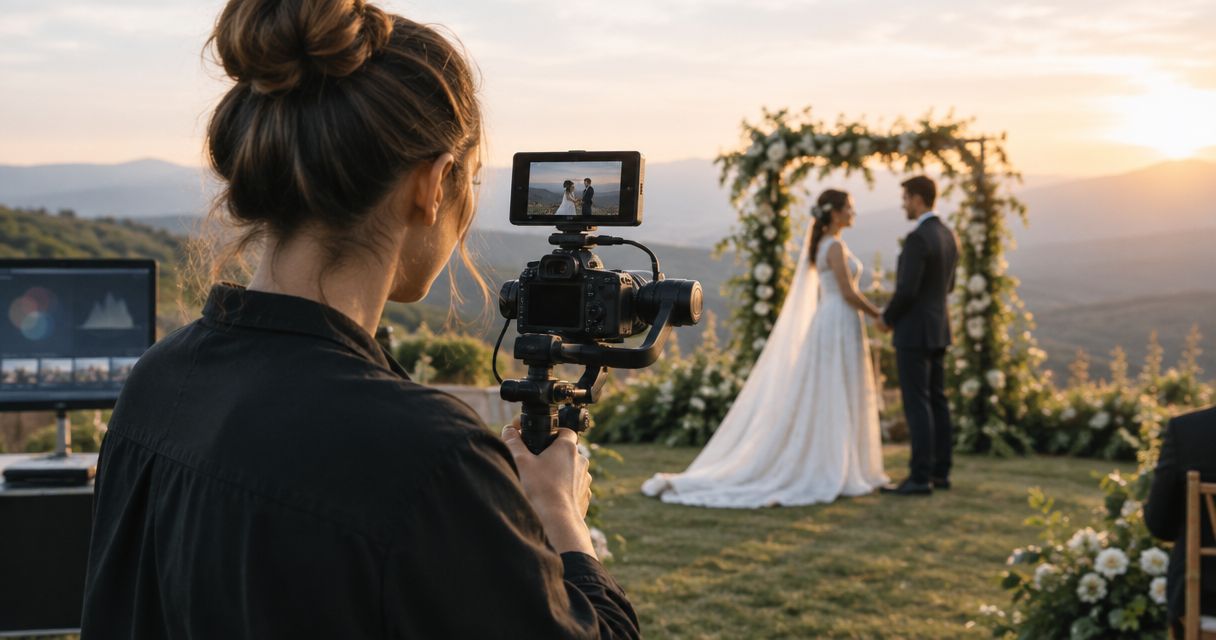
Wedding videography for creative industry professionals means hiring a filmmaker who treats your wedding film as a portfolio-grade production, not a templated highlight reel. Photographers, designers, musicians, and other creative-field couples judge coverage by editing craft, raw footage rights, and visual consistency — not just runtime or price.
- Wedding videography for creative industry professionals prioritizes editing style, raw footage rights, and visual craft over a generic highlight package.
- David Suns Weddings shoots documentary and cinematic-trailer styles suited to couples who work in visual and creative fields.
- Multi-camera coverage matters more for this segment because ceremony and reaction shots double as portfolio material.
- Booking on style fit, not price alone, avoids the most common regret creative couples report after the wedding.
Why wedding videography matters for creative industry professionals
Creative professionals bring reference reels, mood boards, and strong opinions about color grading and pacing into the vendor conversation — most other couples don't. That difference changes what "good coverage" means: a documentary editor and stylist need footage that holds up next to their own body of work, not just a keepsake.
The standard wedding highlight film runs 3 to 5 minutes, a runtime convention most videographers still follow in 2026. For a couple in a visual trade, that short window has to carry more weight — composition, lighting continuity, and sound design all get scrutinized the way a client brief would be. David Suns Weddings builds coverage plans around that scrutiny rather than a one-size template.
Define your visual style before you book
Skip this step and every later decision — camera count, editing pace, delivery format — gets made by default instead of by design.
- Pull 3-5 reference films that match the pacing and color you want, not just the venue
- Decide if you want documentary realism or a stylized cinematic trailer
- Note whether you want narration, vows audio, or a purely visual edit
- Write down non-negotiables (drone shots, black-and-white sequences, specific songs) before the first vendor call
- Compare your reference list against a videographer's actual delivered work, not just their sizzle reel
Audit your venue's lighting and layout
Creative eyes catch lighting problems other couples miss on a venue walkthrough, so use that instinct before booking.
- Walk the ceremony and reception spaces at the actual time of day your wedding will happen
- Flag mixed lighting sources (string lights plus overhead fluorescents) that complicate color grading
- Identify sightline obstructions for a second camera angle during vows
- Check for reflective surfaces (glass, mirrors, water) that a videographer needs to plan around
- Note any low-light reception spaces that will need supplemental lighting gear
Build a shot list that reflects your creative eye
A shot list built from your own taste, not a stock checklist, is what separates a portfolio-ready film from a standard package.
- List 5-7 "must-have" moments in priority order, not a 40-item wish list
- Include at least one unscripted, documentary-style sequence alongside posed shots
- Specify any B-roll you want (venue details, hands, textures) that reflects your aesthetic
- Note which family or vendor introductions need on-camera interviews
- Share the list with your videographer at least two weeks before the wedding, not the morning of
Decide on multi-camera coverage
Single-camera coverage works for small ceremonies, but creative couples who want overlapping angles for editing flexibility usually need more.
- Two cameras minimum for ceremony coverage: one wide, one on reactions
- Three or more for events with a processional, officiant remarks, and guest reactions happening simultaneously
- Confirm whether the second and third camera operators shoot continuously or only key moments
- Ask how footage from multiple cameras gets synced in post — timecode sync beats manual alignment
- Review multi-camera coverage packages if your ceremony has more than one focal point (altar plus musician, for example)
Set raw footage and usage rights expectations
Creative professionals often want to reuse wedding footage for their own portfolios, reels, or client-facing content — that requires a conversation most couples never have.
- Ask directly whether raw, unedited footage is included or available as an add-on
- Clarify usage rights if you plan to post clips on a professional or business account, not just personal social media
- Confirm turnaround time for the final edit separately from any raw footage delivery
- Get delivery format and resolution specs in writing before the wedding, not after
Coordinate your timeline with other creative vendors
A videographer working blind against a florist's install schedule or a DJ's set times loses shots that never come back.
- Share your full day-of timeline with the videographer at least one week out
- Flag overlapping vendor activity (first look during florist setup, for example) that needs sequencing
- Confirm who the videographer coordinates with on-site — planner, photographer, or you directly
- Build 15-20 minutes of buffer around any segment involving multiple creative vendors
Book on portfolio fit, not just runtime
Runtime and price are the easiest things to compare and the least predictive of whether you'll like the final film.
- Watch two or three full, unedited client films from each videographer under consideration, not just trailers
- Ask how many weddings similar to yours in style (documentary, editorial, cinematic) they've shot in the last year
- Compare editing turnaround commitments against your own timeline needs
- David Suns Weddings positions its wedding videography for creative industry professionals around documentary and cinematic-trailer styles, which suits couples judging footage the way they'd judge a client deliverable
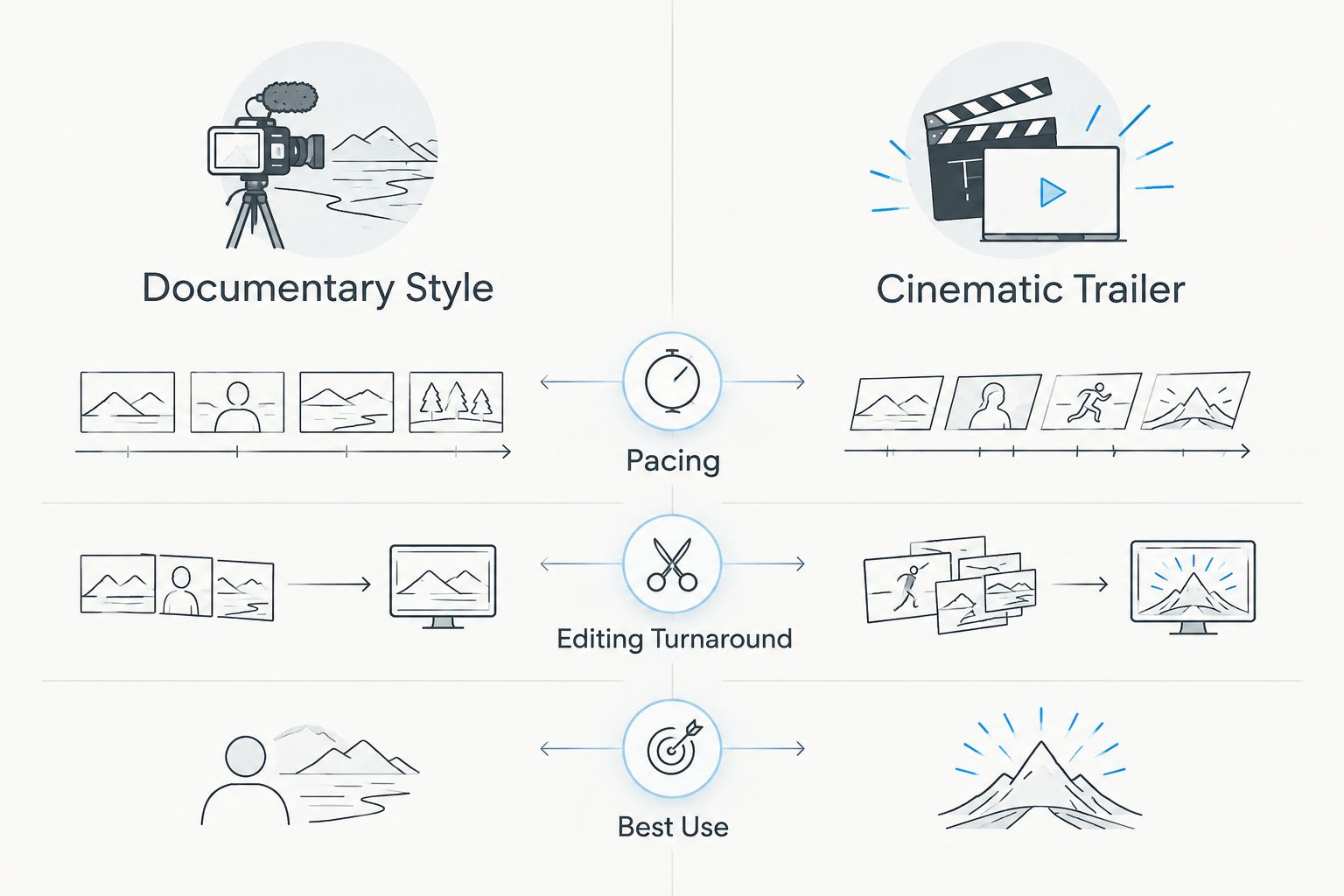
Comparing wedding videography options for creative professionals
| Option | Best for | Key limitation |
|---|---|---|
| Documentary-style coverage | Couples who want unscripted, journalistic footage | Longer edit turnaround since footage is less pre-planned |
| Cinematic trailer | Couples who want a short, stylized film for social sharing | Runtime limits how many ceremony details make the final cut |
| Multi-camera coverage | Couples with overlapping ceremony moments needing multiple angles | Requires a larger crew and more on-site coordination |
| Same-day edit | Couples who want a highlight shown at the reception | Compressed turnaround narrows creative editing choices |
Verdict: documentary-style coverage with a two-to-three-camera setup is the safest default for creative industry professionals in 2026 — it preserves editing flexibility that a purely cinematic-trailer approach doesn't.
“A shot list built from your own taste, not a stock checklist, is what separates a portfolio-ready wedding film from a standard package.”
Common mistakes creative professionals make
- Treating the videographer as a vendor instead of a collaborator — not sharing mood boards or reference reels leaves style decisions to chance.
- Skipping the raw footage conversation — then discovering after the wedding that reuse rights for a personal portfolio weren't included.
- Overloading the shot list — a 40-item wish list built from years of saved reference clips leaves no room for the unscripted moments that actually make a film feel authentic.
- Ignoring venue lighting until the walkthrough — mixed light sources and low-light reception spaces cause color-grading problems that are hard to fix in post.
- Choosing a style based on a trending reel — rather than what the actual venue and timeline can support.
Talk through your wedding video plan
Discuss style, camera count, and footage rights before you book.
Couples working in tech, finance, or other client-facing creative-adjacent fields face a similar decision process — the wedding videography guide for tech industry couples covers how that segment approaches the same style-versus-budget tradeoff.
FAQ
What makes wedding videography different for creative industry professionals?
Creative professionals typically judge footage against their own portfolio standards, so editing style, raw footage rights, and multi-camera coverage matter more than they do for most couples. The core coverage (ceremony, reception, key moments) stays the same.
How long should a wedding highlight film be?
Most wedding highlight films run 3 to 5 minutes, a standard most videographers still follow in 2026. A full-length or documentary cut can run longer if you request raw or extended footage.
Is multi-camera coverage worth it for a small creative wedding?
Yes if your ceremony has overlapping focal points, like a musician performing during the processional or simultaneous reactions you want captured. For a simple, single-focus ceremony, one camera plus a second angle on reactions is usually enough.
Should I ask for raw footage if I work in a creative field?
Ask directly and get it in writing before the wedding. Raw footage access and usage rights for professional reuse are add-ons at many studios, not standard inclusions.
How much wedding video coverage do I need for an 8-hour day?
An 8-hour coverage window is the common default for full-day weddings and typically spans getting-ready through the first hour of reception. Confirm whether your videographer's package matches that window or requires an hourly add-on.
What's the difference between documentary and cinematic-trailer style?
Documentary style favors unscripted, journalistic footage with a longer edit turnaround. Cinematic-trailer style is shorter, more stylized, and built for social sharing, which limits how many ceremony details make the final cut.
Can I get a same-day edit for a wedding video in 2026?
Same-day edit packages exist specifically to deliver a short highlight reel at the reception, but the compressed turnaround narrows creative editing choices compared to a standard post-wedding edit.
How far in advance should creative professionals book a videographer?
Book as soon as your date and venue are confirmed, since videographers with documentary or editorial portfolios tend to fill their 2026 calendar earlier than generalist studios.
One last thing
The detail creative couples skip most often isn't the shot list — it's the sync workflow between cameras. If your videographer can't explain how footage from a second or third camera gets timecode-synced in post, the multi-camera setup you paid for won't actually save editing time; it'll just triple the footage someone has to sort by hand.


