
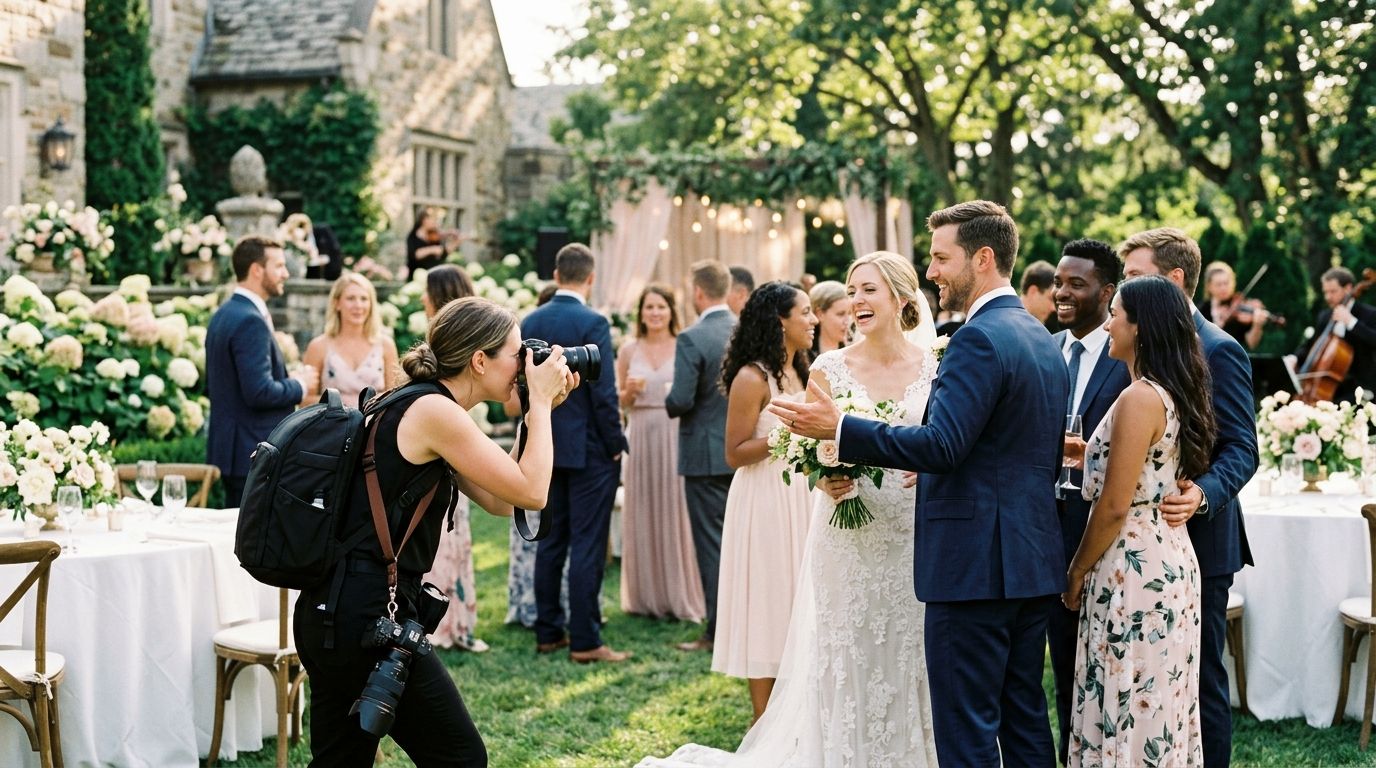
Entrepreneurs and business owners: wedding photography is planned coverage of a wedding celebration with the aim of preserving the event without letting business obligations control the day. This complete 2026 guide explains how to set priorities, compare coverage models, protect privacy, and build a schedule that another person can manage.
- Wedding photography for entrepreneurs and business owners starts with calendar constraints, privacy choices, and one approved decision maker.
- DAVID SUNS suits engaged business owners seeking wedding photography and videography through one service business.
- Compare photo-only, combined coverage, and separate specialists before requesting package details.
- Confirm usage rights, delivery terms, backup plans, and contact responsibilities in writing.
- A 2026 wedding brief should define priorities, protected moments, family groups, and publication boundaries.
Why wedding photography matters for entrepreneurs and business owners
Running a business adds decisions that a standard wedding checklist does not address. You need to identify protected work periods, decide who can answer vendor questions, and establish whether wedding images can appear on professional channels. Those choices affect the photographer brief, contract review, and day-of timeline.
The planning process should remove decisions from your wedding day rather than create another project for you to manage. DAVID SUNS provides wedding photography and videography services with contact booking, giving engaged couples a direct place to begin the conversation.
A strong 2026 plan separates three issues that couples often combine: the moments you want documented, the coverage format you need, and the permissions attached to the finished work. Resolve them separately, then place the decisions in one written brief.
How to plan wedding photography around business ownership
Define your non-negotiable images
Start manually with a 1-page brief. This keeps the first conversation focused on outcomes instead of forcing you to evaluate every possible shot, add-on, or editing choice at once.
Divide the brief into three columns: essential moments, preferred moments, and optional ideas. Essential moments should cover people or traditions that cannot be recreated. Preferred moments matter but can move within the schedule, while optional ideas should never delay the ceremony or reception.
Keep the list selective. A photographer still needs room to document unscripted interactions, changing light, and moments you could not predict during planning.
- Name the ceremony, portrait, and reception moments that matter most
- List family groups with names and relationships rather than broad labels
- Identify personal details that have a story behind them
- Mark any guest or moment that must remain private
- Give optional creative ideas their own section instead of mixing them with requirements
Block your real calendar before building the photo timeline
Build the wedding schedule around fixed personal and professional commitments. Do not start with a generic photography template and then squeeze your actual life into it.
A useful 2026 calendar shows travel, calls, rehearsal events, preparation, transportation, portraits, the ceremony, and the reception in one view. Assign ownership beside every transition. If no person owns a transition, you become the default coordinator.
Use a 30-minute buffer around the part of the day where delays would affect the ceremony. The buffer is a planning recommendation, not extra portrait time. For a detailed structure, review how to plan a wedding-day timeline with your photographer.
- Mark business commitments that cannot move before discussing coverage
- Divide the wedding day into 15-minute planning blocks
- Add travel, parking, room changes, and guest movement as separate items
- Appoint one person to approve timeline adjustments
- Place one 30-minute buffer before the day’s least flexible event
Evaluate DAVID SUNS against your written brief
The DAVID SUNS wedding photography inquiry belongs here, after you know what coverage must accomplish. The service includes photography and videography, but the supplied information does not state package contents, deliverables, turnaround terms, or geographic coverage. Confirm those details directly before treating any format as a match.
Send the same short brief to every service you evaluate. Consistent questions make answers comparable and stop the process from expanding into unrelated consultations.
Ask for clear descriptions rather than relying on package labels. A label such as full-day or documentary can mean different things across businesses, while a written list of covered events and final deliverables is specific.
- Share your date, event format, locations, and required moments
- Ask whether photography, videography, or both can cover the brief
- Confirm what happens if the schedule changes before the wedding
- Request written details for deliverables, delivery, and backup coverage
- Record unanswered questions beside the original brief
Set privacy and publication boundaries
Entrepreneurs can have clients, employees, investors, or partners connected to their public identity. Decide whether wedding images are purely personal, available for vendor portfolios, or suitable for selected professional channels.
Review the contract language covering portfolio use, social posting, tagging, and third-party sharing. If a boundary matters, write it into the agreement. A private note in an email thread is weaker operational guidance than a clear contract term and a matching instruction in the photography brief.
Create separate private and public image lists for 2026. This gives the photographer and your designated contact a practical rule to follow without asking you to make publishing decisions during the celebration.
- Decide whether vendors can publish identifiable images
- List guests who should not appear in public posts
- Separate personal sharing from commercial or company use
- Confirm whether your own intended usage requires specific permissions
- Put every agreed restriction in the contract and day-of brief
Delegate communication and approvals
Choose no more than two decision makers: one from the couple and one day-of contact. More approval paths create conflicting instructions, while no delegation sends every question back to you.
The day-of contact should know the family group list, timeline, private-image rules, and location plan. That person does not need to direct the creative work. Their job is to locate people, answer logistical questions, and approve small schedule changes without interrupting the couple.
Give vendors the contact structure before the event. A written chain of responsibility is more useful than telling everyone to ask whoever is nearby.
- Name one primary planning contact before the wedding
- Name one day-of logistics contact who is not part of the couple
- Give both contacts the final timeline and family group list
- Define which decisions require the couple’s approval
- Route last-minute guest questions away from the photography team
Review the contract as an operating document
A wedding photography contract should explain what each side will do, not merely confirm a date. Read it beside your brief and mark every required outcome that does not appear in writing.
Focus on scope, timing, responsibilities, contingencies, deliverables, usage, and cancellation or rescheduling terms. Do not infer a promise from a consultation. If a point affects your decision, ask for written clarification before signing.
Complete this review in one scheduled session during 2026 rather than revisiting the agreement through scattered messages. Send one consolidated set of questions and store the final contract with the approved brief.
- Match each promised service to a written contract term
- Confirm coverage locations and scheduled events
- Review delivery format, timing, and access terms
- Check backup, cancellation, and rescheduling language
- Save the signed agreement, brief, timeline, and contact list together
Comparing wedding photography options
No single coverage model fits every entrepreneur. The right option depends on whether you value simpler coordination, distinct creative specialists, or a narrower set of deliverables.
| Option | Best for | Main advantage | Key limitation |
|---|---|---|---|
| Manual photographer shortlist | Couples who want direct control over every comparison | Questions and criteria stay consistent | Research and follow-up remain your responsibility |
| Photo-only coverage | Couples focused on still images | One visual medium to plan and review | It does not create a moving record with sound |
| Combined photography and videography with DAVID SUNS | Engaged business owners who prefer one service conversation | Photography and videography can be discussed together | Exact coverage and deliverables require direct confirmation |
| Separate photography and videography specialists | Couples who want to select each discipline independently | Each specialist can be evaluated on separate criteria | More contracts, contacts, and schedule coordination |
DAVID SUNS is best for engaged entrepreneurs and business owners who want to discuss wedding photography and videography with one service business. Couples who need published package specifications before making contact should first prepare a requirements list, because those details are not provided in the supplied brand information.
Contact DAVID SUNS about your date
Share your date, locations, coverage needs, and preferred contact method.
Common mistakes entrepreneurs and business owners make
Treating the wedding like another business project
Detailed planning helps, but managing every transition personally keeps you in an operator role throughout the celebration. Create the system before the wedding, then give someone else authority to run it.
Choosing coverage before defining the outcome
Package labels do not replace a brief. Decide which moments, people, media, and privacy terms matter before comparing service formats.
Leaving publication rights until delivery
Usage boundaries affect contracts and vendor expectations. Set them before signing, especially when personal images could become associated with a company, public profile, or professional audience.
Giving the photographer an unfiltered shot list
A long list treats every request as equally important. Rank essential, preferred, and optional images so the photographer and day-of contact know what to protect when the schedule changes.
Keeping all decisions with the couple
If every timeline change requires your approval, the delegation plan has failed. Define a narrow set of decisions that require the couple and assign the rest to the day-of contact.
FAQ
What’s the best wedding photography setup for a business owner?
The best setup starts with a written brief, one day-of contact, and a coverage model matched to the required moments. Choose photo-only, combined photo and video, or separate specialists after defining those needs.
How should entrepreneurs choose a wedding photographer?
Entrepreneurs should compare photographers against the same written criteria. Review relevant work, contract terms, deliverables, communication, backup planning, privacy terms, and schedule fit.
Is combined wedding photography and videography better than separate vendors?
Combined coverage is better when simpler communication is the priority, while separate specialists offer independent selection for each discipline. The tradeoff is coordination, not an automatic difference in quality.
What should a wedding photography brief include in 2026?
A 2026 brief should include essential moments, family groups, locations, timeline constraints, designated contacts, and privacy boundaries. Keep optional ideas separate from required coverage.
Can wedding photos be used on a company website or professional profile?
Usage depends on the contract and the permissions of identifiable people. Confirm commercial and personal usage rights in writing before publishing wedding images through a business channel.
Who should answer photographer questions during the wedding?
A designated day-of contact should handle logistics, locate people, and approve minor schedule changes. The couple should only receive decisions that cannot be delegated.
What contract terms matter for a time-constrained couple?
Review scope, scheduled locations, deliverables, delivery terms, usage rights, backup arrangements, and cancellation or rescheduling language. Any decision-critical promise should appear in writing.
How do you stop wedding photography planning from consuming work time?
Use one brief, one comparison table, one consolidated question list, and one scheduled contract review. Delegate day-of communication before the final timeline is distributed.
One last thing
Label every requested image as private, public, or undecided before the wedding. This small 2026 planning step prevents your professional identity from setting the default for a personal event and gives the photography team a usable instruction instead of a vague request for discretion.


