
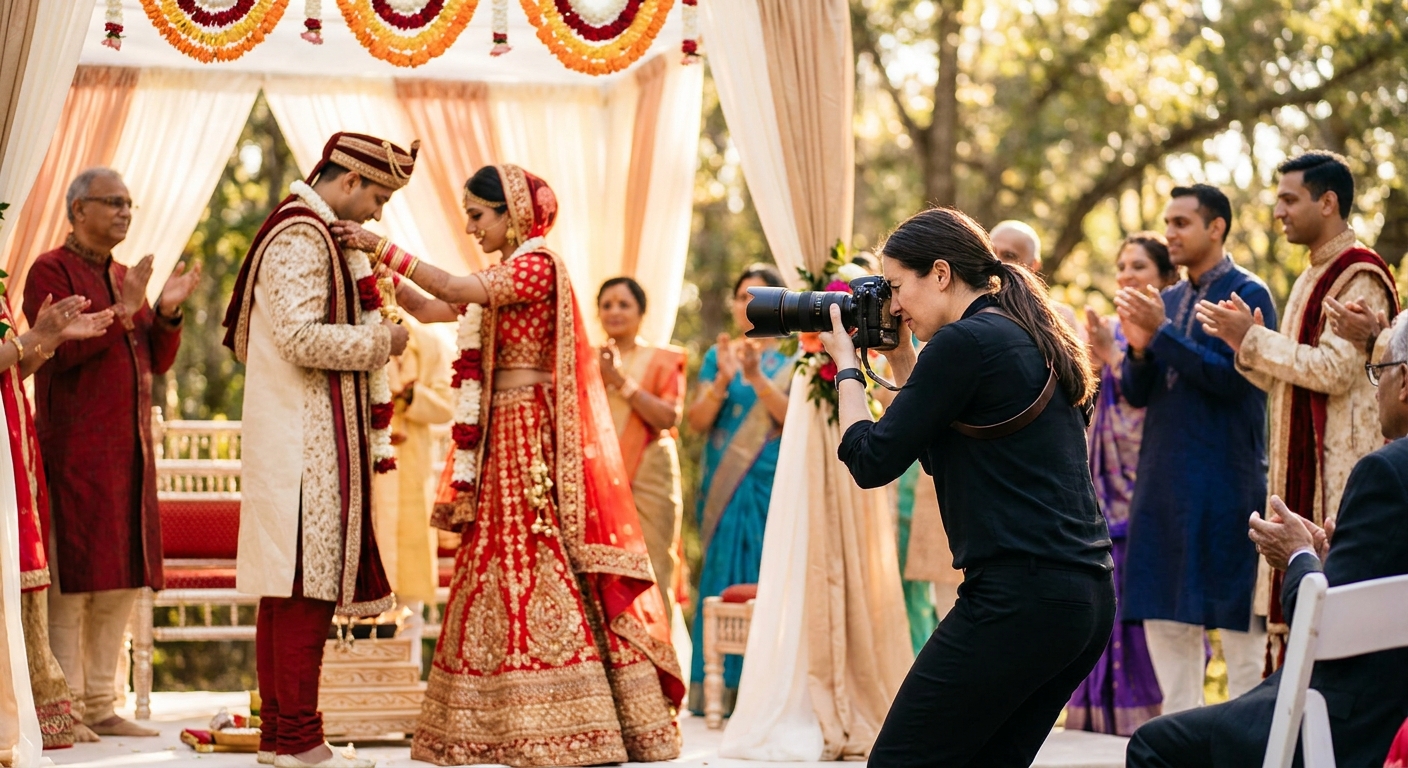
Cultural ceremonies rarely fit a standard eight-hour wedding day, and hiring the wrong photographer for a multi-ritual celebration means missing the moments that actually matter to your family.
- A cultural wedding photographer needs ritual-specific experience, not just a good portfolio — ask for examples from your exact tradition.
- Multi-day celebrations like South Asian or Nigerian weddings need coverage built around three to five separate events, not one eight-hour block.
- Documentary-style coverage protects unscripted ritual moments better than posed-heavy packages built for single-day Western weddings.
- Buy a photographer who has shot your specific ceremony type before; skip anyone who treats it as 'just another wedding' with extra outfits.
Why this matters
A cultural wedding photographer who has never covered a baraat, a tea ceremony, or a jumping-the-broom moment will miss the timing cues that make those rituals work on camera. Elders move fast, officiants don't pause for a lens change, and a lot of the most meaningful footage happens once, without a rehearsal.
The stakes go up further when the celebration spans multiple days. A photographer built for a single-venue, single-day format will burn out or run out of storage and coverage hours before the third event even starts. Picking the right fit before you book, not after the sangeet, is what separates couples who get their full story documented from couples who get a highlight reel of the reception only.
Who this is for
This guide is for couples planning a wedding rooted in a specific cultural or religious tradition — South Asian, East Asian, African, Middle Eastern, Jewish, or any ceremony built around multi-part rituals rather than a single ceremony-and-reception format. It's also for couples blending two traditions into one celebration, where the photographer has to understand two ritual timelines instead of one. If your wedding is a single afternoon at a courthouse or a backyard with no ritual sequence to track, a simpler booking works fine — this guide is for the more complex version.
For a broader look at vetting any photographer before you sign a contract, David Suns Weddings covers the general screening process alongside these culture-specific criteria.
What to look for in a cultural wedding photographer
Direct experience with your specific ritual sequence
A photographer who has shot a mandap ceremony understands where to stand during the saat phere and when the priest will signal the next step. Someone shooting it for the first time is guessing, and guessing during a once-only ritual means missed frames. Ask for a portfolio filtered to your exact tradition, not a general "multicultural weddings" tag.
Comfort with multi-day, multi-location schedules
Many South Asian, Nigerian, and Chinese celebrations run across three to five separate events spread over two or three days — mehndi, sangeet, ceremony, and reception, each at a different venue. A photographer used to single-day coverage will underestimate the hours needed and the number of outfit and lighting changes involved. Ask how they structure coverage across multiple days before you sign anything.
Respect for religious and cultural protocol
Some ceremonies restrict where cameras can stand, ban flash during specific rites, or require modest dress from the photography team. A photographer who asks about these rules upfront, rather than after showing up in shorts and a flash rig, understands what's actually at stake culturally, not just visually.
Team size that matches the event scale
A single shooter can cover an intimate ceremony fine. A three-day celebration with 300 guests across two families usually needs a second shooter, sometimes a videographer running parallel to the photo team. Undersized teams miss simultaneous moments — the groom's entrance and the bride's prep happening at the same time in different rooms.
Documentary instinct over posed-only style
Ritual moments — a father's reaction during a giving-away ceremony, an aunt crying during a blessing — happen once and fast. A photographer trained mainly in posed portrait work will miss them chasing a shot list. Documentary-leaning shooters catch the unscripted second, then move to portraits afterward.
Family and elder comfort with the camera
Older relatives are often less comfortable being photographed up close mid-ritual. A photographer who works quietly, without stepping into sightlines or asking people to repeat a gesture for the camera, keeps the ceremony itself intact instead of turning it into a photo shoot.
Top picks by ceremony format
The marathon pick — multi-day celebration coverage. Built for weddings that run three or more separate events across two to three days, this format plans staffing and turnaround around the full arc rather than one ceremony. Multi-day celebration coverage fits South Asian, Nigerian, and other multi-event traditions where the mehndi and the reception need equally serious coverage. Buy if your celebration spans more than one day.
The travel pick — destination cultural weddings. When the ceremony happens in a home country or ancestral region rather than where the couple currently lives, logistics matter as much as style — travel days, local vendor coordination, unfamiliar lighting conditions. Destination wedding photography is built around exactly that kind of variable. Consider if the venue is more than a few hours from home.
The purist pick — documentary-style ritual coverage. For couples who want the tea ceremony, the unity ritual, or the vow exchange captured as it happens rather than restaged for a better angle, documentary-style wedding films prioritize catching the moment once over getting a technically perfect repeat. Buy if authenticity matters more to your family than cinematic polish.
The low-key pick — intimate ceremony coverage. Not every cultural wedding is 300 guests over three days. Smaller ceremonies with a tighter guest list and a single ritual sequence need less staffing and a simpler timeline, and paying for a full multi-day team here is overkill. Consider if your ceremony fits in a single afternoon with under 50 guests.
The reception-only shortcut — same-day edit films. A quick-turnaround highlight reel shown at the reception works well for single-day Western-format weddings, but it wasn't built to compress a three-day, multi-ritual celebration into a five-minute montage. Skip it for full multi-day cultural coverage; it strips out the ceremony context that makes those rituals meaningful on rewatch.
What to avoid
- A portfolio full of Western church-and-reception weddings with one "multicultural" tag. That's not the same as direct experience with your ritual sequence — ask for named examples, not a category label.
- A single-shooter package sold as sufficient for a three-day event. It looks cheaper upfront and leaves gaps once the schedule doubles in length.
- Skipping the pre-ceremony planning conversation. Multi-day cultural weddings often involve coordination well before the photography contract — families comparing dates, rituals, and even matching birth charts through practices like kundli matching before marriage, and a photographer who doesn't ask about the full ritual calendar will build a shot list around the wrong assumptions.
Verdict comparison table
| Coverage type | Best for | Days covered | Verdict |
|---|---|---|---|
| Multi-day celebration coverage | 3+ event traditions (South Asian, Nigerian) | 2-3 days | Buy |
| Destination cultural wedding | Ceremony abroad or in home country | Travel + ceremony days | Consider |
| Documentary-style films | Ritual-heavy ceremonies, unscripted moments | 1 day | Buy |
| Intimate ceremony coverage | Small guest list, single ritual | 1 day | Consider |
| Same-day edit film | Single-day Western format only | 1 day | Skip for cultural multi-day |
Plan coverage for your ceremony
Talk through your ritual schedule before you book a package.
FAQ
What does a cultural wedding photographer actually do differently?
A cultural wedding photographer plans coverage around your specific ritual sequence instead of a generic ceremony-and-reception timeline. That means knowing when a baraat, mandap, or tea ceremony moment happens and positioning for it in advance, not reacting after the fact.
How much does cultural wedding photography cost in 2026?
Cost depends heavily on how many days and locations the celebration spans, since a three-day multi-event wedding needs more coverage hours than a single-afternoon ceremony. Ask any photographer for a quote based on your actual ritual schedule rather than a flat single-day rate.
Do I need a separate videographer for a multi-day ceremony?
Not always, but a team that runs a videographer alongside the photographer captures simultaneous moments neither could get alone, which matters more when events run in parallel across a multi-day schedule. For single-ritual, single-day ceremonies, one photographer is often enough.
Is destination cultural wedding photography different from a local booking?
Yes. Destination coverage has to account for travel days, unfamiliar venues, and local logistics on top of the ritual sequence itself, which is why it's usually planned as its own package rather than a standard local booking.
How early should I book a cultural wedding photographer?
Book as soon as your ritual calendar and venue dates are set, since photographers experienced in your specific tradition get booked out well ahead of the 2026 wedding season. Multi-day celebrations especially need early scheduling to lock in enough coverage hours.
Can one photographer cover a full multi-day cultural wedding alone?
It's possible for smaller guest counts, but most three-day, multi-event celebrations benefit from a second shooter or a paired videographer to avoid missing simultaneous moments. A single shooter working alone across a full multi-day schedule risks burnout by the final event.
What's the difference between documentary and traditional cultural wedding coverage?
Documentary-style coverage captures rituals as they happen, unscripted, while traditional coverage leans on posed portraits and staged re-creations of key moments. For ritual-heavy ceremonies, documentary style tends to preserve more of what actually occurred.
Should I choose a same-day edit film for a multi-day wedding?
No — same-day edit films are built for single-day Western-format weddings and compress everything into a short highlight reel, which strips out the ceremony detail that makes multi-day cultural celebrations meaningful. A longer-form documentary edit fits better.
One last thing
The detail most couples skip is asking a photographer to name the specific rituals in their ceremony back to them during the consultation — if they can't say what a mehndi, a saptapadi, or a tea ceremony actually involves, they haven't shot enough of them to plan around the timing. That one question filters out more mismatched bookings than any portfolio review.


