
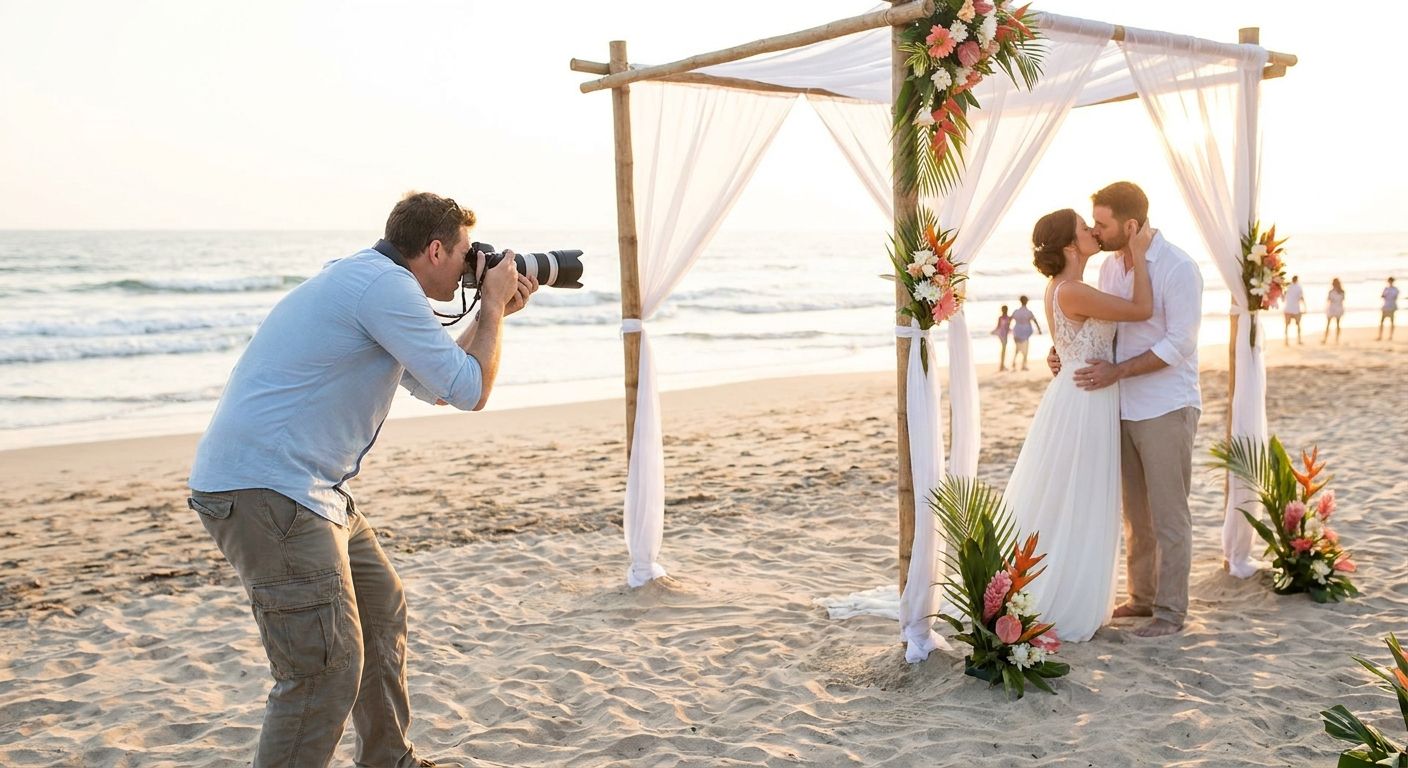
Beachfront ceremonies photograph differently than any other wedding setting — the light shifts every 15 minutes, the sand ruins tripod stability, and salt air fogs lenses if a photographer doesn't know to bag their gear between setups. This guide breaks down what actually matters when hiring a beachfront wedding photographer in 2026, and which David Suns Weddings coverage options fit which kind of beach ceremony.
- A beachfront wedding photographer needs tide tables and sunset timing, not just a nice portfolio — book ceremony start within 45 minutes of sunset.
- Elopement photography for beach ceremonies fits guest counts under 20 and cuts posed-portrait time by roughly half.
- Drone footage coverage captures shoreline shots impossible from the sand — skip it only if local beach drone permits aren't secured.
- Destination wedding photography packages matter most when over half the guest list is flying in for the beach date.
- Studio-trained photographers without sand experience are the most common mismatch for 2026 beachfront bookings.
Why this matters
A beach ceremony gives you maybe 90 minutes of usable light before the sun drops below the horizon and everything goes flat and blue. Get the timeline wrong and you lose the shots couples actually want — vows against the water, golden-hour portraits, the exit walk down the sand. Hire the wrong photographer for the setting and you get studio-quality headshots that ignore the tide, the wind, and the fact that heels sink six inches into wet sand.
Beachfront weddings in 2026 also come with logistics that inland venues don't: permits, tide schedules, and backup plans for wind that can knock over an arch in under a minute. The photographer you hire needs to plan around all of it, not just show up with a camera.
Who this is for
This guide is for couples booking a ceremony directly on sand or within view of open water — not a banquet hall with an ocean-view window. If you're planning an intimate gathering under 20 guests, elopement photography for beach ceremonies is worth reading alongside this one, since a lot of the timing advice below applies double when you're working with a stripped-down schedule and no wedding planner running interference.
It's also for couples flying guests in from out of state, where the beach setting is part of the draw and the photography needs to justify the travel cost with images that couldn't be shot anywhere else.
What to look for in a beachfront wedding photographer
Tide and sunset scheduling experience
A photographer who books your ceremony at 4 PM without checking the tide table is guessing. Low tide exposes more sand and cuts glare; high tide pushes the ceremony line closer to dry ground but can flood a poorly chosen spot. Ask for the exact sunset time on your date and confirm the ceremony start accounts for it — in 2026, most coastal venues publish tide charts a year out, and a photographer who's shot that beach before will already have the number.
Gear built for salt air and sand
Salt spray corrodes lens coatings and camera bodies faster than any other environment a wedding photographer works in. Ask whether they carry weather-sealed bodies and how they protect equipment between the ceremony and reception — a photographer changing lenses in open wind on sand is asking for a sensor full of grit.
A lighting plan for open shade
Beaches have almost no natural shade, which means midday portraits produce harsh shadows under the eyes and squinting in every shot. A photographer who knows the setting will either push ceremony timing toward golden hour or bring reflectors and diffusion gear to soften direct sun.
Comfort directing people on uneven ground
Sand shifts under formalwear, heels, and folding chairs. A photographer experienced with beach ceremonies knows how to pose a wedding party without anyone sinking, tipping, or ruining a hemline, and how to keep a first look moving when wind is pushing veils sideways.
A realistic backup plan
Wind gusts above 20 mph move light decor, flip programs, and can make audio unusable for a videographer standing 15 feet away. Ask what happens if conditions turn — a solid answer includes a fallback shot list and, if videography is part of the package, wind-screened audio gear.
Portfolio work shot on similar sand, not just similar oceans
A photographer's portfolio full of Caribbean turquoise water doesn't tell you how they'll handle a gray, wind-whipped New England beach in October. Ask specifically for galleries shot in conditions close to yours.
Top picks for beachfront ceremony coverage
The intimate pick — Elopement Photography for Beach Ceremonies. Built for guest counts under 20 and ceremonies that run under 30 minutes. The stripped-down timeline means more of the shoot window goes to portraits instead of formal group photos. Buy if your guest list is small and you want the beach itself to be the main subject, not the crowd. See elopement photography for beach ceremonies.
The travel-heavy pick — Destination Wedding Photography. Fits ceremonies where most guests are flying in, since the package structure accounts for multi-day coverage around a single travel window rather than a single evening. Buy if over half your guest list needs a flight to reach the beach. Check destination wedding photography.
The wildcard pick — Drone Footage Coverage. Adds aerial shots of the shoreline, the ceremony arch from above, and the guest arrangement on sand — none of which a ground photographer can capture. Consider it an add-on rather than a standalone booking, and confirm local drone permits are cleared for your specific beach before you commit. Look at drone footage coverage.
The pre-wedding pick — Beach Proposal Engagement Photos. Books the same beach ahead of the wedding date to test lighting, tide timing, and photographer chemistry before the actual ceremony. Buy if you haven't worked with a photographer before and want a trial run on the exact location. View beach proposal engagement photos.
The full-day pick — Documentary-Style Coverage. Runs candid, unposed coverage from getting-ready through reception exit rather than a heavily directed shot list. Consider it if you want the beach setting captured as it naturally unfolds rather than staged — it pairs well with any of the packages above as a coverage style rather than a separate booking.
Lock your beachfront date
Check availability and coverage options for your ceremony date.
What to avoid
Studio-trained photographers with no sand experience. A photographer who's excellent in a controlled indoor venue can still struggle with wind-blown hair, shifting light every 15 minutes, and sand ruining a tripod's footing. Ask directly how many beach ceremonies they've shot in the last year.
Glass and metal-heavy gear in salt air. Photographers who don't bag equipment between setups risk corrosion that shows up as spotting on lenses within a season. It won't ruin your wedding day, but it's a sign of inexperience with the environment.
Booking coordination as an afterthought. Smaller beachfront ceremonies often run without a planner, which means timeline coordination between photographer, officiant, and other vendors falls on the couple. If your ceremony is small, coordinating with a DJ built for elopements and micro weddings follows the same stripped-down logistics your photography timeline needs — both vendors should be working off the same tide-and-sunset schedule, not two different assumptions about when the ceremony actually starts.
Verdict comparison
| Coverage type | Best guest count | Key benefit | Verdict |
|---|---|---|---|
| Elopement (beach) | Under 20 | Faster timeline, more portrait time | Buy |
| Destination wedding | 30+, mostly traveling | Multi-day coverage structure | Buy |
| Drone footage add-on | Any | Aerial shoreline shots | Consider |
| Beach proposal engagement | N/A (pre-wedding) | Location and chemistry test run | Buy |
| Documentary-style full day | Any | Unposed, natural coverage | Consider |
“The tide doesn't wait for portraits, so shoot the vows first and the golden hour second.”
FAQ
What's the best time of day for a beachfront wedding photographer?
Ceremony start within 45 minutes of sunset gives a beachfront wedding photographer the most usable light for both vows and portraits. Midday ceremonies produce harsh shadows since beaches offer almost no natural shade.
Is beachfront wedding photography more expensive than a standard venue?
Pricing varies by package and location, so check current rates directly with the photographer. Beachfront shoots sometimes need extra gear protection for salt air, which some photographers factor into pricing.
How much does drone footage coverage add to a beach wedding package?
Drone coverage is typically booked as an add-on rather than bundled into a base package. Confirm local beach drone permits are cleared before adding it, since some coastal areas restrict flights over public beaches.
What should I ask a photographer before booking a beach ceremony?
Ask for the exact sunset time on your date, their gear protection plan for salt air, and how many beach ceremonies they've shot in the past year. A photographer without a direct answer to tide or sunset timing likely hasn't planned a beach wedding before.
Can I get engagement photos at the same beach as my wedding?
Yes, and it's one of the most useful pre-wedding steps for a beachfront ceremony. A beach proposal engagement session tests lighting, tide timing, and photographer chemistry on the exact location before the wedding date.
Is elopement photography different from full wedding photography on a beach?
Elopement photography for beach ceremonies runs a shorter, less formal timeline built for guest counts under 20. Full wedding photography includes group formals, a reception timeline, and typically a longer coverage window.
What ruins most beachfront wedding photos?
Midday harsh light, wind gusts above 20 mph moving decor and veils, and photographers unfamiliar with shooting on sand are the three most common issues. Scheduling ceremony start near sunset avoids the first problem entirely.
Do I need a backup plan for a beachfront ceremony in 2026?
Yes — wind and weather change fast near open water, and a solid photographer will have a fallback shot list ready. Ask about this directly before booking rather than assuming it's covered.
One last thing
Most couples plan their beachfront ceremony around the sunset time on the wedding date itself — the smarter move is checking the sunset time a full hour earlier and building the timeline backward from there, since setup, walking guests to the ceremony spot, and settling everyone on shifting sand always takes longer than the rehearsal suggested.


