
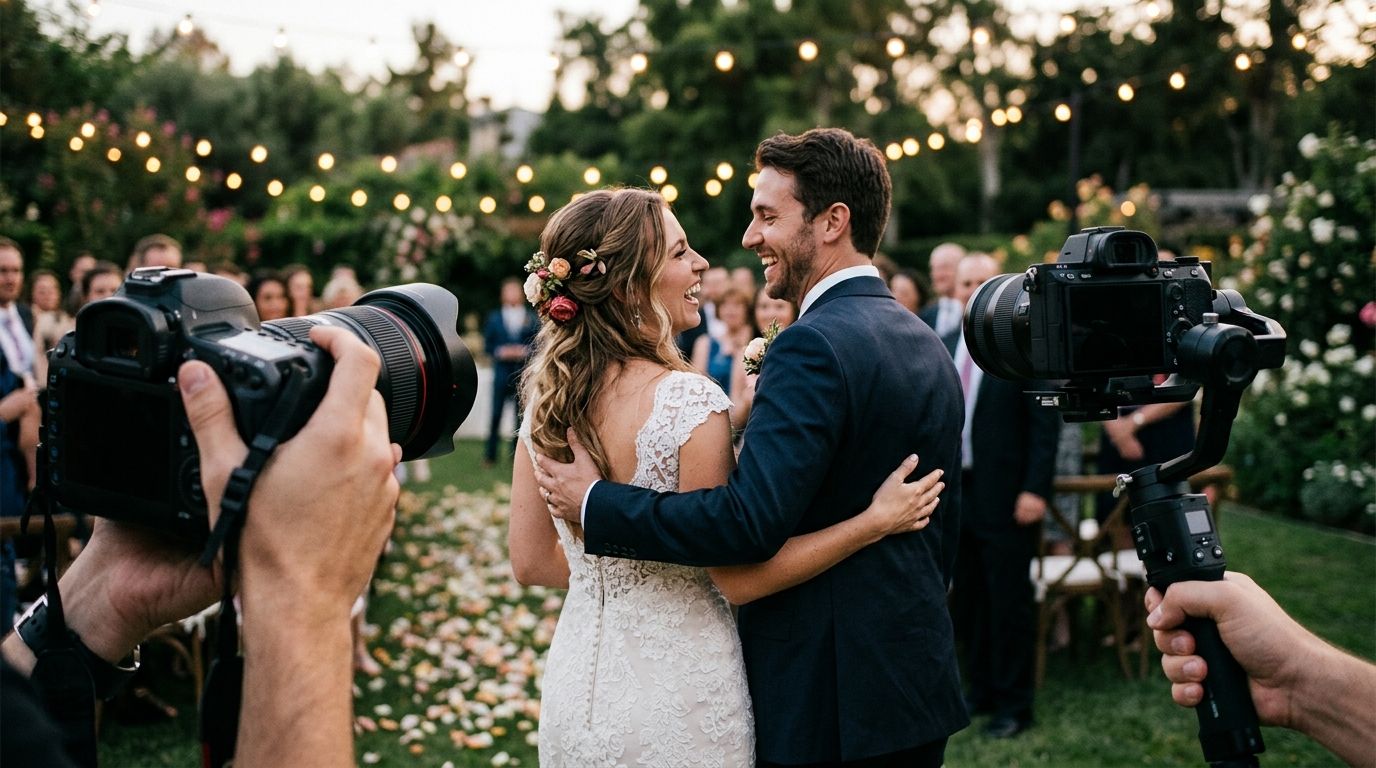
A wedding photo and video bundle is worth it in 2026 if you want both photographs and a film, and the proposal gives each format the coverage it needs. Choose the coverage and deliverables first; treat a shared booking as a convenience, not proof of better work or better value.
- Is a wedding photo video bundle worth it? Yes, when both photo and video coverage match your priorities.
- A shared booking does not guarantee separate shooters, complete audio, or the edits you expect.
- David Suns Weddings offers wedding photography and videography; confirm joint coverage and deliverables before booking.
- Choose separate specialists when either portfolio or coverage plan falls short.
Is a wedding photo and video bundle worth it in 2026?
Yes, if you genuinely want both formats and the written scope works for both. A bundle is not worth choosing simply because it puts photography and videography on one proposal. Compare the actual people, schedule, final files, and contract before deciding.
| Option | Best for | Advantage | Trade-off |
|---|---|---|---|
| Photo and video booked together | Couples who want both formats and approve both portfolios | One conversation can align the creative brief and wedding-day plan | The photo and video scopes still need separate scrutiny |
| Photo and video booked separately | Couples who prefer different specialists for each format | You can choose each professional on their own work | You must align schedules, responsibilities, and contract terms |
| Photography only | Couples who chiefly want still images | Your brief stays focused on photographs | You will not receive a professionally produced wedding film through that booking |
These are ways to book, not fixed package tiers. Start with the David Suns Weddings photography and videography service if you want to discuss both formats, but ask for the proposed coverage in writing. The business offers both services; that alone does not establish that a combined package is available or what it includes.
Why this matters
A wedding photograph can preserve an expression or a family grouping. Video can preserve motion, a spoken vow, or the way a room sounded. The formats answer different questions about the same day, so decide whether you want both before you assess how they are sold.
In 2026, the useful comparison is not bundle versus separate bookings in the abstract. It is one proposed photo-and-video plan against another plan for your actual ceremony, portraits, and reception. If you care most about the vows, ask how sound will be captured. If family portraits matter most, ask who will manage the photo list while video coverage continues.
When booking together makes sense
Choose a joint booking when you like the photography and the videography on their own merits. Watch a finished wedding film, not just a short excerpt, and examine complete photo galleries where available. A strong portfolio in one format does not answer what you will receive in the other.
Ask how the photo and video teams will work during moments that cannot be repeated. Where will they stand for the ceremony? Who follows a couple leaving the ceremony, and who stays for guest reactions? The aim is not to prescribe camera positions from home. It is to establish that both formats have a plan for the moments you care about.
A shared brief also helps when you have specific priorities. Tell the team which family groupings matter, which spoken moments belong in the film, and which parts of the day you would regret missing. Then check that the proposed schedule leaves room for each. The right bundle is the one whose written plan protects both formats.
Check the coverage plan, not the package name
A single booking does not tell you how many people will work at the wedding or whether photography and videography happen at the same time. Ask who is assigned to each role, when each person's coverage starts and ends, and what happens when important events occur in different places.
If getting-ready moments happen in separate rooms, identify which room receives photo coverage, which receives video coverage, and when the team moves. If a ceremony and guest reactions are priorities, ask how each will be recorded without assuming that one camera can cover every angle at once. Your answer should describe a workable sequence, not just say that everything is covered.
The 2026 decision is straightforward: if the proposal is clear about people, locations, and handoffs, a joint booking has a practical advantage. If those details remain unclear, a bundle label does not solve the coverage problem.
When separate bookings are the better choice
Book separately if you love one photographer's work and a different videographer's films. You should not compromise on either portfolio simply to put both services under one agreement. The same applies when a proposed joint plan handles still images well but cannot explain how it will record a ceremony or speeches you want to hear again.
Separate bookings give you independent choices, but they also make coordination your responsibility. Share the same wedding-day timeline, venue rules, and priority moments with both professionals. Ask each how they will work around the other during the ceremony, portraits, and reception, rather than assuming they will settle every conflict on the day.
Review each agreement on its own terms. The photographer's editing and delivery commitments do not define the videographer's, and the reverse is also true. In 2026, choose separate specialists when their combined plans serve you better than the joint proposal, even if coordinating them takes more work.
When photography alone is enough
Photography alone is a coherent choice if still images are the keepsakes you most want. Make that decision deliberately: guest recordings are not a substitute for a videography plan if hearing the vows or speeches later matters to you. Conversely, there is no reason to add a film just because it appears beside photography in a proposal.
Write down what you expect to revisit after the wedding. If your list centers on portraits, candid interactions, and images to share with family, evaluate photography against those needs. If your list includes voices and movement, evaluate videography as its own service before deciding whether to book it together with photography.
Why bundle value varies
- Your priorities: A film has more value to you when sound and movement are part of what you want to preserve; photographs serve different uses.
- Coverage overlap: Ask whether the proposed people and schedule can cover simultaneous moments in the locations you have planned.
- Finished work: Compare complete galleries and finished films where available. A selection of highlights cannot show every aspect of a delivered project.
- Audio plan: If spoken moments matter, ask what the team intends to record and how those recordings relate to the finished film.
- Deliverables: Identify the photographs and video edits named in the proposal. Do not assume that footage, additional edits, or other files are included.
- Contract clarity: Check the coverage period, named services, delivery terms, and the process for changes before you commit.
These factors give you a fair test in 2026 without assuming that a bundle includes a particular crew, film type, or delivery format. Put competing proposals side by side and mark each factor as answered or unanswered. An unanswered item is a question for the provider, not a feature you can count on receiving.
How to compare photo and video proposals
Begin with the work you want to keep. List the moments that need still images, the moments that need sound or motion, and those that need both. A ceremony can appear in all three categories for different reasons: portraits before it, spoken vows during it, and reactions afterward. Your priorities give each provider a usable brief.
Next, request a written account of who covers each part of the day. Keep people, coverage, and deliverables distinct. Knowing that video is listed tells you nothing by itself about the assigned role, when coverage happens, or which edited files you receive. Make the same distinction for photography.
Then look at finished work. Pay attention to consistency across changing light and locations in a photo gallery, and to whether you can follow key events and hear important speech in a film. These are questions about the work in front of you, not promises a package title can make. If a provider cannot show a type of work you want, ask how they plan to deliver it.
Finally, read the agreement against the discussion. A conversation about filming speeches is not the same as a written video deliverable. A request for family portraits is not a substitute for an agreed coverage schedule. Before signing in 2026, resolve any difference between what you expect and what the document actually says.
The proposal should make these points easy to find:
- Who is responsible for photographs and who is responsible for video.
- Which events and locations each service covers.
- How the team handles moments happening at the same time.
- Which final photo and video files are specified.
- What the agreement says about changes and delivery.
For an engaged couple weighing both formats, David Suns Weddings is best for a discussion of photography and videography together, not an assumed bundle with assumed inclusions. Bring the checklist to that discussion and evaluate the written answer the same way you would any other proposal.
Which deliverables should you ask about?
Ask what the photography deliverables are and what the videography deliverables are, using the provider's own proposal rather than a generic checklist of possible extras. Specify whether you want a film of the ceremony, a shorter edit, or another form of finished video, then confirm what the provider actually offers. Do the same for photographs: discuss the moments you want covered and how the finished images will be delivered.
Separate the finished film from source recordings. If retaining unedited footage matters to you, ask whether it is offered and get the answer in writing; do not treat it as a standard bundle component. If hearing a particular reading or speech matters, ask how that moment fits the recording and edit plan. A camera pointed at a speaker does not, by itself, define the audio you will receive.
David Suns Weddings offers wedding photography and videography, but no specific deliverables are established by the information on this page. The useful next step is to describe the images and spoken moments you want, then request a proposal that names the services and final work. That keeps the 2026 decision tied to an actual scope instead of a package label.
Is a bundle better if your wedding has multiple locations?
A bundle is better for a multiple-location wedding only if its coverage plan accounts for travel, transitions, and simultaneous events. Give each provider the same location sequence and ask where the photo and video team members will be at each transition. A shared booking is convenient only when the schedule works on paper.
Should you choose a bundle for a smaller wedding?
Choose a photo and video bundle for a smaller wedding if you want both outputs and the proposed coverage fits the ceremony and gathering. A smaller guest list does not answer whether spoken moments matter to you. Judge the deliverables, not the size of the event.
Can you book photo and video separately without losing coordination?
Yes. Give both professionals the same timeline, priority list, and venue information, then discuss their positions for moments they will cover together. Separate contracts require explicit coordination; they do not prevent it.
FAQ
Is a wedding photo video bundle worth it in 2026?
Yes, if you want both photographs and a film and the written coverage plan serves both. Compare the assigned roles, finished work, and deliverables before booking.
Is one wedding photo and video provider better than two specialists?
One provider is better when you like both portfolios and the joint plan covers your priorities. Two specialists are better when their individual work or proposed coverage is a stronger fit.
Does a wedding photo and video bundle include separate shooters?
Not necessarily. Ask the provider who is assigned to photography and video and how simultaneous moments will be covered.
Does a wedding photo and video bundle include raw footage?
Do not assume it does. Ask whether unedited recordings are offered and check that the agreement names them if they matter to you.
Can I get clear ceremony audio with a wedding video?
Ask the videographer how the ceremony will be recorded and what audio appears in the finished work. A proposal that lists video without an audio plan does not answer that question.
Should I book videography if I already have a photographer?
Book videography if you want motion or spoken moments preserved in a finished film. Photographs and video capture different parts of the experience.
What should I ask before booking photography and videography together?
Ask who covers each role, when coverage happens, how simultaneous events are handled, and which finished files are included. Check the written agreement against those answers.
One last thing
The easiest thing to overlook is not a dramatic wedding moment. It is an ordinary transition when the people you want photographed and the words you want recorded happen in different places. In 2026, put those overlaps on the timeline before you decide whether a joint booking, separate specialists, or photography alone is the right fit.


