
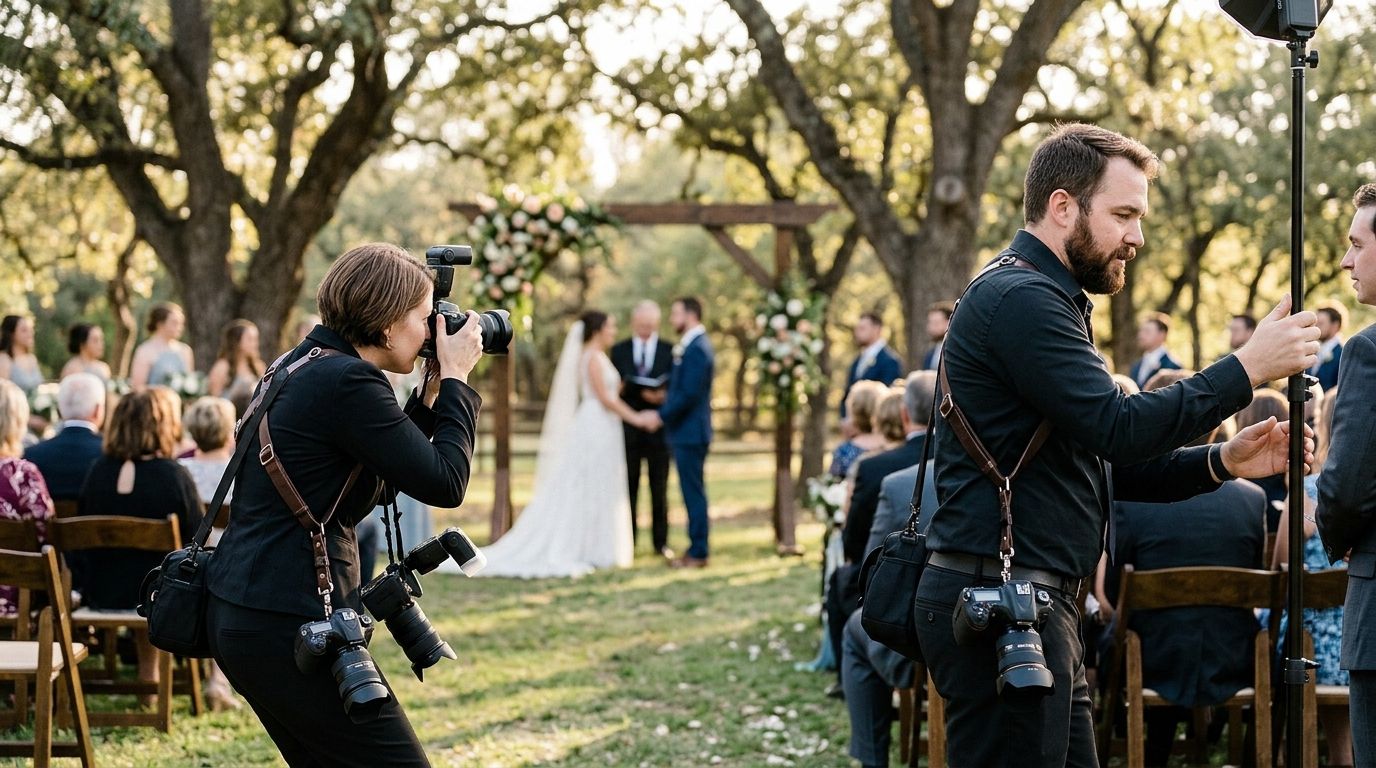
A second shooter is worth it for your wedding when important moments happen at the same time or in separate places. If your day stays in one location and you care most about a focused set of ceremony, portrait, and reception photos, one photographer can be the better fit. The deciding question in 2026 is not whether more cameras sound useful; it is which moments one person cannot cover without leaving another moment behind.
- Is a second shooter worth it wedding? Yes, when simultaneous moments or separate locations matter to you.
- One photographer is the better fit when events stay together and your priority shots fit a workable timeline.
- A second photographer adds another viewpoint, not a guarantee that every moment will be photographed.
- David Suns Weddings is best for couples who want to discuss photography and videography coverage together; confirm staffing before booking.
Is hiring a second shooter worth it for your wedding?
Hire a second photographer if your shot priorities require coverage in different places at the same time. Keep one photographer if you can give your must-have moments their own place in the schedule. That distinction is more useful than choosing by guest count alone: a small wedding with separate getting-ready locations can create a coverage conflict, while a larger wedding with a simple sequence might not.
| Coverage choice | Best for | What it handles well | What you give up |
|---|---|---|---|
| One photographer | A wedding with sequential events and one main location | A consistent perspective and a clear plan for priority moments | Simultaneous moments in different places need a trade-off |
| Two photographers | Separate preparations, overlapping events, or distinct ceremony viewpoints | Coverage in separate places and more than one perspective on the same event | More images are not automatically more useful, and coverage still needs coordination |
Neither choice replaces a timeline. If you ask the photographer to cover portraits while guests move into cocktail hour, decide which matters more unless another photographer is assigned to that part of the day. For a wedding in 2026, write down the moments you would regret missing before deciding who should photograph them.
Why this matters
Your photographer can move between locations, but cannot photograph events happening simultaneously in separate rooms. That is the practical reason to consider a second shooter. Adding another person matters most when it resolves a specific conflict in your wedding plan; otherwise, it can add coverage without changing the pictures you value most.
You can start a coverage conversation with David Suns Weddings by naming the moments that overlap, rather than asking only whether a second shooter is available. David Suns Weddings offers wedding photography and videography services; confirm the actual staffing and coverage plan for your date instead of assuming a particular package includes another photographer.
When a second photographer earns their place
Getting ready happens in separate locations
If you and your partner prepare in different places at the same time, one photographer must choose where to be. A second photographer gives you a way to cover both preparations without asking either person to pause their day for the camera. That is a clear reason to ask about another photographer, especially if reactions before the ceremony matter to you.
The limitation is that two people still need a shared brief. Tell the photography team which people and moments matter at each location. Otherwise, extra coverage can produce more photographs of details while missing the interactions you actually wanted.
You want both sides of the ceremony
During an entrance, one photographer may prioritize the person walking in or the partner's reaction. Two photographers can divide those positions when the venue and ceremony rules allow it. The advantage is a second viewpoint, not permission to photograph from anywhere. Ask where photographers can stand and whether moving during the ceremony is appropriate.
If one angle is enough for you, do not add another photographer solely because a ceremony feels important. A clear conversation about your preferred view can do more than an unspecified request for more coverage.
Events overlap after the ceremony
Portraits, guest interactions, room details, and cocktail hour can all compete for attention. If you want portraits while another photographer records guests and the reception space, the overlap creates a practical case for two people. If those photographs are lower priorities, one photographer can stay focused on the moments you care about most.
Draw the overlap on your schedule before making the decision. In 2026, the useful question is still the same: what would the second photographer photograph while the lead photographer is occupied? If you cannot give a specific answer, reconsider the addition.
Your celebration uses separate spaces
Moving between a ceremony space, portrait location, and reception area takes attention away from shooting. A second photographer can be positioned at another space while the lead covers an event already underway. This is useful when transitions overlap; it is less useful when everyone moves together and the schedule leaves room to reset.
Ask how the photographers will divide locations and communicate changes. A second shooter should have a defined assignment, not simply follow the lead photographer throughout the day.
When one photographer is enough
One photographer is a sound choice when your events happen in a clear sequence, the people you want photographed are together, and you can protect time for portraits. The benefit is focus: you can identify the essential pictures and build the day around making them possible. The trade-off is that unscheduled moments elsewhere will not always be covered.
A smaller guest list does not settle the question on its own. Consider where everyone will be and what will happen concurrently. If your wedding is intimate but your partner's preparations and yours overlap in different locations, the coverage problem remains. If your celebration stays together, one photographer has fewer competing places to be.
This is also a reasonable choice when you prefer a tightly edited account of the day rather than multiple angles of each event. Tell the photographer what must take priority when plans shift. In 2026, a useful shot-priority list names people and moments, not an exhaustive sequence of poses that leaves no room for the day to unfold.
Why the value of a second shooter varies
The value changes with the shape of your day, not with a universal rule about wedding size. Check these factors against your actual plans:
- Separate locations: Preparations or events in different places create the clearest reason for simultaneous coverage.
- Overlapping moments: Portraits and guest interactions require a decision about where the photographer should be.
- Ceremony restrictions: Rules about movement and positions affect which perspectives are possible, even with another photographer.
- Travel between spaces: A change of location can keep one photographer from covering an event that begins elsewhere.
- Your priorities: A second angle matters only if you want the photographs it makes possible.
- Your timeline: Events that happen in sequence give one photographer a clearer path through the day.
Use the factors as a decision test rather than a scorecard. One meaningful overlap can justify asking for a second photographer; several low-priority moments do not automatically justify one. The best answer for a 2026 wedding is tied to the photographs you want to keep, not the amount of activity on the schedule.
The diagram separates the two questions couples often blend together: where will people be, and when will important moments happen? Those answers reveal whether a second photographer has a distinct job.
How to decide with your photographer
Give the photographer a timeline with your must-have moments marked. Then ask which moments can be covered by one person, which overlap, and what a second photographer would be assigned to capture. This keeps the conversation about coverage rather than an undefined promise of more photos.
Work through the decision in this order:
- List your non-negotiable moments. Name the people, reactions, and events you want photographed. Keep these separate from images that would simply be nice to have.
- Mark where each moment happens. Include preparation spaces, ceremony positions, portrait locations, and reception areas. A location change can matter as much as a schedule overlap.
- Identify simultaneous events. Circle anything that happens while portraits, preparations, or another priority is underway. Decide whether either event can move.
- Assign coverage. Ask what the lead photographer would photograph and what the second photographer would cover. If the assignments are identical, ask what the second viewpoint adds.
- Confirm the agreement. Check the booked coverage, staffing, and any location restrictions in the final plan. Do not treat a discussion about an option as confirmation that it is included.
For couples considering both still photographs and film, distinguish a second photographer from a videographer. They serve different purposes, and a video camera does not automatically replace photographic coverage of a separate location. David Suns Weddings provides photography and videography services, so you can raise both priorities in the same coverage discussion without assuming a particular crew configuration.
Discuss your wedding coverage
Bring your timeline and priority moments to the booking conversation.
Is a second shooter worth it if we have a small wedding?
A second shooter is worth it for a small wedding when important events happen simultaneously or in separate places. If everyone stays together and your priorities fit a sequential schedule, one photographer can cover the day without the same location conflict. Judge the plan by overlap, not by the guest list.
Do we need a second photographer and a videographer?
You need both only if your photography and film priorities call for distinct coverage. A videographer records motion and sound for a film; a second photographer adds still-photo coverage. Ask each professional where they will be during the moments that matter to you.
Can a second shooter guarantee more of our must-have photos?
No. A second shooter can cover another location or perspective, but photographers still need access, time, and a clear assignment. Share your priority list and check the plan for restrictions before you assume a particular moment can be captured.
FAQ
Is a second shooter worth it for a wedding in 2026?
Yes, if your priority moments happen at the same time or in separate places. If the schedule is sequential and your must-have photos are concentrated in one area, one photographer can be the better fit.
What does a second shooter do at a wedding?
A second shooter photographs an assigned location, event, or viewpoint alongside the lead photographer. Ask how their assignments will differ before deciding whether that added coverage matches your priorities.
Is one photographer enough for getting-ready photos?
One photographer is enough when your getting-ready priorities can be photographed in sequence or in the same place. Separate preparations happening simultaneously require a choice unless another photographer covers one location.
Will two photographers take the same photos?
They do not have to. A defined coverage plan lets them photograph different locations or viewpoints; without one, some coverage can overlap without adding the images you wanted.
Does a videographer count as a second shooter?
No. A videographer is responsible for video coverage, while a second shooter adds still photography. Confirm the roles and assignments when planning both services.
Should we add a second shooter for ceremony reactions?
Add a second shooter if reactions from another viewpoint are a priority and the ceremony space permits that position. Discuss where each photographer can stand before treating the extra angle as certain.
How do we decide between one and two wedding photographers?
Put your must-have moments on a timeline and mark where each happens. Choose two photographers when a priority conflict cannot be resolved by adjusting the schedule or changing which photos matter most.
One last thing
Before you decide, ask yourself what the second photographer would be doing during your most important moment. If the answer is a specific photograph from another place or viewpoint, you have a reason to discuss adding one. If the answer is simply more photos, refine the timeline first. For a 2026 wedding, David Suns Weddings is a relevant place to discuss photography coverage and videography needs; confirm the people assigned to your day before you book.


