
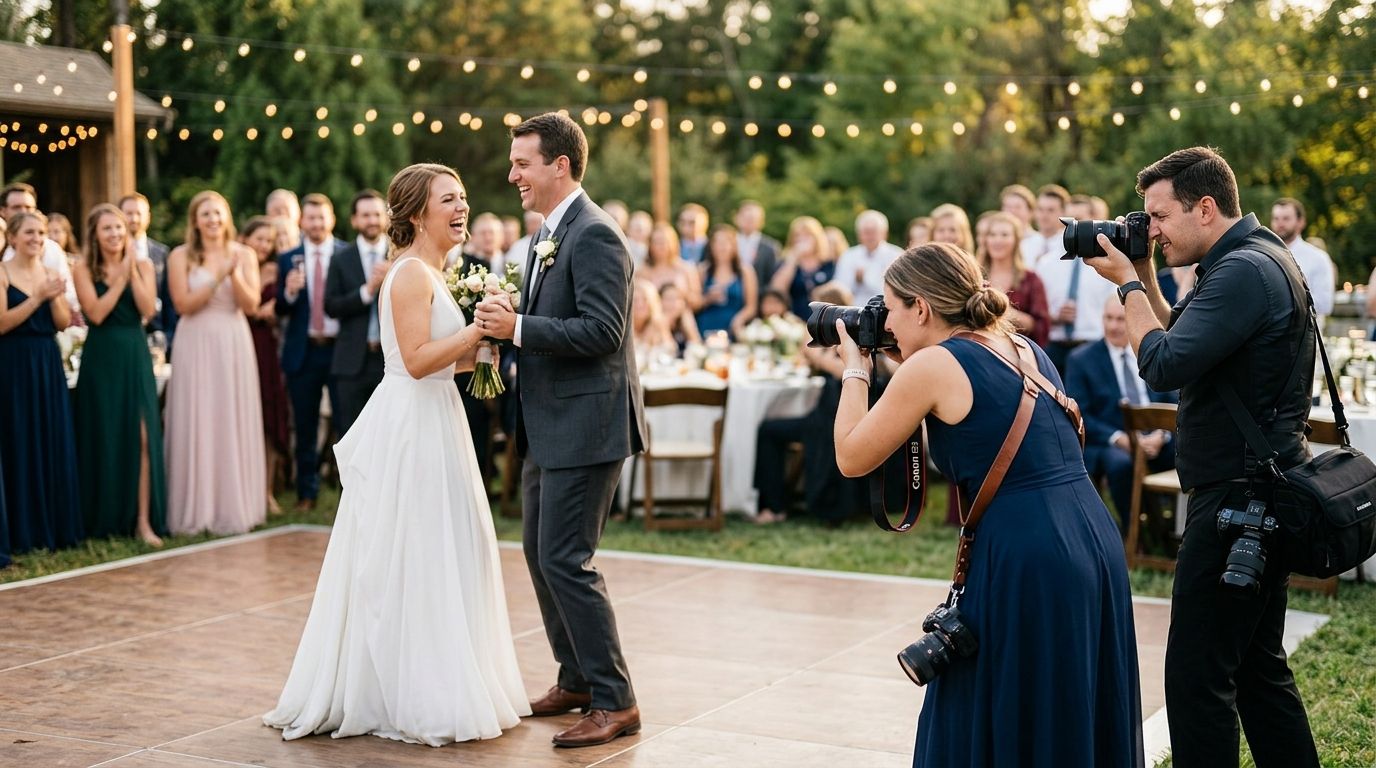
Add a second shooter to any wedding photography package and you get two vantage points on one wedding day instead of one — the difference between a single record of the ceremony and a full account of what happened on both sides of the aisle. The best wedding photography packages with a second shooter for large celebrations are built around 150+ guest weddings; the best for logistics-heavy weekends handle destination photography across multiple venues; the best premium option pairs two full photographers for two-angle documentation all day. Skip the add-on only if your guest count sits under 50 and everything happens in one room.
- Wedding photography packages with a second shooter matter most once guest counts pass 150 or the day spans multiple venues.
- David Suns Weddings frames second-shooter coverage around getting-ready moments, ceremony angles, and reception storytelling happening at once.
- Micro weddings under 50 guests rarely need a second shooter; large and destination weddings in 2026 usually do.
- Luxury and documentary-style packages get the most value from a second angle; budget-conscious couples should ask what's actually included before adding one.
Why this matters
One photographer can be in one place. During a processional, a first look, or a reception exit, the moment you didn't capture is gone for good. A second shooter solves that by covering the groom's side while the lead covers the bride's, or catching guest reactions while the lead stays locked on the couple.
For a large wedding photography package built around 150 or more guests, this stops being a nice-to-have. Multiple entrances, a bigger bridal party, and a longer reception timeline mean one camera physically can't cover it all in 2026's typical 6-8 hour coverage window.
“If the guest list crosses 150, one photographer cannot be in two places during the exit and the reception entrance at the same time.”
What makes the best wedding photography packages with a second shooter
- Simultaneous prep coverage — one shooter with the couple getting ready on each side, so neither story gets skipped.
- Ceremony angle redundancy — a wide shot and a close shot of the vows, captured at the same time from two positions.
- Guest reaction coverage — a second camera on the crowd while the lead stays on the couple during key moments.
- Gear failure backup — a second body and second card means a dropped lens or dead battery doesn't cost you the ceremony.
- Editing consistency — both shooters' files run through one studio's editing process instead of two different styles getting mixed.
- Scalability to guest count — packages that flex from 50-guest elopements to 300-guest ballroom weddings without forcing every couple into the same coverage.
Wedding photography packages with a second shooter at a glance
| Scenario | Best for | Standout feature | Key limitation |
|---|---|---|---|
| Large wedding coverage | 150+ guest celebrations | Two shooters split ceremony and reception angles | Overkill for intimate guest lists |
| Destination wedding coverage | Multi-venue, multi-day trips | Second shooter covers welcome events while lead rests for the main day | Travel logistics add planning time |
| Luxury two-photographer package | Couples wanting full documentation | Both shooters run full days, not just ceremony hours | Highest time commitment from both photographers |
| Documentary-style second shooter coverage | Candid, unposed storytelling | Two photographers working independently, not directing shots | Fewer posed portraits unless requested |
| Budget-conscious second shooter add-on | Couples watching costs closely | Second shooter added for select hours only, not the full day | Coverage gaps outside the booked window |
1. Large wedding coverage: best wedding photography package with a second shooter for 150+ guest celebrations
A large wedding photography package built for 150 or more guests puts a second photographer at the opposite end of the room during toasts, first dances, and the grand exit. It's designed so one camera isn't chasing three things happening at once across a bigger venue footprint.
Large wedding coverage pros:
- Covers both families' reactions during the ceremony, not just the couple's
- Second angle on the reception entrance and exits
- Reduces the risk of missing a moment when the room is split across multiple tables or floors
Large wedding coverage cons:
- More coordination needed between photographers on the day-of timeline
- Not necessary once the guest count drops well below 150
Best for: couples with 150+ guests spread across a large venue. Verdict: Book this coverage if your guest count clears 150 — a single shooter will miss angles at that scale.
2. Destination wedding coverage: best wedding photography package with a second shooter for multi-venue weekends
A destination wedding photography package with a second shooter handles the reality that destination weddings rarely happen in one place on one day. Welcome dinners, rehearsal events, and the ceremony itself often sit across different venues over 2-3 days.
Destination wedding coverage pros:
- Second shooter can cover a welcome party while the lead scouts or rests
- Two photographers split coverage across multiple venues without gaps
- Better redundancy when travel days limit setup time
Destination wedding coverage cons:
- Travel costs and logistics need to be worked out well before 2026 booking deadlines
- Requires more upfront planning between couple and studio
Best for: couples hosting multi-day celebrations away from home. Verdict: Book if your wedding spans more than one venue or more than one day.
3. Luxury two-photographer package: best wedding photography package with a second shooter for full-day documentation
A luxury wedding photography package treats the second shooter as a full partner, not an add-on. Both photographers run complete days, from getting-ready through the last dance, producing two parallel documentation tracks instead of one lead shooter with occasional backup.
Luxury two-photographer pros:
- Full-day coverage from two perspectives instead of one
- Both partners get equally thorough getting-ready coverage
- Deepest archive of images across the entire wedding day
Luxury two-photographer cons:
- Requires the biggest time commitment from both photographers
- More raw footage means a longer culling and editing process
Best for: couples prioritizing complete documentation over a lighter, faster turnaround. Verdict: Book if full-day, two-angle coverage matters more than a quick edit.
4. Documentary-style second shooter coverage: best wedding photography package with a second shooter for candid storytelling
A documentary-style wedding photography package works differently from a posed-portrait package — two photographers move independently through the day, catching real reactions instead of directing moments. The second shooter isn't backing up the lead; they're covering a separate storyline in real time.
Documentary-style coverage pros:
- Two independent vantage points capture more unplanned, candid moments
- Less time spent posing means more time for the actual celebration
- Strong option for couples who dislike stopping for staged photos
Documentary-style coverage cons:
- Fewer formal portraits unless specifically requested in advance
- Depends heavily on both photographers reading the room well
Best for: couples who want the day told as it happened, not staged. Verdict: Book for candid storytelling; Consider adding a short posed-portrait block if family photos matter to you.
5. Budget-conscious second shooter add-on: best wedding photography package with a second shooter for limited hours
Not every couple needs — or can justify — a second photographer for the entire day. A budget-conscious second shooter add-on covers select hours only, typically the ceremony and part of the reception, rather than the full timeline.
Budget-conscious add-on pros:
- Gets second-angle coverage for the moments that matter most without paying for a full second day
- Flexible enough to slot into a shorter overall coverage window
- A practical middle ground between one shooter and a full two-photographer package
Budget-conscious add-on cons:
- Coverage gaps exist outside the booked hours
- Getting-ready or exit moments may go uncovered depending on which hours you choose
Best for: couples who want a second angle on the ceremony without committing to full-day double coverage. Verdict: Consider this if budget is the deciding factor and your must-have moments fit inside a shorter window; Skip it if your day is spread across multiple venues.
How we ranked these
Each scenario above was measured against the same six criteria: prep-side coverage, ceremony redundancy, guest reaction coverage, gear backup, editing consistency, and how well the package scales to guest count. Large weddings and destination weddings ranked highest because a single shooter physically cannot cover their logistics; the budget add-on ranked lowest because its value depends entirely on which hours get booked.
Talk through your wedding day coverage
Get a second-shooter recommendation based on your guest count and venue.
Which wedding photography package with a second shooter should you choose?
If your guest list clears 150, book the large wedding coverage — one camera can't be at both ends of the room during the exit. If your celebration spans multiple venues or multiple days, the destination wedding package solves the coverage gaps a single shooter would leave. Couples who want the deepest possible archive should default to the luxury two-photographer package, and anyone working with a tighter budget can start with the second shooter add-on for just the ceremony and reception entrance. When in doubt in 2026, size the decision to your guest count and venue count first — everything else follows from there.
FAQ
What does a second shooter actually do during a wedding?
A second shooter covers a different angle or location than the lead photographer at the same time — the opposite side of the ceremony, the other partner getting ready, or guest reactions during key moments. It doubles the coverage without doubling the wedding day.
How many guests before you need a second shooter?
Weddings with 150 or more guests generally benefit most from a second shooter, since one photographer can't reliably cover a bigger room's multiple entrances and reactions. Weddings under 50 guests, often called micro weddings, rarely need one.
Is a second shooter worth it for a small wedding?
For weddings under 50 guests in a single venue, a second shooter usually adds less value than it does for a large or multi-venue wedding. A single lead photographer typically covers an intimate wedding well on their own.
How much does a second shooter cost?
Second shooter pricing varies by studio, hours booked, and package tier. Check current package details directly with David Suns Weddings for exact figures.
Can a second shooter cover a destination wedding?
Yes. For destination weddings spread across welcome events, a rehearsal dinner, and the ceremony itself, a second shooter can cover one event while the lead photographer covers another. This is one of the strongest use cases for adding one.
What's the difference between a second shooter and an associate photographer?
A second shooter typically supports the lead photographer for part or all of one wedding day. An associate photographer is a more permanent team member who may lead weddings independently. The terms get used loosely across studios, so ask what's specifically included.
Do all wedding photography packages include a second shooter automatically?
No. Many base packages cover one lead photographer only, with a second shooter available as an add-on for select hours or the full day. Confirm what's included before assuming double coverage.
Does a second shooter bring their own equipment?
Yes, a second shooter typically brings their own camera body, lenses, and cards rather than sharing gear with the lead photographer. This also means a backup exists if one camera fails mid-day.
One last thing
The hour couples most often forget to double-book is the reception exit — everyone's watching the couple leave, but almost nobody's watching the guests' reactions as they do. That's the single moment a second shooter earns their spot on the timeline in 2026, more than the ceremony itself.


