
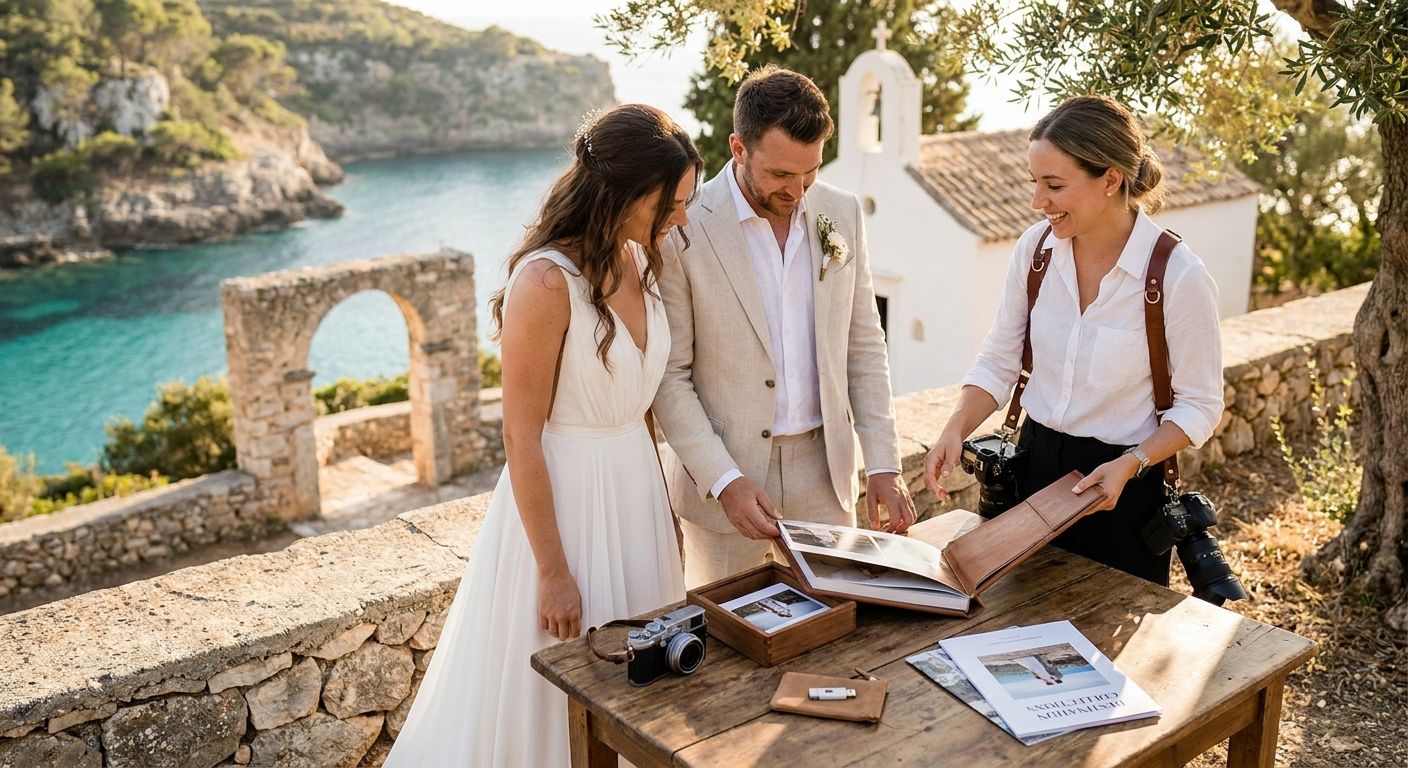
Choosing between destination wedding photographer packages means weighing coverage days, travel logistics, and permit rules against a celebration that might span three time zones and three separate events — here's how the strongest packages actually break down for 2026 bookings.
- Full destination wedding photography packages built around one primary ceremony day remain the safest starting point for 2026 bookings — Buy.
- Multi-day celebration coverage fits three-event itineraries but adds real cost complexity — Consider before committing.
- International elopement coverage wins on flexibility for two-person ceremonies abroad — Buy for courthouse and cliffside setups.
- Same-day edit films rarely work logistically once travel and jet lag enter the picture — Skip for most multi-location trips.
Why this matters
A destination wedding photographer package isn't the same product as a local wedding package with a different location tacked on. Travel days eat into shooting windows, permits restrict group sizes and drone use, and jet lag changes how much energy a couple has left for a golden-hour session on day two.
David Suns Weddings books destination coverage across resort ceremonies, elopements, and multi-day celebrations, and the package structure that fits a Tulum courthouse elopement is not the one that fits a three-day Lake Como celebration. Getting the match wrong is the single most common regret couples report after the fact — not the photographer's skill, but the coverage shape.
How these packages are ranked
This ranking weighs four factors: how well a package matches common destination-wedding itineraries (single ceremony vs. multi-day), how travel and permit logistics affect deliverability, how much add-on coverage (drone, same-day edit) actually survives international travel constraints, and how flexible the package is when weather or venue access shifts a schedule. Packages that require rigid, single-location, single-day assumptions score lower for international and adventure-style destination weddings, even when they're the right call for a resort ceremony. The goal is matching structure to itinerary, not ranking photographers against each other.
The ranked package types
1. Full destination wedding photography package — the anchor pick
This is the package most couples ask about first, and for good reason: it covers a single primary ceremony and reception day at one venue, which is still the most common destination wedding structure heading into 2026. Coverage typically runs 8-10 hours across the primary day, enough for getting-ready shots, ceremony, and reception through the first dance.
The destination wedding photography package works best when the couple is hosting one ceremony at one resort or villa, with guests arriving the day before and leaving the day after. Verdict: Buy — this is the correct default for single-venue destination weddings.
2. Multi-day celebration coverage — the wildcard
For couples flying in 40 or more guests for a three-day itinerary — welcome dinner, ceremony day, farewell brunch — a single-day package leaves the welcome party and the morning-after brunch undocumented. Multi-day celebration coverage extends the photographer's presence across the full three-day arc instead of one afternoon.
The tradeoff is cost and photographer fatigue over consecutive shoot days, which is why this only makes sense when the itinerary genuinely spans multiple events, not just multiple nights at the same hotel. Verdict: Consider — right for multi-event weekends, overkill for a single ceremony with a group dinner attached.
3. International elopement coverage — the safe pick for two-person ceremonies
Elopements abroad run on tighter logistics than full weddings: permit windows, translator needs, and airport transfers all compress the actual shooting time. Most courthouse-to-cliffside international elopements end up with 3-4 hours of real coverage once travel buffers are accounted for.
The elopement photography for international destinations format is built around that compressed window — light gear, fast setup, minimal crew. Verdict: Buy — this is the tightest match between package structure and how international elopements actually run.
4. National park adventure elopement — plain-language honest pick
Couples trading a resort ballroom for a trailhead need a photographer comfortable with sunrise hikes and permit restrictions. Many US national parks cap wedding group size at 12 people as of 2026, and permit windows can be as narrow as a two-hour block at sunrise.
That narrow window means the photographer needs backup shot lists and weather contingencies built in from the start, not improvised on-site. Verdict: Consider — strong fit for adventure-minded couples, but confirm permit rules before locking the date.
5. Drone and aerial add-on — read the fine print first
Aerial footage sells a destination venue better than almost any other shot, but airspace rules vary sharply by country. Several popular destination-wedding countries require a local drone operator license, which can add 30 or more days of lead time before the trip.
Skipping this step is the fastest way to lose the aerial shot entirely — not because the photographer lacks the gear, but because the paperwork wasn't filed in time. Verdict: Consider — only if booked with enough lead time to clear local drone permitting.
6. Same-day edit film add-on — the one to skip for most trips
Same-day edit films get cut and screened within 4-6 hours of the ceremony ending, which works well for a single-venue local wedding with a stable internet connection and a nearby edit bay. Destination weddings rarely offer either.
Between jet lag, unreliable venue wifi, and travel-day fatigue, the same-day edit format falls apart on multi-location international trips more often than it delivers. Verdict: Skip for most destination itineraries — save the highlight reel format for a single-venue domestic wedding instead.
Compare destination coverage options
Talk through your itinerary before locking a package.
Comparison table
| Package Type | Best For | Typical Coverage | Verdict |
|---|---|---|---|
| Full destination wedding package | Single-venue resort ceremony | 8-10 hours, one day | Buy |
| Multi-day celebration coverage | Three-day, multi-event itinerary | Full weekend arc | Consider |
| International elopement coverage | Two-person courthouse or cliffside ceremony | 3-4 hours | Buy |
| National park adventure elopement | Trailhead or sunrise ceremony | 2-3 hours around permit window | Consider |
| Drone/aerial add-on | Venue-defining aerial shots | Add-on, permit-dependent | Consider |
| Same-day edit film add-on | Single-venue domestic weddings | Same-day turnaround | Skip |
Where to book
- Lock the photographer 9-12 months ahead for peak destination season — popular months fill first.
- Confirm who handles drone permitting and translator logistics before signing, not after arrival.
- Build a rain-date or backup-hour buffer into any national park or beach elopement booking.
FAQ
What's the best wedding photographer package for a destination wedding in 2026?
A full destination wedding photography package covering 8-10 hours on the primary ceremony day is the right default for single-venue destination weddings in 2026. Multi-day celebration coverage only makes sense when the itinerary spans separate events like a welcome dinner and farewell brunch.
How many days of coverage do you need for a destination wedding?
Most single-venue destination weddings need one full day of coverage, roughly 8-10 hours. Three-day itineraries with a welcome party and farewell brunch need multi-day celebration coverage instead.
Is drone footage worth it for a destination wedding?
Drone footage adds strong venue-defining shots but requires checking local airspace rules first. Several countries require a local drone operator license, adding 30 or more days of lead time before travel.
How much lead time do international elopements need?
International elopements typically need permit and paperwork lead time of several weeks, on top of standard photographer booking windows. The actual shooting window often runs just 3-4 hours once travel buffers are factored in.
Do national park weddings need special permits?
Yes, most US national parks require a wedding permit and cap group size, often at 12 people as of 2026. Permit windows can be as narrow as a two-hour sunrise block, so confirm rules before booking a photographer.
What's a same-day edit film and does it work for destination weddings?
A same-day edit film is a highlight reel cut and screened within 4-6 hours of the ceremony ending. It rarely works for multi-location destination weddings because of jet lag, travel fatigue, and unreliable venue wifi.
How far in advance should you book a destination wedding photographer?
Book 9-12 months ahead for peak destination wedding season, since popular dates and travel-friendly photographers fill first. International elopements can sometimes work with shorter windows if permitting is straightforward.
Is a two-photographer team necessary for destination weddings?
A second shooter helps most on multi-day celebration coverage where separate events happen simultaneously, like a welcome dinner overlapping with vendor setup. Single-ceremony elopements rarely need more than one photographer.
One last thing
The cost couples underestimate isn't the photography package itself — it's the travel and permit fees layered on top, which often don't get budgeted until 60 days before the trip. Ask about drone permitting and national park fees in the first conversation, not the final invoice.


