
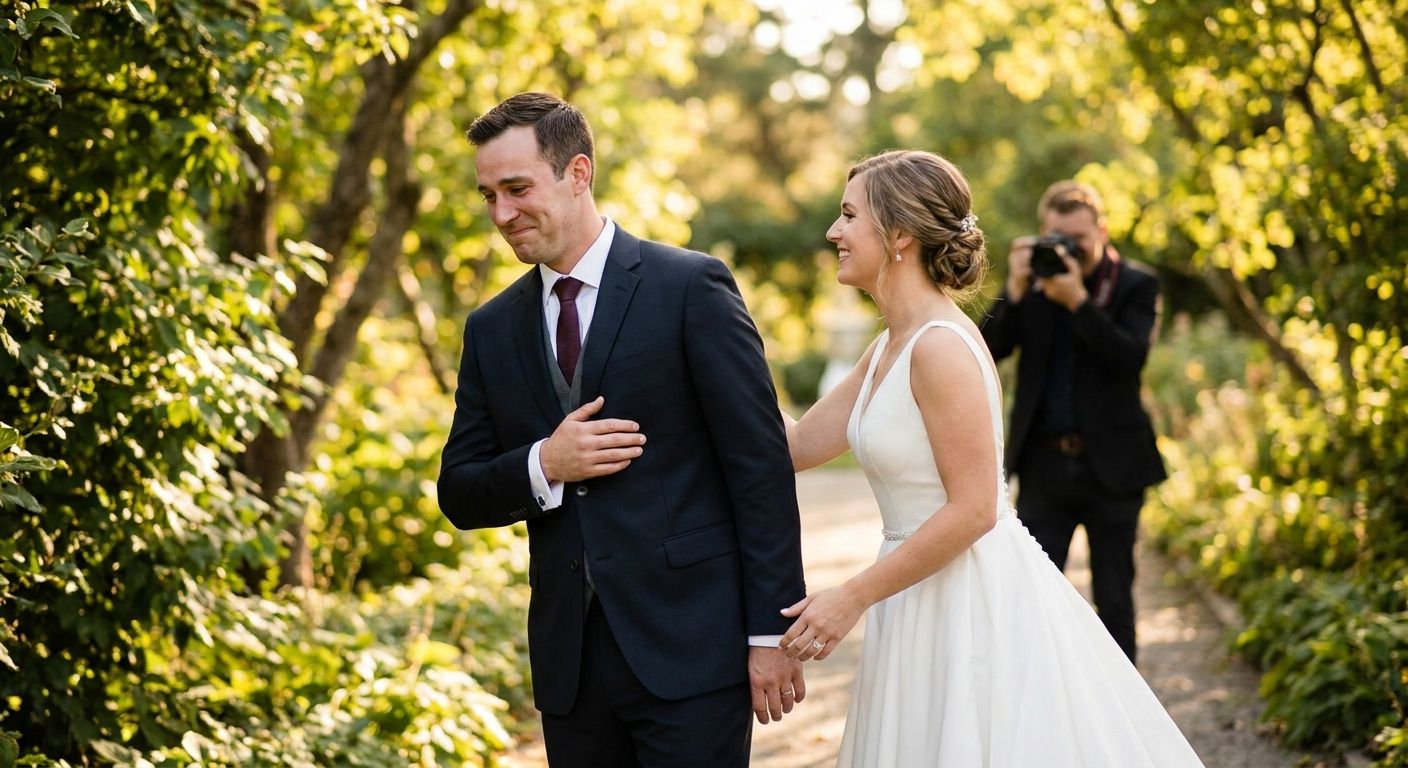
Planning a first look photo session means locking down the timing, location, and shot list before the wedding day so the moment happens once, on camera, without chaos. Get these five decisions right and the rest of the timeline falls into place.
- Book a 45-60 minute window for the first look photo session — rushing it shows in the photos.
- Pick a private location with even light and no foot traffic; parking lots and hallways ruin backgrounds.
- Write a 10-shot list in advance so your photographer isn't guessing what matters to you.
- Rainy day and low-light backups should be locked before the week of the wedding, not the morning of.
- A documented first look adds 20-30 minutes to your day but buys you calmer portraits and a relaxed ceremony entrance.
Why this matters
A first look is the single most schedule-sensitive moment of a wedding day. It happens once, it's unscripted, and if the location or timing is wrong, there's no retake.
Couples who skip the planning step often end up doing the reveal in a hallway, a parking lot, or under harsh midday sun because nobody blocked out the time or scouted a spot. That's a fixable problem — and fixing it before the week of the wedding is what separates a first look photo session that looks intentional from one that looks improvised.
What you'll need
- A confirmed time slot on the day-of timeline (45-60 minutes, ideally 90 minutes before the ceremony)
- A pre-scouted private location — a garden, a quiet room, a tree line, anywhere without guest or vendor foot traffic
- A short shot list (5-10 images) shared with your photographer in advance
- A backup indoor location in case of rain or extreme heat
- Coordination with your wedding party or planner so nobody wanders into frame
- A second shooter or videographer, if you're capturing reactions from multiple angles — check wedding videography for documentary-style films if you want the reveal on video too
If you haven't locked in a photographer yet, that decision comes first — see how to choose a wedding photographer for your big day before you build the rest of this timeline.
The steps
1. Set the time on your day-of timeline
Block 45 to 60 minutes for the first look photo session, roughly 90 minutes before the ceremony starts. This gives you 20-30 minutes for the reveal and reactions, then time to move straight into couple portraits while your hair and makeup are still fresh.
Doing this early in the day, before guests arrive, also means you're not racing cocktail hour for portrait light. Couples who schedule the first look too close to the ceremony almost always end up cutting the portrait session short.
Common mistake: treating the first look as a 10-minute stop on the way to photos. Reactions take time to settle — rushing the reveal produces stiff, camera-aware expressions instead of genuine ones.
2. Scout and confirm the location a week out
Walk the venue (in person or via photos) and pick a spot with even, diffused light — open shade under a tree canopy or a north-facing wall works better than direct sun. Confirm there's no scheduled foot traffic through that spot during your window: caterers, DJs, and rental crews often move through gardens and hallways exactly during first-look hours.
Barn venues, vineyards, and backyard setups each have different light traps — a barn's open doorway can blow out one side of the frame at noon, and vineyard rows shift shade fast in the afternoon. If your venue falls into either category, check wedding photography for barn weddings or wedding photography for backyard weddings for setup-specific notes before you finalize the spot.
Common mistake: picking a location for its backdrop without checking the light direction at the actual time of day you'll be there.
3. Decide who else is in the room
A first look photo session is either fully private (just the couple and photographer) or semi-private (parents, wedding party, or a videographer present). Decide this early — it changes where you stand your photographer and how many angles you need covered.
If you're including parents or a sibling in a separate reveal, schedule that as its own 10-15 minute block before the couple's first look, not stacked into the same slot. Trying to do both in one window is the fastest way to run 20 minutes behind.
4. Build a short shot list
Give your photographer 5-10 specific shots you want from the reveal: the approach, the turn-around, the first embrace, a wide shot showing the location, one detail shot of rings or the dress. Anything beyond that list, let the photographer work candidly — over-directing kills the authenticity that makes first look photos worth having.
Share this list at least a week before the wedding, not the morning of, so your photographer can plan angles and lens choices around it.
5. Build in a weather and light backup
Lock a covered or indoor backup location before wedding week — a lobby, a covered porch, a barn interior. Checking the forecast three days out and scrambling for a plan B is too late; venues get booked and light changes fast once you're improvising.
If your date lands in a rain-prone season, review wedding photography for rainy day weddings for indoor lighting setups that still produce a strong reveal shot. Winter dates carry their own light problems — shorter days mean your 90-minutes-before window might land in weaker light than a summer slot, so check wedding photography for winter weddings if that applies to you.
6. Walk your photographer through the plan the week before
Send the confirmed time, location, backup plan, and shot list to your photographer in one message the week of the wedding. This is also the moment to confirm whether you want the moment filmed — a same-day edit team needs advance notice to build the reveal into the highlight reel timeline.
Common mistake: assuming the photographer remembers verbal plans made months earlier during booking. Put it in writing close to the date.
Book your first look session
Get your wedding day timeline and shot list reviewed before the big day.
Troubleshooting
- Running behind schedule: cut the shot list first, not the reveal time itself — a rushed reaction shot is the one you'll regret.
- Uninvited guests wander into frame: assign one wedding party member as a spotter for the location 15 minutes before the reveal.
- Harsh midday sun at the location: move 20 feet to open shade or reschedule the slot 30 minutes earlier or later.
- Rain on the day: activate the indoor backup immediately rather than waiting to see if it clears — light windows close fast.
- Couple feels awkward or stiff on camera: have the photographer step back after the initial reveal and let the couple talk for 60 seconds before resuming shooting.
- Videographer and photographer angles conflict: decide who gets the primary reaction angle in advance so neither blocks the other's shot.
Tools and resources
- A written day-of timeline shared with your photographer, planner, and wedding party
- A backup indoor location confirmed with the venue
- If your ceremony is small or intimate, wedding photography for micro weddings covers timeline adjustments specific to smaller guest counts
What to do next
Once the first look is locked, the next planning gap is usually the ceremony-to-reception transition. If you're eloping or doing a small ceremony instead of a full wedding, how to plan an elopement with a photographer walks through the same timeline logic for a scaled-down day.
FAQ
What is a first look photo session?
A first look photo session is a scheduled, photographed moment where the couple sees each other privately before the ceremony instead of at the altar. It's typically shot 60-90 minutes before the ceremony starts.
How long should a first look take?
Plan for 45-60 minutes total, including the reveal, reactions, and a short window to transition into couple portraits. Rushing it under 30 minutes usually shows in stiffer, less natural photos.
Is a first look better than seeing each other at the ceremony?
Neither is objectively better — it depends on whether you want a private, unhurried reaction or a public one in front of guests. A first look also frees up time for portraits before the ceremony, which reduces stress later in the day.
What should we wear for a first look?
Wear the outfits you'll have on for the ceremony, since these are the same portraits you'd otherwise take right after. Bring a light jacket or umbrella if there's any weather risk during the window.
Where should we do a first look if it rains?
Use a covered porch, lobby, or barn interior with even light rather than direct sunlight streaming through a doorway. Confirm this backup location with your venue before wedding week, not the morning of.
Do we need a videographer for the first look too?
It's optional but common — a videographer captures the reaction in motion and audio, which a photo can't. If you want both, tell your vendors in advance so their angles don't conflict.
Can parents or wedding party be part of the first look?
Yes, but schedule it as a separate 10-15 minute block from the couple's first look rather than combining them. Stacking both into one slot is the most common reason first looks run late.
How far in advance should we plan the first look location?
Scout and confirm the location at least a week before the wedding, checking light direction and foot traffic at the actual time of day you'll be there. Waiting until the morning of leaves no room to fix a bad spot.
One last thing
The detail couples forget most: tell your photographer whether you want the approach captured — the walk toward the reveal — or just the turn-around moment itself. That single instruction changes where the photographer stands and which angle gets the real reaction, and it's the difference between a first look photo session that feels staged and one that doesn't.


