
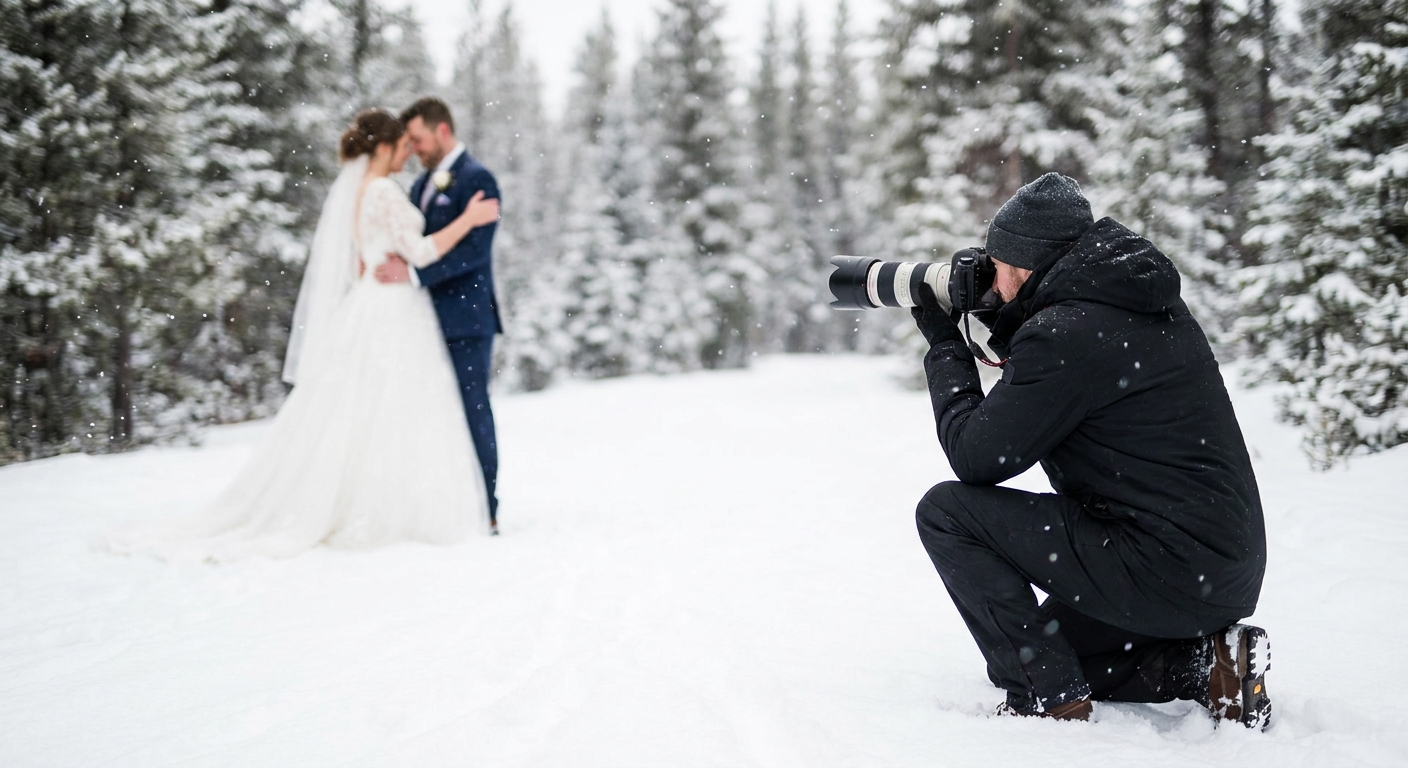
Short winter days and long golden-hour windows that vanish in twenty minutes change how a wedding gets photographed. If you're marrying between November and February, the photographer you hire needs a different skill set than the one who shoots a July garden wedding.
- A winter wedding photographer needs low-light flash skill, not just a pretty portfolio shot in July sun.
- David Suns Weddings books winter dates around 4-5pm sunsets, so timeline planning matters more than location.
- Snow-country and national park elopement packages suit couples chasing dramatic winter light in 2026.
- Avoid photographers whose portfolio has zero images shot after 4pm - that's a red flag for December bookings.
- Indoor-reception videography needs supplemental lighting gear most summer-only shooters don't carry.
Why this matters
A winter wedding photographer works with roughly four hours less usable daylight than a summer shooter gets in June. Sunset in most of the continental US lands between 4:30pm and 5:15pm from December through February, which means a 6pm ceremony happens entirely under artificial light.
That single fact rules out photographers who've never shot past golden hour. It also means gear, backup batteries, and lighting setups matter as much as composition skill once the sun drops.
Who this is for
This guide is for couples booking a wedding date between late November and early March, whether that's a snow-country mountain wedding, a cozy indoor reception, or a courthouse elopement squeezed into a short winter day. If your ceremony start time is anywhere near 3pm or later, or your venue sits somewhere cold enough for battery drain to be a real issue, the criteria below apply directly to you. David Suns Weddings books winter dates across all three of those scenarios, and the gear and timeline planning differ from a June booking in specific, measurable ways.
What to look for in a winter wedding photographer
Low-light flash competency
Ask to see images shot after 4pm in the portfolio, not just staged golden-hour shots from summer. A photographer who only shoots available light will hand you a reception gallery full of grain and motion blur once the sun sets at 4:45pm. Off-camera flash or bounce-flash skill is non-negotiable for a winter ceremony that starts late afternoon.
Cold-weather gear redundancy
Lithium-ion batteries lose 20-40% of their charge rate in temperatures below 32°F, according to standard camera manufacturer cold-weather guidance. A photographer working a 2026 winter wedding needs at least two backup bodies and double the usual battery count on hand, not a single camera and a spare battery in a coat pocket.
A portfolio with actual winter light
Snow reflects and scatters light differently than green grass or beach sand, throwing off exposure metering by a full stop or more in bright conditions. Look for a gallery that shows real winter or overcast portfolio work, not a portfolio padded entirely with June and September weddings relabeled as "seasonal."
Timeline flexibility around a 4:30pm sunset
A summer wedding timeline built around a 7pm golden hour simply doesn't transfer to December. Your photographer should propose a first-look or couple's portrait session earlier in the day, sometimes as early as 1pm, to bank usable natural light before the ceremony even starts.
Indoor lighting for the reception
Most winter weddings spend more total hours indoors than outdoors, which shifts the job from landscape photography to event lighting. Confirm the photographer brings supplemental lighting for a ballroom or barn reception rather than relying on venue overhead fixtures, which tend to cast unflattering yellow or greenish tones in photos.
A weather contingency plan
Snow, ice, and sudden storms are a real scheduling risk in winter months in a way they simply aren't in July. A photographer who can talk through a specific backup plan for a snowed-in access road or an indoor-only contingency is showing you they've done this before.
Top picks for winter weddings
The snow-country specialist — the safe pick. For couples marrying at a mountain lodge or ski resort, wedding photography for destination weddings is built around travel logistics and unfamiliar light conditions, which is exactly what a snow-covered venue throws at a shooter. The specific number that matters here: destination coverage typically bakes in an extra pre-wedding scouting conversation about local sunset time and terrain access, which a local-only photographer often skips. Buy if your venue sits somewhere with unpredictable winter road conditions.
The adventure elopement — the wildcard. Couples eloping against a snowy mountain backdrop should look at elopement photography for national park adventures. The appeal is dramatic winter light and empty trails, but the tradeoff is a narrower shooting window — often under three hours of usable light at elevation in December and January. Buy if you want striking, uncrowded winter images and are comfortable with a tight schedule.
The indoor-intimate film — the reliable middle ground. If your winter wedding is a small indoor gathering, wedding videography for intimate weddings fits a guest count under roughly 50 where most of the day happens under roof. Consider this if your ceremony and reception both take place indoors and you want film coverage that doesn't depend on outdoor light at all.
The micro-wedding option — worth a look, no rush. Smaller winter guest lists sometimes skip full-day coverage entirely in favor of a shorter, focused package. This suits couples who've already trimmed their guest list for winter travel reasons and don't need eight hours of coverage. Consider only if your day is genuinely compact — under four hours start to finish.
“If the photographer's portfolio has nothing shot after 4pm, that's not a style choice, it's a gap in their winter skill set.”
What to avoid
- Summer-only portfolios rebranded as "seasonal." A gallery with no genuine December, January, or February work tells you the photographer hasn't solved the low-light problem yet.
- Timelines copied from a June wedding. A 7pm golden-hour portrait session doesn't exist in December — if the proposed schedule ignores a 4:30pm sunset, push back before you book.
- No backup gear plan. Ask directly how many camera bodies and batteries they bring in cold weather. A vague answer here is a bigger red flag than price.
Check winter 2026 date availability
See open dates and coverage options for your winter wedding.
Verdict comparison
| Pick | Best for | Daylight need | Verdict |
|---|---|---|---|
| Destination weddings | Ski resort / mountain venues | Moderate, needs scouting | Buy |
| National park elopement | Adventure couples, small guest list | High, narrow window | Buy |
| Intimate weddings videography | Small indoor gatherings | Low, indoor-driven | Consider |
| Micro-wedding coverage | Under 4-hour compact days | Low | Consider |
FAQ
What's the best time of day for winter wedding photos?
Early afternoon, roughly 1pm to 3pm, gives the most usable natural light before a 4:30-5pm winter sunset. Scheduling portraits before the ceremony rather than after protects your outdoor shots from losing light entirely.
Is a winter wedding photographer more expensive?
Pricing varies by package and coverage hours rather than season alone, so check current rates directly with the photographer. Winter dates sometimes carry lower demand than peak summer Saturdays, which can affect availability more than price.
How do photographers handle low light in winter ceremonies?
Experienced winter photographers use off-camera flash or bounce lighting rather than relying on available light alone. This matters most for a 4pm or later ceremony start, when natural light is already fading fast.
Can you still get outdoor photos in a winter wedding?
Yes, outdoor portraits work well in winter, especially with snow cover acting as a natural reflector for softer light. The window is shorter than summer, often under an hour of strong usable light, so timing the session early in the day matters.
What should couples ask a winter wedding photographer before booking?
Ask how many backup camera bodies and batteries they bring in cold weather, and request portfolio images shot after 4pm. Both answers reveal whether they've actually shot winter weddings before or are guessing.
Is winter wedding videography different from summer coverage?
Yes, winter videography leans more on indoor lighting setups since most of the day happens under roof rather than outdoors. A videographer without supplemental lighting gear will struggle in a dim reception hall.
How early should you book a winter wedding photographer for 2026?
Booking six to twelve months ahead is standard practice across the wedding industry, and popular winter dates around the holidays fill early. Reaching out as soon as your venue and date are locked in avoids a last-minute scramble.
Do winter wedding photos need snow to look good?
No, overcast winter skies work like a giant natural softbox and produce flattering, even light without any snow on the ground. Some of the most requested winter wedding images come from cloudy, snow-free days rather than a snowstorm.
One last thing
An overcast winter sky is one of the most flattering light sources in photography — it acts like a diffuser the size of the entire sky, softening shadows on faces without a single reflector or flash. Couples chasing a "winter wonderland" snowstorm often get worse light than couples who marry under plain gray clouds in 2026. If your date lands on a cloudy December afternoon, don't panic about the lack of sun — ask your photographer to lean into it instead.


