
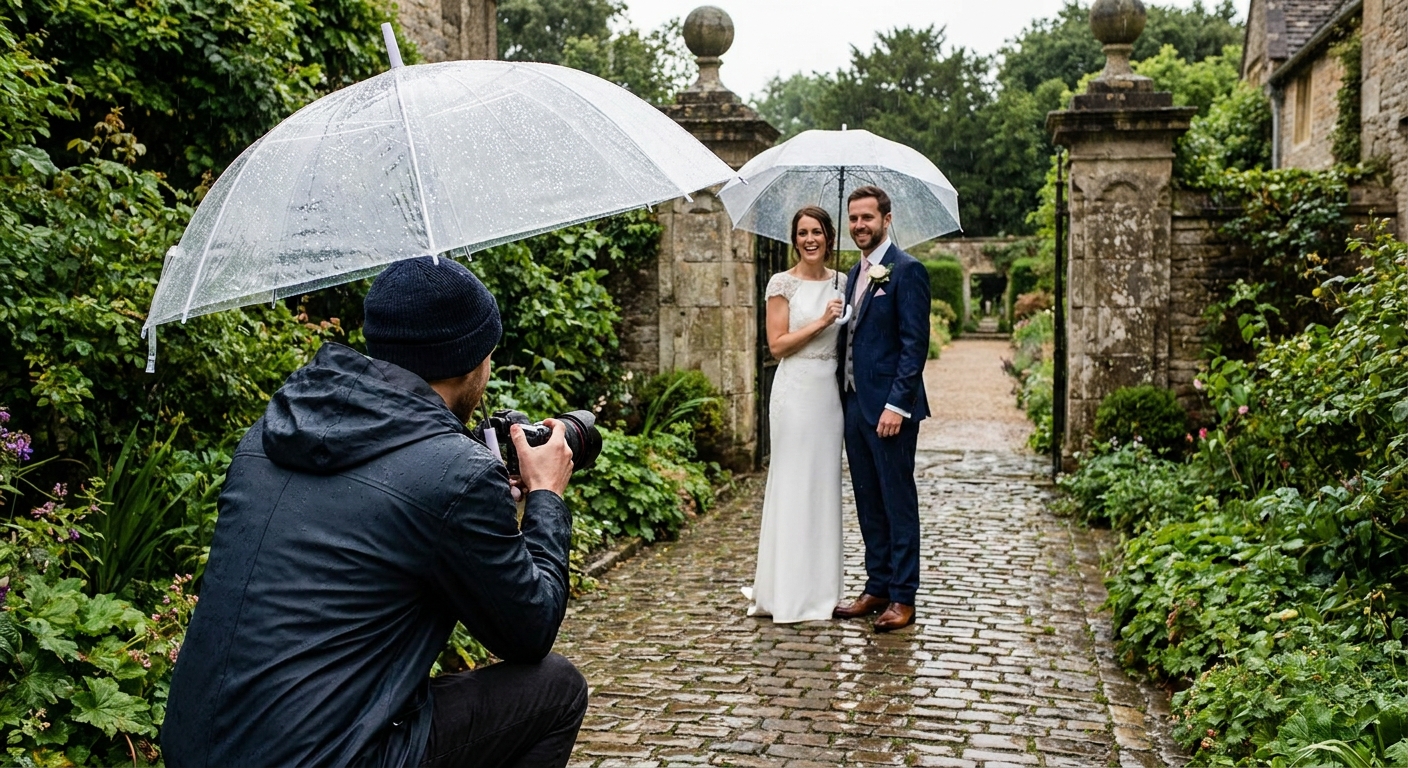
Rain on a wedding day changes everything about how a photographer works — lighting, timeline, backup venues, even lens choice. This guide breaks down exactly what to look for in a rainy day wedding photographer so the day still gets covered the way you pictured it, sun or no sun.
- A rainy day wedding photographer needs weather-sealed gear and off-camera flash, not just a nice portfolio.
- David Suns Weddings' backyard and courthouse elopement packages both build in indoor backup coverage — Book.
- Skip any photographer whose portfolio shows zero overcast or rain images from actual 2026 weddings.
- Build a 30-minute weather buffer into the timeline; it's the single biggest fix for rain-day stress.
Why this matters
Couples planning outdoor ceremonies treat rain as a worst-case scenario, but the real risk isn't the weather — it's hiring a photographer who has no plan for it. A photographer who's only ever shot bright, backlit golden hour will freeze when the ceremony moves indoors 20 minutes before start time.
The fix isn't luck. It's booking someone who treats rain contingency as part of the job, not an emergency. That means specific gear, a specific timeline buffer, and a portfolio that proves they've done this before in 2026 conditions, not just claimed they can.
Who this is for
This guide is for couples with an outdoor ceremony booked — backyard, garden, vineyard, beach — who are watching the forecast get worse and need a photographer who won't panic or reshoot the whole plan from scratch. It's also for couples who chose an indoor backup venue from the start and want photography that treats the rain as a creative asset instead of a compromise. If your venue is fully indoors already, most of this still applies to lighting and timeline planning.
What to look for in a rainy day wedding photographer
Weather-sealed camera bodies and lenses
Rain gets into gear fast, and a photographer without weather-sealed equipment will either stop shooting or ruin a camera mid-ceremony. Ask directly whether their primary bodies and lenses are rated for weather resistance — this isn't a nice-to-have on a forecast under 60% chance of rain, it's the baseline.
Off-camera flash and lighting control
Overcast skies and indoor backup tents kill natural light fast, and a photographer relying only on ambient light will hand back flat, gray images. Look for off-camera flash with a guide number of at least 60 — that's enough punch to separate subjects from a dim reception tent without blowing out faces.
A real indoor backup plan, not an improvised one
A rainy day wedding photographer should walk into the day already knowing where the ceremony moves if it rains — covered porch, tent, hallway, lobby — and how the shot list changes there. If the answer to "what's the backup plan" is "we'll figure it out," that's a photographer still learning on your dime.
A portfolio with actual rain-day weddings in it
Anyone can show you a wall of sunny golden-hour shots. Ask specifically for galleries shot in rain or heavy overcast from 2026 or 2025 weddings — umbrella portraits, wet pavement reflections, indoor first looks. If they can't produce any, they haven't done this enough to trust with your date.
Timeline flexibility built in before the day
The single biggest rain-day fix isn't gear, it's time. A photographer who builds a 30-minute buffer into the day-of schedule can absorb a delayed ceremony move or a pause for the rain to ease without cutting portrait time. Ask how they structure the timeline differently once rain is forecast.
Editing style that treats rain as mood, not a mistake
Rain-day galleries need a different color and contrast approach than bright sunny sets — moodier tones, deeper blacks, intentional use of reflections and umbrellas as compositional elements. A photographer who just tries to "fix" the gray sky in every frame is fighting the weather instead of using it.
Check availability for your date
See rain-contingency coverage details before you book.
Top picks for rainy day coverage
The backyard fallback — for outdoor ceremonies with a covered patio or porch nearby
Backyard weddings are the highest-risk setup for rain because there's usually no built-in indoor space, just whatever covered area exists on the property. David Suns Weddings' backyard wedding photography package is built around exactly this scenario — scouting covered spots during the initial walkthrough, not the morning of. One spec that matters here: flash range needs to cover at least 15-20 feet to light a covered patio group shot evenly. Book — this is the right pick if your ceremony site has zero indoor backup and relies entirely on a porch, garage, or tent.
The indoor-first option — for couples who planned around weather from day one
Courthouse and small indoor ceremonies sidestep the rain problem entirely, but they still need a photographer comfortable with tighter spaces and mixed indoor lighting. David Suns Weddings' courthouse ceremony elopement coverage is shot almost entirely indoors already, meaning the gear and lighting approach never has to improvise. Expect a tighter shot list — often under 2 hours total — since courthouse ceremonies move fast. Book if you've already committed to an indoor or covered venue and want a photographer who isn't adjusting on the fly.
The small-guest-list rain pivot — for couples keeping the list under 50
Smaller weddings move faster and pivot easier when weather turns, which is exactly why David Suns Weddings' micro wedding photography coverage works well as a rain-day option. A guest list under 50 means a full ceremony relocation can happen in under 15 minutes instead of the 30-45 minutes it takes to redirect 150 people. Consider this route if your original plan was a larger outdoor gathering and the forecast is pushing you to scale down anyway.
What to avoid
- A photographer with no rain-day portfolio examples. A polished sunny-day gallery tells you nothing about how they'll handle low light and moving locations.
- Anyone without a stated backup timeline. "We'll adapt" is not a plan — ask for the specific buffer they build in when rain is forecast.
- Gear lists that skip weather sealing. A camera bag full of non-weather-rated bodies means shooting stops the moment rain actually falls, not just threatens to.
“If a photographer's backup plan for rain is 'we'll figure it out,' they haven't shot enough rain-day weddings to trust with your date.”
Verdict comparison
| Package | Best for | Backup built in | Verdict |
|---|---|---|---|
| Backyard wedding coverage | Outdoor ceremony, covered patio nearby | Yes, patio/porch scouted in advance | Book |
| Courthouse elopement coverage | Fully indoor or covered venue | Not needed — already indoors | Book |
| Micro wedding coverage | Guest list under 50 | Fast pivot, under 15-minute relocation | Consider |
FAQ
Does rain actually ruin wedding photos?
No — rain changes the lighting and location plan, but it doesn't ruin photos when the photographer has weather-sealed gear and off-camera flash ready. Some of the most striking wedding galleries in 2026 come from overcast or light-rain days because of the softer, moodier light.
What's the best backup plan for an outdoor wedding photographer if it rains?
The best backup plan is a pre-scouted covered space identified during the venue walkthrough, not decided the morning of the wedding. A photographer should also build a 30-minute timeline buffer to absorb a ceremony relocation without cutting portrait time.
Is a rainy day wedding photographer more expensive?
Pricing for rain-day coverage generally follows the same package structure as any other date — check current pricing directly with the photographer rather than assuming a weather surcharge. What changes is the gear and timeline plan, not necessarily the cost.
How much extra time should I add to my timeline for rain?
Build in at least 30 minutes as a buffer if rain is forecast for your wedding day. That covers a ceremony relocation, a pause for a lighter rain window, or extra time for indoor portrait setups.
Should I still do outdoor portraits if it's raining?
Yes, with the right gear — umbrella portraits and wet-pavement reflections are a common, intentional part of rain-day wedding galleries in 2026. It works best with off-camera flash to keep subjects lit against a gray sky.
What camera gear should a rainy day wedding photographer carry?
Weather-sealed camera bodies and lenses are the baseline, paired with off-camera flash rated at a guide number of 60 or higher for indoor backup lighting. Without both, a photographer either stops shooting in rain or hands back flat, underlit images.
Can a courthouse or elopement ceremony avoid rain problems entirely?
Mostly yes, since courthouse and small indoor elopement ceremonies remove the outdoor weather risk from the ceremony itself. Portraits afterward can still move outdoors during a break in the rain if the photographer builds that flexibility into the schedule.
How do I know if a photographer has real rain-day experience?
Ask to see galleries specifically shot in rain or heavy overcast conditions, not just their standard sunny portfolio. A photographer with real experience will have 2025 or 2026 rain-day galleries ready to show without hesitation.
One last thing
Most couples treat a rain forecast as bad news for their photos, but overcast skies act as a giant natural softbox — even, diffused light with no harsh shadows under the eyes or nose. Some of the strongest portrait sets from 2026 weddings come from exactly this kind of light, not despite the rain but because of it. The photographer who knows how to use that light, instead of fighting it, is the one worth booking.


