
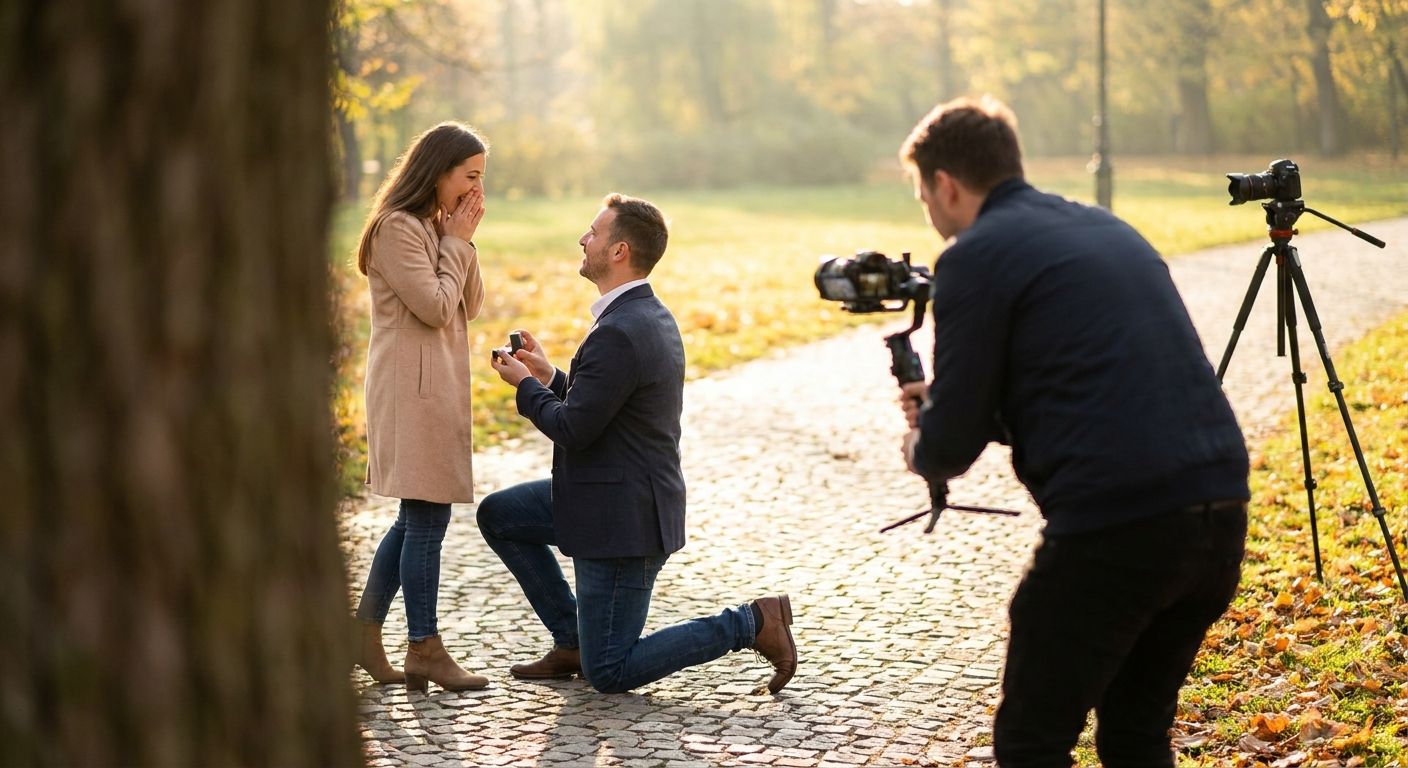
A proposal videographer for surprise proposal capture films the moment someone gets down on one knee from a hidden vantage point, so the partner being proposed to never spots a camera before the question is asked. The goal is one unscripted, unrepeatable reaction on video — not a reenactment shot after the fact.
- A proposal videographer for surprise proposals hides in plain sight and shoots from 50-150 feet away using a long lens.
- Friends filming on phones lose the moment more often than not — shaky footage, wrong angle, missed audio.
- Book the videographer at least 2-3 weeks ahead of the proposal date in 2026 so the scout visit and briefing happen with time to spare.
- David Suns Weddings handles surprise proposal capture as a standalone booking, separate from full wedding coverage.
Why this matters for surprise proposal capture
A surprise proposal happens once. There's no second take, no "can you say that again" — if the camera is aimed at the wrong bench or the audio doesn't pick up the words, the moment is gone for good. That's the core difference between filming a proposal and filming a wedding: a wedding has a schedule you control; a proposal has a person who must not know what's coming.
The stakes also change the gear and the plan. A surprise proposal photography and videography session needs a hidden shooter, a pre-scouted location, and a signal system between the proposer and the crew — none of which apply to a standard engagement shoot where both partners know a photographer is there. Couples planning this for 2026 engagements are increasingly asking for both video and photo from the same hidden position, so one missed angle doesn't cost them the whole memory.
Scout the proposal location before the day
A videographer who shows up cold on proposal day is guessing at sightlines. Scouting in advance turns a guess into a plan.
- Visit the exact spot at the same time of day the proposal will happen, to check light direction and shadows
- Identify 2-3 hiding positions with a clear line to where the proposal will happen
- Check for foot traffic, tour groups, or events that could block the shot
- Note backup spots in case the primary plan gets crowded
- Confirm whether a permit is needed for tripods or drones at the location
Skip this step and the whole shoot depends on luck. Scouting is free if you do it yourself with a phone camera and a notes app; it's one of the first things a hired proposal videographer will insist on doing before quoting a plan.
Brief the proposer without tipping off the partner
The proposer needs to walk the videographer through the plan in a way that never reaches the other person. This conversation is the difference between a clean shot and a scrambled one.
- Confirm the exact words or signal that starts the proposal (a hand on the shoulder, a specific phrase)
- Share where the ring is hidden and how it gets retrieved without fumbling on camera
- Agree on a backup plan if the partner suggests a different spot last minute
- Exchange phone numbers for a discreet text check-in on arrival
- Walk through who else is coming — family, a photographer, a small crowd — so the frame is planned, not chaotic
A proposal videographer who has done this before will ask these questions unprompted. That's the fastest way to tell a specialist from someone just showing up with a camera.
Choose the right lens distance for a hidden shot
Getting close enough to hear the words without being seen is the single hardest technical problem in surprise proposal capture.
- Use a telephoto lens (200mm or longer) to shoot from 50-150 feet away
- Pair a shotgun mic or a hidden lavalier on the proposer for clean audio at distance
- Test the framing at the scouted distance before the actual day, not on it
- Have a second, wider angle running as backup in case the primary shot is blocked
- Check that the lighting at that distance won't force a slow shutter and blurry motion
A phone camera struggles here — most phones lose detail and audio clarity past 20-30 feet, which is exactly the distance a hidden shooter needs to stay unseen.
Plan the reveal sequence and reaction shot
The reaction is the footage everyone rewatches. Planning where it happens protects it.
- Decide which side of the partner's face the camera needs, based on where they'll be standing
- Build in a few extra seconds of anticipation before the question, since reactions often start before the ring is out
- Assign a second shooter to catch the proposer's face if a two-camera setup is available
- Keep the camera rolling 15-20 seconds after the "yes" — hugs, calls to family, and laughter are often the best part
- Plan for a same-day teaser cut couples can post before the full film is ready, similar to a social media proposal teaser
Add wide or drone footage for scale
A tight shot on faces tells the emotional story; a wide or aerial shot tells the setting story. Both matter for a proposal film that gets watched more than once.
- Confirm drone use is legal at the location — parks and private venues often restrict it
- Shoot a wide establishing shot before the proposer arrives, so the film has context
- Capture the surrounding crowd or family reaction if others are in on the surprise
- Grab b-roll of the ring, the location, and any signage or landmark that marks the spot
Turn the footage into a shareable film
Raw footage from a surprise proposal is rarely watchable straight out of the camera — audio needs syncing, shaky handheld moments need trimming, and the reaction needs to lead the cut.
- Edit down to a 60-90 second highlight for sharing before the full-length version is ready
- Sync any separate audio recording to the video track for clean dialogue
- Color-correct for consistent tone if two cameras were used at different angles
- Add the couple's names and the date as a simple opening or closing title
- Save a version formatted for vertical viewing, since most of these films get watched on a phone
This step is where hiring a proposal videographer pays off fastest — most couples don't have editing software or the time to cut a clean film themselves in the days right after a proposal.
Deliver the raw footage and a save-the-date cut fast
Couples want to share the news within days, not weeks. A fast turnaround matters more here than on a full wedding film.
- Deliver a short teaser clip within 48-72 hours of the proposal
- Provide raw, unedited files as a backup in case the couple wants their own cut
- Offer a longer edited version that can double as a save-the-date film for the wedding to come
- Confirm file formats work across phones, social platforms, and email attachments
Comparison: ways to capture a surprise proposal
| Option | Best for | Key limitation |
|---|---|---|
| Hired proposal videographer | Couples who want a hidden, professional shot with edited delivery | Requires booking and a scouting visit ahead of the date |
| Friend or family member with a phone | Low-key proposals with no budget for a hire | Shaky footage, wrong angle, or getting spotted is common |
| Self-set tripod or GoPro | Proposers comfortable setting up gear alone | Fixed frame can't follow movement or zoom in on the reaction |
| Drone-only coverage | Wide, scenic locations with open sightlines | Weak on close-up audio and facial reaction detail |
The hidden professional shooter wins on reliability; everything else trades some control for lower cost.
Common mistakes couples make with proposal videography
- Skipping the scout visit. Showing up on the day without checking sightlines is the top reason proposal footage gets ruined.
- Telling too many people the plan. Every extra person who knows raises the odds the partner finds out before the moment happens.
- Choosing a spot with no backup. Crowds, weather, or a closed path can force a last-second change with no plan B.
- Forgetting audio. A gorgeous wide shot with no clear "yes" on the recording is a common regret couples report after the fact.
- Cutting the camera too soon. The seconds right after the "yes" — the hug, the call to mom — often matter more than the question itself.
FAQ
What does a proposal videographer actually do?
A proposal videographer films the moment of a marriage proposal from a hidden vantage point so the person being proposed to doesn't know a camera is rolling. The service typically includes a location scout, a briefing with the proposer, and an edited highlight video delivered within days.
How far in advance should I book a proposal videographer for 2026?
Book at least 2-3 weeks ahead of the proposal date in 2026 to leave time for a scout visit and a full briefing. Popular outdoor spots and weekend dates fill faster, so earlier booking gives more flexibility on timing.
Can a friend with a phone replace a hired videographer?
A friend with a phone can work for a low-key moment, but shaky handheld footage, distance limits, and audio pickup are common problems. A hired proposal videographer uses a telephoto lens and separate audio to solve exactly those issues.
Is a proposal videographer different from an engagement photographer?
Yes. An engagement photographer typically shoots posed portraits with both partners aware of the camera, while a proposal videographer hides to capture the surprise moment itself, often before any posed photos happen.
How long does it take to get the proposal video back?
A short teaser or highlight clip is often deliverable within 48-72 hours of the proposal so couples can share the news quickly. A longer, fully edited film usually follows afterward.
Does a drone work for surprise proposal footage?
A drone works well for wide, scenic shots of the location but is weak for capturing close-up facial reactions and audio. Most proposal videographers pair a drone shot with a ground-level hidden camera rather than relying on the drone alone.
What if the proposal doesn't happen at the planned spot?
A good proposal videographer scouts backup positions in advance specifically because plans change on the day. A text check-in system between the proposer and the crew lets the shooter reposition quickly if the location shifts.
Can the same videographer film the wedding later?
Many couples who book proposal coverage in 2026 later book the same videographer for engagement sessions or the wedding itself, since the crew already knows the couple's style and story.
One last thing
The seconds most couples wish they had on film aren't the question — they're the ten seconds right after, when the phone calls start and the ring finally goes on. Tell your videographer to keep rolling well past the "yes," not to cut the moment the question is asked. That's the footage that gets rewatched at the wedding, at anniversaries, and for years after both.


