
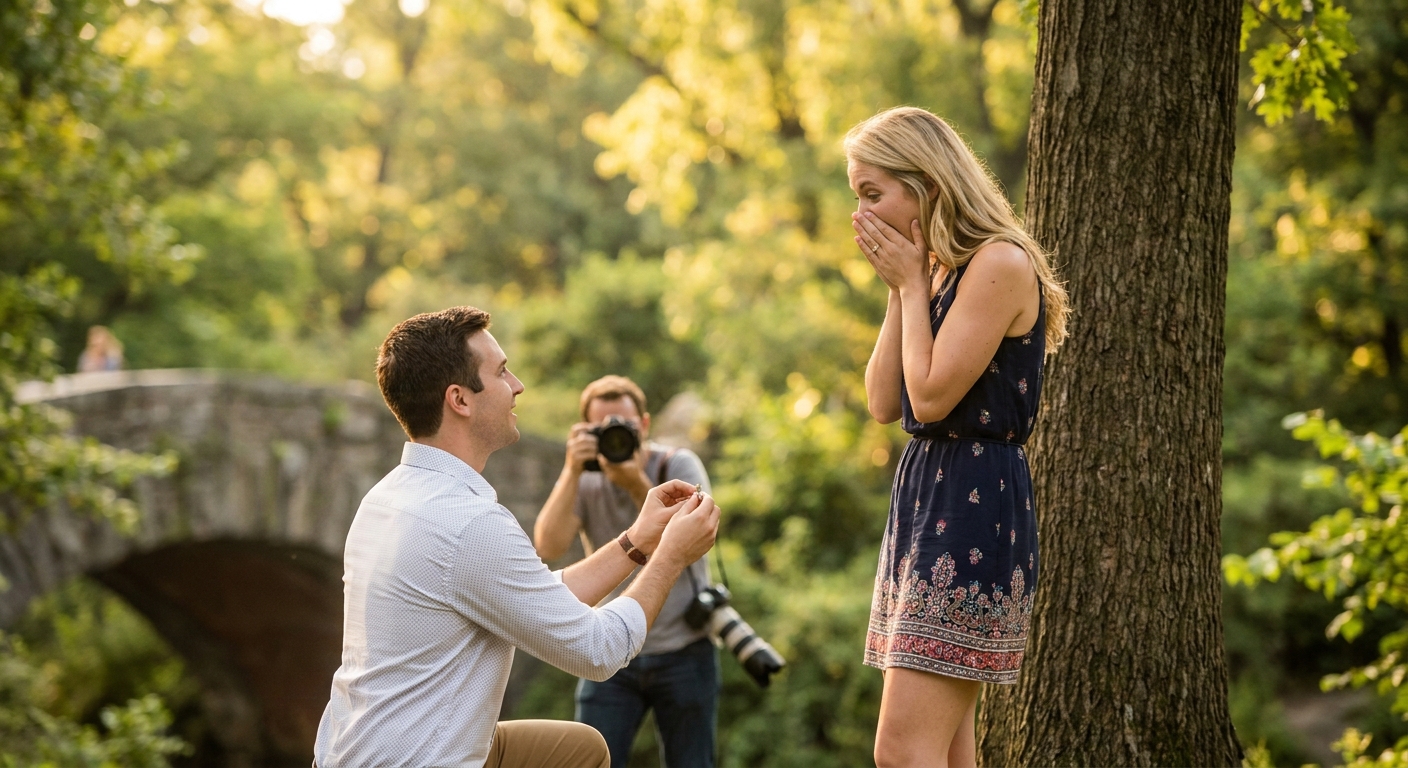
A surprise proposal photographer has to disappear into the background while still catching the exact second someone drops to one knee — and that's a different skill set than standard engagement photography. This guide breaks down what to look for, who does it well, and what setups fall apart when the moment actually happens.
- A surprise proposal photographer needs concealment skills and a telephoto lens, not just a portfolio of posed shots.
- Beach and city skyline proposals both work best with a 60-90 minute session window built around golden hour in 2026.
- David Suns Weddings treats national park and outdoor proposals like mini elopement shoots, with the same documentary approach.
- Confirm the hiding spot and sightline 48 hours before the proposal, not the morning of.
- Turnaround on proposal photos should land in 10-14 days in 2026 — anything longer means you're waiting to share the news.
Why this matters
A proposal happens once, on a schedule you don't control, in front of a person who has no idea it's coming. There's no second take if the photographer is standing in the wrong spot or the partner spots them mid-approach.
That's why hiring for a surprise proposal is a different exercise than booking a standard engagement photography session. You're not hiring for posed chemistry — you're hiring for a person who can vanish into a crowd, read body language from 40 yards, and still deliver a sharp, well-lit frame the instant the ring comes out.
Who this is for
This guide is for the partner doing the planning — the one coordinating a hidden photographer, a specific location, and a cover story, all while trying not to tip off the person they're about to propose to. If you're managing logistics on a group text with a best friend and checking sunset times on your phone, this is written for you.
What to look for in a surprise proposal photographer
Concealment and long-lens work
A photographer who shoots proposals regularly works from distance — often 50 to 150 feet away — with a long lens instead of standing close like a typical engagement shoot. Ask what focal length they default to for concealed work; anything shorter than 200mm usually means they're planning to be visible, which risks the whole surprise.
Pre-proposal coordination with you, not your partner
The photographer needs a private line of communication with the planning partner only. That means a text thread, a signal for "they're on the move," and a confirmed meeting spot that doesn't route through anyone who might slip.
A weather and backup plan
Outdoor proposals get rained out, fogged in, or hit with sudden wind that ruins a hairstyle five minutes before the question. A photographer who has a rain-date protocol or an indoor backup location already scouted is protecting the one shot you're paying for.
Fast turnaround
You want to share the news, not sit on it. In 2026, a 10-14 day turnaround on proposal photos is a reasonable standard — some photographers offer a same-day sneak peek of two or three edited frames specifically so the announcement doesn't wait on the full gallery.
Documentary instinct over posed instinct
Someone trained mainly in posed portraiture tends to direct — "look here," "hold that pose" — which doesn't work when the couple has no idea they're being photographed. Look for a portfolio with genuine candid proposal sequences, not staged re-creations.
Location scouting before the day
A photographer who visits the proposal site in advance knows where the sun will sit, where the crowd will be, and where they can stand without being seen. That scouting trip is the difference between a lucky shot and a planned one.
Top picks by setting
The golden-hour classic — beach proposals
Sand and sunset light do a lot of the work for you, but timing has to be locked to that day's actual sunset table, not a guess. Engagement photos for beach proposals work best with a 60-90 minute window that starts about an hour before sunset, giving the photographer time to find cover in a lifeguard stand, a dune line, or a nearby group of beachgoers. Verdict: Buy — for coastal settings this is the most forgiving surprise-proposal environment because open sightlines make long-lens concealment easy.
The skyline dramatic — city proposals
Rooftop bars, bridges, and skyline overlooks add scale and drama, but city settings mean more foot traffic and less predictable lighting. Engagement photography for city skyline sessions leans on blue-hour timing — the 20-30 minutes after sunset when building lights and sky color balance out — plus a photographer comfortable shooting from a distance in a crowd. Verdict: Buy — strong pick if the proposal spot has a clear elevated vantage point nearby.
The epic backdrop — national park and outdoor adventure proposals
A proposal on a trail or overlook needs the same documentary instinct used for full outdoor ceremonies. The approach behind elopement photography for national park adventures — positioning ahead of the couple on a route, hiking gear included — transfers directly to a trailside proposal. Verdict: Consider — only if the trail allows a second person to hike ahead unnoticed; narrow single-file trails make concealment much harder.
The low-key hometown pick — backyard or home proposals
A backyard or living-room proposal keeps things private, but it also means fewer places to hide a photographer. This setup usually works better with the photographer already inside the house as a "guest" or positioned in a parked car with a long lens through a window. Verdict: Consider — it takes more creative coordination than an open outdoor setting, but it's the lowest-risk option for privacy.
What to avoid
- A photographer who insists on being visible "just in case." If they won't commit to full concealment, the surprise is compromised before the day starts.
- No written contingency for weather. A verbal "we'll figure it out" isn't a plan when rain hits 20 minutes before showtime.
- Phone-only shooters for long-distance concealment. A phone camera can't hold focus and detail from 50+ feet away the way a long lens can — fine for a close posed shot, not for a hidden proposal.
Lock in your proposal photographer
Coordinate concealment, timing, and backup plans directly with David Suns Weddings.
Verdict comparison
| Setting | Concealment Difficulty | Session Length | 2026 Turnaround | Verdict |
|---|---|---|---|---|
| Beach | Low | 60-90 min | 10-14 days | Buy |
| City skyline | Medium | 60-90 min | 10-14 days | Buy |
| National park / trail | High | 60-90 min | 10-14 days | Consider |
| Backyard / home | Medium-High | 45-60 min | 10-14 days | Consider |
FAQ
What's the best surprise proposal photographer to hire in 2026?
The best surprise proposal photographer in 2026 is one who shoots with a long lens from a concealed distance and has a documented backup plan for weather. David Suns Weddings applies the same documentary approach used for outdoor elopements to concealed proposal sessions.
How much does a surprise proposal photographer cost?
Pricing depends on location, session length, and how much scouting the shoot requires, so it varies by photographer and setting. Check current 2026 pricing directly with the photographer for your specific location before booking.
How far in advance should you book a surprise proposal photographer?
Book 4-6 weeks ahead when possible, especially for popular sunset or holiday-weekend dates in 2026. Last-minute bookings are sometimes possible but limit your choice of photographer and backup dates.
Can a proposal photographer really stay hidden during the moment?
Yes, when the photographer scouts the location in advance and uses a lens in the 200mm-plus range to shoot from 50 to 150 feet away. Concealment fails most often when the photographer skips the scouting visit and improvises on the day.
Is a surprise proposal photographer better than a videographer?
Photography and videography capture different things — stills freeze the exact reaction, video captures sound and motion like the actual words spoken. Many couples book both, but if choosing one, photography is the more common pick for proposal moments.
What happens if it rains on proposal day?
A photographer with a weather contingency will have an indoor backup location or a rain-date option already discussed with you in advance. Confirm this plan during booking, not the morning of the proposal.
How long does a surprise proposal photo session take?
Most surprise proposal sessions run 60-90 minutes, covering the arrival, the proposal itself, and a short reaction and celebration segment afterward. Backyard or home proposals sometimes run shorter, around 45-60 minutes.
Do surprise proposal photographers also shoot engagement photos afterward?
Many do, often extending the same session into a short engagement portrait segment once the surprise is over. This gives couples both the candid proposal reaction and posed portraits from a single 2026 booking.
One last thing
The frame everyone plans for is the reaction shot — hands over mouth, tears, the ring reveal. The frame that actually gets used most is the three seconds before that, when the partner is still registering what's happening and hasn't composed their face yet. A photographer positioned for that split second, not just the aftermath, is the one worth booking for 2026.


