
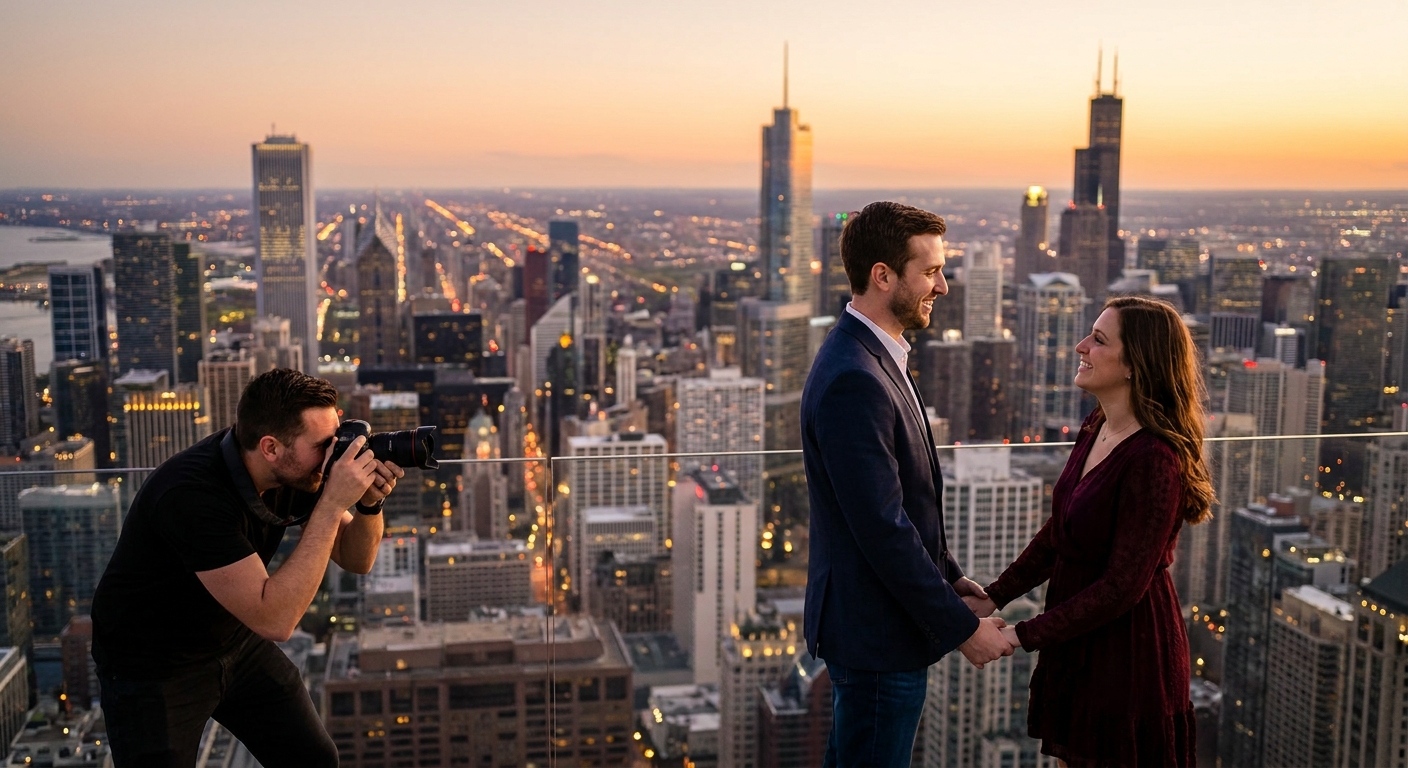
Skyline backdrops turn an engagement session into a statement piece, but the wrong vantage point, timing, or lens choice can flatten a skyline into a gray smudge behind two people squinting into the sun. This guide breaks down what actually makes city skyline engagement photos work and which locations deliver on the promise.
- City skyline engagement photos rely on golden hour and blue hour timing, not midday light — plan the 60-90 minute window around sunset.
- Rooftop and observation-deck sessions deliver the widest skyline views but need building permission booked weeks ahead in 2026.
- David Suns Weddings recommends scouting a location at the same time of day you'll shoot before committing to it.
- A pedestrian bridge or waterfront overlook is the safest all-season pick for consistent, unobstructed skyline framing.
Why this matters
A skyline session is a location-driven shoot first and a couples portrait session second. Get the location, timing, and permit situation wrong and no amount of posing fixes it — the couple ends up backlit, squinting, or shot from an angle where the skyline reads as a smudge of gray instead of a recognizable city.
David Suns Weddings approaches every city skyline engagement session as a two-part plan: nail the light window first, then work the composition around it. That order matters more than any single camera setting.
Who this is for
This guide is built for couples who want their engagement photos to read as "our city" rather than a generic park backdrop — professionals who met downtown, couples relocating for a new job, or anyone proposing to make a skyline the visual signature of their wedding announcement. It also applies if you're choosing between a skyline shoot and another engagement style, since the criteria below apply just as much to comparing venues as to picking the final one.
What to look for in city skyline engagement photos
Golden hour and blue hour timing
Skyline photos live or die on light direction. Shooting at noon puts the sun directly overhead, which flattens building facades and forces harsh squinting; golden hour (the 20-30 minutes before sunset) and blue hour (the 20-30 minutes after) both put warm or cool ambient light behind the skyline instead of glare in your eyes. In 2026, sunset shifts by roughly a minute per day through fall, so any photographer worth booking should confirm the exact time slot within a week of your actual shoot date, not lock it in months out.
Location scouting and access
Rooftop bars, observation decks, and private terraces almost always require advance booking or a building permit, and some downtown cores restrict tripod use on public sidewalks without a filming permit. A photographer who has shot the specific skyline before will know which spots need paperwork and which are walk-up only — that knowledge saves you from a rejected access request the week of your session.
Lens choice for skyline compression
A 70-200mm lens compresses distance so a couple standing 40 feet from the rail appears closer to the skyline behind them, while a 24-35mm wide lens shows more of the cityscape but pushes the couple smaller in the frame. Neither is wrong, but the choice changes the whole feel of the photo — ask which lens your photographer plans to use for the hero shots before the shoot, not after.
Weather backup and flexibility
Skyline shoots depend on visibility. Haze, fog, or a sudden storm front can erase a skyline in under an hour, so the plan needs a same-day backup — an indoor atrium, a parking structure with a partial view, or a rescheduled date within the same week. A photographer without a stated backup plan is a risk for any outdoor city session.
Outfit and color coordination
Glass, steel, and concrete backdrops read cool and neutral, so jewel tones, deep reds, and warm neutrals stand out far more than pastels or all-black outfits, which can blend into shadowed building lines. This matters more for skyline shoots than for garden or beach settings because the backdrop itself has almost no color variation to work with.
Portfolio experience with urban backdrops
Urban and architectural photography is a different skill from soft-focus garden portraiture — look for a portfolio with actual skyline sessions, not just a few city snapshots mixed into a broader gallery. If a photographer's portfolio is heavy on parks and light on skylines, ask directly how many rooftop or bridge sessions they've shot in the past year.
Top picks: skyline vantage points that work
Rooftop bar or observation deck — the showstopper. These spots deliver a 270-degree skyline view and put the couple above street noise and pedestrian traffic entirely. The tradeoff is booking lead time — most venues need reservations two to four weeks out in 2026, and wind at height can complicate hair and veil shots. Book.
Waterfront pier or promenade — the safe pick. A pier or riverside walk gives an unobstructed horizontal skyline view with water reflections doubling the visual impact, and it's almost always public access with no permit needed. Light hits differently depending on which side of the water you're on, so confirm the sun's position for your exact date. Book.
Pedestrian bridge or elevated overlook — the golden-hour workhorse. Bridges put you at a mid-height vantage that reads as more intimate than a rooftop while still capturing the full skyline. Foot traffic can be an issue during commute hours, so early morning or post-sunset blue hour sessions work best here. Consider.
Downtown street-level with glass reflections — the wildcard. Shooting street-level against a glass-front building creates a mirrored skyline effect that's distinctive but harder to pull off — it depends entirely on finding the right building angle and avoiding pedestrian clutter in the frame. This works best as a secondary location within a longer session rather than the whole shoot. Consider.
If a skyline location falls through, engagement photos for beach proposals and elopement photography for national park adventures cover the two other backdrop styles most couples compare against a city session.
Book your skyline engagement session
Check availability for 2026 golden-hour and blue-hour city sessions.
What to avoid
- Midday sessions with harsh overhead sun — the light flattens building facades and forces squinting; nothing in post-production fixes it fully.
- Skipping the permit check — a rooftop or private terrace booked without confirming photography access can get you turned away on the day, with no backup plan in place.
- All-black or pastel outfits against glass and steel — dark outfits disappear into shadowed building lines, and pastels wash out against gray concrete; jewel tones and warm neutrals hold up far better.
Before locking in any photographer for a skyline session, the criteria in how to choose a wedding photographer for your big day apply just as much to engagement sessions as to the wedding day itself.
Verdict comparison
| Vantage point | Best light window | Permit difficulty | Best season | Verdict |
|---|---|---|---|---|
| Rooftop / observation deck | Blue hour | High — advance booking | Spring, fall | Book |
| Waterfront pier | Golden hour | Low — public access | Year-round | Book |
| Pedestrian bridge | Golden hour | Low, watch foot traffic | Spring, fall | Consider |
| Downtown street reflections | Midday or overcast | Low | Summer, fall | Consider |
FAQ
What's the best time of day for city skyline engagement photos?
Golden hour, roughly 20-30 minutes before sunset, and blue hour, the 20-30 minutes right after, both give the skyline soft ambient light instead of harsh overhead glare. Midday sun flattens building facades and forces squinting, so it's the window to avoid.
Is a rooftop location better than a bridge for skyline shots?
A rooftop gives a wider, higher-angle view of the skyline, while a bridge gives a more intimate mid-height framing with less permit hassle. Rooftops usually need two to four weeks of advance booking in 2026, while public bridges rarely need any permission at all.
How much does city skyline engagement photography cost in 2026?
Pricing varies by market, photographer package, and any venue or permit fees for rooftop or private locations. Check current rates directly with your photographer rather than assuming a flat number applies across cities.
Do you need a permit for skyline engagement photos?
Private rooftops, observation decks, and some downtown sidewalks require a permit or advance booking, while public parks, piers, and bridges usually don't. Confirm access rules for your specific location before the shoot date, not the week of.
What lens is best for skyline engagement photography?
A 70-200mm lens compresses distance so the skyline feels closer behind the couple, while a 24-35mm wide lens captures more of the cityscape at the cost of making the couple appear smaller. The right choice depends on whether you want the couple or the skyline to dominate the frame.
Can skyline engagement photos work in winter?
Yes, winter often gives clearer air and crisper skyline visibility than humid summer months, though sunset comes earlier and outfits need to account for cold. Blue hour arrives faster in winter, so timing the shoot gets easier to plan around shorter days.
How long does a city skyline engagement session take?
Most engagement sessions run 60 to 90 minutes, split between one or two locations to make the most of a single light window. Multi-location sessions need extra travel time built in between the skyline shot and any secondary backdrop.
Is blue hour better than golden hour for skyline shots?
Blue hour, right after sunset, often produces more dramatic skyline photos because city lights turn on while the sky still holds color, creating contrast golden hour can't match. Golden hour gives warmer skin tones, so many sessions book both windows back to back.
One last thing
Blue hour only lasts 20 to 30 minutes, and the most dramatic color shift happens in the final 10 — city lights switch on while the sky still holds deep blue, and that overlap window is the single shot most couples end up choosing as their favorite from the whole session. Plan the schedule so the photographer is already in position before that window opens, not scrambling to find it.


