
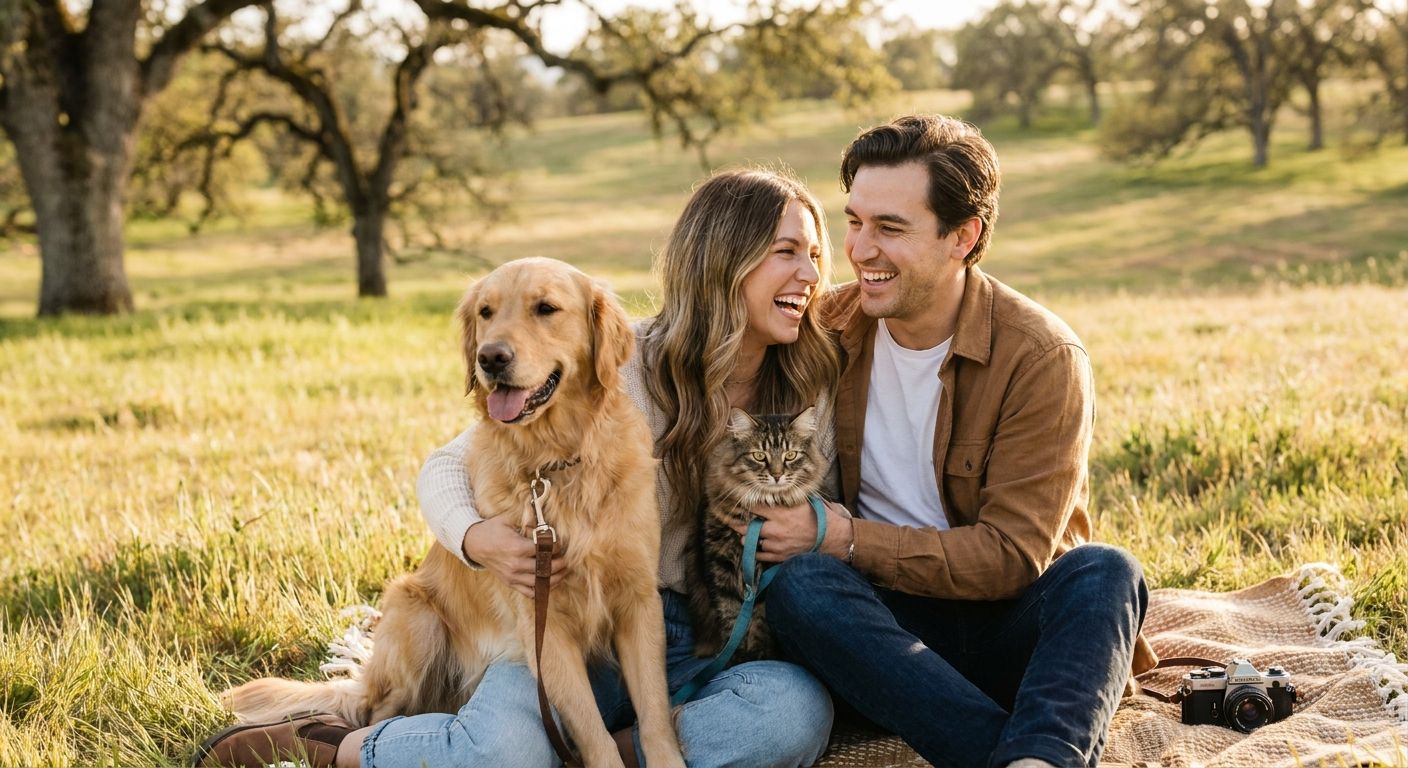
Booking engagement photos with pets means choosing a photographer who can direct two subjects who don't take direction the same way, and planning a session around an animal's attention span instead of a couple's schedule.
- Book a photographer with documented pet experience before location — engagement photos with pets fail more often from handling gaps than bad light.
- City skyline sessions and beach proposals both work for pets in 2026, but only with a dedicated leash handler off-camera.
- Skip midday summer sessions and off-leash dog parks — heat and distraction ruin more pet shoots than any camera setting.
- A 20-30 minute session cap keeps most dogs cooperative; past that, fatigue shows in every frame.
Why this matters
Couples increasingly want their dog, cat, or even a rescue foster in engagement photos, and that changes the entire shot list. A session built for two adults standing still doesn't translate to a session with a third subject who gets bored in 15 minutes and doesn't understand "look at the camera." The photographer, the location, and the timing all need adjusting, and most of the failures in pet-inclusive engagement sets trace back to skipping that adjustment. David Suns Weddings approaches these sessions differently than a standard couple's shoot, starting with the animal's temperament rather than the backdrop, and that ordering matters more than most couples expect going into 2026.
Who this is for
This guide is for couples who consider their pet part of the relationship story and want it documented, not tacked on as an afterthought in three frames at the end of a shoot. It's for couples planning engagement photos around a dog that's food-motivated but not obedience-trained, a cat that tolerates a harness for ten minutes max, or an older pet that can't handle a long outdoor walk. If your pet is anxious around strangers, unfamiliar equipment, or crowds, this also applies to you — the criteria below are built around managing exactly that.
What to look for in engagement photos with pets
A photographer who directs animals, not just people
Most wedding photographers are trained to pose humans, not read a dog's body language or anticipate when a cat is about to bolt. Ask directly whether the photographer has shot sessions with pets before 2026 and what their fallback plan is when the animal won't cooperate on cue.
A location the pet already knows or can acclimate to quickly
A totally unfamiliar environment adds stress on top of a new person with a camera. Locations with open sightlines and low foot traffic — a quiet stretch of beach, an early-morning park path — reduce the number of variables a nervous pet has to process at once.
Timing built around the pet's energy curve, not golden hour alone
Golden hour matters for light, but a dog that's had zero exercise that day will not sit calmly for 45 minutes of shooting. Schedule the shoot after a walk or a play session so the pet arrives tired enough to settle but not so tired it goes flat in every frame.
A second person dedicated to handling, not shooting
One person can't hold a leash, offer treats, and direct a couple's pose at the same time. The strongest pet-inclusive sessions in 2026 use a friend, family member, or the photographer's assistant purely for handling so the couple never has to break character to manage the animal.
A realistic session length cap
Most dogs and cats give you 20 to 30 usable minutes before attention drops off hard. Photographers who build a two-hour shot list around a pet with a 25-minute attention span are setting the session up to fail in its second half.
A backup plan if the pet checks out early
Even a well-prepared pet can decide it's done. The photographer should have a plan B — shooting the couple solo for the remaining time, or moving the pet portion to the front of the session — instead of pushing through and getting stressed, unusable frames.
Top picks for pet-inclusive engagement sessions
Beach proposals — the classic pick. Open sand, wide sightlines, and a leash-friendly environment make beach proposal engagement sessions one of the more forgiving settings for a first-time pet shoot. The main spec that matters: tide timing. Shooting two hours before low tide gives you the widest usable sand strip and the fewest crowds. Verdict: Buy — reliable for dogs with moderate leash training and low anxiety around water.
City skyline sessions — the wildcard. Urban backdrops photograph beautifully but come with sirens, crowds, and unpredictable noise, all of which spike a nervous pet's stress. City skyline engagement sessions work best with pets under 90 seconds of novelty tolerance for new sounds — meaning confident, well-socialized dogs, not first-time-outside rescues. Verdict: Consider only if your pet has logged real time in busy public spaces before 2026.
Surprise proposals with a pet as the reveal — the emotional pick. Having the dog carry the ring or wear a "will you marry me" bandana works on camera, but it depends entirely on the pet holding a stationary pose for the reveal moment. Surprise proposal engagement sessions with this setup need a rehearsal walk-through beforehand — skipping that step is the single most common reason this concept falls apart on the day. Verdict: Buy, but only with a 15-minute rehearsal built into the timeline.
“If your dog can't hold a sit for ten seconds at home, it won't hold one on a beach with strangers walking by.”
What to avoid
- Off-leash dog parks as a location. They look natural on camera but offer zero control over other dogs entering the frame or triggering a reaction.
- Midday sessions in summer heat. Pavement and sand both radiate heat that dogs feel through their paws long before a person notices discomfort — this alone shortens a usable session from 30 minutes to under 10.
- New gear on shoot day. A harness, leash, or bandana the pet hasn't worn before adds a stress variable you don't need on top of a new location and a camera. Break in any new gear at least a week ahead.
Handling matters as much as location once you're on site. Photographers who've shot pets through multiple seasons will tell you the same thing trainers say: a dog that pulls against the leash the moment it senses excitement needs the handler to keep steady tension and a calm voice, not a tug-of-war. Sites that focus specifically on lead work, like guidance on how to keep your dog calm on a leash, cover exactly the groundwork that turns a chaotic 30 minutes into a usable set of frames — and that groundwork should happen weeks before the shoot, not the morning of.
Couples who skip the rehearsal step tend to spend the first ten minutes of the session just settling the pet down, which eats into the light window and the pet's attention span at the same time.
Verdict comparison
| Setting | Best for | Weather risk | Session length | Verdict |
|---|---|---|---|---|
| Beach proposal | Moderate-trained, water-tolerant pets | Wind, tide timing | 25-35 min | Buy |
| City skyline | Confident, socialized pets | Noise, crowds | 20-30 min | Consider |
| Surprise reveal | Rehearsed pets, stationary cues | Low, controllable | 15-25 min | Buy with rehearsal |
Plan your pet-inclusive session
Talk through timing, location, and handling before you book.
FAQ
What's the best location for engagement photos with pets?
Open, low-traffic locations like a quiet beach stretch work best for engagement photos with pets in 2026 because they limit distractions and give handlers room to manage a leash off-camera. Busy urban settings work only for pets already comfortable around crowds and noise.
Is a dog park a good spot for pet engagement photos?
No — dog parks introduce uncontrolled variables like other off-leash animals that can trigger reactions mid-shoot. A controlled outdoor location with no other loose pets gives a far more reliable result.
How long should a pet-inclusive engagement session run?
Most dogs and cats stay cooperative for 20 to 30 minutes before attention drops noticeably. Building the shot list around that window, rather than a full session length, keeps every frame usable.
Do I need a separate handler for pet photos?
Yes, in most cases. A dedicated handler manages the leash and treats so the couple never has to break their pose to control the pet, which is the single biggest factor separating smooth sessions from chaotic ones.
What time of day is best for engagement photos with pets?
Early morning or late afternoon works best, both for light quality and because pets are calmer after some exercise but before peak heat. Midday summer sessions raise the risk of overheating on pavement or sand.
Should I bring my pet's own toys or treats to the shoot?
Yes — familiar treats and a favorite toy help hold attention far better than anything new introduced on shoot day. New gear or unfamiliar rewards add stress instead of reducing it.
Can a nervous or reactive pet still be part of engagement photos?
It's possible with a shorter session, a familiar location, and a rehearsal beforehand, but expectations should be realistic. A backup plan to shoot the couple solo if the pet checks out early keeps the session productive either way.
One last thing
The rehearsal walk-through beats every other prep step combined — couples who run through the pose, the cue, and the location once beforehand consistently get more usable frames than couples who show up cold, even with a perfectly trained pet.


