
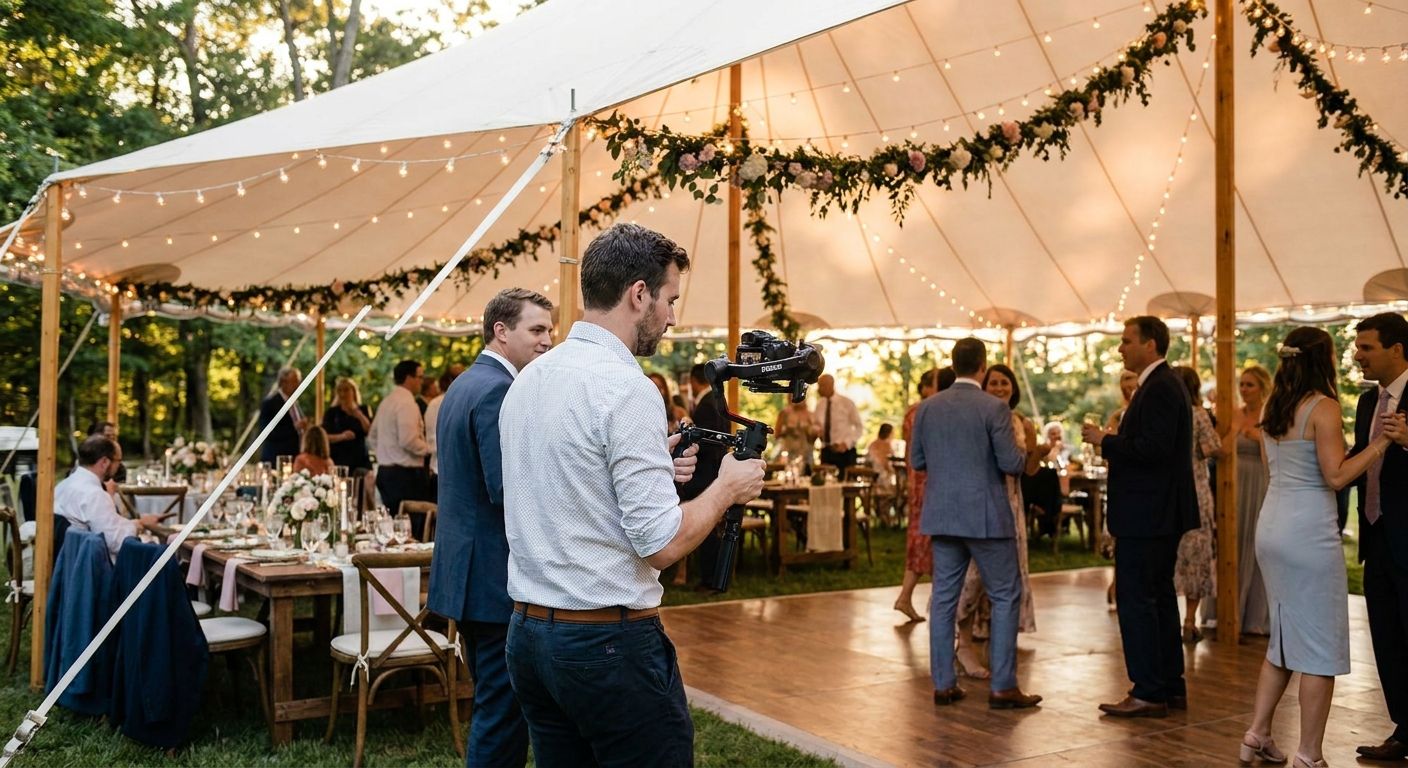
Booking a videographer for an outdoor tented reception means solving problems a ballroom never presents: dropped light after 6pm, generator hum bleeding into vows, and a ceiling that blocks the one drone shot everyone wants. This guide breaks down what actually matters when you're hiring a tented reception videographer in 2026, not what sounds nice in a sales pitch.
- A tented reception videographer needs a lighting rig rated for tent interiors, not just natural light experience.
- Documentary-style two-camera coverage is the safe pick for tented receptions with 150+ guests. Book it.
- Drone footage of the tent exterior only works with clear venue permission and daylight timing before sunset. Consider it.
- Rainy-day contingency planning matters more for tented receptions than any other venue type in 2026. Don't skip it.
Why this matters
A tent is not a building. It has no fixed power, no controlled light, and no walls to bounce a flash off. Videographers who default to a run-and-gun style built for indoor venues get caught flat when the generator kicks on during the toast or the sun drops behind the tent wall thirty minutes before the first dance.
Couples planning a documentary-style wedding film for a tented reception need to ask different questions than they would for a hotel ballroom booking. The gear list changes, the shot list changes, and the contingency plan changes. Get this wrong and you end up with underexposed dance floor footage and audio that sounds like it was recorded next to a lawnmower.
Who this is for
This guide is for couples who've booked or are considering an outdoor tented reception — backyard tent, farm tent, vineyard marquee, or a rented structure on raw land with no built-in infrastructure. If your reception has a generator, string lights instead of house fixtures, and a hard 10pm noise cutoff from the venue, you're the target audience here. Guest counts from 80 to 250 under canvas all face the same three problems: light, sound, and weather.
What to look for in a tented reception videographer
Lighting rigs built for tent interiors
Ambient tent lighting typically runs far dimmer than a ballroom chandelier setup, often landing under 50 lux once the sun sets. A videographer who shows up without supplemental LED panels or on-camera lights will shoot grainy, underexposed reception footage after dark. Ask specifically what lighting kit they bring for tent work, not just for outdoor ceremonies.
Audio capture that beats the generator
Generators used to power tented receptions in 2026 typically produce a steady low-frequency hum that on-camera mics pick up clearly. A videographer who uses lavalier mics on the officiant and a dedicated audio recorder for toasts will isolate speech from that hum. One who relies on the camera's built-in mic will hand you a film with muddy audio under every spoken word.
Weather contingency built into the contract
Tents leak, sag, and flap in wind gusts above 15 mph. A videographer who has covered rainy-day weddings before will have a rain-cover plan for gear and a backup shot list that doesn't depend on clear skies. One who hasn't will improvise, and improvised is not what you want on the one day you don't get a reshoot.
Drone eligibility for the tent exterior
A drone shot of the tent lit up at dusk is one of the most requested images in tented wedding films, but it only works with venue sign-off, clear airspace, and daylight before sunset. Confirm whether drone footage coverage is included and whether the videographer has flown at that specific property before.
Second camera coverage for wide tent angles
A single camera positioned at the head table misses the dance floor, the bar, and the sides of a 200-guest tent. Two cameras covering roughly 180 degrees of combined angle catch reactions a single operator physically cannot.
Turnaround speed for same-day moments
Some couples want a same-day edit played during the reception itself — a highlight reel from the morning's getting-ready shots and ceremony, cut and ready within hours. If that's on your list, confirm the videographer has actually delivered a same-day edit film before, not just a same-day promise.
Coverage approaches to prioritize
Documentary-style two-camera coverage — the reliable pick. Two operators covering ceremony and reception from complementary angles is the standard for tented receptions over 150 guests. It costs more than a single-shooter package but eliminates the single biggest risk: missing the toast because the one camera was pointed at the cake. This is the documentary-style approach most couples land on for larger tented events. Book it.
Drone footage of the tent exterior — the wow shot. A 30-to-45-second aerial pass of a lit tent at dusk, timed before sunset with venue clearance, delivers the single most-shared clip from most tented wedding films. It only works within a tight daylight window and requires the venue's written permission in advance. Drone footage adds production value but depends entirely on weather and timing lining up. Consider it.
Same-day edit for the reception — the crowd-pleaser. A 3-to-5-minute cut of the morning and ceremony, played on a screen during dinner, is one of the highest-impact additions to tented reception coverage because it fills the dead time between ceremony and dancing. It requires an editor working on-site or nearby with a hard deadline of a few hours. Confirm the same-day edit has actually been delivered under a tight tent-venue timeline before. Consider it.
Single-camera natural-light-only coverage — the corner-cutter. It's cheaper up front, but under a tent after sunset it produces flat, dark footage with no fill light and no backup angle if the primary shot is blocked by a guest standing up. Skip it for any tented reception running past 7pm.
What to avoid
- A videographer with zero tented-venue experience. Ask directly how many tent receptions they've shot in the last year. Indoor-only experience doesn't transfer.
- No written rain contingency. If the contract doesn't mention what happens when the forecast turns, that's a gap that shows up on the actual day, not a hypothetical.
- Built-in camera audio only. Anyone relying on the mic on top of the camera for speeches under a tent with a generator running nearby will hand you unusable audio.
Planning a tented reception?
Talk through lighting, audio, and drone logistics before you book.
Verdict comparison
| Approach | Handles low light | Handles wind/rain | Guest count fit | Verdict |
|---|---|---|---|---|
| Documentary two-camera | Yes, with LED panels | Moderate | 150+ guests | Buy |
| Drone tent exterior shot | Daylight window only | No — grounded in wind/rain | Any | Consider |
| Same-day edit reel | N/A (editing, not shooting) | N/A | Any | Consider |
| Single-camera natural light | No | Poor | Under 80 guests only | Skip |
FAQ
What makes a tented reception videographer different from a regular wedding videographer?
A tented reception videographer brings supplemental lighting for after-dark coverage and audio isolation gear to counter generator hum, neither of which a ballroom-only shooter typically carries. They also plan a rain contingency since tents offer less weather protection than a permanent structure.
Is drone footage worth it for a tented reception?
Drone footage of a lit tent at dusk is one of the most-shared clips in tented wedding films, but it only works with venue permission and a clear daylight window before sunset. If wind or rain shows up, the shot gets grounded, so treat it as a bonus, not a guaranteed deliverable.
How much does tented reception videography cost in 2026?
Pricing varies by market, guest count, and hours of coverage, so get a quote based on your specific tent size and timeline rather than a flat national number. Two-camera documentary coverage generally costs more than single-shooter packages because of the added labor.
Do I need a same-day edit for a tented reception?
A same-day edit isn't required, but it fills the gap between ceremony and dancing at tented receptions where there's often a longer cocktail-hour lull while the tent is reset for dinner. Confirm your videographer has delivered one under a real time crunch before adding it.
What's the biggest videography mistake at tented receptions?
Relying on natural light and the camera's built-in mic is the most common mistake, and it shows up as dark, grainy dance-floor footage with muddy speech audio once the sun sets and the generator is running. Ask specifically about lighting and audio gear before booking.
Can a tent block cell signal for live-streaming the reception?
Metal-framed tents and dense guest crowds can weaken cell and wifi signal enough to affect a live stream, so confirm with the venue whether a hardline internet connection is available if streaming matters to you.
How many videographers should cover a 200-guest tented reception?
Two operators covering roughly 180 degrees of combined angle is the standard for tented receptions above 150 guests, since a single camera at the head table misses the dance floor and bar entirely.
Should I book the same team for photography and videography at a tented reception?
Booking one team for both isn't required, but it reduces the number of vendors coordinating around the same lighting and weather contingency plan, which matters more under a tent than in a fixed venue.
One last thing
The detail most couples overlook until the week before: ask your venue whether the tent has a hard sound cutoff, because a 10pm noise ordinance in 2026 can end your dance floor an hour earlier than you planned, and your videographer needs that timeline locked before they build the shot list, not discovered on-site.


