
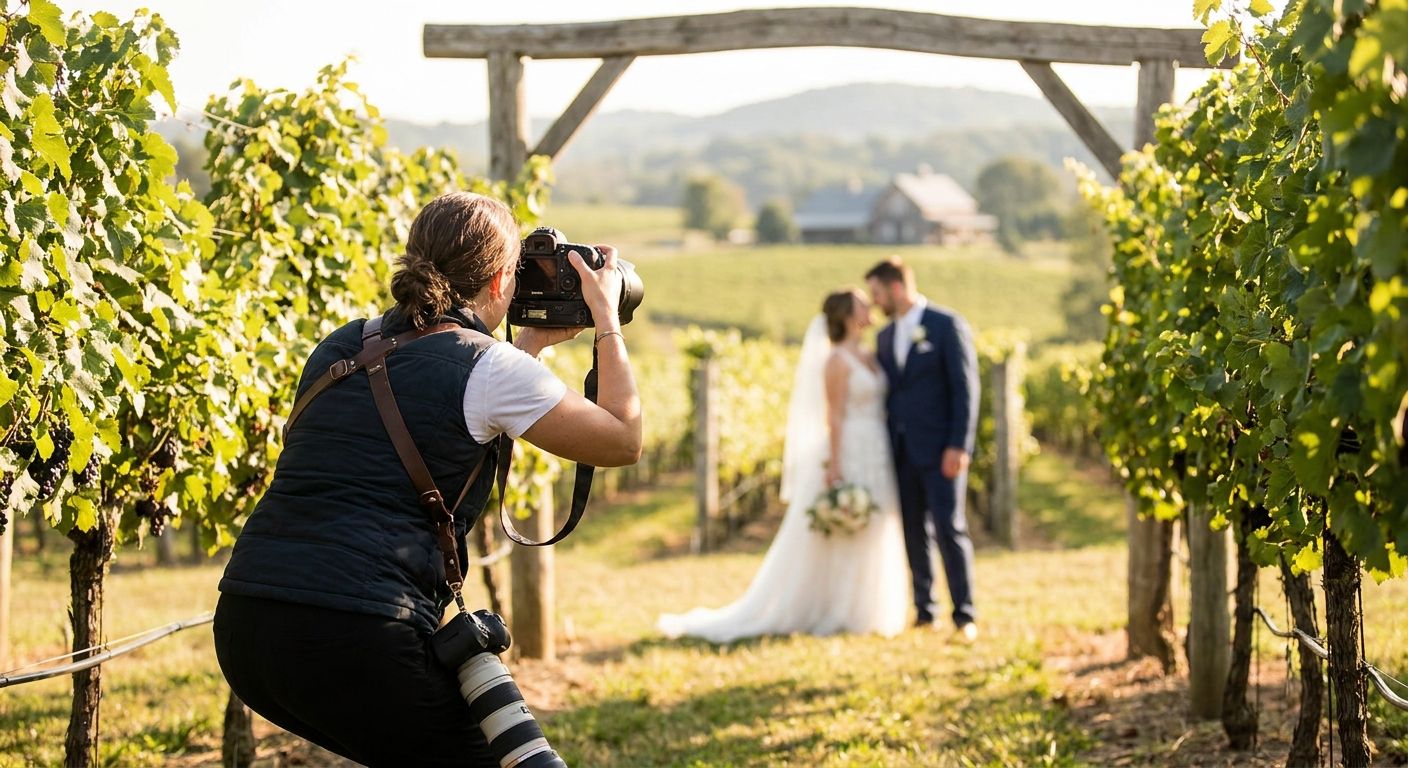
Vineyard weddings run on natural light, uneven terrain, and a property owner's rulebook — hire the wrong photographer and you lose all three. This guide breaks down what actually matters when booking a vineyard wedding photographer and where David Suns Weddings fits into that decision.
- A vineyard wedding photographer needs golden-hour timing skill, not just a nice portfolio — verdict: Buy when they show harvest-season light samples.
- Drone add-ons need FAA Part 107 compliance and the venue's written aerial policy before 2026 booking.
- Rain-plan coverage inside a barrel room or covered pavilion should be locked in writing 30 days out.
- David Suns Weddings' destination and drone coverage pages are the two to check first for vineyard dates.
Why this matters
A vineyard isn't a ballroom with better scenery. Rows of vines change color by the week, the ground is gravel or packed dirt, and most estates cap guest counts, drone flights, and even flash photography during harvest season. Get the wrong photographer and you'll end up with flat midday light, muddy shoes in every shot, or a canceled aerial sequence because nobody filed for permission.
2026 vineyard bookings are already filling faster in the September-through-November window than earlier months, since that's when the vines turn and light softens. Photographers who specialize in this setting book those dates first — which is exactly why the vetting criteria below matter more here than for a standard hotel wedding.
Who this is for
This is for couples who've already picked a vineyard, winery, or estate venue and are now choosing who shoots it. You're planning around harvest schedules, outdoor ceremony risk, and a guest list that's probably traveling from out of town. Check the David Suns Weddings homepage for current availability before you lock a date, since vineyard slots move fast in peak season.
What to look for in a vineyard wedding photographer
Harvest-season light experience
Vineyard light shifts dramatically between June and October — full sun on the rows in summer, amber backlight through the leaves by late September. A photographer who hasn't shot a working vineyard before will default to flat midday exposures that miss the whole point of the venue. Ask to see samples specifically from harvest months, not just spring garden shoots.
Terrain and mobility gear
Vine rows sit on gravel, slope, or loose dirt — not a flat dance floor. Photographers need boots, weatherproof gear bags, and the physical stamina to move fast across uneven ground while carrying two camera bodies. If a photographer's answer to "how do you handle slope and gravel" is vague, that's a real red flag for a vineyard shoot.
Weather contingency planning
Outdoor ceremonies at vineyards carry real rain and heat risk depending on region and month. A photographer who can't describe a specific rain-plan location — barrel room, covered pavilion, tasting room — hasn't actually worked this venue type before. Lock the backup plan in writing at least 30 days before the date.
Drone and aerial permissions
Most vineyard estates have a written drone policy, and FAA Part 107 rules cap recreational and commercial flights at 400 feet above ground level regardless of venue rules. A photographer offering aerial coverage should be able to produce both the FAA registration and the venue's signed waiver before flight day, not after.
Guest travel and multi-day logistics
Vineyard venues are often 30 to 90 minutes outside a major city, which means welcome dinners, rehearsal coverage, and Sunday brunch frequently stretch into a two- or three-day event. Confirm whether the photographer's package covers a single day or the full weekend arc before you compare pricing.
Check vineyard wedding date availability
See open 2026 dates and coverage options before you book the venue.
Top picks by coverage type
Destination-style weekend coverage — the safe pick. Vineyard weddings routinely pull guests from out of state, and a single-day photographer misses the welcome dinner and Sunday brunch that make up half the memories. Look at coverage built for multi-day arcs, like the approach outlined for destination weddings — a 48-hour minimum coverage window is the baseline to ask for. Verdict: Buy if your guest list is traveling more than two hours to the estate.
Aerial vineyard rows — the wildcard. Nothing sells a vineyard venue like an overhead shot of the rows fanning out from the reception tent, but it only works with proper clearance. Coverage built around drone footage needs the venue's written sign-off and FAA Part 107 registration on file before the ceremony. Verdict: Consider it an add-on, not a default — confirm the paperwork exists before you pay for it.
Rain-plan backup — the insurance policy. Outdoor vineyard ceremonies carry real weather exposure, and a photographer without a named indoor fallback location is gambling with your day. The framework built for rainy day weddings covers barrel-room and pavilion lighting setups specifically. Verdict: Buy — this is the cheapest insurance in the whole booking.
Small-ceremony vineyard elopement — the niche option. Not every vineyard wedding needs a 150-guest tent; some couples want twelve people and a barrel room. A micro-format package trims cost and crew size but still needs the same golden-hour and terrain competence as a full event. Verdict: Consider only if your guest count is genuinely under 30.
“If a photographer can't name the venue's rain-plan room, they haven't actually worked this vineyard before.”
What to avoid
- Studio-only portfolios with one vineyard shoot pasted in. A single styled shoot at golden hour doesn't prove someone can handle a live, moving wedding timeline on uneven ground.
- Drone add-ons with no paperwork trail. If a photographer can't produce FAA registration and venue sign-off before the date, that shot gets pulled the morning of the wedding — don't pay a premium for a coin flip.
- Single-shooter coverage for estates over 100 guests. Vineyard receptions often spread across multiple structures — tasting room, barrel room, outdoor tent — and one photographer can't cover all three during cocktail hour.
Verdict comparison
| Coverage type | Golden-hour handling | Weather backup | Aerial add-on | Verdict |
|---|---|---|---|---|
| Destination-style weekend | Built for multi-day light shifts | Included in most packages | Optional | Buy |
| Drone/aerial rows | Depends on flight window | N/A | Yes, needs paperwork | Consider |
| Rain-plan backup | Adapted to indoor light | Core feature | Rarely included | Buy |
| Small-ceremony elopement | Simplified single-location shoot | Case-by-case | Rarely needed | Consider |
FAQ
What's the best time of year for a vineyard wedding photographer to shoot?
Late September through November gives the richest color and softest light as the vines turn for harvest. Summer months work too but need midday shade planning since direct sun on gravel rows creates harsh shadows.
Is a drone add-on worth it for a vineyard wedding?
Yes, if the venue signs off in writing and the photographer holds FAA Part 107 registration. Without both, skip it — a canceled flight on the wedding day isn't worth the deposit.
How much does vineyard wedding photography cost compared to a standard venue?
Vineyard shoots often cost more due to travel time and multi-day coverage needs, not the location itself. Ask whether the quote includes a rehearsal dinner or Sunday brunch before comparing prices across photographers.
Do vineyards allow flash photography during the ceremony?
Many estates restrict flash during harvest season to protect the vines and guest experience, so confirm the venue's rules directly. A photographer experienced with vineyard properties will already know to ask.
How far in advance should you book a vineyard wedding photographer for 2026?
Book nine to twelve months out for peak harvest-season dates in 2026, since photographers who specialize in vineyard light tend to fill September through November first. Off-season spring dates have more flexibility.
What should the rain-plan location be at a vineyard venue?
A barrel room, covered pavilion, or indoor tasting room are the three most common backups. Confirm the specific room and its lighting in writing at least 30 days before the wedding.
Can one photographer cover both the ceremony and a same-day edit film at a vineyard?
It requires a two-person crew in most cases, since a same-day edit needs a dedicated editor working during cocktail hour while the photographer keeps shooting. Ask specifically how the crew splits that workload.
One last thing
The detail couples forget until the morning of: gravel and loose dirt ruin heels within an hour, so the photographer who tells you to bring flats for the vine-row portraits has actually shot this venue type before — the ones who don't mention it usually haven't.


