
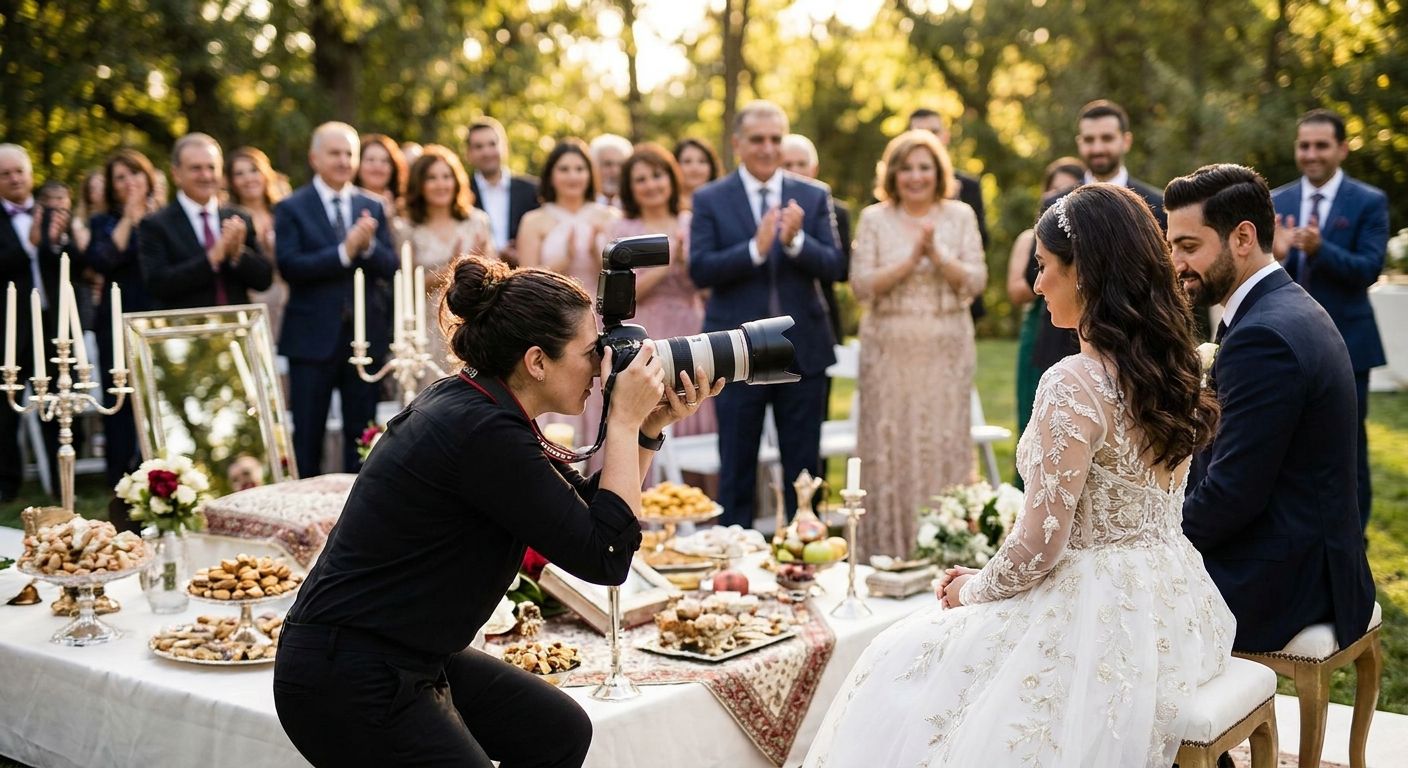
Persian wedding photographer coverage means documenting a Sofreh Aghd ceremony, an aroosi reception, and often a two-day celebration with a team that understands the ritual order and the size of the guest list. Persian weddings run longer and pull in more extended family than the average American wedding, so the photographer needs a timeline built around ceremony structure, not a generic golden-hour template. Get this wrong and you end up with a shot list missing the sofreh spread, the mirror and candles, or the aghd signing itself.
- A persian wedding photographer needs a shot list built around the Sofreh Aghd, not a generic ceremony template.
- David Suns Weddings covers cultural ceremonies and multi-day celebrations for couples planning wedding photography in 2026.
- Multigenerational family portraits at Persian weddings take extra planning time — schedule them before the reception, not during it.
- Verdict: book a persian wedding photographer who asks about the sofreh spread and guest list before quoting coverage.
Why persian wedding photography matters for this segment
Persian weddings typically involve two distinct ceremonial moments — the Sofreh Aghd, where the couple sits before a symbolic spread, and the aroosi, the reception that follows, sometimes on the same day and sometimes on a separate one. A photographer who treats this as a single generic ceremony misses the ritual objects (the mirror, the candelabra, the honey, the sewn fabric canopy) that families expect documented in full detail. David Suns Weddings builds coverage plans around cultural ceremonies and multi-day celebrations rather than a one-size timeline, which matters when a couple is coordinating two ceremonies and three generations of family in one weekend.
The segment also skews toward larger guest counts and extended-family portrait sessions than a standard elopement or courthouse booking. That changes how a photographer allocates time on the day: less flexibility for spontaneous shots, more structure for group formations.
How to plan photography for a Persian wedding
Map the ceremony order before you build a shot list
Start with the sequence of events, not the photo list. A Sofreh Aghd followed same-day by an aroosi reception needs a different hour-by-hour plan than a Sofreh Aghd held the evening before.
- Confirm whether the aghd and reception happen on the same day or across two days
- List every ritual object that needs a close-up: sofreh spread, mirror, candlesticks, sugar cones
- Identify who performs the honey ceremony and where they'll stand
- Note if a khoshbakhti (fortune) reading or additional blessing happens before the vows
- Confirm what time family elders arrive, since portraits often start with them
Brief your photographer on the sofreh table setup
The sofreh aghd spread is the visual centerpiece of the ceremony and it's set up hours before guests arrive. A photographer who doesn't know to shoot it before the room fills with people misses the detail shots families ask for first when reviewing the gallery.
- Request detail shots of the spread before guests are seated
- Photograph the mirror and candelabra reflection separately from the group shot
- Capture the fabric canopy (chador) held over the couple during the ceremony
- Get a wide shot of the full sofreh layout before any items are moved
Plan photography across a multi-day celebration
Many Persian weddings extend across two or more days once you add a welcome dinner, the ceremony day, and a post-wedding gathering. Treating each day as a separate mini-shoot, rather than one continuous session, keeps the photographer fresh and the gallery organized. Wedding videography for multi-day celebrations covers how a video team structures coverage across consecutive days without repeating shots or losing continuity between events.
- Assign a different visual focus to each day (detail shots on day one, ceremony on day two)
- Confirm whether the same photographer covers every day or a second shooter joins for overlap days
- Build in a rest block between days so galleries don't feel identical
- Decide early whether video coverage runs the full multi-day arc or just the ceremony day
Schedule multigenerational family portraits early
Persian wedding guest lists often include three generations in a single formal portrait. Booking this block early in the day, before makeup fades and children get restless, protects the shot far more reliably than squeezing it in during cocktail hour.
- Group family portraits by generation first, then combine for a full group shot
- Assign a family member to call names and organize positioning
- Shoot immediate family before extended family arrives, in case timing runs short
- Confirm language needs if elders are more comfortable being directed in Farsi
Cover both the religious and civil components
Some couples hold a separate civil registration alongside the religious ceremony. If both happen, the photographer needs to know which one carries more weight for the family's keepsake gallery.
- Ask which ceremony the couple considers the "main" event for the album
- Confirm if the civil signing happens privately or in front of guests
- Photograph both signatures and any official documents as detail shots
- Note if a second location is involved and build travel time into the timeline
Decide on photo-only or photo-plus-video coverage
A still gallery captures the sofreh detail and portraits; video adds the vows, the speeches, and the reception dancing in motion. Couples layering in cultural music and dance often want both formats to capture the full energy of the celebration.
- List which moments matter most in motion: vows, first dance, speeches
- Decide if a same-day highlight reel matters for sharing with family who couldn't attend
- Confirm whether drone coverage is allowed at the venue for wide reception shots
- Check if the videographer needs a separate audio feed for the ceremony
Build timeline buffers for large guest counts
Larger guest lists mean longer receiving lines, longer portrait sessions, and more time needed for the room to settle before speeches start. Padding the timeline by even a short block per segment keeps the day from running behind.
- Add buffer time after the ceremony for guests to move to the reception space
- Confirm caterer timing against photo timing so speeches aren't rushed
- Build a contingency plan for weather if any portion happens outdoors
- Share the final timeline with the photographer, planner, and venue coordinator together
Plan your persian wedding coverage
Talk through your ceremony order and guest count before booking.
Persian wedding photographer options compared
| Option | Best for | Key limitation |
|---|---|---|
| General wedding photographer with no cultural experience | Couples on a tight vendor shortlist who plan to direct every shot themselves | Won't know the sofreh sequence or ritual objects without heavy briefing |
| Family member or friend with a camera | Small, informal gatherings with no formal ceremony | No backup equipment or second shooter if something goes wrong mid-ceremony |
| Photographer specializing in cultural and multi-day ceremonies | Couples with a Sofreh Aghd, multi-day schedule, or large multigenerational guest list | Fewer available dates during peak Persian wedding season |
| David Suns Weddings | Couples who want photography and videography built around cultural ceremony structure and multigenerational portraits | Availability depends on how far out the date is booked |
A persian wedding photographer who hasn't shot a Sofreh Aghd before will need a detailed briefing document — build one into the contract, don't leave it to a pre-wedding phone call.
Common mistakes couples make booking persian wedding photography
- Underestimating portrait time for large family groups — a multigenerational lineup takes longer to organize than a typical bridal party shot
- Not briefing the photographer on the sofreh setup timing — the spread is often assembled hours before the ceremony and needs its own detail shots
- Treating a two-day celebration as one continuous shoot — day one and day two need separate shot lists, not a repeated template
- Skipping a written ceremony-order document — verbal explanations get lost between the couple, the planner, and the photography team
- Booking video as an afterthought — cultural music, dance, and speeches lose their energy in stills alone
“A persian wedding photographer who hasn't shot a Sofreh Aghd before needs a written briefing on ritual order, not a verbal walkthrough on the day.”
FAQ
What's the best wedding photographer for Persian weddings in 2026?
The best fit is a photographer experienced with cultural ceremonies and multi-day schedules, since Persian weddings often include a Sofreh Aghd plus a separate reception. David Suns Weddings structures coverage around cultural ceremonies and multigenerational family portraits for exactly this reason.
Is Persian wedding photography different from a standard wedding package?
Yes — it typically requires detail shots of the sofreh spread, coverage of the honey ceremony, and portrait time for larger extended-family groups. A standard package built for a single ceremony often doesn't budget enough time for these extra moments.
How long does Persian wedding photography coverage need to run?
Coverage length depends on whether the aghd and reception happen the same day or across two days. Couples with a multi-day celebration should plan separate coverage blocks for each day rather than one long continuous session.
Does David Suns Weddings photograph the Sofreh Aghd ceremony?
David Suns Weddings covers cultural ceremonies as part of its wedding photography and videography services, including ritual moments like the sofreh setup and honey ceremony. Contact the team directly to walk through your specific ceremony order.
Can one photographer cover both the religious ceremony and the reception?
Yes, one photographer can usually cover both if the timeline and travel time between locations are built into the schedule in advance. Couples with two separate venues should confirm travel buffers with the photographer before finalizing the day-of timeline.
Is wedding videography common at Persian weddings?
Video coverage is common for Persian weddings because dance, live music, and speeches carry energy that still photos alone don't capture. Many couples pair photography with video specifically for the reception portion of the celebration.
How much lead time do Persian weddings need for booking a photographer?
Booking early matters most during peak wedding season, since photographers with cultural ceremony experience have limited dates. Reach out as soon as the ceremony date and venue are confirmed rather than waiting until other vendors are locked in.
Do Persian wedding photographers need experience with large family groups?
Experience with large, multigenerational groups helps significantly, since Persian wedding guest lists often include three generations in a single formal portrait. A photographer without this experience may need extra time or a second shooter to manage the group efficiently.
One last thing
The sofreh spread is set up hours before the ceremony starts and then partially disassembled or shifted once guests arrive to take their seats — if the photographer isn't in the room early, that first clean layout is gone for good. Build the sofreh detail shots into the very first line of the day-of timeline, before hair and makeup even finish, not after.


