
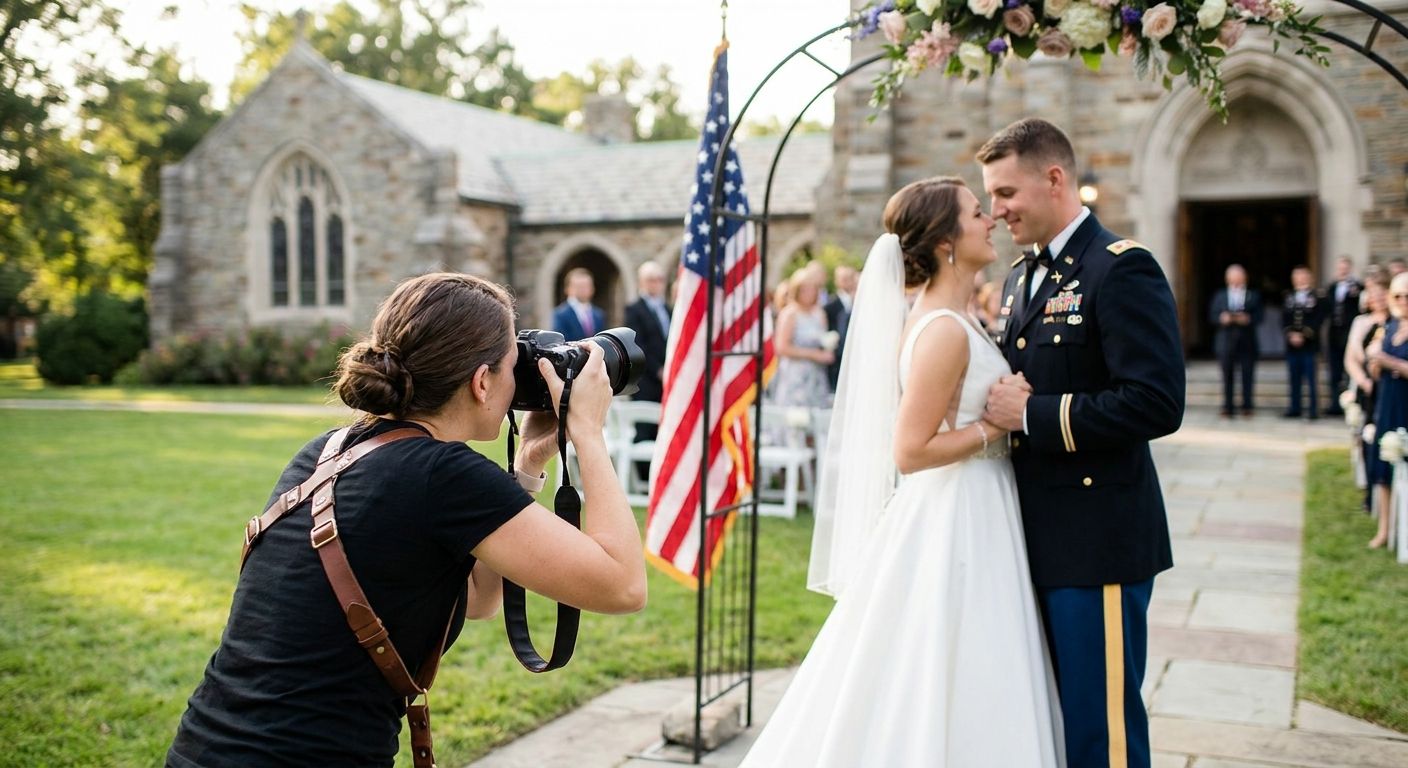
Military weddings run on orders, not on Pinterest boards, and the photographer you hire has to work around leave windows, PCS moves, and uniform protocol instead of the other way around.
- David Suns Weddings treats leave orders and PCS dates as the real deadline for a military wedding photographer, not the venue calendar.
- All-day coverage is the safe buy for a 2026 saber arch and reception combo - short packages cut the ceremony traditions first.
- Chapel and post ceremonies need a photographer cleared for base access and low-flash shooting near the flag - build that in before booking.
- Skip any package that charges a fee to move the date when orders change; that penalty is the wrong side of a deployment schedule.
Why this matters
A civilian wedding date rarely moves once it is set. A military wedding date moves because a unit gets extended, an R&R window shifts by a week, or PCS orders land with 30 to 60 days' notice instead of the six months most photographers expect. Building a wedding day timeline with your photographer around that uncertainty is the single biggest difference between a military wedding photographer worth hiring and one that just shoots weddings and happens to book yours.
Treat this the way you'd treat orders: assume the schedule will change once, and pick the photographer whose contract already accounts for it.
Who this is for
This guide is for the active-duty couple, reservist, or National Guard family planning a wedding around deployment cycles, permanent change of station moves, or a 15-day rest and recuperation leave window in 2026. It's also for the couple marrying at a post chapel, a base officers' club, or a civilian venue with a formal saber arch or first salute worked into the reception - anyone whose ceremony has military tradition baked into it, whether or not either partner is in uniform.
What to look for in a military wedding photographer
Flexibility around leave and PCS timelines
Orders change. A photographer who charges a rebooking fee for a date shift caused by extended deployment or a moved PCS report date is charging you for something you can't control. Ask directly what happens if the date moves 30 days out - the answer tells you more than any portfolio.
Comfort with rank etiquette and uniform protocol
Saluting order, cover removal indoors, medal and ribbon placement, and who stands where in a receiving line aren't things a photographer should be learning on your wedding day. A photographer who has shot a military ceremony before will ask about these details in the planning call, not during the first look.
Base and chapel access experience
Post chapels and base venues often require a visitor pass, an escort, or advance security clearance for anyone bringing camera gear onto the installation. If the photographer needs to be escorted and hasn't arranged it, you lose shooting time waiting at the gate.
A plan for low-light, low-flash moments
Flag ceremonies, saber arches, and formal presentations near the colors often restrict flash. A photographer who hasn't worked around that rule will either miss the moment or break protocol trying to get it.
Full-day coverage, not ceremony-only coverage
Military wedding traditions - saber arch exits, dollar dances, the first salute as a married officer - happen at different points across a long day. Ceremony-only packages routinely cut before the moments that make a military wedding distinct.
“If the photographer needs an escort onto post, book that before you book the flowers.”
Top picks for military wedding coverage
All-day coverage package - the workhorse pick. Full-day packages track a wedding from getting-ready through the saber arch exit and into the reception, which is the only structure that reliably catches every military tradition in one shoot. The spec that matters here is coverage window, not hour count on a brochure - confirm the package covers arrival through last dance, not a capped block. Buy if your day includes both a formal ceremony and a reception with military traditions worked in. See wedding photographer packages built for all-day coverage.
Chapel and church ceremony coverage - the safe pick for post weddings. Base chapels and civilian churches both come with rules about flash near the altar, aisle-blocking, and where a second shooter can stand. A photographer who has shot wedding photography for church weddings already knows to scout sightlines before the processional, not during it. Buy for any ceremony held in a chapel with fixed seating and formal aisle protocol.
Cultural and tradition-first ceremony coverage - the wildcard pick. Saber arches, dining-in style receptions, and unit-specific customs vary by branch and by command, and a generalist shooter can miss the sequence entirely. Wedding photography for cultural ceremonies covers the planning-call questions that surface these traditions before the day arrives. Consider it when your ceremony includes customs specific to a branch, unit, or family heritage beyond a standard church format.
Timeline-first planning - the scheduling insurance policy. A written timeline that flags the saber arch, first salute, and any formal photo line with command staff protects the day when a reception runs long or a ceremony starts late because of a delayed convoy or gate line. This is the piece already referenced above and it belongs in every military wedding contract in 2026, not just the ones with a tight schedule. Buy, always.
What to avoid
- Unlimited-hours packages with no PCS clause. "Unlimited coverage" sounds generous until a reschedule fee shows up in the fine print for a date change tied to orders.
- Photographers who haven't worked a base before. Security clearance timelines, ID checks, and escort requirements at a post gate can eat 45 minutes to an hour of a shooting day if nobody planned for them.
- Ceremony-only bookings for saber arch weddings. The exit tradition happens after the ceremony ends, which means ceremony-only coverage cuts before the shot most couples actually want framed.
Verdict comparison
| Pick | Best for | Flexibility on date change | Verdict |
|---|---|---|---|
| All-day coverage package | Ceremony + reception with traditions | Confirm before booking | Buy |
| Chapel/church coverage | Post chapel or civilian church ceremonies | Depends on venue contract | Buy |
| Cultural ceremony coverage | Saber arch, dining-in, branch-specific customs | Ask about planning-call scope | Consider |
| Timeline-first planning | Every military wedding in 2026 | Built into the process itself | Buy |
Book your 2026 military wedding date
Check availability around your leave or PCS window.
FAQ
What makes a military wedding photographer different from a regular wedding photographer?
A military wedding photographer plans around leave orders, base access rules, and uniform protocol instead of a fixed civilian calendar. That means flexible reschedule terms and familiarity with chapel or post venue restrictions matter more than portfolio style alone.
Can a civilian photographer shoot a wedding on a military base in 2026?
Yes, but they usually need a visitor pass or an escort arranged by the sponsoring service member in advance. Confirm this step during the planning call, not the week of the wedding.
How much notice does a military wedding photographer need for a date change?
PCS orders commonly arrive with 30 to 60 days' notice, so a photographer's contract should already state how a date shift is handled without penalty. Ask this question before signing, since it's the clause most couples skip.
Should the ceremony or the saber arch exit get more coverage time?
Both need dedicated coverage because they happen at different points in the day and neither substitutes for the other. Full-day packages solve this by default; ceremony-only packages often cut before the exit.
Is a second shooter necessary for a military wedding with formal traditions?
A second shooter helps when a saber arch, receiving line, and reception entrance happen close together, since one camera can't cover all three angles at once. It's not mandatory, but it reduces missed moments on a tightly packed timeline.
Do base chapels restrict flash photography during the ceremony?
Many do, especially near the flag or during formal presentations, so confirm the venue's flash policy with the photographer ahead of time. A photographer experienced with post chapels will already ask this during scouting.
What happens if a deployment pushes the wedding date back?
A well-written contract should allow a date change tied to military orders without a full rebooking fee. This is the single clause worth negotiating before you put down a deposit.
One last thing
The detail that trips up more military weddings than the ceremony itself is the gate line - a photographer stuck waiting for base clearance loses shooting time nobody gets back, so confirm access arrangements in writing before the week of the wedding, not the morning of it.


