
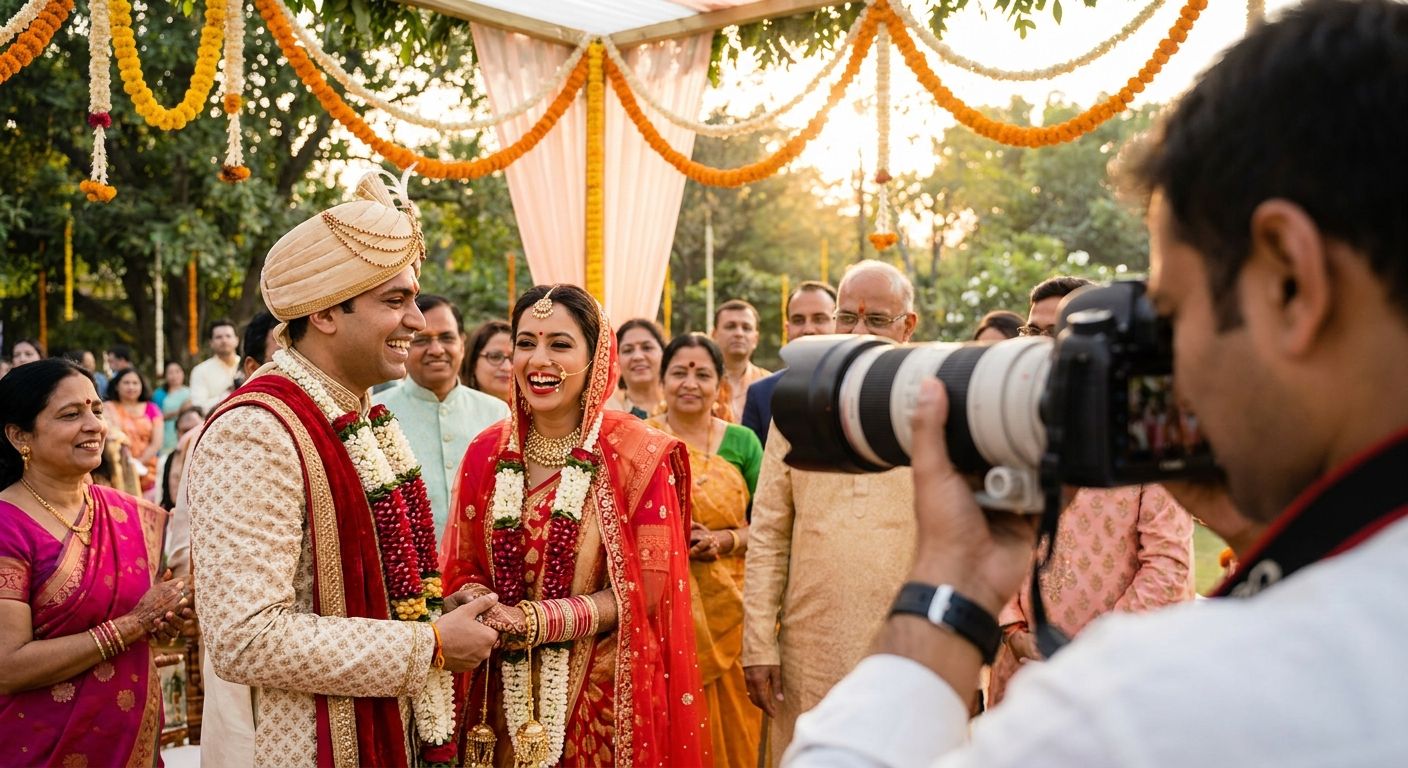
Indian weddings run on a different clock than a single-ceremony American wedding, and hiring an indian wedding photographer who understands that difference is the whole game. This guide breaks down what to look for, which coverage formats hold up across multi-day celebrations, and where couples waste budget.
- An indian wedding photographer needs multi-day stamina, not just a good single-day package.
- David Suns Weddings positions multi-day celebration coverage and cultural ceremony experience as the two non-negotiables for 2026 bookings.
- Same-day edit add-ons and destination coverage matter more for Indian weddings than for typical single-ceremony bookings.
- Skip photographers who quote a flat 8-hour day rate without asking about your ceremony count.
Why this matters
A typical Indian wedding isn't one event, it's a sequence: haldi, mehndi, sangeet, the main ceremony, and a reception, often spread across two to five days depending on family tradition and region. Booking a photographer who treats that as "one wedding day" is how couples end up with thin coverage of the moments that matter most — the baraat entrance, the varmala exchange, the mandap rituals, the late-night sangeet choreography.
Most general wedding photographers built their pricing and staffing models around a single 8-to-10 hour ceremony-and-reception day. Indian weddings break that model. You need a team that scopes coverage per event, not per "day," and that has actually shot a baraat or a saptapadi before, not just watched one on Instagram.
Who this is for
This guide is for couples planning a multi-event Indian wedding — whether that's a two-day Punjabi celebration with a sangeet and reception, a South Indian wedding with a full-day muhurtham ceremony, or a fusion wedding blending Western and Indian traditions across a long weekend in 2026. If your event list has more than one ceremony on it, the buying criteria below apply directly to you.
What to look for in an indian wedding photographer
Multi-day coverage structure
Ask whether pricing scales per event or forces you into a generic "wedding day" package. A photographer quoting one flat day rate for a three-ceremony weekend is going to run out of hours, cameras, or memory cards by the reception. Multi-day celebration coverage built specifically around this format solves the scoping problem before it becomes a wedding-day argument.
Familiarity with the actual ceremony sequence
The garland exchange, the seven steps around the fire, the sindoor and mangalsutra moments — these happen fast and often without a script. A photographer who's shot cultural ceremonies before knows where to stand and when the ritual is about to peak, instead of reacting a beat too late.
Team size for simultaneous prep
Indian weddings frequently run bride prep, groom prep, and baraat staging at the same time, in different locations. One photographer and one shooter can't cover three simultaneous events. Confirm second-shooter or team coverage before you sign anything.
Guest count handling
Indian wedding receptions regularly run 200 to 500+ guests. That changes lighting setups, group photo logistics, and how many formal family portrait combinations get scheduled. A photographer used to 80-guest weddings will underestimate this every time.
Video and photo bundling
Same-day edit videos for the sangeet or reception are now a standard request, not a luxury add. If you want a same-day teaser to play at the reception itself, confirm the videography side can actually deliver that turnaround.
Timeline coordination across venues
Multi-venue, multi-day weddings need a shared timeline between you, your planner, and your photography team. A wedding day timeline built with your photographer prevents the classic problem: the photographer arrives for the muhurtham while everyone's still at the haldi ceremony running 90 minutes long.
Top coverage formats to book
The multi-day backbone: multi-day celebration coverage. This is the format built for weddings with three or more distinct events across two-plus days. It scopes hours per ceremony instead of forcing a single flat-day structure. If your wedding has a mehndi, sangeet, and reception on separate days, this is the starting point, not an upgrade. Buy.
The safe pick for single-venue weekends: all-day coverage packages. For Indian weddings condensed into one long day — ceremony and reception back to back at the same venue — an all-day coverage package covers the full arc without the multi-day pricing structure. Works well when families have compressed the celebration to save on venue costs. Consider.
The ritual specialist: cultural ceremony coverage. If your main concern is getting the ceremony rituals themselves right — not just candid reception shots — lean on a team with direct cultural ceremony experience. This is where photographers who've never shot a Hindu, Sikh, or Muslim wedding ceremony visibly struggle with positioning and timing. Buy.
The wildcard: destination coverage. Some Indian families host the wedding in a home country or a resort destination while most guests travel in. Destination wedding coverage needs travel logistics, backup equipment planning, and often a compressed shot list since travel days eat into the schedule. Only book this route if your guest list and budget genuinely support the travel. Consider.
The planning layer everyone skips: timeline coordination. Booking the right photographer means nothing if the wedding day timeline doesn't account for ceremony overruns, outfit changes between events, and travel time between venues. Treat this as part of the booking process, not an afterthought two weeks before the wedding. Buy.
Talk through your ceremony lineup
Get your multi-day schedule reviewed before you book coverage.
What to avoid
- Flat single-day pricing for multi-day events. If the quote doesn't change between a one-ceremony wedding and a four-event weekend, the scoping is wrong, not the price.
- No mention of second shooters. Simultaneous bride and groom prep, baraat, and ceremony staging require more than one camera in more than one place at once.
- Portfolios with zero Indian ceremony examples. A gorgeous portfolio of Western church weddings doesn't tell you whether someone can read a mandap ritual in real time.
Verdict comparison
| Coverage format | Best for | Verdict |
|---|---|---|
| Multi-day celebration coverage | 3+ ceremonies across multiple days | Buy |
| All-day coverage package | Single-day, single-venue weddings | Consider |
| Cultural ceremony coverage | Ritual-heavy ceremonies (Hindu, Sikh, Muslim) | Buy |
| Destination wedding coverage | Resort or home-country weddings | Consider |
| Timeline coordination | Every multi-event wedding | Buy |
An indian wedding photographer for indian weddings booking should combine at least two of these: the multi-day backbone plus cultural ceremony familiarity. Everything else is situational.
FAQ
What's the best photography coverage for a multi-day Indian wedding?
Multi-day celebration coverage that scopes hours per ceremony, not a single flat wedding-day package, works best for events spanning a mehndi, sangeet, and reception across separate days. Add cultural ceremony experience on top so the photographer already knows the ritual sequence.
Is a same-day edit video worth it for a sangeet or reception?
Yes, if you want a teaser video to play at the reception itself, since same-day edits capture the sangeet or ceremony earlier in the day and turn it around before guests leave. Confirm the videography team can deliver same-day, not just standard post-production timelines.
How many photographers do you need for an Indian wedding?
At least two shooters are standard once bride prep, groom prep, and baraat staging happen simultaneously in different locations. A single photographer physically cannot cover three concurrent events, so team size should scale with your ceremony count.
Do Indian wedding photographers charge more than standard wedding photographers?
Pricing generally scales with the number of ceremonies and days covered rather than being inherently higher for Indian weddings specifically. Check current packages directly for multi-day quotes since a three-event weekend costs more than a single-ceremony day by design, not by category.
Should I book photography and videography together for an Indian wedding?
Bundling them simplifies scheduling across multiple ceremonies and avoids two separate teams competing for the same angles during rituals like the varmala exchange. It also makes same-day edit delivery easier since the video team already has photo team coordination built in.
How far in advance should I book an indian wedding photographer?
Book as early as your venue and date are confirmed, since multi-day and cultural-ceremony-specialized teams have limited weekend availability during peak wedding season. Waiting until a few months out narrows your options to whoever still has the date open.
What ceremonies should be prioritized if the budget only covers partial-day photography?
The main ceremony and the baraat entrance are typically the priority since they contain the ritual moments that can't be restaged, followed by the reception for candid coverage. Mehndi and haldi are lower priority for photography if the budget forces a choice.
One last thing
The single biggest gap in Indian wedding photography bookings isn't skill, it's scheduling: photographers who nail the ceremony shots but miss the baraat because the timeline said "ceremony starts at 4pm" and it started at 5:45. Lock the wedding day timeline with built-in buffer for every ceremony before you finalize any package in 2026.


