
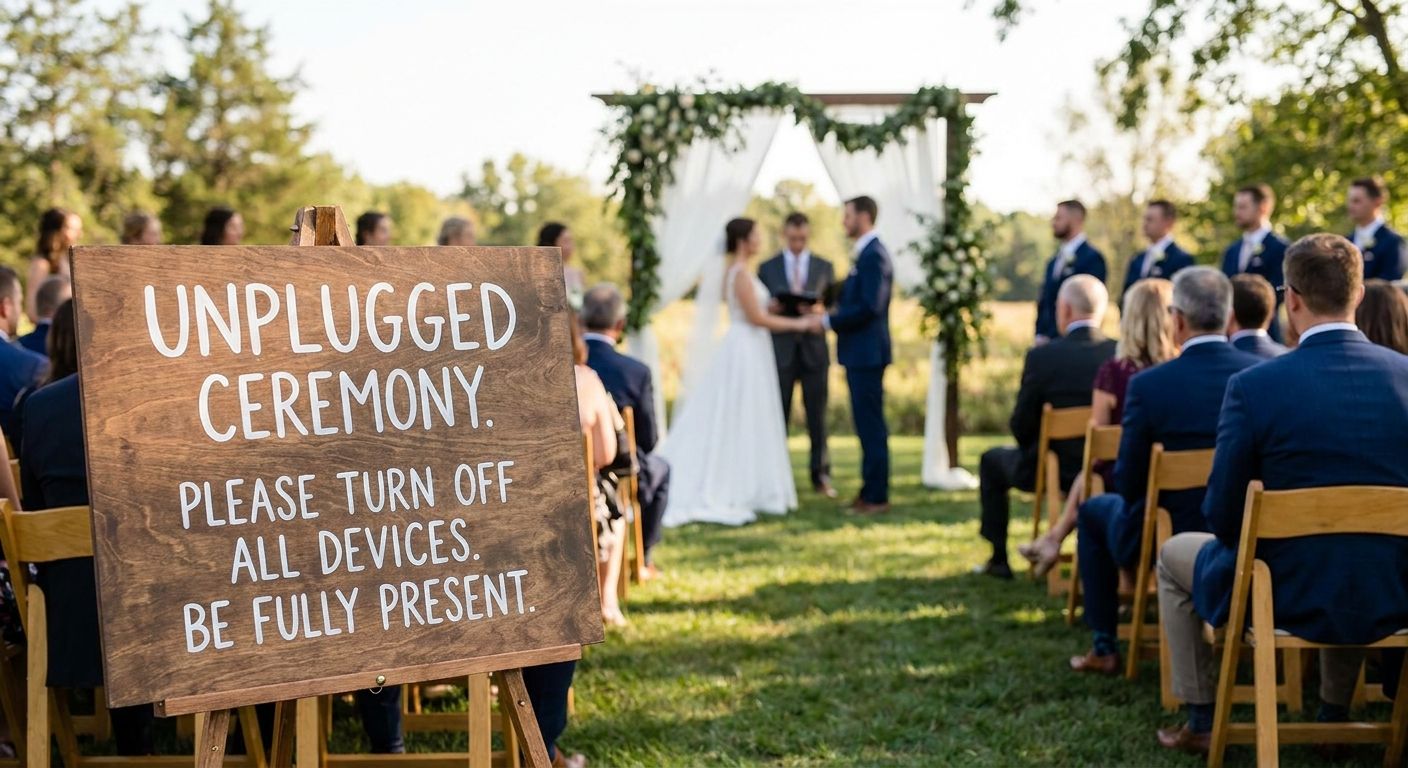
An unplugged wedding ceremony means no phones, tablets, or cameras from the guest section during the vows — the officiant, the couple, and the hired photographer own every sightline instead. Setting one up for a 2026 wedding takes three pieces working together: a written notice, a verbal announcement, and one person on the ground enforcing it.
- An unplugged wedding ceremony bans guest devices during the processional and vows so the hired photographer isn't shooting around raised phones.
- A verbal announcement from the officiant right before the processional works better than a sign alone.
- Full unplugged policies cover aisle to recessional; partial policies cover only the processional and vow exchange.
- David Suns Weddings builds the unplugged request into the ceremony timeline for both photography and videography coverage.
- One designated person — a parent, a planner, or an usher — needs to catch stragglers signage misses.
Why this matters
Guest phones are the single most common thing professional wedding photographers ask couples to control in 2026. A raised phone in the third row blocks the shot of the bride's face during her vows, and a flash from an iPad mid-processional ruins a frame no retake fixes. An unplugged ceremony is not about being anti-technology — it's a sightline decision that protects the images and video you're actually paying for.
Couples who skip the conversation entirely usually find out the cost of that choice when the gallery comes back with three guest arms in every aisle shot.
How do you plan an unplugged wedding ceremony?
Follow these steps in order, starting at least a month before the wedding date.
- Decide full or partial unplugged. Full means no devices from processional to recessional. Partial means only the aisle walk and vow exchange are covered.
- Tell your officiant first. The officiant is the one making the announcement, so they need the wording and the timing before anyone else does.
- Put it in writing. A program insert or a freestanding sign at the ceremony entrance sets the expectation before guests sit down.
- Have the officiant say it out loud. A verbal line right before the processional starts — while guests are already facing forward — lands harder than any printed card.
- Brief the wedding party and immediate family separately. Parents and grandparents are the most common people to break an unplugged policy, usually because they want their own photo of the aisle walk.
- Clear the shot for your photographer and videographer. Once guests know the rule, your hired team can move through the aisle and altar area without competing with guest phones for the same angle.
Sample unplugged ceremony wording
| Placement | Sample line |
|---|---|
| Program insert | "We invite you to be fully present with us today. Please silence and put away phones and cameras during the ceremony." |
| Officiant announcement | "Before we begin, the couple asks that you set aside phones and cameras for the next 20 minutes — a professional photographer is capturing every moment for them." |
| Entrance sign | "Unplugged ceremony: please no phones or cameras. Enjoy the moment with us." |
Full unplugged ceremony: no devices from aisle to recessional
This is the strictest version, and it's the one most couples mean when they say "unplugged wedding ceremony." No guest photos during the processional, the vows, the ring exchange, or the recessional walk back up the aisle. Best for: couples working with a hired photographer and videographer who want a clean gallery with zero guest arms or phone screens in frame. Verdict: use this version if photography and video are priorities for your budget.
Partial unplugged ceremony: processional and vows only
Some couples only restrict devices during the walk down the aisle and the vow exchange, then let guests photograph the recessional and confetti exit. Best for: couples who want the emotional, quiet moments protected but don't mind guest phones once the formal part is over. Verdict: a reasonable middle ground if you expect pushback from older relatives.
Unplugged ceremony, open reception: the most common setup
Most couples in 2026 only ask for unplugged during the ceremony itself and let the reception be a free-for-all with guest phones, table cameras, and social sharing. Best for: nearly every couple — it protects the one segment of the day where sightlines matter most while still letting guests document the party. Verdict: the default choice, and the one your officiant script above is written for.
Why couples go unplugged
- Blocked sightlines during vows — a raised phone in the front rows sits directly between the officiant's camera angle and the couple's faces.
- Guests stepping into the aisle — people angling for a better phone shot often move into the walking path.
- Competing flash photography — a guest's phone flash firing mid-processional creates a lighting mismatch the professional camera can't fix in editing.
- Photos surfacing online before the couple sees them — guests posting phone shots to social media before the hired gallery is delivered.
- Video audio interference — phones set to record video pick up rustling and shutter sounds that bleed into the ceremony audio track.
- Guest distraction from the moment itself — this one isn't about the photography at all, just about people actually watching the vows instead of filming them.
“If the officiant doesn't say it out loud, the sign on the easel is just decoration.”
Is an unplugged wedding rude to guests?
No — an unplugged wedding ceremony asking guests to hold off on phones for 15 to 20 minutes is a request, not a punishment, and most guests comply once an officiant states it clearly. The rudeness complaints usually come from couples who post a sign but never explain the reasoning, so guests feel scolded instead of invited into the moment.
What should an unplugged wedding sign say?
An unplugged wedding sign should state the request plainly and give a reason in one sentence — something like "Please silence and put away phones during the ceremony; our photographer is capturing every moment for us." Keep it to two sentences max; a sign with paragraphs of explanation gets skimmed, not read.
Do you need an unplugged policy for the reception too?
Most couples do not extend the unplugged policy to the reception, since guest phones don't interfere with a dance floor the way they interfere with a quiet aisle during vows. If you're planning a documentary-style reception film, though, an unplugged first dance or toast segment is worth the same treatment as the ceremony.
Couples marrying in a house of worship should also check the venue's own device policy — some officiants at church wedding ceremonies already enforce a no-phone rule during the service regardless of what the couple requests, which simplifies the announcement step considerably.
Plan your unplugged ceremony coverage
David Suns Weddings builds the unplugged request into your ceremony timeline.
One last thing
The single biggest predictor of whether an unplugged wedding ceremony actually works isn't the sign — it's whether the officiant says the line before the processional music starts, not after guests are already seated and scrolling. Couples who script that one sentence into the officiant's opening remarks in 2026 get far fewer phones in the aisle than couples who rely on a sign alone.
FAQ
What is an unplugged wedding ceremony?
An unplugged wedding ceremony is a request that guests put away phones, tablets, and cameras during the processional and vows so the hired photographer and videographer have a clear sightline. It typically covers only the ceremony, not the reception.
How do you word an unplugged wedding sign?
Keep an unplugged wedding sign to two sentences: state the request, then give a one-line reason such as a professional photographer covering the moment. Longer signs get skimmed rather than read.
Should the officiant announce the unplugged policy out loud?
Yes — a verbal announcement from the officiant right before the processional starts gets better compliance than a printed sign alone, since guests are already facing forward instead of reading a program.
Is an unplugged ceremony rude to guests?
No, an unplugged wedding ceremony asking for 15 to 20 minutes without phones is a reasonable request, especially when the officiant explains the reason clearly instead of just posting a sign.
Do unplugged rules apply to the reception too?
Most unplugged policies cover only the ceremony, not the reception. Couples wanting a documentary-style reception film sometimes extend the rule to the first dance or toasts as well.
Who enforces an unplugged policy on the wedding day?
A designated person — usually a parent, planner, or usher — should watch for stragglers who miss the sign or the announcement. Relying on guests to self-enforce leaves gaps in an otherwise clean gallery.
Can guests take photos after the ceremony ends?
Yes, most unplugged policies only apply from the processional through the recessional. Once the couple exits the aisle, guest phones are typically welcome again.
What happens if a guest breaks the unplugged policy?
A quiet word from the designated enforcer, not a public correction, is the standard fix — most breaks are unintentional, especially from grandparents wanting their own aisle photo.


