
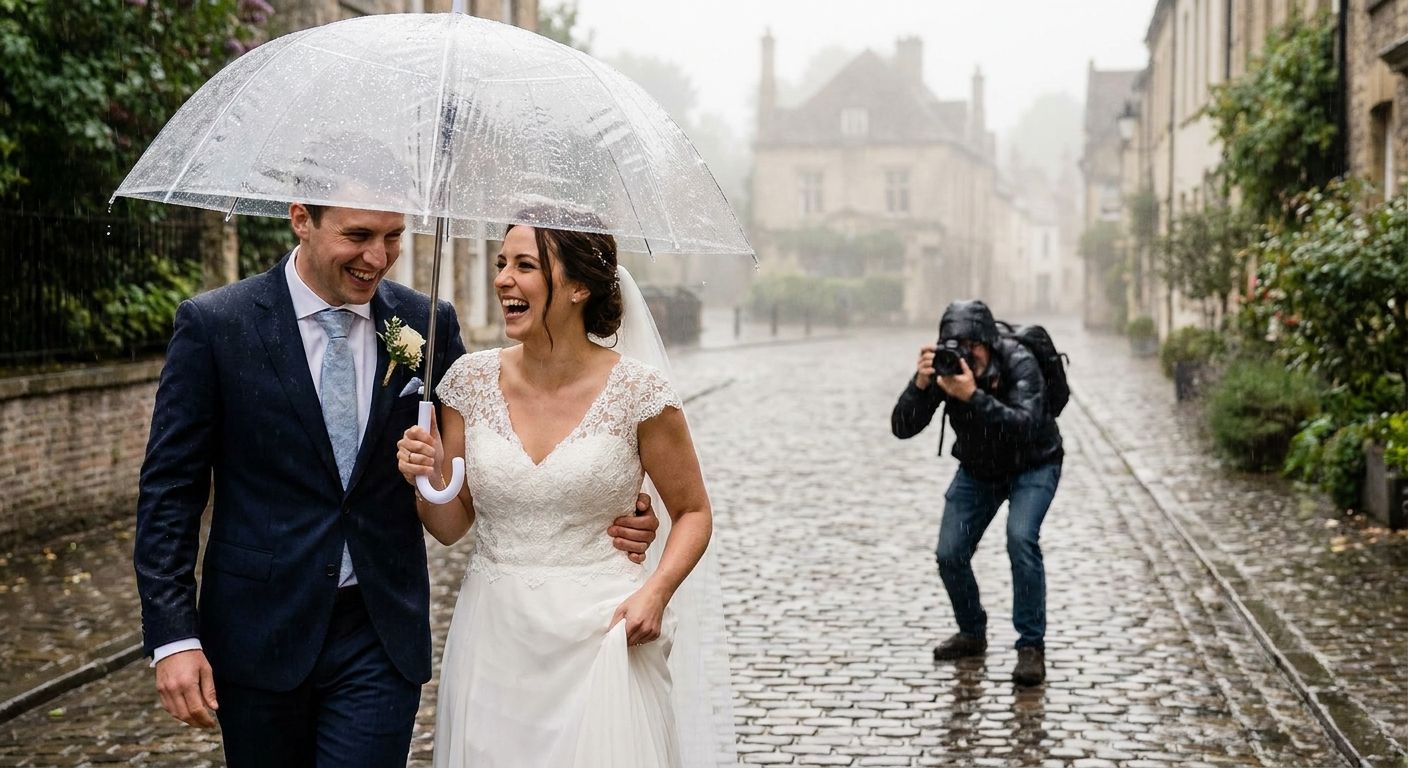
Rain on a wedding day doesn't ruin the photos — it changes the plan, and the plan is what makes or breaks the shots. This guide walks through exactly what to prep, shoot, and avoid when the forecast turns against you in 2026.
- Clear umbrellas and a covered backup location turn rainy day wedding photos into a genre couples request on purpose in 2026.
- Shoot first look and portraits under a porch, breezeway, or tent before the ceremony to lock in usable light.
- A fast prime lens and a weather-sealed camera body handle low-light rain conditions better than kit gear.
- Skip white satin heels and unsealed leather shoes outdoors — they're the most common rainy day wardrobe mistake.
- Build a 20-minute rain buffer into the wedding day timeline so nobody rushes the shot list.
Why this matters
Couples panic when the forecast flips a week out, and that panic usually leads to canceling outdoor portraits entirely. That's the wrong move. Rain produces some of the most requested images in a wedding gallery — reflective pavement, fogged glass, dramatic umbrella shots — but only when the day is planned around it instead of despite it. Rainy day wedding photography works when logistics, gear, and timing are locked before the first drop falls, not improvised on the spot.
The difference between a rushed, awkward gallery and a striking one comes down to five decisions made in the 48 hours before the ceremony. None of them require moving the wedding indoors.
What you'll need
- A backup covered location within a 5-minute walk of the ceremony site (porch, pergola, breezeway, or tent)
- Two to three clear or black umbrellas, sized for two people each
- A weather-sealed camera body or a plastic rain sleeve for a standard DSLR/mirrorless kit
- A fast prime lens (f/1.4–f/2.8) to compensate for lower light under cloud cover
- Waterproof or water-resistant footwear alternative for the wedding party (flats, boots)
- A revised wedding day timeline with a 20-minute rain buffer built in
- A change of dry clothes or a towel for the couple between portrait sessions
The steps
1. Check the radar 72 hours out, not the day-of
A 72-hour window gives enough runway to move the ceremony under cover or rent a tent without scrambling. Waiting until the morning-of forecast means every decision becomes reactive.
Look at hourly precipitation probability, not just the daily summary — a 60% chance of rain often means a 20-minute window, not an all-day soak. Confirm the venue's indoor or covered backup space is actually reserved for you, not shared with another event. Common mistake: relying on a single weather app instead of cross-checking two sources.
2. Rebuild the timeline around light, not the clock
Rain usually comes with heavier cloud cover, which softens light and extends the usable golden-hour window on both ends of the day. Shift portrait sessions to take advantage of that diffused light instead of fighting a hard 4pm slot.
Work with your photographer to adjust the wedding day timeline with your photographer at least a day ahead, adding a 20-minute buffer around any outdoor segment. Expected outcome: nobody stands in a doorway checking their phone while guests wait. Common mistake: keeping the original outdoor ceremony slot and hoping the rain clears on schedule.
3. Scout the covered backup location in person
A porch, breezeway, barn overhang, or hotel lobby with good window light can outperform an outdoor field shot in flat gray conditions. Walk the space and note where natural light enters and where the background is clean.
If the venue has one, this is also the ideal spot for a first look photo session — dry, private, and controllable. Expected outcome: a location that photographs well regardless of what the sky does. Common mistake: assuming any covered space works without checking the light or the background clutter.
4. Pack the right gear for wet conditions
A weather-sealed camera body handles a drizzle without issue; a standard body needs a rain sleeve or a plastic bag with a lens hole cut in. Pack a microfiber cloth for lens fogging, which happens fast when moving between air-conditioned interiors and humid exteriors.
Bring two to three clear umbrellas — clear ones let more light through and don't cast a colored tint on skin tones the way a colored umbrella does. Expected outcome: gear that keeps working through a full afternoon of intermittent rain. Common mistake: using a single large golf umbrella that blocks the photographer's angle entirely.
5. Adjust the wardrobe plan for wet ground
White satin heels and unsealed leather soles are the most common casualty of a rainy day wedding — they stain and slip within minutes on wet grass or pavement. Pack a backup pair of flats or boots for the walk between locations, then swap back for posed shots.
Carry a couple of oversized towels to dry off benches, chairs, or car seats before anyone sits down in formalwear. Expected outcome: the dress and suit stay presentable for six hours instead of thirty minutes. Common mistake: packing a backup umbrella but no backup shoes.
6. Use the rain in the shot instead of hiding from it
Reflections in puddles, water droplets on flower petals, and steam off a warm drink all read as intentional, romantic details when framed deliberately. Ask for two or three shots specifically built around the weather — an umbrella kiss shot, a puddle reflection, a walk-away silhouette.
This works especially well for couples who already planned a backyard wedding, where the covered patio or garage often becomes the most photogenic spot on the property once rain starts. Expected outcome: a handful of gallery standouts that wouldn't exist on a sunny day. Common mistake: treating every rain shot as a compromise instead of a feature.
Troubleshooting
- The ceremony space floods or becomes unusable minutes before start time. Move to the confirmed indoor backup immediately — this is why step 1's 72-hour check matters, so the backup is already reserved and known.
- Guests are huddled under one small awning and there's no room for photos. Split the group; shoot family formals in two smaller batches under separate covered spots rather than forcing everyone into one frame.
- Camera lens keeps fogging between indoor and outdoor moves. Let the gear acclimate for 5–10 minutes before shooting, and wipe with a dry microfiber cloth rather than a sleeve or shirt.
- The couple is anxious about the forecast and it shows in early portraits. Reframe the rain as a feature during the first look — a light, playful umbrella walk usually resets the mood faster than reassurance alone.
- Wind flips umbrellas and ruins hair/makeup mid-shoot. Have the wedding party hold umbrellas at a slight backward angle rather than straight overhead, and keep touch-up kits within arm's reach.
- Dress hem gets soaked walking between locations. Assign one person (planner, bridesmaid, or photographer's assistant) to lift and carry the train during transitions — this single job prevents most of the damage.
Plan your rainy day wedding shoot
Get a timeline built around your venue and forecast before the big day.
Tools and resources
- Two clear umbrellas, minimum, sized for two people each
- A weather-sealed camera body or rain sleeve for standard gear
- A revised, buffered wedding day timeline shared with the full vendor team
- A backup footwear pair for muddy or wet ground transitions
- David Suns Weddings' rainy day planning checklist for venue-specific backup spots
FAQ
What's the best way to plan rainy day wedding photos?
Confirm a covered backup location 72 hours before the ceremony and rebuild the timeline with a 20-minute buffer around outdoor segments. Pack clear umbrellas and backup footwear so wardrobe and gear stay ready regardless of when the rain hits.
Should I cancel outdoor portraits if rain is forecast?
No — diffused light from cloud cover often extends usable golden-hour light on both ends of the day. Move portraits to a covered space like a porch or breezeway instead of canceling them outright.
Do rainy day wedding photos actually look good?
Yes, when the rain is used deliberately in the shot — puddle reflections, umbrella walks, and steam off a warm drink read as intentional rather than accidental. Couples in 2026 increasingly request these shots on purpose, even when the sky clears.
What umbrellas work best for wedding photos?
Clear umbrellas let more natural light through and avoid casting a colored tint on skin tones, unlike dark or patterned ones. Size each umbrella for two people so the photographer has room to frame the shot.
How much extra time should I add to the timeline for rain?
Add a 20-minute buffer around any outdoor segment of the wedding day timeline, including transitions between the ceremony and portrait locations. This buffer absorbs wardrobe changes, umbrella logistics, and gear protection without pushing back the reception.
What shoes should the wedding party wear if it rains?
Pack a backup pair of flats or boots for walking between locations, then swap back to formal shoes for posed shots. White satin heels and unsealed leather soles stain and slip on wet grass or pavement within minutes.
Can a backyard wedding still work in the rain?
Yes — covered patios, porches, and garages on the property often become the most photogenic backup spot once rain starts. Scouting these spaces in advance turns a weather problem into a usable location.
How do I keep camera gear working in wet conditions?
Use a weather-sealed body or a rain sleeve over a standard camera, and let gear acclimate 5-10 minutes between indoor and outdoor moves to prevent lens fog. A microfiber cloth handles condensation faster than a sleeve or shirt.
One last thing
The single biggest factor in how rainy day wedding photos turn out isn't the umbrella or the lens — it's whether the couple relaxes into it. Couples who treat the rain as an inconvenience photograph tense and rushed; couples who lean into one deliberate umbrella-kiss or puddle-reflection shot end up with the image every guest asks about afterward. Plan for that one shot on purpose in 2026, not as a fallback.


