
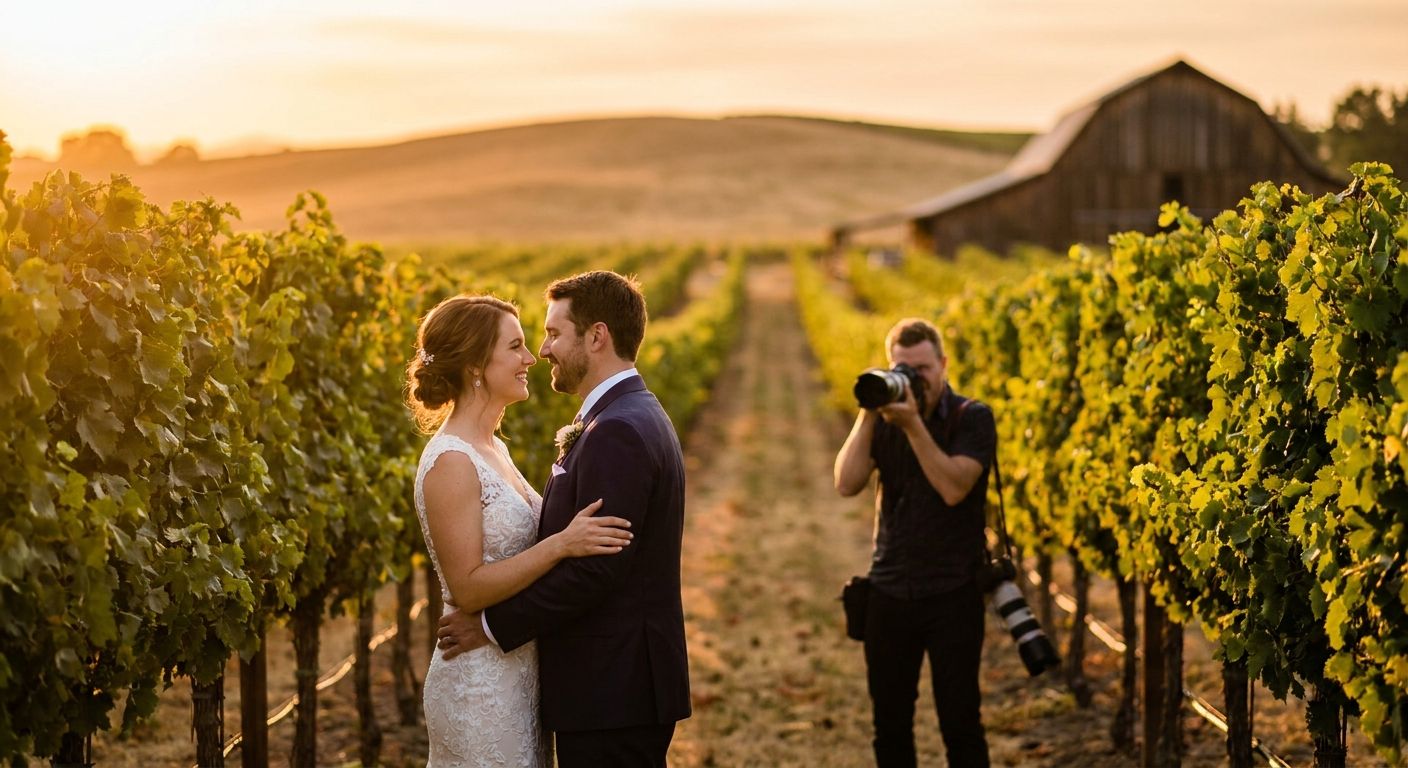
Vineyard elopement photography is intimate wedding-day coverage built around rows of vines, barrel rooms, and the golden light that spills across a hillside at sunset. Couples choosing this setting want fewer guests, more privacy, and a location where the scenery does the heavy lifting instead of a ballroom's decor.
- A vineyard elopement photographer plans around harvest season and vine growth, not a generic wedding calendar.
- Golden hour at a vineyard runs shorter than at open fields because hills and rows create early shade.
- David Suns Weddings shoots vineyard elopements with a same-day-edit option for couples who want a film ready before the reception dinner ends.
- Book vineyard access and photography together at least 60-90 days out during peak fall harvest weekends.
Why vineyard elopement photography matters for this segment
A vineyard ceremony has constraints a backyard or beach doesn't: rows of vines block certain angles, tasting rooms close their access windows, and harvest crews sometimes work the same acreage on the exact date you want to marry. Couples searching for a vineyard elopement photographer in 2026 are usually planning around a specific season — late summer heat or an autumn harvest — and need someone who has actually walked a working vineyard before, not just photographed a garden with grapevines painted on a backdrop.
The light behavior is different too. Vine rows run in fixed directions, so the same golden hour that lasts 40 minutes on an open beach might give you 15 minutes of usable side light between two rows before a hill blocks the sun. That's a planning problem, not just a taste problem, and it's why generic vineyard wedding photography guidance built for 150-guest receptions doesn't translate directly to a two-person elopement timeline.
Pick your vineyard and confirm access rules
Not every vineyard allows elopements, and fewer still allow a photographer to bring lighting gear or a second shooter onto working rows during harvest.
- Call the tasting room directly and ask if they host private ceremonies outside of full-buyout weddings
- Ask whether harvest crews will be working the property on your date
- Confirm whether a permit or day-use fee applies for photography-only access
- Check if the vineyard restricts drone footage near crops or equipment
- Ask about backup indoor space (barrel room, tasting room) in case of rain
Scout the light before you lock the date
Vine rows create shade patterns that shift by season, and a vineyard that looks perfect in July photos might be half-shaded by October.
- Visit the property at the same time of day you plan to marry, if you can
- Note which rows run east-west versus north-south for consistent side light
- Ask the vineyard staff which months show the fullest canopy versus bare vines
- Check sunset time for your exact date and work backward 90 minutes for ceremony timing
This is where working with an experienced vineyard elopement photographer pays off — they've already mapped the light on dozens of properties and can tell you which rows photograph well in November versus June without a scouting trip.
Build your timeline around harvest and heat
Harvest season (typically late August through October in most US wine regions) brings crews, tractors, and bins into the same rows you want empty for portraits. Summer heat, on the other hand, pushes ceremony times later in the day to avoid harsh overhead light and sweat-through outfits.
- Schedule ceremonies for early morning or last two hours before sunset in July and August
- Ask the vineyard for a harvest calendar before booking a September or October date
- Build a 30-minute buffer into your timeline for unexpected crew activity in the rows
- Plan indoor barrel-room portraits as a heat or rain backup
Decide how you'll choose the exact location within the property
A 40-acre vineyard has dozens of usable backdrops — the entrance arbor, a single old vine, the barrel room, a hilltop overlook. Working through choosing an elopement location for photos before the wedding day cuts hours off your actual shoot.
- Walk the property with your photographer or review photos of past shoots on the same land
- Pick one hero backdrop for the ceremony and one or two secondary spots for portraits
- Confirm whether the vineyard allows a small arch, chairs, or florals without a full event permit
- Ask if golf carts or ATVs are available to move between distant rows quickly
Choose outfits and props built for vine rows, not aisles
Long trains and stiletto heels don't move well through loose soil between vine rows.
- Pick a dress with a shorter train or a bustle option for walking through rows
- Bring a change of shoes — wedges or flat sandals work better on uneven ground
- Skip oversized bouquets that get lost against dense green foliage; smaller, high-contrast blooms photograph better
- Bring a light jacket or wrap for early morning or post-sunset shoots when temperatures drop fast
Add video coverage if you want motion, not just stills
A vineyard's wind through the vines, the pour of a toast, and the walk down a dirt row all read differently in motion than in a still frame. Couples who want both formats should decide early, since planning an elopement with a photographer usually determines whether a second shooter or videographer needs separate access clearance from the vineyard.
- Ask if the vineyard charges separately for video versus photo access
- Decide if you want a same-day edit to share before your reception dinner or a longer-form film later
- Confirm drone use rules if you want an aerial shot of the full vine layout
- Budget extra time in the timeline for a second camera setup
Book vendors who've actually shot on working vineyard soil
A photographer who's only shot vineyards from a paved parking lot won't know that loose dirt rows swallow rolling equipment carts or that irrigation lines run underfoot in certain sections.
- Ask for a portfolio specifically from vineyard shoots, not general outdoor weddings
- Confirm the photographer has liability coverage the venue requires
- Ask how many vineyard elopements they've shot in the current season
- Check turnaround time for the final gallery so you know when to expect images
Plan your vineyard elopement shoot
Get vineyard timing, permit, and location questions answered before you book.
Comparing your options for vineyard elopement coverage
| Option | Best for | Starting price | Key limitation |
|---|---|---|---|
| Local freelance photographer, no vineyard experience | Couples on a tight timeline with a flexible venue | Contact for quote | May not know row light patterns or harvest scheduling |
| Dedicated elopement photographer with vineyard portfolio | Couples set on a working vineyard for 2026 | Contact for quote | Limited to their travel radius or booked dates |
| National park elopement specialist | Couples open to relocating the ceremony outdoors | Contact for quote | Vineyard-specific light and access knowledge won't transfer directly — see national park elopement packages for that setting instead |
| DIY with a friend as photographer | Couples prioritizing budget over image quality | Free | No backup gear, no vineyard access negotiation experience |
A vineyard elopement photographer who has already mapped a property's light and harvest calendar saves you the scouting trip and the guesswork.
Common mistakes couples make with vineyard elopements
- Booking a harvest-season date without checking if crews will be in the rows that day
- Choosing footwear that sinks into soft vineyard soil between rows
- Assuming every vineyard allows an outside photographer without a day-use or access fee
- Skipping a rain or heat backup plan when the only shelter on-site is a working barrel room with limited hours
- Underestimating how fast golden hour ends once a hillside starts casting shade across the rows
“A vineyard elopement photographer who has already mapped a property's light and harvest calendar saves you the scouting trip and the guesswork.”
FAQ
What's the best time of year for a vineyard elopement photographer to shoot?
Late spring through early fall gives full canopy and green rows, while October brings harvest colors but also crew activity. Confirm the harvest calendar with the vineyard before locking a fall 2026 date.
Is a vineyard elopement more expensive than a courthouse elopement?
Vineyard elopements typically add a venue day-use or access fee that a courthouse ceremony doesn't require. Photography pricing itself depends on the package and hours booked, not the location type.
How much does a vineyard elopement photographer cost in 2026?
Pricing varies by photographer, hours of coverage, and travel distance to the vineyard. Contact the photographer directly for a quote based on your specific date and package.
Do vineyards require a permit for elopement photography?
Many working vineyards require a day-use fee or permit for private ceremonies, separate from their tasting room hours. Confirm this directly with the property before booking your photographer.
Can I have a vineyard elopement during harvest season?
Yes, but confirm with the vineyard whether crews will be working the specific rows you want for photos. Harvest season also brings equipment and bins into view that a photographer needs to plan around.
Should I hire a videographer along with a vineyard elopement photographer?
Add video if you want motion of the wind through vines, the toast, or the walk down a row, since stills can't capture that. Confirm with the vineyard whether video access is billed separately from photography access.
What should I wear for a vineyard elopement shoot?
Choose a dress with a shorter train or a bustle option, and bring flat shoes for walking on loose vineyard soil. A light jacket helps for early morning or post-sunset shoots when temperatures drop.
How many hours of coverage does a vineyard elopement usually need?
Most vineyard elopements run two to four hours covering the ceremony, portraits, and a toast. Longer coverage adds time for a full property walk between multiple backdrops.
One last thing
Most couples plan vineyard elopements around sunset, but the hour right after sunrise gives a longer, softer light window on east-facing rows before the hills start casting shade — and the vineyard is usually empty of staff and tourists at that hour, which means no scheduling conflicts with tasting room visitors or harvest crews.


