
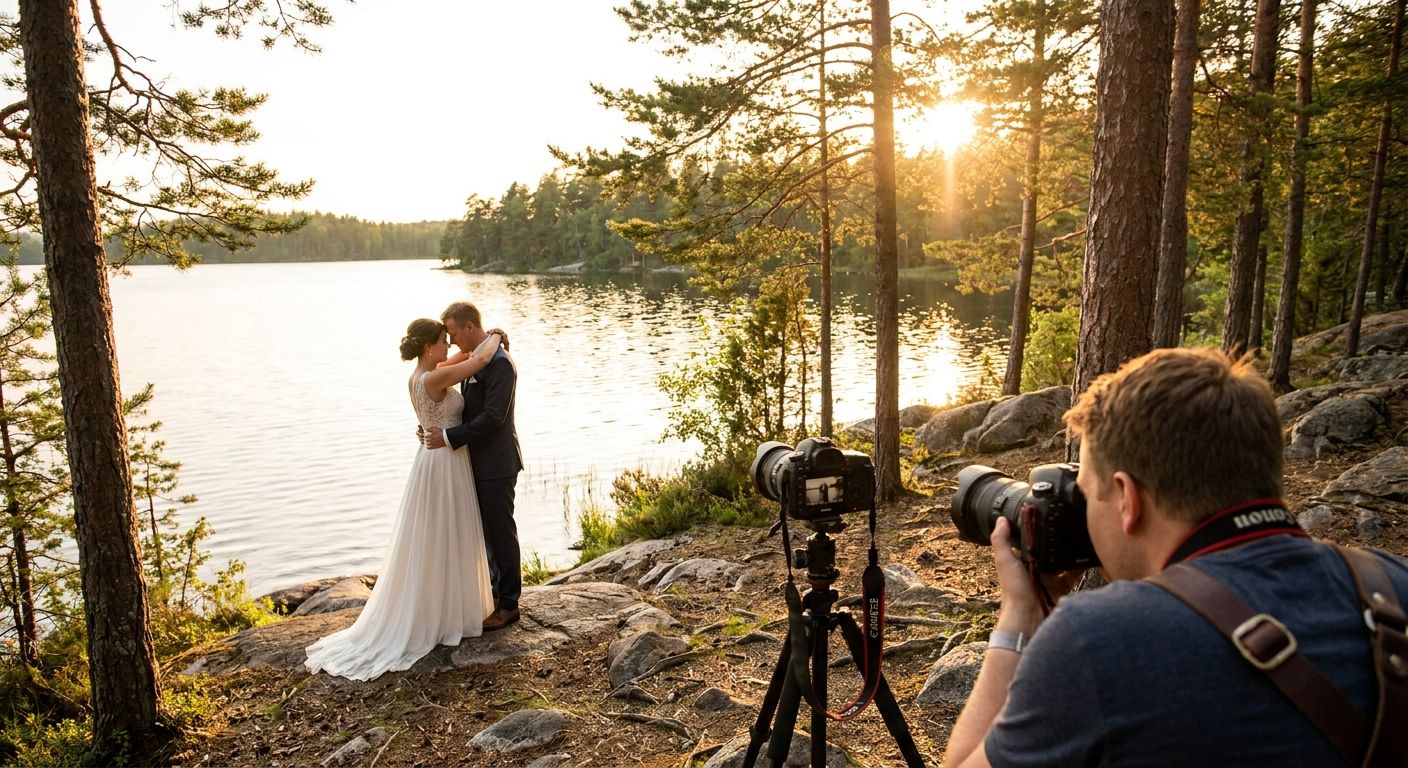
Lakeside elopement photography documents a two-person ceremony at the water's edge, built around natural light off the surface, a short guest list (often zero), and a flexible timeline that bends around wind and lake traffic instead of a fixed reception schedule. A lake setting behaves differently from a beach or barn: light bounces off the surface and doubles exposure in some directions, shoreline access can require a permit even on public land, and the best window is often 30-45 minutes wide, not an all-afternoon shoot.
- A lakeside elopement photographer plans around water light, permits, and short golden-hour windows, not a fixed reception clock.
- DAVID SUNS documents lakeside elopements with coverage built for two-person days, not scaled-down wedding packages.
- Public lakes, state parks, and national park lakes each carry different permit rules — check before you pick the date.
- Backup plans matter more at lakes than at barns: wind, glare, and dock hours change the shot list fast.
Why lakeside elopement photography matters for eloping couples
Couples choosing a lake over a beach or backyard are usually optimizing for the same three things: fewer logistics, a dramatic natural backdrop, and a short, unhurried day. That changes what a photographer needs to plan for. A lake wedding photography session and a lakeside elopement share a location type but not a timeline — elopements compress the whole day into a couple of hours, so the light window, the weather backup, and the shot list all have to be tighter and pre-planned rather than worked out on the fly.
Water also punishes bad timing more than almost any other backdrop. Midday sun on a flat lake surface produces glare and blown-out highlights; the same lake at golden hour turns into a mirror. A photographer who treats a lakeside elopement like a generic outdoor shoot will miss that window entirely.
Plan your lakeside elopement photography around these steps
Choose a lake location with photo access in mind
Not every scenic lake is shootable. Confirm access before you fall in love with a photo you saw online.
- Check whether the shoreline or dock is public, private, or part of a managed park
- Ask about parking distance from the ceremony spot — gear and a dress don't travel well over a quarter-mile trail
- Note which direction the lake faces for sunrise vs. sunset light
- Look for an elevated overlook option as a backup angle if the shoreline is crowded
- Confirm boat traffic patterns on weekends if the lake is used for recreation
Time the ceremony around the light, not the clock
Water changes how light behaves more than grass or stone does. A ceremony scheduled for convenience often gets scheduled into the worst light of the day.
- Sunrise sessions give flat, soft water and almost no wind — ideal for reflection shots
- Sunset gives warmer tones but often stronger wind as temperatures drop
- Midday produces hard glare off open water and should be avoided for portraits
- Overcast days actually work well at lakes — diffused light removes glare entirely
- Fall mornings can bring fog over the water, which reads dramatically in photos but needs an earlier call time
Build a weatherproof backup plan
Lakes are more weather-exposed than a barn or church, and rain, wind, or algae bloom can change the shoreline look with almost no notice.
- Identify a covered pavilion, boathouse, or dock roof within walking distance
- Have an indoor backup nearby (lodge, cabin, or event space) for the ceremony itself
- Check the wind forecast the week of — strong wind ruins veil and hair shots near open water
- Ask the venue about seasonal water level or algae changes that affect the shoreline photos
- Build a rain-date conversation into the contract before booking, not after a forecast turns
Keep the look simple and intentional for two
With no wedding party to coordinate, wardrobe choices carry more visual weight per person.
- Choose attire that reads well against water and open sky — solid colors photograph cleaner than busy patterns
- Pack layers; lake mornings and evenings run 10-15 degrees cooler than midday
- Bring shoes rated for uneven shoreline, dock boards, or damp grass
- Skip accessories that catch wind (long veils, loose scarves) unless a still moment is planned for them
Book coverage hours that match a short elopement day
A full eight-hour wedding package doesn't fit a two-hour elopement, and paying for it wastes budget. Working through how to choose an elopement location for photos before booking coverage hours keeps the package matched to the actual day instead of a standard wedding block. This is where a documented process, not a generic photographer, starts to matter — DAVID SUNS structures elopement coverage around the shot list a lake ceremony actually needs, not a scaled-down version of a full wedding day.
Add sunrise or second-day coverage if the ceremony itself is short
Many lakeside elopements run under two hours of actual ceremony and portrait time. Couples who want more images often add a second short session rather than stretching one session too thin.
- A sunrise portrait session the morning after can use softer light without ceremony-day time pressure
- A short second-location session (overlook, dock, forest trail near the lake) adds variety without adding a second full day
- Drone footage, where allowed by the park or venue, captures the lake's full shoreline in a way ground shots can't
Book your 2026 lakeside elopement date
Check availability before permit deadlines fill your preferred lake.
Lakeside elopement location options compared
| Option | Best for | Key limitation |
|---|---|---|
| Public town or city lake | Couples staying close to home on a tight timeline | No control over foot traffic or other visitors during the ceremony |
| State park lake | Couples wanting shoreline plus forest backdrop | Most state parks require a permit and photography fee before shoot day |
| National park lake | Couples wanting dramatic mountain-lake backdrops | Special-use permits often require applying well ahead of the date, and some parks cap group size |
| Private lake house or dock | Couples wanting full privacy with no permit | Access limited to property owners or short-term rental guests |
Verdict: a state or national park lake gives the strongest backdrop for a lakeside elopement in 2026, but only if the permit is filed early — a private dock is the lower-friction choice when timing is tight.
Common mistakes couples make with lakeside elopement photography
- Booking the date before checking permit rules. Public and state-managed lakes often require a photography permit separate from any marriage license, and finding out the week of the ceremony causes real problems.
- Ignoring dock and shoreline access hours. Private marinas and some park docks close or restrict access at dawn and dusk — exactly when the light is best.
- No wind plan for hair, veils, or loose fabric. Open water amplifies wind more than a sheltered barn or garden, and it shows in every portrait.
- Scheduling the ceremony at midday. Flat glare off open water at noon is the single most avoidable lighting mistake at a lake.
- Assuming the shoreline looks the same every season. Water levels and algae growth shift the shoreline's appearance from spring to late summer — scout close to the actual date if possible.
FAQ
What's the best time of day for a lakeside elopement photographer to shoot?
Sunrise and sunset give the softest, most even light on open water, while midday produces hard glare that's difficult to shoot around. Overcast days also work well at lakes because the clouds diffuse light without reducing it.
Do you need a permit to elope at a lake in 2026?
Many public, state, and national park lakes require a photography or special-use permit even for a two-person ceremony. Rules vary by park and agency, so confirm requirements with the specific lake's managing body before booking a date.
Is a lakeside elopement cheaper than a full wedding?
Elopements typically involve shorter photography coverage and no reception logistics, which usually reduces overall cost compared to a full wedding day. Exact package pricing depends on coverage hours and add-ons, so check current packages directly.
Should we add a videographer to a lakeside elopement?
Video adds motion and ambient sound — wind over water, vows spoken aloud — that still photos can't capture. Whether it's worth adding depends on budget and how much of the day you want documented beyond stills.
What happens if it rains on our lakeside elopement day?
A weatherproof backup plan — a covered pavilion, nearby indoor space, or a flexible rain-date clause — should be settled before the ceremony date, not after a forecast turns. Rain at a lake can also produce dramatic, moody photos if the couple is willing to shoot through it.
How far in advance should we book a lakeside elopement photographer?
Book as soon as the date and location are set, especially if the lake requires a permit with its own lead time. Popular lake locations in peak season (late spring through early fall) fill fastest.
Can family attend a lakeside elopement?
Yes — many lakeside elopements include a handful of close family or a small guest count while keeping the ceremony itself brief and low-logistics. The photography plan should confirm guest count ahead of time so shot composition accounts for it.
What should we wear for photos on an uneven shoreline?
Choose footwear rated for wet grass, sand, or dock boards rather than formal heels or dress shoes. Solid-color attire also reads more cleanly against water and sky than busy patterns.
One last thing
Shoot the vow exchange with the sun behind the photographer, not behind the couple. Backlighting off open water is more extreme than backlighting on land — it can silhouette faces completely instead of just rimming hair with light, which is the opposite of what most couples want from their one lakeside moment.


