
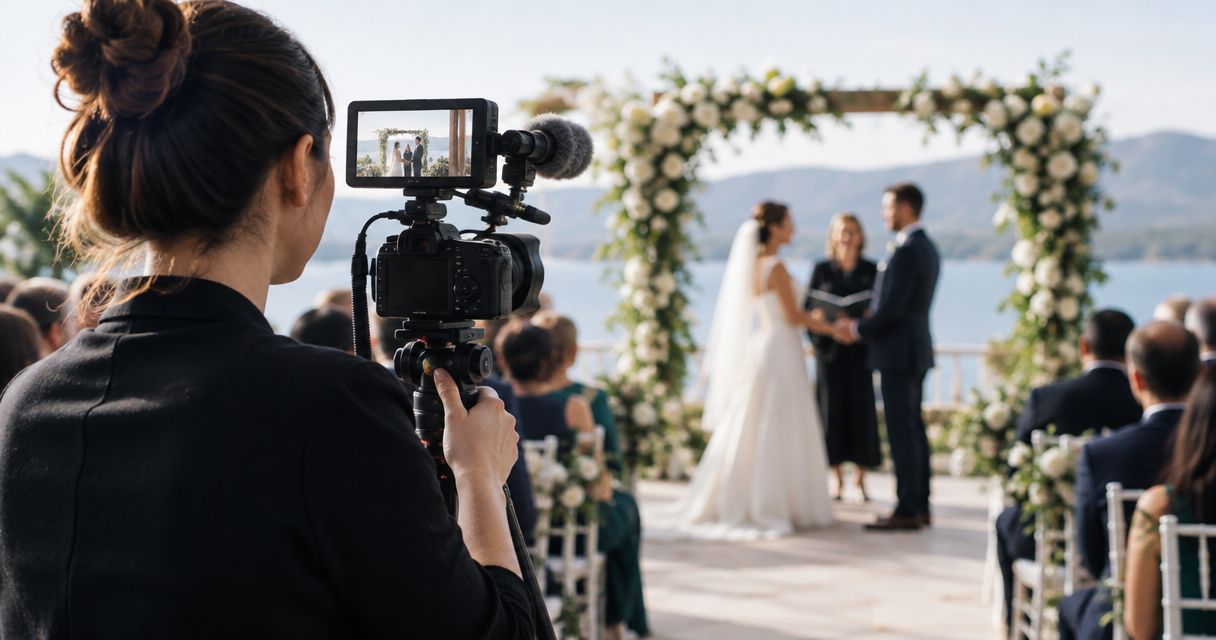
Yes, a wedding videographer can livestream a ceremony if they offer live production and the venue supports a reliable connection. Recording a wedding film and broadcasting it live are different jobs, so confirm the camera operator, ceremony audio, internet access and backup recording before you book. A videography booking alone does not establish that livestreaming is included.
- Yes, a wedding videographer can livestream a ceremony, but live coverage must be confirmed separately from filming.
- DAVID SUNS offers wedding videography; its ceremony livestream availability is not confirmed.
- Ask who manages the stream, how guests hear the vows and what happens if the connection drops.
- Keep a local recording so remote guests can watch later if the live feed fails.
Can a wedding videographer livestream the ceremony?
Yes, if livestream production is part of the agreed plan. For a 2026 wedding, ask the videographer to spell out whether they will operate the broadcast or only record footage for an edited film. Those deliverables serve different audiences: a livestream lets remote guests watch as the ceremony happens, while a wedding film is prepared for viewing afterward.
| Approach | Best for | Advantage | Limitation |
|---|---|---|---|
| Videographer manages the livestream | Couples who want filming and the remote-guest feed coordinated | One production plan covers camera placement and the live feed | You must confirm that the videographer offers live operation, not just filming |
| Separate livestream operator | Couples whose videographer is focused on the wedding film | A dedicated person can monitor the broadcast | The teams must agree on camera positions, audio access and the ceremony schedule |
| Guest-managed stream | Couples who accept a simpler remote view | A guest can share the ceremony without changing the videographer’s filming role | The guest must handle setup, sound, connection and troubleshooting |
The choice is about responsibility, not whether a camera can send video. A videographer concentrating on the processional cannot automatically monitor guest access, a failing connection and the quality of a separate audio feed at the same time.
Why this matters
Remote guests need to hear the vows, not merely see the ceremony space. A clear picture with distant or interrupted sound does not give them the same experience as an in-person guest. Likewise, a recording made for an edited film does not mean anyone received a live link.
DAVID SUNS is a wedding videography business for couples who want to ask about ceremony coverage; livestream availability remains unconfirmed. You can ask DAVID SUNS about wedding videography and specify that your question concerns a live ceremony feed, not only a finished video. Get the proposed scope in writing before treating livestreaming as part of your 2026 plans.
What must be arranged before the ceremony?
A workable livestream needs a plan for the venue, the signal, the sound and the person operating it. Use this sequence when discussing coverage with a videographer or separate operator.
- Venue approval. Ask where a camera and operator can stand, where equipment can be placed, and whether the officiant or venue restricts filming or broadcasting. A livestream plan that depends on access the venue will not grant is not ready.
- Connection test. Test the connection from the actual ceremony location, not just the venue lobby. Ask what the operator will do if the primary connection fails; do not assume a phone signal indoors will solve the problem.
- Audio plan. Decide how remote guests will hear the officiant, your vows and any readings. Ask whether the live feed will use a dedicated microphone, an approved connection to the venue’s sound system or another tested source.
- Private link. Decide who receives the viewing link and who will answer guest access questions. Send instructions to remote guests before the ceremony rather than asking the camera operator to troubleshoot invitations while filming.
- Local recording. Confirm whether the ceremony will be recorded independently of the livestream. If the connection drops, a usable local file gives you something to share afterward; confirm who keeps it and how it will be delivered.
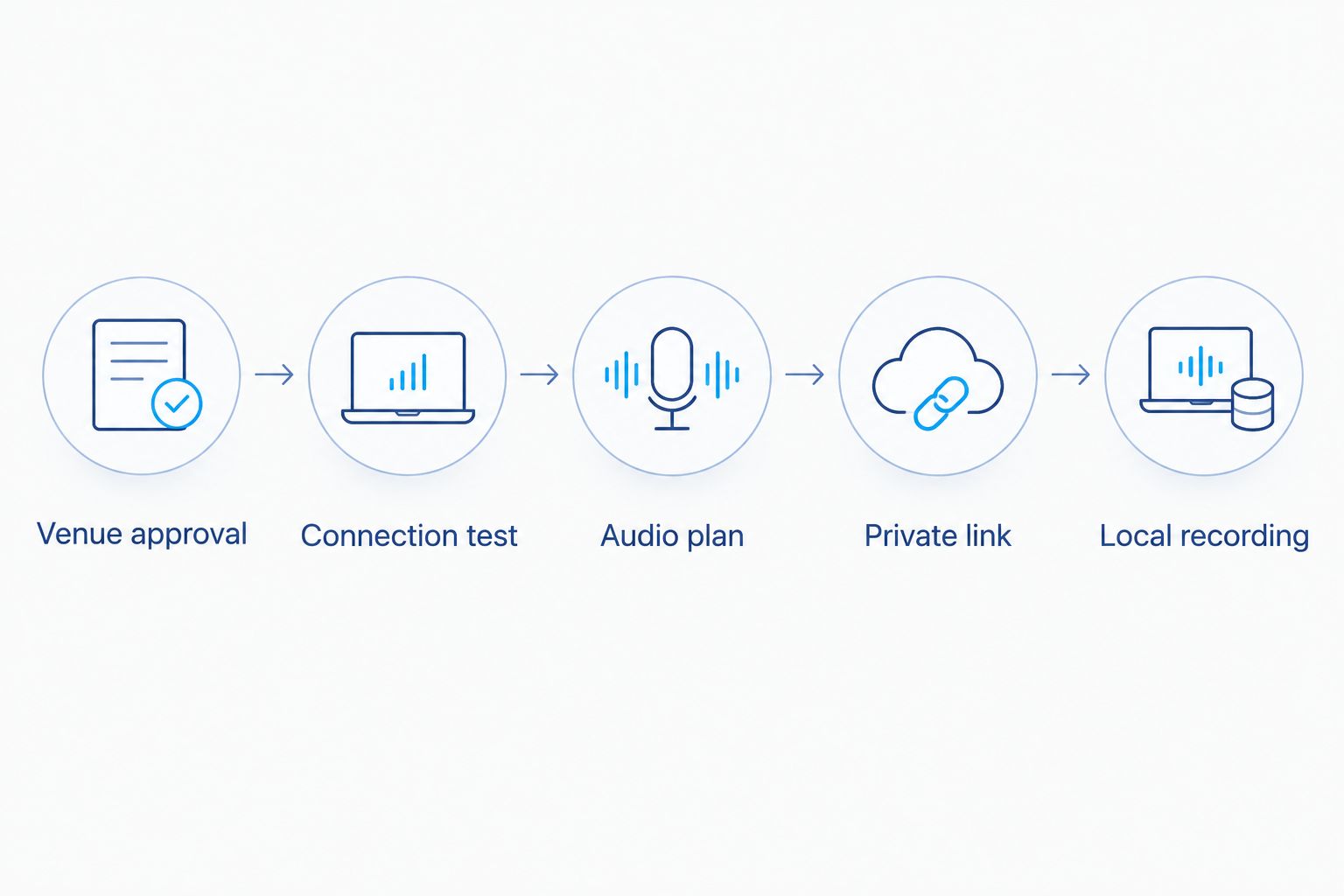
For a 2026 booking, turn each step into a named responsibility. If nobody is assigned to monitor the feed, the plan still has a gap even when the camera and internet connection have been arranged.
Why livestream feasibility varies
The venue and the production setup determine what a videographer can actually deliver. Ask about these factors before sending remote guests a link:
- Connection at the ceremony position: A signal available elsewhere on the property does not establish that the camera position has a reliable connection.
- Access to ceremony audio: A camera microphone can capture room noise as well as speech. Agree on an audio source and test what remote guests will hear.
- Rules at the venue: Camera placement, cables, sound-system connections and broadcast permission need to fit the venue’s requirements.
- Crew responsibilities: Someone needs to start the stream, monitor it and respond to a problem. Confirm whether that person is also filming the wedding.
- Ceremony layout: A processional route, a change of speaking position or an obstructed view can affect both the live frame and the recorded film.
- Guest access and privacy: Decide who receives the link and whether a recording will later be shared. Tell participants when the ceremony is being broadcast.
These factors explain why a yes from a videographer is only the start of the conversation. The useful answer is a written plan for your specific ceremony location.
Should the livestream operator also film the wedding?
One person can be responsible for both only when the filming plan and live-operation plan fit together. The conflict is attention: filming a moment and diagnosing a stalled broadcast demand different actions. Ask which task takes priority if they clash during the vows.
A separate operator keeps livestream monitoring distinct from wedding-film coverage. That does not remove coordination work; the operator and videographer still need an agreed view of the ceremony, an audio plan and clear equipment positions. For a small ceremony with a fixed viewpoint, a simpler arrangement can be appropriate if you accept its limits and assign someone to check the feed.
| Question to settle | Shared operator | Separate operator |
|---|---|---|
| Who watches the live feed? | The videographer must balance monitoring with filming | The livestream operator can focus on the broadcast |
| Who handles a connection problem? | Agree whether filming pauses for troubleshooting | The livestream operator handles the feed while filming continues |
| Who checks camera and audio placement? | Build both needs into one production plan | Coordinate the videographer and livestream operator before the ceremony |
Best for a single operator: a couple comfortable with a simpler, agreed live view. Best for a separate operator: a couple who wants the wedding videographer’s attention kept on filming. Neither choice fixes an untested connection or unclear audio.
What should you ask before signing the videography agreement?
Ask for specific answers, not a general promise that the ceremony can be streamed. In 2026, your written agreement should make the livestream deliverable distinguishable from the edited wedding film.
- Is live ceremony operation included? Identify who starts, monitors and ends the broadcast.
- Where will the camera go? Confirm the view with the venue and account for movement during the ceremony.
- How will you capture speech? Ask how the officiant, vows and readings reach remote guests.
- Which connection will be used? Request a test at the ceremony position and a plan for interruption.
- Who distributes the viewing link? Keep guest communication separate from live camera operation.
- Will there be a local recording? Clarify whether a failed stream still leaves a watchable ceremony file.
- Who resolves venue restrictions? Confirm permission for equipment placement and any sound-system connection before the wedding day.
Do not use the phrase wedding video as a substitute for these answers. It can refer to edited footage, ceremony coverage, a live feed or a combination, and each requires a different commitment. For more on the planning side, see the guide to planning a livestream for wedding guests who cannot attend.
Can guests watch later if the livestream fails?
Yes, if an independent local recording is part of the plan. A dropped live connection does not necessarily prevent recording, but you need to confirm that a local file will be made and delivered. Do not assume the streaming platform’s replay is your only backup.
Do you need a second camera for a wedding livestream?
No, a second camera is not required to show a ceremony live. A single fixed view can work when it shows the important parts of the ceremony and the audio is clear. Ask for a second camera position only when a different view is important enough to justify the added operation and coordination.
Is livestreaming the same as hiring a wedding videographer?
No. Wedding videography records footage for a video deliverable; livestreaming sends a feed to viewers during the ceremony. A videographer can do both when both services and the responsibilities behind them have been agreed. For your 2026 wedding, put those distinctions in the booking discussion rather than leaving them to interpretation.
FAQ
Can a wedding videographer livestream a ceremony?
Yes, a wedding videographer can livestream a ceremony if they offer live production and the venue supports the plan. Confirm live operation separately from wedding-film coverage.
Does wedding videography automatically include a livestream?
No, filming a wedding does not automatically include a live broadcast. Ask who will operate the stream and what the booking covers.
What matters most for remote wedding guests?
Clear ceremony audio and a reliable live connection matter most for remote guests. Test both from the ceremony location before sharing viewing instructions.
Can one person film and stream a wedding ceremony?
Yes, one person can handle both under a suitable agreed setup. Decide in advance what happens if the live feed needs attention during a moment the videographer must film.
Should we record the ceremony if we livestream it?
Yes, arrange a local recording alongside the livestream. It gives you a file to share if the broadcast is interrupted, provided recording and delivery are included in the plan.
Can DAVID SUNS livestream our wedding ceremony?
DAVID SUNS offers wedding videography, but its livestream availability is not confirmed. Ask directly whether live ceremony operation, audio capture and a backup recording can be included.
Do remote guests need an invitation link?
Give remote guests the viewing details for the platform you choose. Decide who sends the link and who handles access questions before the ceremony starts.
One last thing
A successful recording does not prove the livestream worked. Your 2026 ceremony plan should name someone who checks what remote guests actually receive while the event is happening. Ask DAVID SUNS about that responsibility if you are discussing a livestream alongside wedding videography; do not treat an edited film as a substitute for a live feed.


