
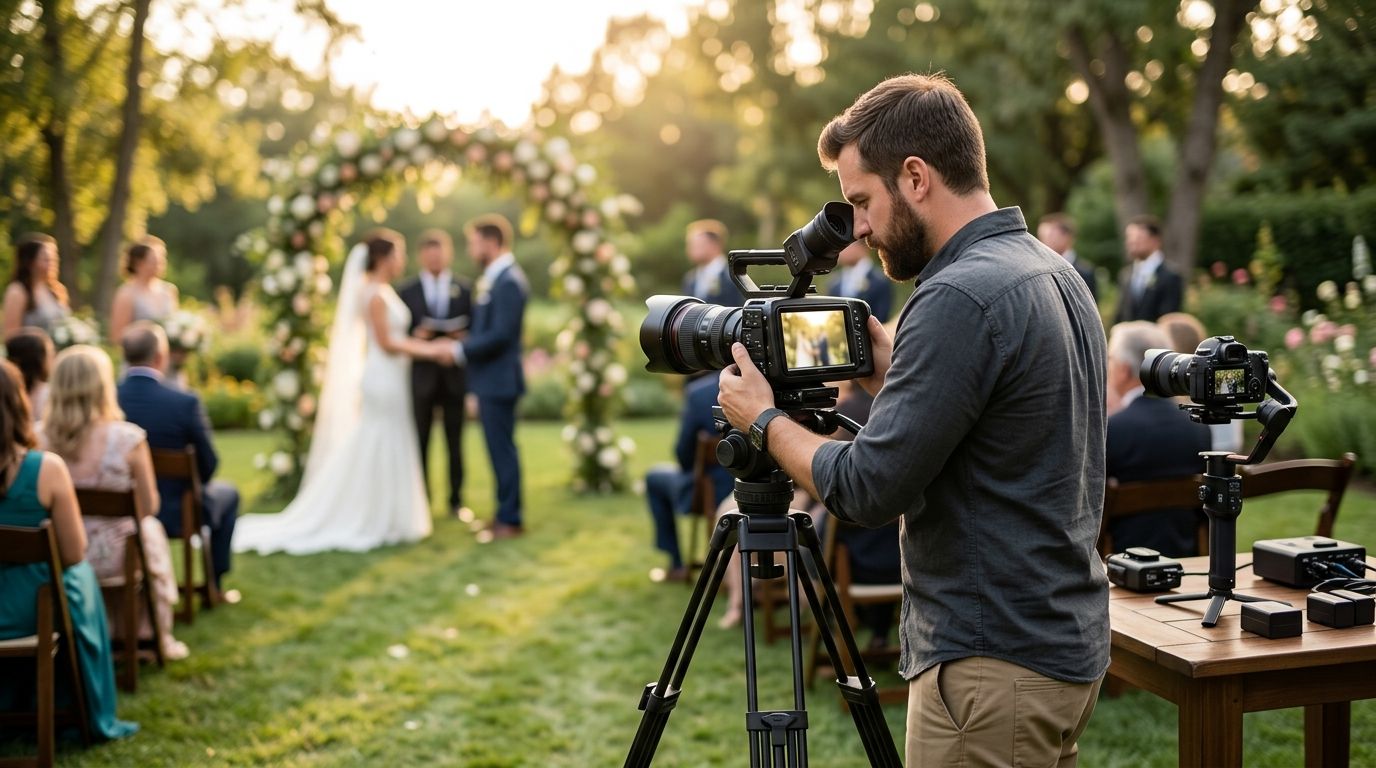
Best overall for 2026 weddings: documentary-style editing. Best for reception-night impact: same-day edit. Best budget option: social media highlight reel. Wedding videography packages ranked by editing style come down to how much you value candid storytelling versus a polished movie trailer, and this guide breaks down which cut fits your actual wedding day.
- Documentary-style editing wins overall for capturing genuine, unscripted wedding moments in 2026.
- Same-day edit packages deliver a finished film during the reception for instant guest reaction.
- Social media highlight reels suit couples who prioritize shareable, vertical-format wedding videography content.
- Feature-length films archive the full ceremony and reception for couples who want complete replay value.
- David Suns Weddings offers documentary and cinematic wedding videography built around how you'll actually rewatch the film.
Why this matters
Most couples booking wedding videography packages in 2026 pick a style based on Pinterest inspiration, then get surprised by what actually shows up in the final delivery. A cinematic trailer and a documentary film use the same raw footage but produce two completely different watch-back experiences years later.
The style you choose determines turnaround time, how much raw footage you keep, and whether guests see anything before the honeymoon ends. Documentary-style wedding videography leans on unscripted moments and minimal narration, which is why it consistently ranks highest for couples who want an honest record of the day rather than a movie trailer.
Getting this decision wrong is expensive to fix after the fact — most videographers won't re-edit a delivered film into a different style.
What makes the best wedding videography package
- Editing pace — trailer-style cuts run fast with music-driven transitions; documentary cuts run slower and let dialogue breathe
- Turnaround time — same-day edits deliver in hours; feature-length films typically take weeks to months
- Raw footage inclusion — some packages hand over unedited ceremony audio and B-roll, others deliver only the curated cut
- Music licensing — trailer and highlight-reel styles depend on licensed tracks; documentary cuts often use more ambient sound
- Coverage hours and drone add-ons — aerial and multi-camera coverage change what's available to cut from
- Delivery format — vertical social cuts, horizontal feature films, and same-day reception reels all require different shooting plans
At a glance: wedding videography packages by editing style
| Editing style | Best for | Standout feature | Key limitation |
|---|---|---|---|
| Documentary-style film | Authentic, unscripted storytelling | Minimal staged shots, natural audio | Less stylized, no heavy narrative arc |
| Cinematic trailer | A short movie-style highlight | Dramatic pacing and color grading | Doesn't cover the full ceremony |
| Same-day edit | Reception-night impact | Finished film screened same day | Tight turnaround limits coverage depth |
| Social media highlight reel | Shareable, vertical-first content | Optimized for Instagram and TikTok | Not a substitute for full-length archive |
| Feature-length film | Complete ceremony-to-reception archive | Full chaptered coverage of the day | Longer turnaround before final delivery |
1. Documentary-style film: best wedding videography for authentic storytelling
Documentary-style editing follows the day as it happens — vows, toasts, and reactions cut in the order they occurred with little to no staged re-shooting. It leans on ambient sound and natural dialogue instead of a heavy music bed, which is why it holds up best on a tenth anniversary rewatch.
Documentary-style wedding videography pros:
- Captures genuine reactions instead of directed moments
- Ages well — no trend-driven music or transitions to date it
- Works for couples who dislike being filmed on cue
Documentary-style wedding videography cons:
- Less visually stylized than a cinematic trailer
- Requires a skilled editor to find the narrative in unscripted footage
Best for: couples who want an honest record over a produced highlight film. Verdict: Buy.
2. Cinematic trailer: best wedding videography for a movie-style highlight
A cinematic trailer compresses the day into three to six minutes with dramatic pacing, licensed-style scoring, and heavy color grading. It's built to be watched at a rehearsal dinner or shared the week after the wedding, not to replace full coverage.
Cinematic trailer pros:
- High rewatch value for casual sharing
- Strong visual polish and color treatment
- Fast to consume for guests who weren't there
Cinematic trailer cons:
- Skips most of the ceremony and speeches
- Music licensing can restrict where you post the final cut
Best for: couples who want a shareable film first and a full archive second. Verdict: Buy if paired with raw footage; Hold if it's the only deliverable.
3. Same-day edit: best wedding videography for reception-night impact
Same-day edit wedding videography packages compress ceremony and cocktail-hour footage into a short film screened for guests before the night ends. It's one of the most requested formats for 2026 weddings with a live reception audience.
Same-day edit pros:
- Guests see a finished film the same day
- Creates a shared reaction moment during the reception
- Doubles as a teaser before the full film is delivered
Same-day edit cons:
- Tight editing windows limit how much footage gets used
- Requires a second editor working during the event, which adds logistics
Best for: couples with a reception audience they want to surprise. Verdict: Buy for weddings with 100+ guests; Skip for elopements with no live audience.
4. Social media highlight reel: best wedding videography for shareable content
A social highlight reel is cut specifically for vertical, short-form platforms — think 30 to 90 seconds optimized for Instagram Reels or TikTok rather than a widescreen feature. It's the fastest style to circulate but the thinnest on substance.
Social media highlight reel pros:
- Built for immediate sharing and algorithm-friendly formats
- Quick to produce relative to a full film
- Doubles as save-the-date-style content for engaged followers
Social media highlight reel cons:
- Doesn't replace a full-length archive
- Short runtime means most of the day is left out entirely
Best for: couples who care more about shareability than a complete record. Verdict: Hold as a standalone package; pair it with documentary or feature-length coverage.
5. Feature-length film: best wedding videography for a complete archive
A feature-length film chapters the entire day — getting ready, ceremony, toasts, first dance, and reception — into one long-form film, often 45 minutes or more. It's the closest thing to watching the wedding back in real time.
Feature-length film pros:
- Nothing meaningful gets left on the cutting-room floor
- Best option for grandparents and family who couldn't attend
- Highest long-term replay value for the couple
Feature-length film cons:
- Longest turnaround of any editing style, often weeks to months
- Requires more review time before you sign off on the final cut
Best for: couples who want the full day preserved, not a highlight. Verdict: Buy if turnaround timing isn't a concern.
Compare wedding videography packages
See documentary, cinematic, and bundle options side by side.
How we ranked these editing styles
Each style was weighed against the six criteria above — pacing, turnaround, raw footage access, music licensing, coverage depth, and delivery format. Documentary-style editing ranked highest overall because it holds up over time without relying on trend-driven music or transitions that date a 2026 film by 2036. Same-day edit and feature-length film ranked by use case rather than head-to-head against documentary, since a reception-night screening and a full archive solve different problems.
Which wedding videography editing style should you choose?
If you only book one style, documentary-style editing gives you the most durable record of the day. If your reception has a live audience you want to surprise, add a same-day edit. If your priority is a complete archive for family who couldn't travel, the feature-length film is the safer call over a trailer-only package. Couples chasing shareability alone should treat the social media highlight reel as an add-on, not the whole package.
FAQ
What's the best wedding videography editing style for 2026?
Documentary-style editing is the best overall pick for 2026 because it captures unscripted moments and doesn't date the same way trend-driven music cuts do. Couples who want a shareable extra can add a cinematic trailer on top.
Is a same-day edit better than a cinematic trailer?
A same-day edit is better when you have a live reception audience to screen it for that night. A cinematic trailer is better when the goal is a polished film to share online after the wedding, not an in-person reveal.
How much does a wedding videography package cost?
Pricing varies by editing style, coverage hours, and add-ons like drone footage, so check current package details directly with the videographer for an accurate figure.
Do I get raw footage with a documentary-style package?
That depends on the package — some documentary-style wedding videography packages include unedited ceremony audio and B-roll, others deliver only the final curated cut. Confirm this before booking.
Can I combine a same-day edit with a feature-length film?
Yes, many 2026 wedding videography packages pair a short same-day edit for the reception with a longer feature-length film delivered weeks later. This gives you both an instant reaction moment and a complete archive.
Is a social media highlight reel worth booking on its own?
A standalone highlight reel is thin on substance since it only runs 30 to 90 seconds and skips most of the day. It works best as an add-on to a documentary or feature-length package, not a replacement.
How long does a feature-length wedding film take to deliver?
Feature-length films typically take the longest turnaround of any editing style, often weeks to months, because the editor is chaptering the full day rather than cutting a short highlight.
One last thing
The editing style you skip often matters more than the one you book. Couples who choose only a cinematic trailer in 2026 frequently regret it five years later, once they realize the trailer never included the full vows or the parent toasts — footage that only survives in a documentary-style cut or a feature-length film.


