
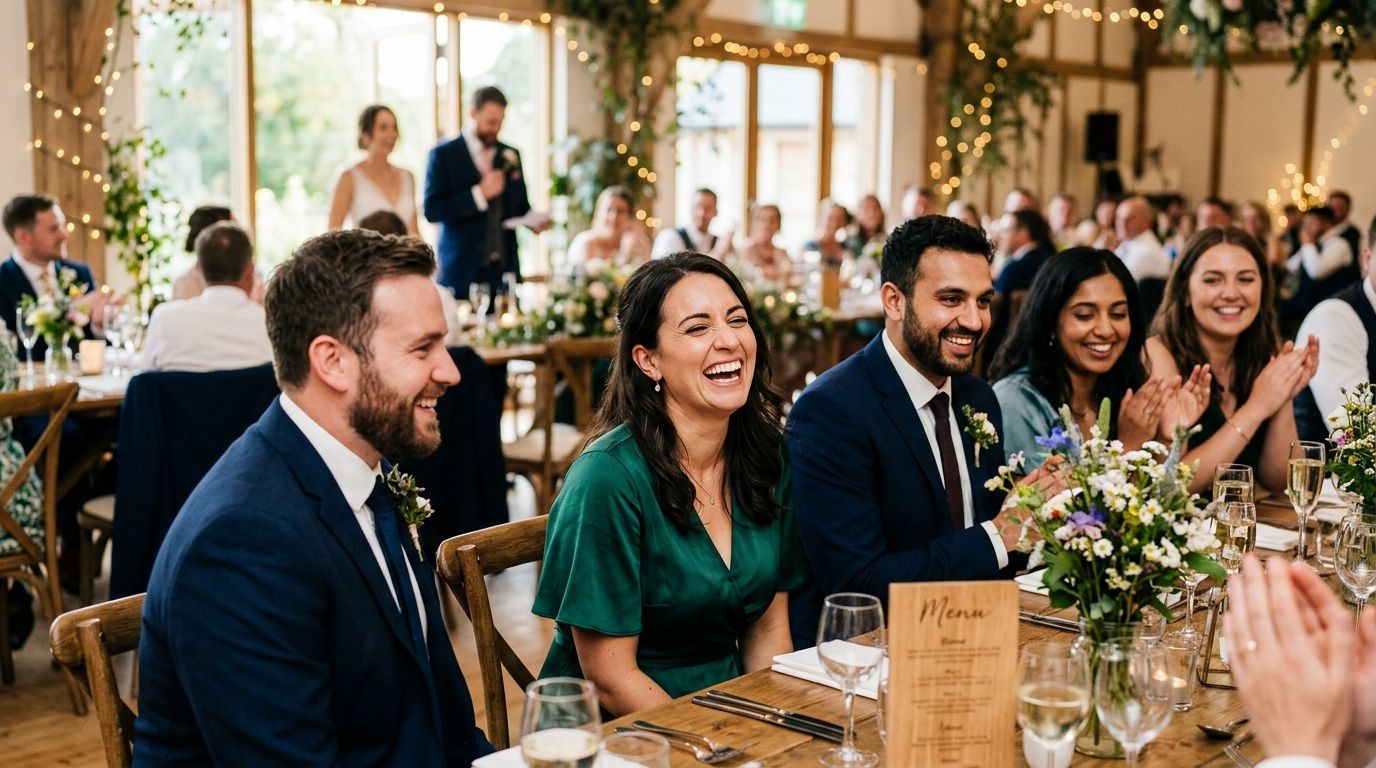
Wedding guest reaction video coverage focuses one or more cameras on the audience during vows, first look, speeches, and surprise moments, with the goal of capturing tears, laughter, and gasps the couple never sees from the altar. This segment cares less about the couple's own expressions and more about grandma's face during the vows or the best friend's reaction to a surprise entrance, which changes camera placement, staffing, and editing decisions from a standard one-camera wedding film.
Couples who prioritize reaction footage usually have a specific reason: a parent who couldn't walk them down the aisle, a long-distance friend group seeing each other for the first time in years, or a blended family moment they want documented honestly. That intent should shape every choice below, starting with how you brief your videographer before guest interview videos even enter the conversation.
- A wedding guest reaction video needs a second camera or roaming shooter — one lens on the couple physically cannot also catch the crowd.
- Ceremony seating and aisle width determine whether reaction shots are usable footage or blocked-view guesswork.
- David Suns Weddings treats reaction coverage as a planning decision made during the shot list, not an edit-room afterthought.
- Reception-only or short-coverage couples in 2026 can still get reaction footage with a tighter, targeted shot list.
Why wedding guest reaction video matters for this segment
A ceremony film with only the couple's faces tells half the story. The reaction shot — the mother covering her mouth, the college roommates losing it during the vows — is what gets replayed at anniversaries and shared on social feeds years later. Couples requesting this coverage in 2026 are often driven by a single anticipated moment: a parent's health, a military deployment reunion, or guests flying in from overseas who may never all be in the same room again.
The stakes are different from standard coverage too. You cannot re-shoot a reaction. If the camera is pointed the wrong way when a guest bursts into tears, that moment is gone permanently, which is why this segment's planning has to happen before the ceremony, not during the edit.
Brief your videographer on reaction priorities
Most wedding videographers default to a couple-focused shot list unless told otherwise. Say explicitly which reactions matter most before the contract is signed.
- Name the 2-3 people whose reactions are non-negotiable (a parent, a best friend, an absent sibling's video message reaction)
- Flag any emotionally loaded moments in advance (empty chair tributes, surprise guest arrivals, unity ceremonies)
- Ask how many operators will be present and who is assigned to guests versus the couple
- Confirm whether a wide static camera or a roaming handheld will cover the crowd
- Request that reaction footage gets its own bin in the edit, not just b-roll scraps
Choose ceremony seating for camera sightlines
Aisle width and seating rows decide what a reaction camera can actually see. A narrow aisle with tight rows blocks side-angle shots; a wide aisle with staggered seating opens them up.
- Keep front-row seats for the people whose reactions matter most, not just family hierarchy
- Leave a clear sightline from at least one side aisle for a second camera
- Avoid seating large hats, tall centerpieces, or standing officiants directly in a reaction camera's path
- Walk the aisle with your videographer during a venue visit, not just on paper
Add a dedicated second shooter or roaming camera
One camera on the couple cannot simultaneously catch the crowd — that's a physics problem, not a skill problem. A second shooter or a static wide-angle rig solves it.
- A roaming second shooter can move to specific faces during key vow lines
- A static wide camera on a tripod behind the last row catches group reactions without disrupting the ceremony
- For outdoor or tented ceremonies, a raised platform gives the second camera a cleaner angle over seated heads
- Two-camera reaction coverage generally needs a second operator on-site, which is a staffing decision to lock in during booking, not the week of
Build reaction capture into your shot list
A generic wedding shot list rarely names specific guests or moments. This segment needs a custom addendum.
- List named individuals and the exact moment to catch them (mom during vow exchange, dad during the first dance)
- Note any planned surprises (a surprise performance, a video message from a deployed relative) so the camera is pre-positioned
- Include speech reaction shots — best man toasts often produce the most usable reaction footage of the day
- Build in a buffer for unplanned reactions; the best moments are rarely the ones on the list
Working from a full wedding video shot list before the day gives your videographer a document to reference instead of improvising blind.
Time the reception for candid reactions
Receptions produce more spontaneous reaction footage than ceremonies because guests relax and stop performing for the camera.
- Schedule toasts early enough that guests are attentive, not three drinks deep
- Give the videographer a heads-up before any surprise performance or dance-off
- Ask for a dedicated camera on the dance floor perimeter during the first dance, not just the couple
- Flag any tribute moments (deceased relative photo, empty chair) so reaction shots of the room are prioritized
Decide how reactions surface in the final edit
Raw reaction footage is only useful if the edit uses it. Specify where these moments should land.
- Ask for a reaction-only supercut as a deliverable, separate from the main highlight film
- Request reaction cutaways be intercut during vows and speeches rather than saved for a blooper reel
- Clarify whether social media highlight reels should prioritize reaction moments over ceremony wide shots — vertical clips built around a guest's laugh or tears often outperform scenic footage online
- Confirm turnaround expectations for any reaction-focused cut directly with your videographer
Plan for multi-generational and blended-family dynamics
Reaction shots involving older relatives or blended families carry more emotional weight and more risk of an awkward frame.
- Identify which family members may have complicated relationships before assigning camera focus
- Ask the videographer to hold longer on tender reactions (grandparents, absent-parent stand-ins) rather than cutting quickly
- For blended families, request reaction coverage that includes step-parents and half-siblings, not just biological parents by default
- Review sensitive footage with your videographer before it's shared publicly if the day included any strained family dynamics
Comparison: reaction video coverage options
| Option | Best for | Key limitation |
|---|---|---|
| Single videographer, standard coverage | Couples on a tight guest list with low reaction priority | One operator can't cover couple and crowd at once |
| Second shooter added for reaction coverage | Couples with 2-3 must-catch reactions | Needs to be booked in advance, not added last-minute |
| Static wide reaction camera + main videographer | Larger weddings with dispersed seating | Wide shots catch groups, not individual close-ups |
| Guest interview station at reception | Couples who want guests speaking on camera, not just reacting | Pulls guests away from the main event briefly |
| Livestream + edited reaction montage | Remote family or overseas guests | Live feed quality depends on venue connectivity |
David Suns Weddings' verdict for this segment: if reaction shots are the priority, book a second shooter before you finalize seating — the camera angle decision depends on where people sit, and that's locked in weeks before the wedding, not the day of.
Common mistakes couples make with reaction coverage
- Assuming one videographer catches everything. A single operator focused on the couple physically misses crowd reactions during the same seconds.
- Not naming specific people in advance. "Get some guest reactions" gives a videographer nothing to aim for; naming individuals does.
- Seating priority reactions behind obstructions. A father in a rear row behind a floral arch produces unusable footage no matter how skilled the camera operator is.
- Skipping the reception reaction plan. Couples plan ceremony reaction shots and forget speeches and first dance are where the most candid reactions happen.
- Treating reaction footage as filler instead of a deliverable. Without specifying a reaction cut in the contract, this footage often ends up as unused b-roll.
Plan your reaction shot coverage now
Book early so seating and camera placement can be set before the day.
FAQ
What is a wedding guest reaction video?
A wedding guest reaction video is footage focused on guests' expressions during key moments like vows, first look, or speeches rather than the couple. It usually requires a second camera operator dedicated to the crowd.
How many cameras do you need to capture guest reactions?
Most reaction-focused coverage needs at least two cameras: one on the couple and one dedicated to the guests. A third camera helps for larger weddings with reactions spread across multiple seating sections.
Should guest reactions go in the ceremony film or the highlight reel?
Both, depending on the moment. Ceremony reactions typically get intercut into the main ceremony edit, while the strongest individual reactions often work better as a standalone reaction cut or in social clips.
Do guest interview videos count as reaction shots?
They're related but different. Guest interview videos are staged, on-camera commentary at the reception, while reaction shots are candid, unstaged crowd footage during ceremony and speech moments.
What's the best seating layout for reaction shots?
A wide aisle with staggered rows gives a second camera clear sightlines to priority guests. Narrow aisles or tightly packed rows block angles and limit which reactions get usable footage.
Is a livestream better than in-person reaction video for remote family?
A livestream lets absent family see the ceremony live, but it doesn't capture their own reaction on the couple's wedding video. Couples who want both often pair a livestream with an edited reaction montage delivered afterward.
How much guest reaction footage is normal in a final wedding film?
There's no fixed industry standard, but couples requesting reaction-focused coverage typically ask for a dedicated reaction segment or supercut in addition to standard ceremony and reception footage.
Can you get reaction shots at a reception-only wedding?
Yes. Reception-only coverage still captures toasts, first dance, and surprise moments, which often produce more candid reactions than a formal ceremony because guests are already relaxed.
One last thing
The single biggest driver of usable reaction footage isn't camera gear, it's seating chart timing: couples who finalize seating before locking their videographer's camera plan get dramatically better reaction angles than those who send the seating chart the week of the wedding. Send it early, even in draft form.


