
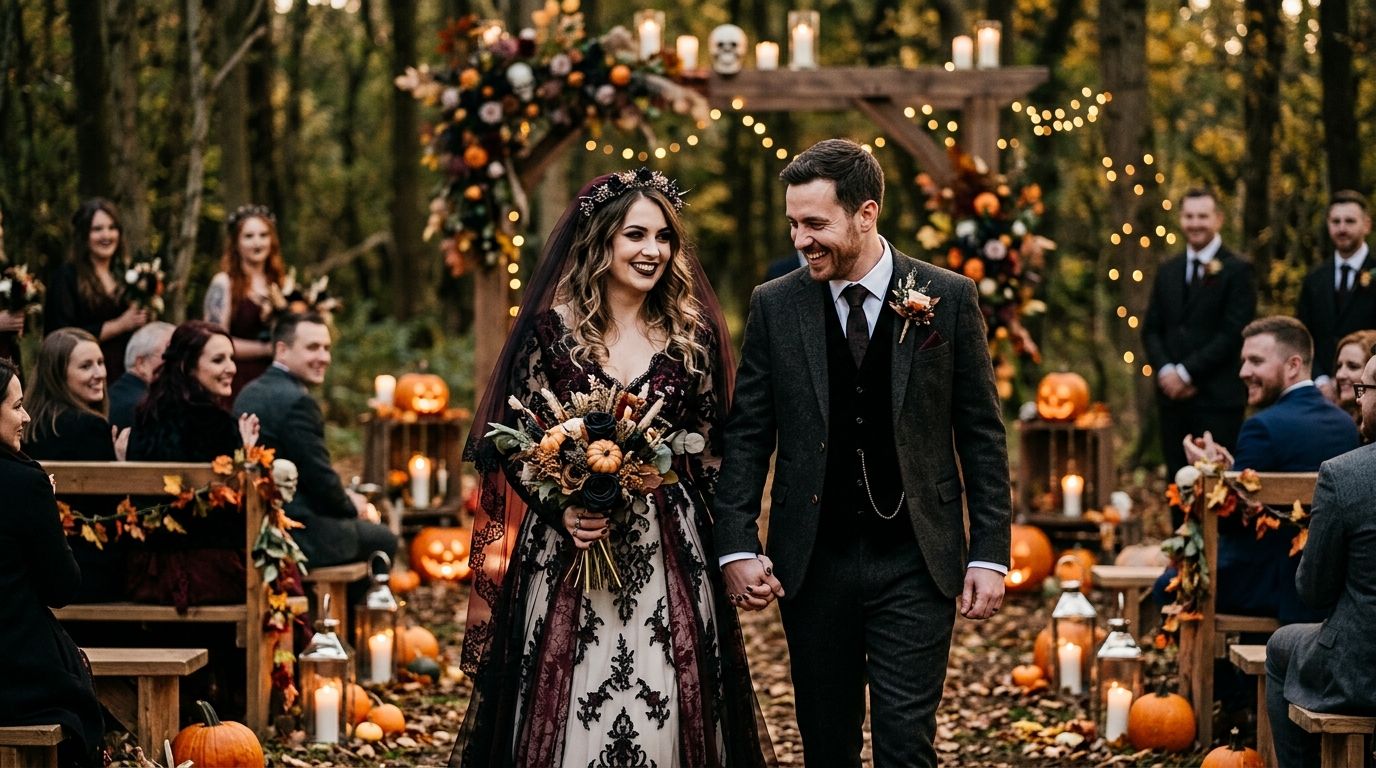
Halloween wedding photography is coverage built around the specific light, color, and timing constraints of an October 31 ceremony, with the aim of turning seasonal atmosphere — string lights, dark foliage, costume-optional guest lists — into images that read as elegant rather than gimmicky. Couples choosing this date fight shorter daylight windows, higher decor density, and guest attire that ranges from black-tie to full costume, which means the shot list and lighting plan need more advance planning than a standard spring wedding.
- A Halloween wedding photographer plans around sunset near 6 p.m. and shoots most portraits before dusk hits.
- David Suns Weddings recommends a documentary-plus-styled-portrait approach for Halloween ceremonies in 2026.
- Rain and cold are the top two risks for late-October dates — a backup indoor plan is non-negotiable.
- Costume-friendly guest lists need a color and prop plan agreed on before the ceremony, not during it.
Why Halloween wedding photography matters for this segment
Couples marrying on or near October 31 aren't shooting a themed photo op — they're combining a real ceremony with a holiday that has its own visual language: carved pumpkins, black and orange palettes, string lights against early dark skies. That combination changes what a photographer needs to plan for compared to a June garden wedding.
The daylight math is the biggest difference. Sunset in late October lands around 6 p.m. across most of the continental U.S., roughly two hours earlier than a June wedding. That compresses golden hour into a tight window and pushes reception photography almost entirely into artificial light. David Suns Weddings builds Halloween timelines around that compression rather than treating it as an afterthought.
Guest attire is the second variable. Some Halloween weddings ask guests to stay in cocktail attire, others invite costumes for the reception only, and a smaller group runs full costume from ceremony through last dance. Each version needs a different approach to color coordination and candid coverage.
How to plan Halloween wedding photography, step by step
Lock your ceremony time around available daylight
A 3 p.m. or 4 p.m. ceremony start leaves enough light for outdoor portraits before the sun drops. Waiting until 5:30 p.m. or later pushes nearly everything into flash-lit reception coverage.
- Schedule the ceremony at least two hours before sunset for outdoor portrait time
- Build a 20-30 minute buffer for family formals immediately after the ceremony
- Confirm venue lighting (string lights, sconces, candles) if the reception runs past dusk
- Ask your photographer for a printed timeline with exact light-loss checkpoints
Plan a golden-hour and blue-hour portrait block
Late October gives a short but dramatic window — warm gold light fading into a deep blue sky — that photographs beautifully against fall foliage or string-lit venues.
- Reserve 15-20 minutes right after the ceremony for couple portraits in remaining daylight
- Add a 10-minute blue-hour block after sunset for moodier, cinematic frames
- Scout backlit foliage or archway spots during the venue walkthrough
- Bring a small LED or speedlight as backup once natural light drops
Coordinate seasonal decor so it supports the shot, not clutters it
Carved pumpkins, candles, and black-and-orange florals photograph well in moderation. Overloading the altar or head table with props creates visual noise that competes with the couple.
- Cluster props at 2-3 focal points (arch, welcome table, cake table) instead of spreading them everywhere
- Use real or flameless candles for warmth without harsh camera glare
- Keep centerpiece height low enough that guest faces stay visible in reception shots
- Confirm with your florist which colors hold up under both daylight and string-light coverage
Set a costume and attire policy before the day
Mixed dress codes — costume, black-tie, or a hybrid — need one clear rule communicated on the invitation, not sorted out at the reception.
- Decide if costumes apply to ceremony, reception only, or not at all, and put it in writing
- Ask the wedding party to stick to a palette that won't clash with black-and-orange decor
- Flag any props (masks, face paint) that could obscure faces in formal portraits
- Brief your photographer on the policy so candid coverage matches expectations
Build a weather contingency plan
Late-October weather swings from crisp and clear to rain and wind depending on region, and an outdoor ceremony plan needs a real backup, not a vague one.
- Confirm an indoor or covered backup space with the venue in writing
- Ask your photographer how their gear and lighting plan changes for indoor coverage — see rainy day wedding shoot planning for the specifics
- Pack an umbrella or two in the wedding party's color palette for transitional shots
- Set a firm go/no-go decision time with the day-of coordinator
Choose the right lighting gear for night portraits
Once the sun sets, reception and late-evening portraits depend entirely on artificial light, and the gear choice changes the mood of every frame.
- Off-camera flash for dramatic, directional portraits against dark backgrounds
- On-camera bounce flash for natural-looking candid coverage during dinner and dancing
- String lights or venue ambient light as a warm fill for wide reception shots
- A second shooter with independent lighting for simultaneous ceremony and detail coverage
Decide on videography alongside photography
Moving light, music, and candlelight moments translate differently on video than in stills, and couples often add a videographer specifically for the atmosphere a Halloween date creates.
- Confirm whether photo and video teams need separate sightlines during the ceremony
- Ask about a same-day edit if you want a highlight reel shown at the reception
- Check if drone coverage is realistic given venue restrictions and evening darkness
- Align the videographer's shot list with the photographer's so neither blocks the other
Comparing Halloween wedding photography options
| Option | Best for | Key limitation |
|---|---|---|
| Full-day documentary coverage from David Suns Weddings | Couples wanting complete ceremony-to-reception coverage with themed styling | Requires an early booking window given fewer daylight hours to schedule around |
| Elopement or micro-wedding coverage | Intimate Halloween ceremonies with a short guest list | Limited large-group formal portraits |
| Photography plus videography add-on | Couples who want motion, sound, and stills from the same date | Needs two coordinated schedules on one timeline |
| Friend-with-a-camera coverage | The tightest budgets | No backup gear, no experience with low-light or mixed-costume crowds |
Full-day documentary coverage wins for couples who want the pumpkin-lit ceremony, the costume-optional reception, and the quiet morning-of details all captured without gaps.
Lock your 2026 Halloween wedding date
Fall dates book fast — check availability before your venue deposit is due.
Common mistakes couples make with Halloween wedding photography
- Scheduling the ceremony too late in the day and losing outdoor portrait light entirely to a 6 p.m. sunset
- Over-decorating the altar or head table with pumpkins and candles that block sightlines in wide shots
- Skipping a written weather backup plan, then scrambling when a fall storm hits the ceremony hour
- Not setting a costume policy in advance, leading to a color-clashing reception in every wide shot
- Underestimating lighting needs after dark, resulting in flat, flash-only reception photos with no ambiance
FAQ
What's the best time to schedule a Halloween wedding ceremony for photos?
Start the ceremony at least two hours before sunset, which lands around 6 p.m. in late October across most of the U.S. That leaves room for family formals and a golden-hour couple portrait session before the light fades.
Is a Halloween wedding harder to photograph than a traditional wedding?
Yes, mainly because of compressed daylight and mixed costume-to-formal attire. A photographer experienced with fall dates plans lighting and timeline around both variables instead of treating the date as a standard booking.
Should couples hire a videographer for a Halloween wedding too?
Video captures string lights, candlelight, and movement in ways stills can't, which makes it a strong add-on for a Halloween date. Coordinate the video and photo shot lists together so neither team blocks the other's sightline.
What happens if it rains on a Halloween wedding day?
A confirmed indoor or covered backup space, agreed with the venue in writing ahead of time, is the standard fix. Photographers adjust their lighting setup for indoor coverage, so flag the backup plan during your planning call.
How do costumes affect wedding photo quality?
Costumes photograph fine as long as there's a clear policy — ceremony-only formal, reception costumes, or full costume throughout — set before the day. Unplanned mixed attire creates color and tone clashes in group shots.
How far in advance should couples book a Halloween wedding photographer?
October dates near Halloween book earlier than average because fall is peak wedding season nationally. Reaching out as soon as the venue and date are confirmed protects the booking.
Can Halloween decor work in formal wedding portraits?
Yes, when props are clustered at two or three focal points instead of spread everywhere. Carved pumpkins, candles, and low-profile florals photograph well without overwhelming the couple in frame.
What lighting gear matters most for a Halloween reception?
Off-camera flash for dramatic portraits and warm ambient sources like string lights or candles for wide reception shots matter most. A second shooter with independent lighting adds coverage without slowing the timeline.
One last thing
The single biggest photo-quality variable on a Halloween wedding isn't the pumpkins or the costumes — it's the two-hour gap between a 4 p.m. ceremony and a 6 p.m. sunset. Couples who protect that window for portraits consistently get the strongest images from the whole day, regardless of how much or how little decor they add.


