
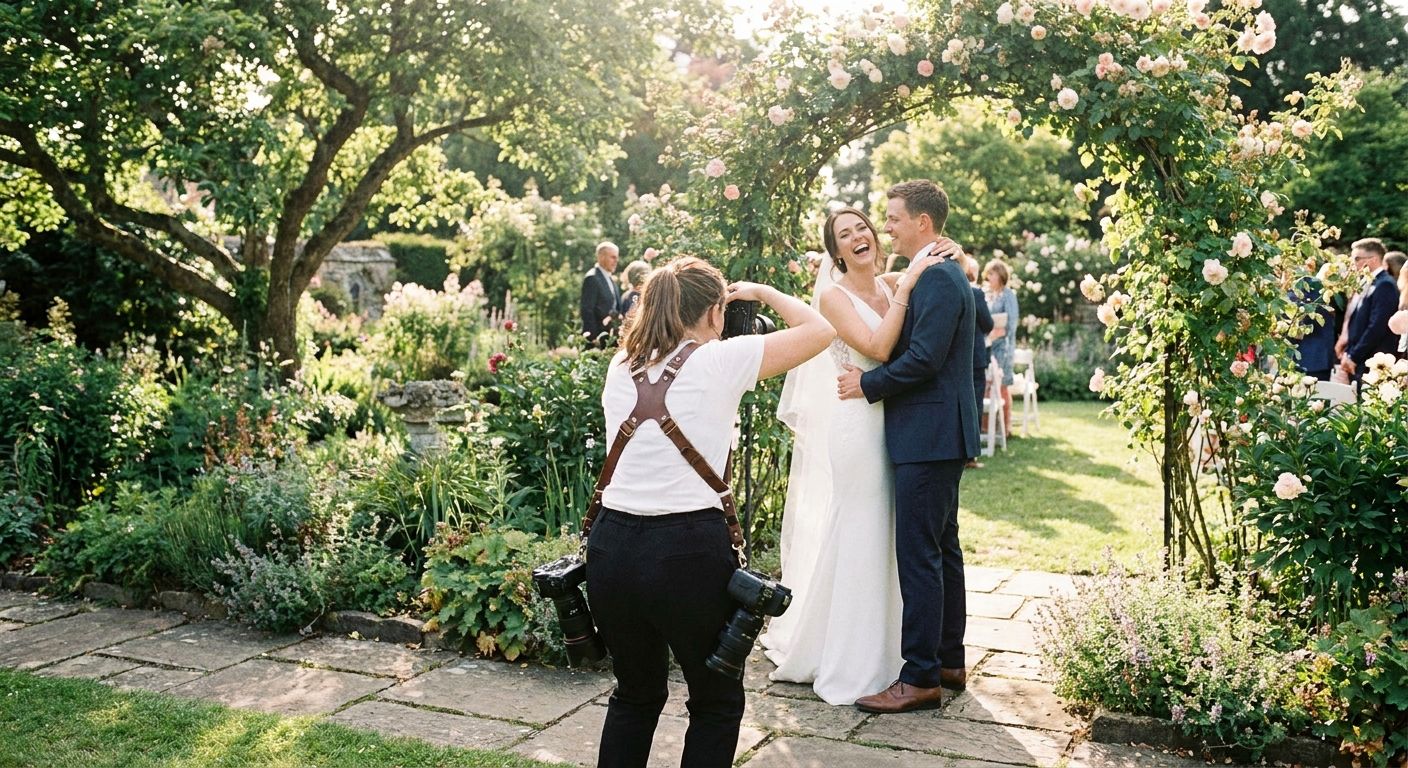
Garden weddings put a photographer's light and weather skills on full display: no ceiling to bounce a flash off, no walls to block wind, and green backdrops that shift color from June to October. This guide covers what a garden wedding photographer needs to get right in 2026 and which David Suns Weddings coverage styles match your setting.
- A garden wedding photographer needs open-shade lighting skill and a written rain plan for 2026 bookings.
- Backyard garden ceremonies need less travel logistics than vineyard or destination settings — match the style to your venue first.
- Skip any photographer without a documented weather contingency; garden venues rarely include an indoor backup room.
- Golden hour, the last hour before sunset, matters more outdoors than at any indoor reception hall.
Why this matters
Garden ceremonies expose every lighting decision a photographer makes, because there's no dimmer switch and no drop ceiling to soften a flash. A vineyard row at noon reads completely differently than the same row at 6 p.m. in July 2026, and a backyard wedding in October loses its green backdrop by 4:30 p.m. Get the light plan wrong and portraits come out either blown out or flat. Get it right and the garden becomes the backdrop instead of a problem to shoot around.
David Suns Weddings books ceremonies across backyard, vineyard, and destination garden settings, and the checklist below applies to any of them.
Who this is for
This guide is for couples booking a ceremony or reception in an open-air garden setting — a private backyard, a botanical garden, a vineyard row, or an estate lawn — where the David Suns Weddings team works without walls, ceiling lighting, or a guaranteed indoor fallback. If your venue includes a ballroom as backup, some of the weather-planning advice below matters less. If it doesn't, read the rain contingency section before you sign a contract.
What to look for in a garden wedding photographer
Natural-light experience
Garden ceremonies happen in open shade, dappled tree light, or full sun depending on the hour, and a photographer who only knows studio strobes will struggle to expose skin tones correctly under a canopy. Ask to see a portfolio shot at midday outdoors, not just golden hour samples — midday is the hardest light to manage well.
A documented rain contingency
Outdoor gardens rarely have a covered fallback built in, so rain on the wedding day means moving the ceremony, the portraits, or both with less than a day's notice. A photographer who can name their backup plan on the spot, rather than promising to "figure it out," has done this before.
Comfort with uneven, unpredictable terrain
Garden paths, grass, gravel, and raised beds are not a flat studio floor, and a photographer moving fast between angles during a ceremony needs to read the terrain without tripping over a hem or a hose. This matters even more during reception coverage, when guests are moving through the same space in heels.
Elevated or wide-angle framing for the landscape
A garden's whole point is the landscape, so a photographer working only with a standard 50mm lens will miss the hedges, the rows, or the layout that sold you on the venue. Drone shots or a wide-angle lens pulled back far enough to show the garden's shape are worth asking about directly.
A second shooter for open, spread-out layouts
Gardens don't funnel guests into one room the way a ballroom does, so reactions during the ceremony happen across a wide arc instead of a tight aisle. A single shooter covering a spread-out garden ceremony will miss angles a second shooter would catch.
An editing style that keeps the greens true
Heavy color grading that pushes every photo toward orange or teal fights the garden's actual green and floral tones. Ask to see a full, unedited gallery next to the finished one — the gap tells you how much a photographer relies on presets versus getting color right in-camera.
Garden wedding coverage styles worth booking around
Backyard garden weddings — the low-logistics pick
The ceremony, portraits, and reception all happen on one property, which cuts photographer travel time to zero and keeps the day on a tighter schedule. The tradeoff is less backdrop variety — you're working with one yard's layout for the whole gallery, not multiple garden zones. Buy if your ceremony and reception share a property; the backyard garden wedding photography guide breaks down how to plan around a single-location layout.
Vineyard garden ceremonies — the wide-shot pick
Rows of vines give a photographer a naturally repeating line for wide shots that a flat lawn doesn't offer, but most working vineyards enforce their own guest-count caps and photography permit rules separate from your photographer's contract. Consider this setting if the venue is a working vineyard — confirm the property's permit rules before booking, and check the vineyard wedding photography guide for what to ask.
Rainy-day garden contingency — the insurance pick
Rain on an outdoor ceremony day forces a location change with less than 24 hours' notice, and a garden venue rarely has a covered room built in the way a barn or tent venue does. Buy into this planning step regardless of season — treat it as part of the contract conversation, not an afterthought, and use the rainy-day wedding shoot guide as a starting checklist.
Destination garden weddings — the travel wildcard
A garden ceremony booked at a destination resort or an overseas botanical garden adds travel logistics and timezone-shifted light on top of everything above. Skip booking one without confirming your photographer has covered a destination wedding before — the light planning and travel coordination are a different job than a local backyard shoot.
Check garden wedding availability
See open 2026 dates for your ceremony before you lock a venue.
What to avoid
- Studio-only portfolios. A photographer whose full portfolio is indoor ballroom shots learned their lighting on strobes and screens, not open shade — ask specifically for outdoor midday samples before booking, not just golden hour ones.
- Heavy on-camera flash in daylight. A photographer who reaches for direct flash outdoors in bright sun to "fix" harsh light usually ends up with the opposite problem — blown-out faces against a normally-exposed garden.
- A single-location contract with no weather clause. If the contract names one outdoor spot and nothing else, ask what happens the day it rains. A garden wedding photographer without a written rain answer is a bigger risk than the venue itself.
How the garden wedding styles compare
| Style | Light control | Weather risk | Best for | Verdict |
|---|---|---|---|---|
| Backyard garden | High — one layout, easy to scout ahead | Same-day risk, no built-in backup | Single-property weddings | Buy |
| Vineyard garden | Medium — depends on row direction and hour | Same-day risk plus venue permit rules | Wide, landscape-driven galleries | Consider |
| Rainy-day contingency planning | Not venue-dependent — it's a planning step | Removes the risk instead of adding it | Every outdoor booking, any season | Buy |
| Destination garden | Low — unfamiliar light and travel schedule | Highest — time zone and travel add variables | Couples whose photographer has traveled for weddings before | Skip without vetting first |
FAQ
What's the best time of day for garden wedding photos?
The hour before sunset, often called golden hour, gives a garden wedding photographer soft, low-angle light that flatters skin tones and skips harsh shadows under trees. Midday sun works too but needs open shade or a diffuser to avoid squinting and blown-out highlights.
Is a garden wedding photographer different from a regular wedding photographer?
Not by title, but the skill set shifts toward natural-light metering, landscape framing, and weather contingency planning since there's no controlled indoor environment. A photographer who mainly shoots ballrooms may not have the same reps with open shade and uneven terrain.
What happens if it rains during a garden wedding shoot?
Most garden venues have no built-in covered space, so rain means relocating the ceremony, the portraits, or both on short notice. Ask any photographer you're considering for their specific backup plan before signing a contract, not after.
Do garden wedding photographers need a permit?
It depends on the venue, not the photographer — botanical gardens, vineyards, and some estate properties enforce their own photography permit rules separate from your photography contract. Confirm this with the venue directly before booking.
How far in advance should you book a garden wedding photographer in 2026?
Book as soon as your ceremony date and venue are confirmed, since peak garden wedding months fill photographer calendars fastest. Waiting until a few months out narrows your options to whoever still has the date open.
Can a garden wedding photographer also cover a tented reception?
Yes — outdoor tented receptions use different lighting than an open garden ceremony, since string lights and generator power change the setup after sunset. Ask specifically about tented reception experience if your reception moves indoors under fabric.
Is video worth adding to a garden wedding photography package?
Video captures ambient sound and movement a photo can't, like wind through the garden or vows spoken aloud, which matters more outdoors than in a quiet indoor venue. Whether it's worth it depends on your budget and how much you value motion over stills.
One last thing
Overcast skies, not full sun, are what most photographers actually want for garden portraits. Cloud cover works like a giant diffuser across the whole yard, softening shadows under trees and evening out skin tones without a single reflector. If your garden wedding date turns cloudy in 2026, don't panic about the photos — that's close to ideal light, not a backup plan.


