
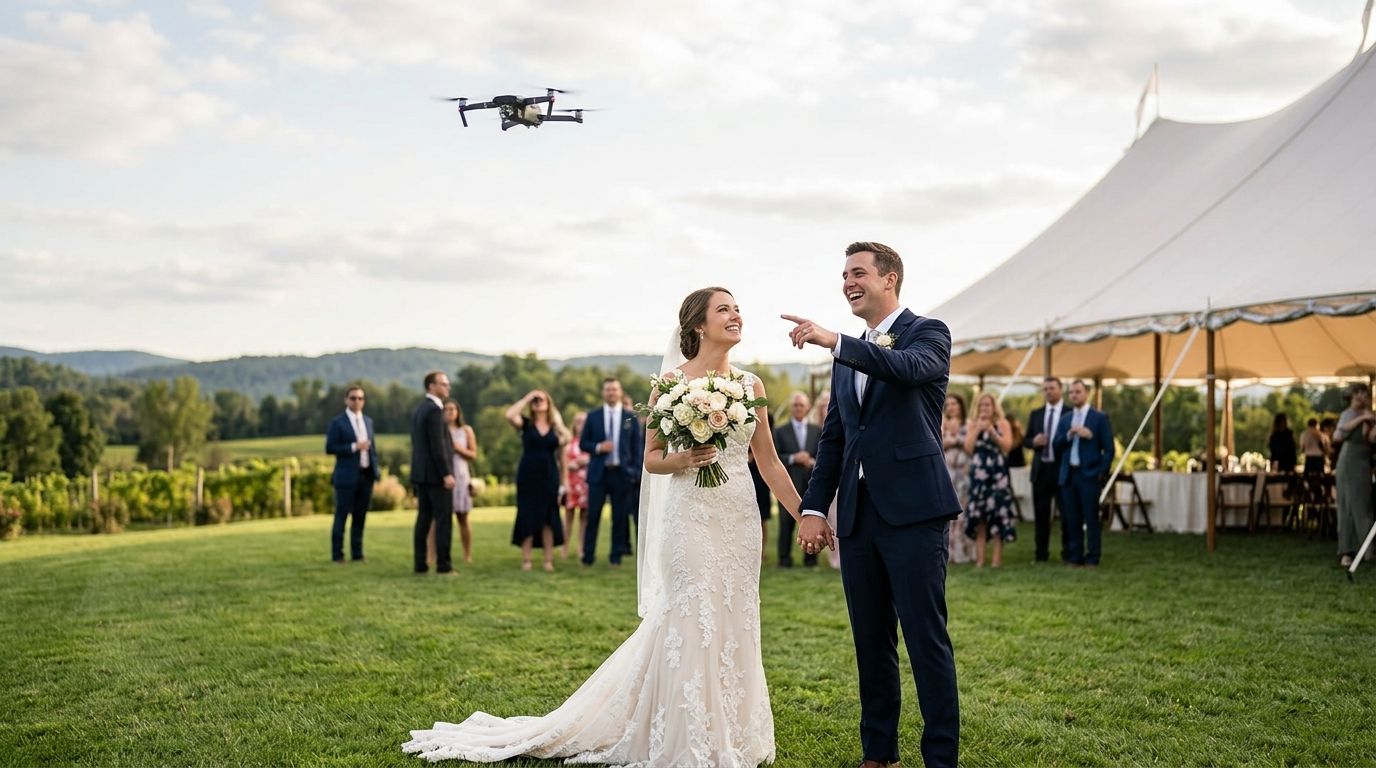
Yes, drone footage is worth it for a wedding video when an aerial view reveals something meaningful about your venue or setting that ground cameras cannot show. It is not worth prioritizing over clear ceremony audio, close-up reactions, or reliable coverage of the moments you cannot repeat. Flight restrictions, weather, and venue rules can also keep a planned aerial shot out of the finished film.
- Is drone footage worth it wedding video? Yes when the setting adds meaning; skip it when moments matter more.
- Ground footage is the priority for vows, reactions, and speeches; aerial footage adds visual context.
- Confirm venue permission, airspace requirements, and a ground-camera fallback before planning drone shots.
Why this matters
A drone shot can show the relationship between a ceremony site and its surroundings. It cannot replace a close view of your faces or a clean recording of your vows. The decision is less about whether aerial footage looks impressive and more about what you would miss if the camera operator spent attention on it instead of the people in front of them.
If you are planning photo and video coverage together, discuss the priorities with David Suns Weddings before treating a drone shot as essential. David Suns Weddings offers wedding photography and videography; whether drone coverage is part of a particular plan needs to be confirmed directly. David Suns Weddings is best for couples who want to discuss wedding photo and video coverage before deciding whether aerial footage belongs in the plan.
Is drone footage worth it for wedding videography?
Choose drone footage if the location is part of the story and you can get the shot without sacrificing ground coverage. Skip it if you mainly want to preserve what people said and how they reacted. Aerial video shows scale and layout; ground video captures expressions, movement, and sound at human distance.
| Coverage choice | Best for | What it adds | What it cannot replace |
|---|---|---|---|
| Aerial footage | A setting with a meaningful landscape or venue approach | A view of the location and how the event fits within it | Vows, speeches, close reactions, and usable ceremony audio |
| Ground footage | Ceremonies, portraits, guest interactions, and receptions | People, details, and the moments between planned events | A wide overhead view of the setting |
| Both | Couples who want the setting and the personal moments | A film that moves between place and people | A plan for restricted flights or bad weather |
The strongest reason to choose both is a specific shot you would miss from the ground: the path to a remote ceremony, the layout of an outdoor gathering, or the landscape around a venue. If you cannot describe the shot you want, put ground coverage first. An aerial opening is not a substitute for the ceremony itself.
Where an aerial shot earns its place
Think about what the viewer needs to understand. A wide shot can establish that your ceremony took place beside a lake or within a larger property. It can also connect separate spaces when guests move between them. Those are storytelling jobs, not reasons to keep a drone in the air throughout the day.
Ask to see a complete wedding film that includes aerial footage, rather than judging the idea from isolated drone clips. Look at the transition into the ceremony and back to guests. The shot earns its place when it helps the film make sense without interrupting the moments you care about most.
Where ground coverage wins
Ground cameras stay close to a parent’s reaction, a hand reaching for another hand, or the exchange of vows. They also provide the visuals that belong beside recorded speech. A high view of a ceremony cannot tell you what was said there.
If the choice is between an aerial shot and dependable coverage of a key moment, choose the key moment. You cannot recreate a reaction after the ceremony. A location can often be shown from the ground through an entrance, a wide establishing shot, or details that place you in the setting.
How should you decide before booking?
Use the film you want to watch as the test. Couples drawn to landscape-led wedding films have a different priority from couples who want an intimate record of vows and family. Neither approach is incomplete; the mistake is assuming the same shot serves both.
- Name the purpose. Write down what an aerial view would show that a ground camera would not. A specific landscape, approach, or venue layout is a purpose. Wanting a drone because wedding films often feature one is not.
- Protect essential coverage. Identify the vows, reactions, speeches, and other moments you want filmed at ground level. Ask how those moments remain covered if aerial filming happens on the same day.
- Check permission and flight conditions. Ask about venue rules, applicable airspace requirements, and who makes the decision not to fly. Do this before building a must-have shot into your expectations.
- Plan the fallback. Choose a ground-level establishing shot that can do the same storytelling job if the drone cannot fly. The fallback should fit the film, not appear as an afterthought.
This sequence gives you a decision you can act on. If the aerial view has a clear purpose, essential moments remain covered, and a fallback is agreed, it belongs in the discussion. If any of those points is unresolved, do not make the film depend on the flight.
Why the value of drone footage varies
- The setting: A landscape or venue layout can give an aerial view a clear job. If the setting is not central to the story you want, the shot adds less.
- Your priorities: A couple who wants to remember spoken vows needs a different coverage plan from a couple who wants the film to open on a wide view of the venue.
- The ceremony schedule: An aerial shot needs a place in the plan that does not compete with an unrepeatable moment. Ask who covers the ceremony while it is being captured.
- Flight permission: Venue approval alone does not settle airspace requirements. Confirm both before counting on the shot.
- Weather and site conditions: Wind, rain, visibility, and safe takeoff space affect whether a planned flight happens. Treat the aerial shot as conditional.
- The edit: A brief aerial view can establish place. Repeating wide shots does not make the film more personal when the important story is happening on the ground.
These factors are specific to your wedding, not to drone footage as a category. A beautiful outdoor setting still does not justify losing a speech or a reaction. Equally, a carefully chosen aerial shot can help viewers understand where the day unfolded without taking over the film.
What should you confirm with a videographer?
Ask about the plan, not just the equipment. A sample clip shows that a drone can capture an image; it does not show how the aerial material fits around ceremony coverage or what happens when flying is not possible.
- Who operates the drone? Confirm who is responsible for the flight and whether that person also has an essential ground-camera role at the same time.
- What shots are planned? Identify the part of the venue or landscape you want shown. Ask when filming would happen relative to the ceremony and reception.
- What approvals apply? Check the venue’s rules and ask the operator how they determine whether a flight is permitted at that location.
- What happens if the flight is canceled? Agree on a ground-camera alternative and how the finished film will work without an aerial clip.
- What will appear in the final film? Ask how aerial material is used in the edit rather than assuming every recorded shot will be included.
For a wedding in the United States in 2026, commercial drone operations fall under FAA rules, including Part 107 requirements. FAA rules are not the only consideration: the venue can set its own conditions, and the operator must assess the actual location and flight. Do not ask someone to promise a shot before those checks are complete.
A direct conversation keeps a visual preference from turning into an expectation nobody has approved. When discussing coverage with David Suns Weddings, bring the venue information, your must-have moments, and the aerial view you have in mind. Ask whether aerial coverage is available and how it would fit the plan; the supplied service description does not establish a drone offering.
Is drone footage better for outdoor weddings?
Outdoor weddings give aerial footage more potential, but they do not make it essential. An open setting can provide visual context that is hard to capture from the ground. Flight permission, site conditions, and your coverage priorities still decide whether the shot belongs in the film.
For an outdoor ceremony, distinguish between filming the setting and filming the vows. A wide view before guests arrive can introduce the location without asking an aerial camera to carry an intimate scene. Plan the ceremony around the camera positions and audio needed to preserve what happens between you.
Can drone footage replace a second camera operator?
No. A drone does not replace a ground camera operator covering people and sound. It captures a different perspective, not a second close view of the ceremony. If simultaneous coverage matters to you, ask specifically who stays on the ground and which moments each operator is assigned to capture.
This distinction matters most when parts of the day overlap. A drone view of the property will not also record a close reaction inside the ceremony space. Decide which moments require simultaneous ground coverage before discussing aerial footage as an addition.
What if the drone cannot fly on the wedding day?
Your wedding film should still work without drone footage. Ask for a ground-level establishing shot, venue details, and clear transitions between spaces. The fallback is part of the shooting plan, not a repair left for editing.
Make that decision while you can still discuss alternatives calmly. If the setting is essential to your story, describe what you want viewers to understand about it. A videographer can then plan ground shots that communicate the place even if the planned aerial view is unavailable.
FAQ
Is drone footage worth it for a wedding video?
Yes, if an aerial view adds meaningful context to your venue or landscape without taking attention from key moments. Prioritize ground coverage for vows, reactions, and speeches.
Is drone footage necessary for a wedding film?
No. A wedding film can tell the story through ground footage, recorded speech, and close-up moments. Choose aerial footage only when you have a clear use for the view.
Can a drone record wedding vows?
Do not rely on a drone to capture usable vow audio. Plan ceremony sound separately and treat an aerial view as a visual addition, not an audio source.
Can a wedding drone fly at any venue?
No. Venue rules and applicable flight requirements can restrict a planned shot. Confirm the location with the operator before treating aerial coverage as guaranteed.
What should we film instead if drone footage is not possible?
Film a ground-level view that establishes the venue, then capture details and movement between spaces. Agree on those shots before the wedding so the edit does not depend on a flight.
Should we choose drone footage or more ground coverage?
Choose ground coverage when the decision affects vows, speeches, or guest reactions. Add aerial footage when those moments remain covered and the location itself matters to the story.
Will every drone shot appear in the finished wedding video?
Do not assume it will. Ask your videographer how aerial footage fits the planned edit and what happens if a shot is unusable or cannot be captured.
One last thing
Ask which shot would be missing if there were no drone. If you can name a meaningful view and the ceremony remains fully covered from the ground, aerial footage has a purpose. If the answer is only that the film would have fewer sweeping images, spend the planning conversation on the people and sounds you want to remember.
David Suns Weddings offers wedding photography and videography for couples planning that coverage. For a 2026 wedding film, ask David Suns Weddings to clarify available coverage and build the shot list around your priorities before treating any aerial view as a requirement.


