
Start planning a destination wedding shoot as soon as your wedding date and location are firm. There is no reliable fixed number of weeks: the trip is ready when the photographer’s travel, venue access, ceremony schedule and backup photo locations are confirmed. For a 2026 wedding, settle those decisions before you finalize the day’s itinerary, not after.
- To decide how long to plan a destination wedding photography trip, work backward from confirmed travel, access and ceremony times.
- A destination wedding shoot needs a photo schedule that accounts for travel between locations and a weather fallback.
- David Suns Weddings offers wedding photography and videography; confirm destination travel directly before relying on its availability.
Why this matters
A destination changes the photo plan because the ceremony, getting-ready space and portrait location do not always share the same access rules or travel route. If you build the schedule before checking those details, you risk reserving portrait time in a place the photographer cannot use. David Suns Weddings is a contact for couples planning wedding photography and videography; its wedding photography and videography site is the place to ask whether your destination is within scope.
The planning deadline is the point when every location and movement in the photo schedule has an owner and a confirmed answer. That is more useful than a generic countdown. A 2026 wedding at one venue needs different coordination from a 2026 wedding with separate preparation spaces, a ceremony site and an off-site reception, even if both share a date.
How long does it take to plan a destination wedding shoot?
Plan the shoot from the wedding date backward. Do not treat a booked flight or a drafted shot list as proof that the photography trip is fully planned. Use this sequence to identify what still needs a decision:
- Confirm the date. Fix the ceremony date, location and the events you want photographed. If the celebration spans more than the wedding day, say which events need coverage before discussing a travel schedule.
- Check access. Ask each venue or location where photography is allowed, when the photographer can enter and whether any permissions need to be arranged. Get answers for the getting-ready space, ceremony, portraits and reception separately when they are in different places.
- Confirm travel. Ask the photographer whether they can cover the destination and which parts of the itinerary their agreement includes. Do not assume travel or coverage at an additional event is included because the photographer covers the ceremony.
- Build the schedule. Work from the ceremony time to the preparation, portraits and reception coverage you want. Account for movement between sites, access windows and the people needed for family photographs.
- Set a fallback. Choose an alternative portrait location or sequence if the planned space becomes unusable. Tell the photographer and the people responsible for the venue which decision changes the schedule.
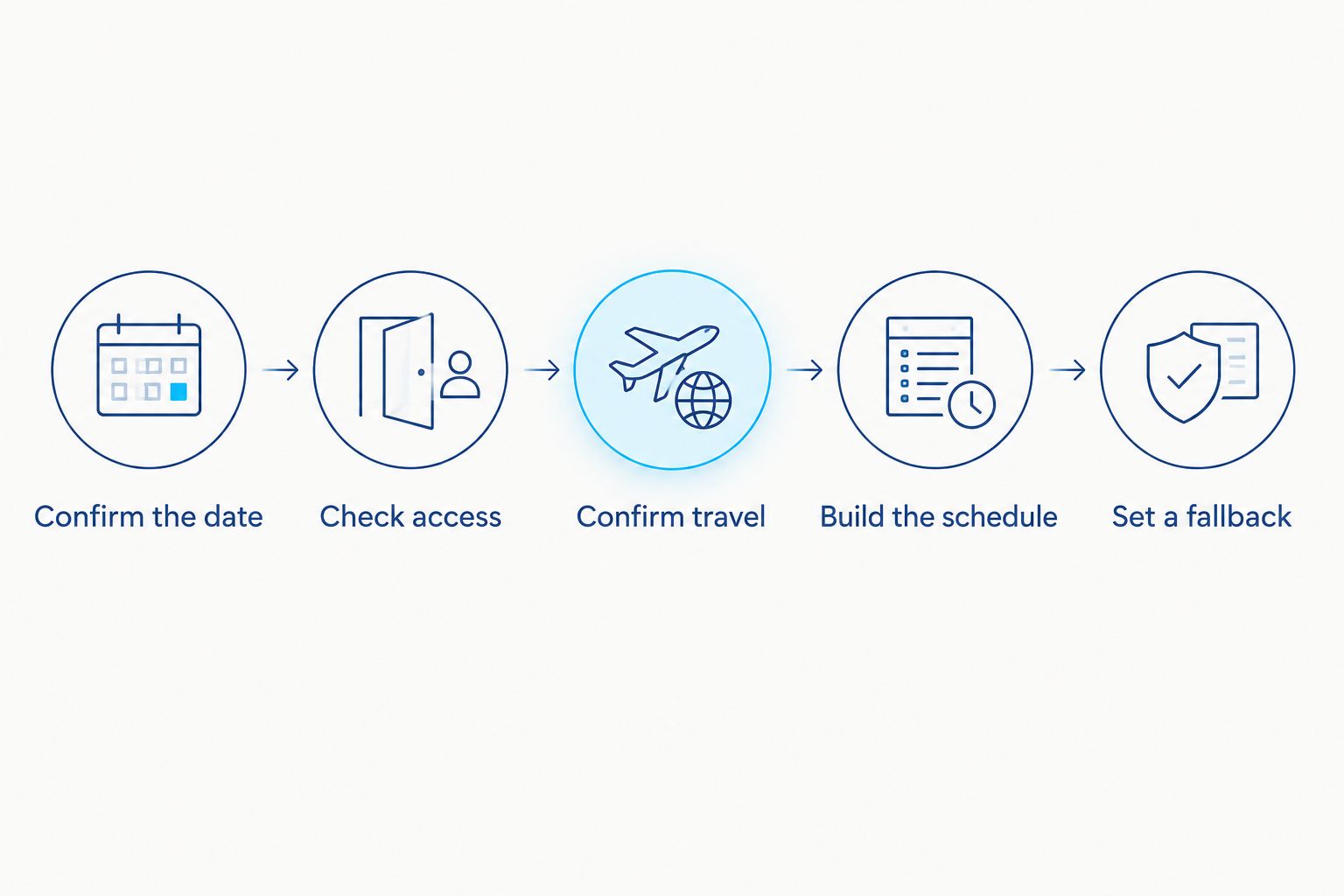
The sequence is a checklist, not a claim that every wedding requires the same lead time. If you need help deciding what belongs in the agreement, read the guide to whether a wedding photographer can travel for destination weddings. For your own 2026 plans, put unresolved items next to the person who can answer them: the venue for access, the photographer for coverage and travel, and the couple for portrait priorities.
What should you confirm before booking travel?
Start with the actual wedding locations, not just the destination name. A ceremony location tells the photographer where one event happens; it does not establish where preparation, family portraits or the reception will take place. Share the venue names and planned sequence so the photographer can respond to the trip you are arranging.
Ask for a clear answer on who arranges travel and what happens if the itinerary changes. Review the agreement before treating an extra venue, event or travel day as covered. For a 2026 wedding, keep the confirmed itinerary and the photography agreement aligned whenever you change the event plan.
What belongs in the photo schedule?
Write down the moments you want documented, the people needed for them and the locations where they will happen. Then place those moments around fixed events such as the ceremony. A wish list without an order leaves the photographer to resolve conflicts on the wedding day.
Protect the moments you cannot repeat before assigning time to optional portraits. If family members must appear in particular groupings, identify those groups and who will gather them. If you want portraits away from the venue, confirm access and the route before placing that stop in the schedule.
For photography and video together, identify the events each service needs to cover rather than assuming their plans are identical. David Suns Weddings offers both wedding photography and videography, but the scope of any specific booking needs direct confirmation. The useful question is whether the agreed coverage matches your itinerary, including any event outside the ceremony and reception.
Why does planning time vary?
The number of weeks is not a dependable measure because couples arrive at the same date with different decisions already settled. These factors determine how much coordination remains:
- Number of locations: Separate preparation, ceremony, portrait and reception sites require an agreed route and access plan.
- Venue access: Photography rules and entry arrangements affect where and when the shoot can happen.
- Events you want covered: A welcome gathering or another wedding-day event changes the coverage brief if you want it photographed.
- Travel arrangements: The photographer needs a confirmed destination and itinerary before either party can treat the trip as settled.
- Portrait priorities: Family groups and off-site portraits need people and locations assigned in the schedule.
- Fallback choices: An unusable outdoor location needs an agreed alternative, not an improvised decision during the ceremony.
A simple 2026 itinerary is not automatically ready just because it has fewer stops. A detailed 2026 itinerary is not automatically difficult if the venues, access and coverage are confirmed. Judge readiness by the unanswered questions, then resolve the ones that affect a booking or the wedding-day schedule first.
Discuss your wedding coverage
Share your destination, date and planned events before setting the photo itinerary.
Can you plan a destination wedding shoot on short notice?
Yes, if you can confirm photographer availability, travel, location access and a workable schedule before the event. Short notice does not remove those checks; it leaves less room to resolve unanswered questions. Ask about the specific date and itinerary rather than seeking a general promise that a destination trip is possible.
Put the fixed details in one message: wedding date, destination, venues, ceremony time and the events you want covered. Mark what is still undecided. David Suns Weddings can then address a concrete wedding photography or videography inquiry without you presenting a tentative plan as final.
Should you book the photographer before the itinerary is final?
You can discuss coverage before the itinerary is final, but confirm which changes require a revised agreement. The ceremony date and destination give the photographer a starting point; additional events, locations or shifts in the schedule change the brief. Keep a written record of what has been agreed for your 2026 wedding.
Do not wait for a polished shot list before making contact. Do know which details are fixed and which are open. That distinction helps you avoid building a destination wedding photography trip around coverage you have not confirmed.
Does a destination wedding need a separate portrait plan?
Yes, when the portraits you want depend on a particular place, access window or group of people. Name the portrait location and the people involved, then check that the plan fits around the ceremony and other fixed events. If portraits can happen at the ceremony venue, say so rather than assuming an off-site stop is necessary.
The strongest portrait plan has a priority order. Identify the photographs you would keep if a location change or schedule shift cut the session short. Give that order to the photographer before the wedding so an on-the-day change does not turn into a debate about which photographs matter most.
FAQ
How long should we allow to plan a destination wedding photography trip?
Start when your date and location are firm, and finish before travel and the wedding-day itinerary are locked. There is no fixed lead time that replaces confirming coverage, venue access, travel and the photo schedule.
What should we send a destination wedding photographer first?
Send the date, destination, known venues, ceremony time and events you want photographed. Identify any details that are still tentative so the photographer can respond to the actual scope.
Do we need permission for photos at a destination wedding venue?
Ask each venue what photography access and permissions apply to your planned spaces. Do not assume access to a ceremony site also covers preparation areas or a separate portrait location.
Can a photographer cover events beyond the destination wedding ceremony?
Ask the photographer to confirm the events included in the agreement. A welcome gathering, rehearsal event or other celebration should appear in the coverage discussion if you want it photographed.
What if the outdoor portrait location cannot be used?
Choose an alternative location or portrait sequence before the wedding. Confirm access to that option and tell the photographer which plan takes priority.
Should we plan photography and videography together?
Plan them against the same event itinerary, then confirm the coverage agreed for each service. David Suns Weddings offers wedding photography and videography, but the scope of a destination booking requires direct confirmation.
One last thing
The easiest detail to miss is not a photograph; it is the handoff between locations. For your 2026 wedding, check who tells the photographer when the wedding party is ready to leave, who gathers family for portraits and who confirms access at the next site. A photo schedule works only when someone can carry it out.


