
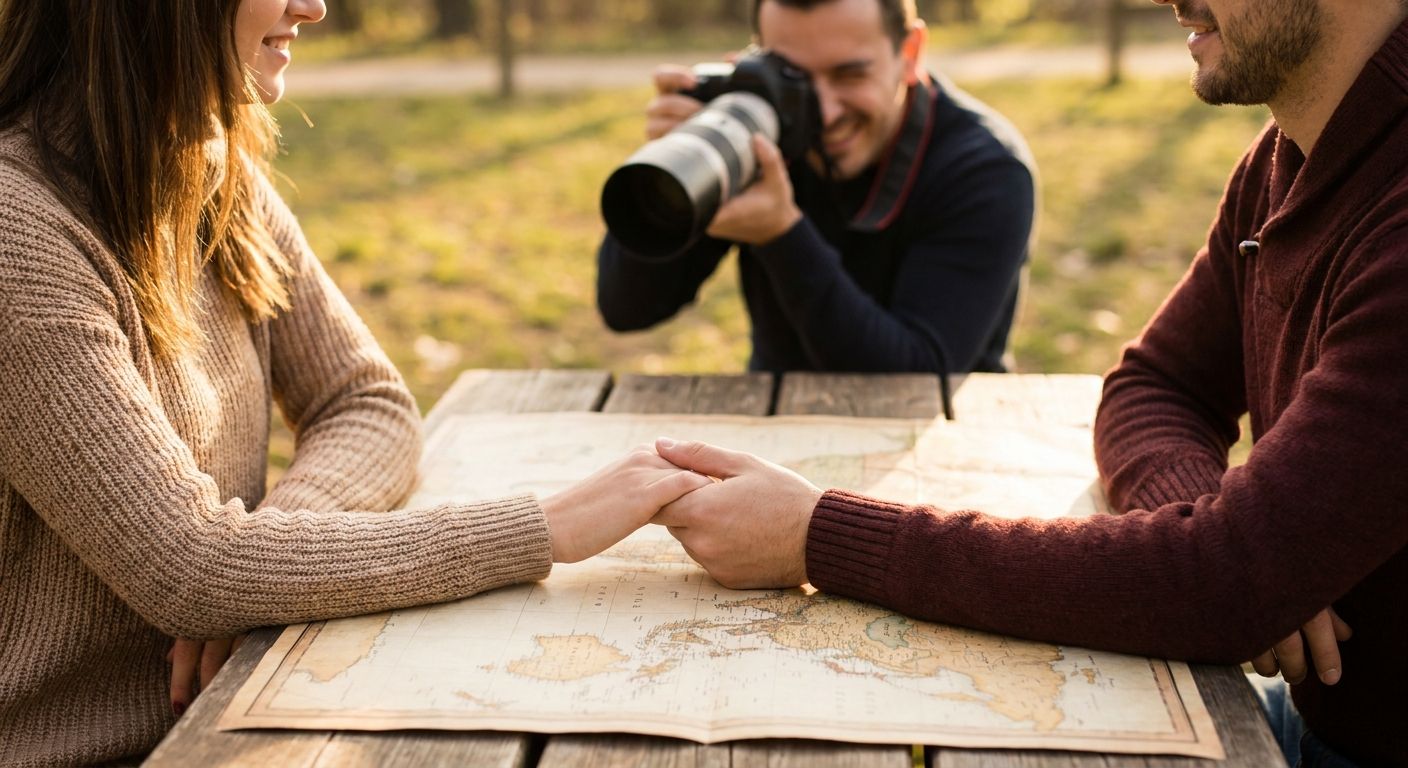
Engagement photography for long-distance couples is a single-day (or single-weekend) session built around the one window both partners can be in the same city, with the goal of getting real, un-rushed portraits without adding a second cross-country trip. The core difference from a local shoot: you're planning locations, outfits, and timing over text and video calls weeks before you ever stand in front of a camera together.
- Engagement photos for long distance couples work best as one compressed session, not two separate solo shoots.
- Pick a meeting-point city both partners can reach by direct flight to protect the shoot day from delays.
- David Suns Weddings books long-distance sessions around a single full-day window with built-in weather buffer.
- Coordinate outfits over video call at least three weeks out — mail swatches if colors matter.
- Split sessions in two cities cost you continuity: the photos won't look like one shared day.
Why engagement photography matters for long-distance couples
A long-distance couple usually has one or two windows a year where both people are physically together for more than a weekend — often a holiday visit, a flight booked around a proposal, or the trip before the wedding itself. That scarcity changes the entire planning calculus: you're not squeezing in a shoot around a Tuesday evening, you're building the trip around the shoot.
The engagement session also does more work for a long-distance couple than it does for a local one. It's frequently the first (and sometimes only) professional photo either partner's family has of the two of them together before the wedding, and it often doubles as save-the-date content. That's a lot riding on one afternoon, which is why the planning steps below focus on removing risk rather than adding options.
Pick a meeting-point location that protects the shoot day
The single biggest risk in a long-distance session isn't the weather — it's one partner's flight getting delayed and eating the shoot window. Choose a location that minimizes travel risk on both ends.
- Favor a city with direct flights from both partners' home airports over a connection-heavy hub
- Build in a buffer day before the shoot, not after — so a delayed arrival doesn't cancel the session
- Pick a city one partner already knows, so at least one of you can scout locations in person
- Avoid destinations with a single daily flight in 2026 schedules; a missed connection there means a missed shoot
- If neither city works, meet somewhere neutral with reliable regional airport service
Compress the plan into one full-day shoot
With limited days together, treat the engagement session like a wedding-day timeline: locked hours, backup plan, no wasted time hunting for a new spot mid-shoot.
- Scout 2-3 locations in advance using street view and recent geotagged photos, not a drive-by
- Schedule golden hour (roughly the hour before sunset) as the anchor block, then work backward
- Leave 30-45 minutes of slack between locations for traffic or parking
- Confirm any permit requirements for public parks or private venues before travel, not on arrival
- Have a rain plan location picked before you land, not decided in the car
Coordinate outfits and details without a fitting room
You can't try on outfits together in person, so remote coordination has to replace what a joint closet trip would normally catch.
- Video call in outfits at least three weeks before the trip, standing against a plain wall
- Mail fabric swatches or a small accessory (tie, jewelry) if color-matching matters
- Agree on 2-3 outfit changes max — more than that eats shoot time you don't have
- Check weather for the shoot city a week out and pack a backup layer
- Confirm hair and makeup logistics if either partner is traveling in same-day
Build a shared shot list before either flight is booked
A shot list matters more here than in a local shoot because there's no second weekend to come back and fix a miss.
- List 8-12 must-have shots split between posed portraits and candid movement
- Flag any location-specific shots (a skyline, a landmark, a specific street) that require exact timing
- Note any family or pet inclusion if either is flying in for the session
- Share the list with your photographer at least two weeks before the shoot date
- Rank shots by priority in case weather or light cuts the session short
This is the point where hiring a photographer who already runs long-distance sessions saves the most friction. Engagement photography for home sessions and destination-style bookings both get planned the same way at David Suns Weddings: shot list first, logistics second, shoot day locked once both are confirmed.
Choose a photographer who knows the meeting city
A photographer unfamiliar with your chosen city is working from the same street-view research you did — which means you're paying for local knowledge you don't actually get. Ask before booking:
- How many sessions have they shot in this specific city in the past 12 months
- Do they have a backup indoor or covered location for rain
- What's their turnaround time on final images post-shoot
- Will they scout in person, or only from photos
How to prepare for an engagement photo session covers the questions worth asking any photographer before you commit a flight to the date.
Turn the shoot into the trip, not an add-on to it
Since you're already flying somewhere, build in couple time around the shoot instead of treating it as a stopover between flights back to two different cities.
- Book at least one full day with zero photography plans on either side of the shoot
- Pick a hotel walkable to at least one shoot location to cut transit stress
- Keep location notes from the trip — they double as material for wedding-day speeches later
- Treat the buffer day as non-negotiable, not the first thing you cut when flights get expensive
Comparison: ways long-distance couples handle engagement photos
| Option | Best for | Key limitation |
|---|---|---|
| Single meet-in-the-middle full-day session | Couples who can each get 2-3 days off together | One shoot day, no reshoot window if weather turns |
| Split solo sessions in each home city | Couples wanting individual portraits blended into one album | Photos aren't shot together — no shared narrative |
| Video-call planning plus one flown-in shoot day | Couples who prep remotely then fly in once | Less flexibility if outfits or hair don't read on camera the way they did on the call |
| Two separate local photographers, no shared shoot | Couples who genuinely can't meet before the wedding | No shared engagement photos at all |
Verdict: a single, well-planned full-day session in a meeting-point city beats split solo shoots for long-distance couples — you lose the shared-narrative photos entirely once you go the two-city route. Skip the split-session route unless meeting in person truly isn't possible before the wedding.
Book your long-distance engagement session
Get your shoot date locked before flights go on sale.
Common mistakes long-distance couples make
- Booking flights before confirming the photographer's availability — the date should lock the flights, not the other way around.
- Skipping the outfit video call — mismatched tones or clashing patterns show up in every frame of a one-shoot-only session.
- Over-scheduling the trip — cramming the shoot between two other commitments leaves no slack for a delayed landing.
- Choosing a location neither partner has seen in person — street-view research misses lighting and crowd patterns that matter at 5pm on a Saturday.
- Not confirming turnaround time — long-distance couples often need images fast for save-the-dates, and a vague delivery window creates avoidable stress.
Couples planning the same trip around a proposal often ask about engagement photos for beach proposals or a city-based alternative like engagement photography for city skyline sessions — both work under the same single-day planning model in 2026.
FAQ
How do long-distance couples plan engagement photos without living in the same city?
They pick one meeting-point city, lock a single full-day shoot window, and coordinate outfits and shot lists remotely beforehand. The session gets treated like a compressed wedding-day timeline rather than a casual weekend shoot.
What's the best location for a long-distance couple's engagement photos?
A city with direct flights from both partners' home airports, so a delayed connection doesn't cancel the session. City skyline and downtown settings work well because they photograph consistently regardless of season.
Is one long shoot better than two separate solo sessions?
Yes for most couples. A single shared session captures both partners together in one narrative, while split solo shoots in separate cities never produce photos of the couple actually together.
How far in advance should long-distance couples book an engagement photographer?
Book as soon as travel dates are set, ideally 6-8 weeks out in 2026, since the shoot date is what locks the flights rather than the reverse.
What if it rains on the one day we have together?
Confirm a covered or indoor backup location with your photographer before you travel, not the morning of the shoot. This is non-negotiable when you only have one shoot day available.
Should we coordinate outfits over video call?
Yes. Video call in your outfits against a plain wall at least three weeks before the trip, and mail fabric swatches if exact color matching matters, since screens shift color accuracy.
How many outfit changes should a long-distance engagement session include?
Cap it at two to three changes. More than that eats into shoot time you can't get back if you're only in the same city for one day.
Can engagement photos double as save-the-date content?
Yes, and for long-distance couples this is often the main reason to prioritize a fast turnaround. Ask your photographer's delivery timeline before booking.
One last thing
The detail long-distance couples skip most often: confirming turnaround time before booking, not after. When a session doubles as save-the-date material, a two-week delivery delay in 2026 can push your announcement past the window you actually wanted it in — ask the delivery timeline question in the first email, not the follow-up.


